
Safety
General information, not medical advice
Your prescriber and the leaflet in your pack know your situation. This page does not.
- Follow your prescriber and the leaflet
- Don't start, stop, or change a dose on your own
- Doses and warnings differ by country and product
Quazepam Tablet: Uses, Dosage, Side Effects, Precautions and Alternates
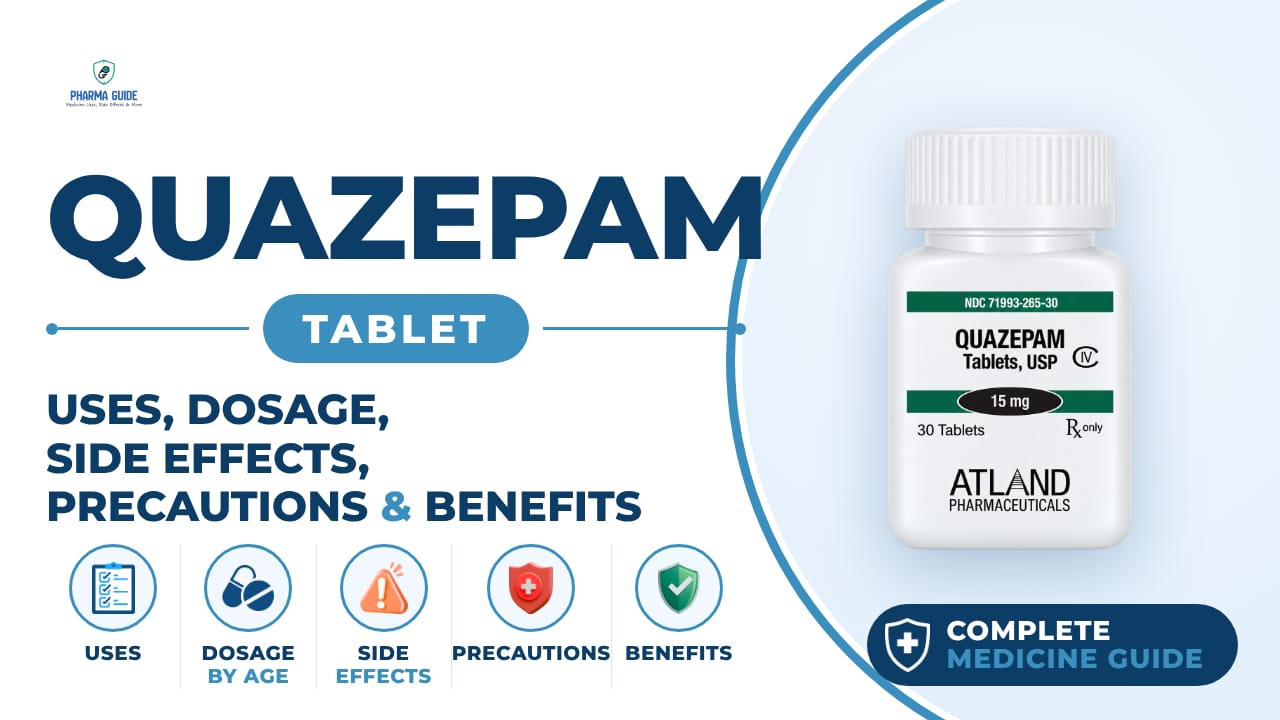
| Generic name | Quazepam |
|---|---|
| Drug class | Benzodiazepine |
| Forms | Tablet |
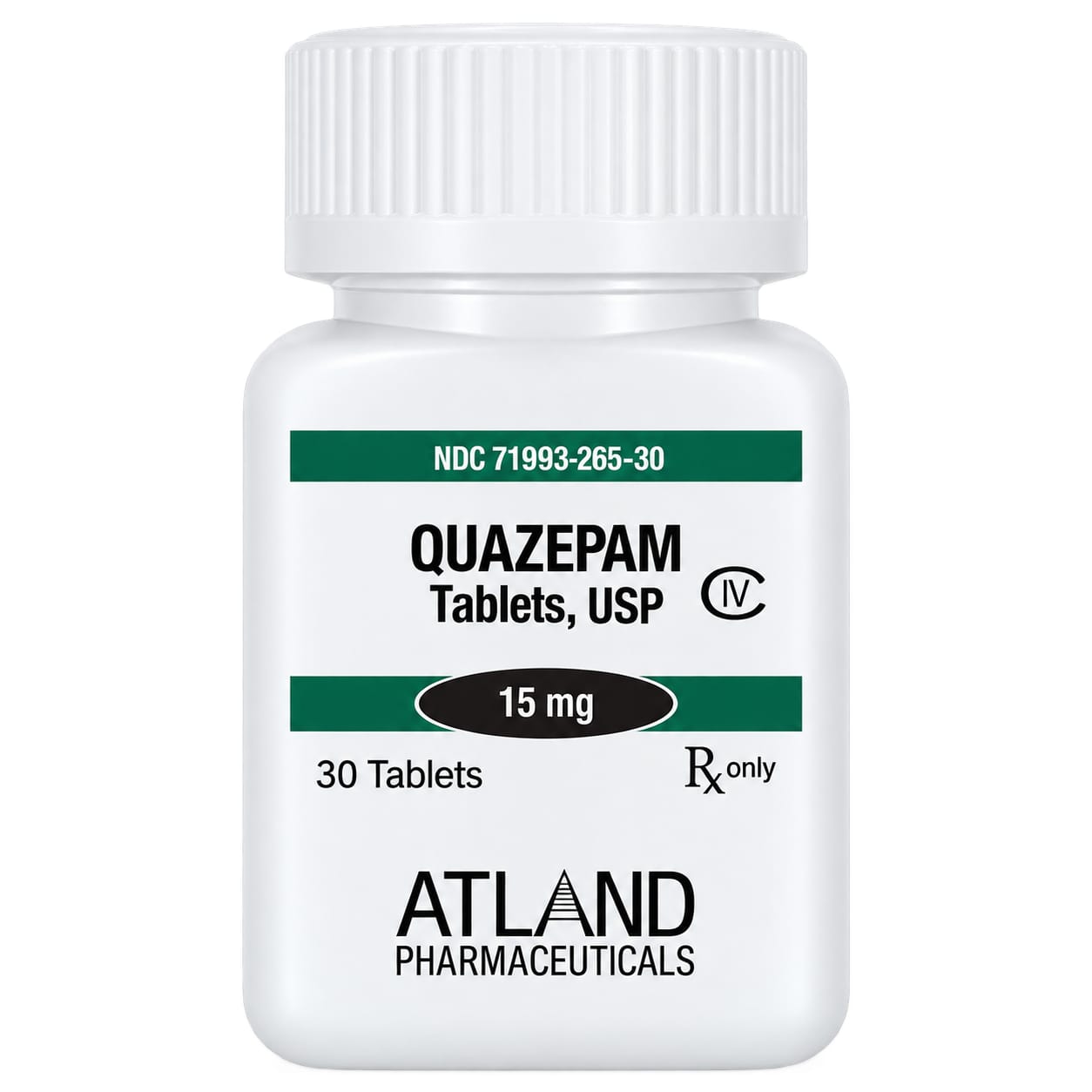
Quick overview
Quazepam Tablet is a prescription benzodiazepine medicine used for the short-term treatment of insomnia. It belongs to a group of medicines called central nervous system (CNS) depressants, which slow down the nervous system. It is typically used for short periods, usually 7 to 10 days, to help reset sleep cycles.
What is Quazepam Tablet
Quazepam is a prescription benzodiazepine medicine used for short-term treatment of insomnia. It belongs to a group of medicines called central nervous system (CNS) depressants, which slow down the nervous system.
Quazepam Tablet uses
- Treats insomnia, including trouble falling asleep, frequent waking during the night, and waking up too early in the morning
- Treats short-term insomnia
- Helps reduce difficulty falling asleep
- May help reduce nighttime awakenings
Benefits of Quazepam Tablet
- Helps you fall asleep faster, reduces how often you wake up at night, and increases total sleep time
- Has a longer-acting profile that generally causes fewer rebound anxiety or early-morning withdrawal symptoms during treatment compared to some short-acting sleep medicines
- Typically used for short periods (usually 7 to 10 days) to help reset sleep cycles
How Quazepam Tablet works
Quazepam works by binding to specific receptors in the brain and central nervous system, which slows down brain activity, though the exact mechanism is not fully known.
Quazepam Tablet dosage
Take this medicine only as directed by your doctor, exactly as prescribed, and do not take it more often or for longer than ordered. Take it just before going to bed, when you are ready to go to sleep, as it works very quickly to cause sleepiness. Only take it when your schedule allows for a full night's sleep of about 7 to 8 hours; waking up too soon may cause lingering drowsiness and memory problems.
You do not need to take it on a regular schedule — only use it when you cannot sleep, and never take two doses at the same time. When first starting, the tablet may need to be split in half to get the correct dose, so follow your doctor's instructions carefully. If you miss a dose, skip it and go back to your regular routine — do not double up.
Do not take for longer than 7 to 10 days in a row unless your doctor tells you to. Do not stop taking this medicine suddenly without talking to your doctor, since this can cause withdrawal symptoms; your doctor may lower your dose gradually. Avoid alcohol while taking this medicine and for several days after stopping it.
Children should only use this medicine if and as directed by a doctor, since safety and dosing in children have not been established. Older adults may be more sensitive to this medicine and are usually started on a lower dose.
Use exactly as prescribed by your doctor or pharmacist.
Available forms and strengths
- Tablet
Side effects of Quazepam Tablet
Common
- Drowsiness or daytime tiredness
- Dizziness or lightheadedness
- Headache
- Dry mouth
- Upset stomach or nausea
- Feeling very tired
Serious
- Severe allergic reaction, including swelling of the face, lips, tongue or throat, hives, trouble breathing or swallowing, nausea or vomiting
- Slow or shallow breathing, long pauses in breathing, blue-colored lips, or being hard to wake up
- Confusion, agitation, hallucinations, unusual thoughts or behavior
- Suicidal thoughts or worsening depression
- Doing activities like driving, eating, walking, making phone calls, or having sex while not fully awake, with no memory of it afterward
- Severe withdrawal symptoms after stopping suddenly, including seizures, unusual muscle movements, severe mood or behavior changes, and hallucinations
- Irregular heartbeats, seizures, uncontrolled twisting movements, slurred speech, trouble speaking or swallowing
- Signs of liver problems such as yellowing of the eyes or skin, dark urine, or clay-colored stools
Warnings and precautions
- Quazepam slows down brain activity and can cause severe sleepiness and dangerously slow or stopped breathing, especially when combined with opioid pain medicines, alcohol, or other substances that cause drowsiness; this can lead to coma or death.
- This medicine carries a risk of abuse, misuse, and addiction, which can occur even when taken exactly as prescribed, and can lead to overdose or death.
- Do not stop taking this medicine suddenly or lower the dose without talking to your doctor, since this can cause severe, life-threatening withdrawal reactions such as seizures.
- This medicine can cause serious allergic reactions, including swelling of the tongue, throat, or face, which can be life-threatening.
- You may do activities such as driving, eating, making phone calls, or having sex while not fully awake and not remember doing them afterward.
- This medicine may worsen depression or cause new or worsening suicidal thoughts.
- Using this medicine late in pregnancy can cause sedation or withdrawal symptoms in the newborn baby.
- This medicine should not be used in people with sleep apnea or certain lung problems, as it can make breathing problems worse.
- Tell your doctor if you are pregnant or planning to become pregnant. Using this medicine in late pregnancy may cause sedation or withdrawal symptoms in the newborn baby.
- Breastfeeding is not recommended while taking this medicine because it can pass into breast milk and cause sedation, poor feeding, and poor weight gain in the infant.
- Tell your doctor if you have kidney disease, since this may affect how the medicine is used, especially in elderly patients.
- Tell your doctor if you have liver disease, since this may affect how the medicine is used.
- Avoid alcohol while taking this medicine and for several days after stopping, since combining the two can increase drowsiness, dizziness, and the risk of dangerous breathing problems.
- Do not drive, operate machinery, or do anything dangerous until you know how this medicine affects you, since it can cause drowsiness and slowed reactions even the next day.
Storage
- Store the medicine in a closed container at room temperature, away from heat, moisture, and direct light.
- Keep from freezing.
- Keep out of the reach of children.
- Do not keep outdated medicine or medicine no longer needed.
- Ask your healthcare professional how you should dispose of any medicine you do not use.
- Store at room temperature between 20 and 25 degrees C (68 and 77 degrees F).
- Get rid of any unused medication after the expiration date.
When to see a doctor
- Get emergency help right away if you have slowed or shallow breathing, breathing that stops, or extreme sleepiness.
- Call your doctor right away if you have signs of a serious allergic reaction, such as hives, itching, swelling of the face, mouth, or throat, or trouble breathing or swallowing.
- Call your doctor right away if you have confusion, agitation, hallucinations, unusual thoughts or behavior, suicidal thoughts, or worsening depression.
- Get medical help right away if you develop withdrawal symptoms after stopping the medicine, such as unusual muscle movements, severe mood or behavior changes, confusion, hallucinations, or seizures.
- Call your doctor right away if you find out you did activities like driving, eating, or sexual activity while not fully awake and don't remember them.
- If you think you have taken too much of this medicine, contact a poison control center or emergency room right away.
- Call your doctor if your insomnia does not improve after 7 to 10 nights of use, or if it gets worse.
Alternatives
- Doxepin
- Melatonin
- Ramelteon
- Cognitive behavioral therapy for insomnia (CBT-I)
Watch the video
FAQs
How long can you take Quazepam Tablet?
Quazepam is typically used for short periods, usually 7 to 10 days, to help reset sleep cycles. It should not be taken longer than this unless your doctor tells you to.
How should Quazepam Tablet be taken?
Take it exactly as prescribed, just before going to bed when you are ready to sleep, since it works quickly to cause sleepiness. Only take it when your schedule allows for a full night's sleep of about 7 to 8 hours, and never take two doses at the same time.
What are the common side effects of Quazepam Tablet?
Common side effects include drowsiness or daytime tiredness, dizziness or lightheadedness, headache, dry mouth, upset stomach or nausea, and feeling very tired.
Can you drink alcohol while taking Quazepam Tablet?
No, you should avoid alcohol while taking this medicine and for several days after stopping it, since combining the two can increase drowsiness, dizziness, and the risk of dangerous breathing problems.
Is it safe to stop taking Quazepam Tablet suddenly?
No, you should not stop taking this medicine suddenly without talking to your doctor, since this can cause severe, life-threatening withdrawal symptoms such as seizures. Your doctor may lower your dose gradually instead.
General information, not medical advice
Your prescriber and the leaflet in your pack know your situation. This page does not.
- Follow your prescriber and the leaflet
- Don't start, stop, or change a dose on your own
- Doses and warnings differ by country and product
Sources
Video
Related medicines
Lonazep Tablet: Uses, Dosage, Side Effects, Precautions and Alternates
Benzodiazepine
Lonazep Tablet contains clonazepam, used for anxiety, panic attacks, insomnia, and epilepsy. Learn about dosage, benefits, side effects, and precautions.
Benzodiazepines Capsule: Uses, Dosage, Side Effects, Precautions and Alternates
Benzodiazepine
Benzodiazepines Capsule (Diazepam) treats severe anxiety, muscle spasms, seizures, and alcohol withdrawal. Learn uses, dosage, side effects, and precautions.