
Safety
General information, not medical advice
Your prescriber and the leaflet in your pack know your situation. This page does not.
- Follow your prescriber and the leaflet
- Don't start, stop, or change a dose on your own
- Doses and warnings differ by country and product
Rozerem Tablet: Uses, Dosage, Side Effects, Precautions and Alternates
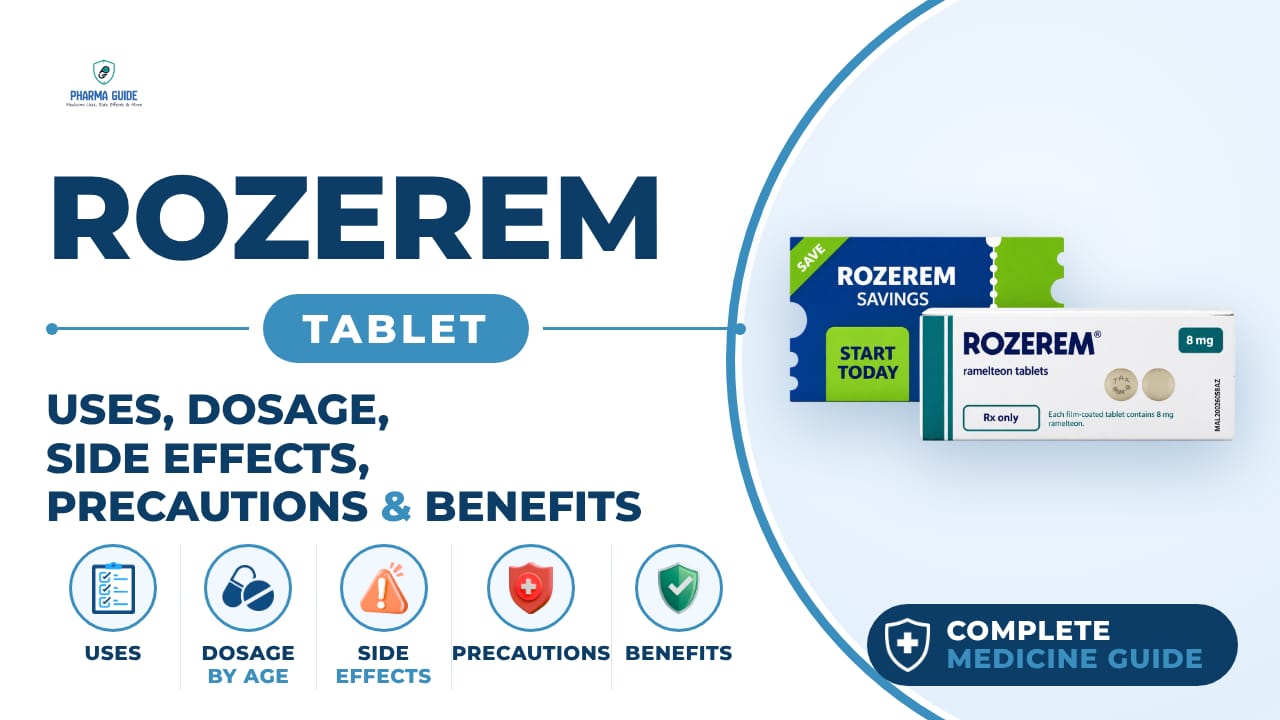
| Generic name | ramelteon |
|---|---|
| Drug class | Miscellaneous anxiolytics, sedatives and hypnotics |
| Forms | Tablet |
Quick overview
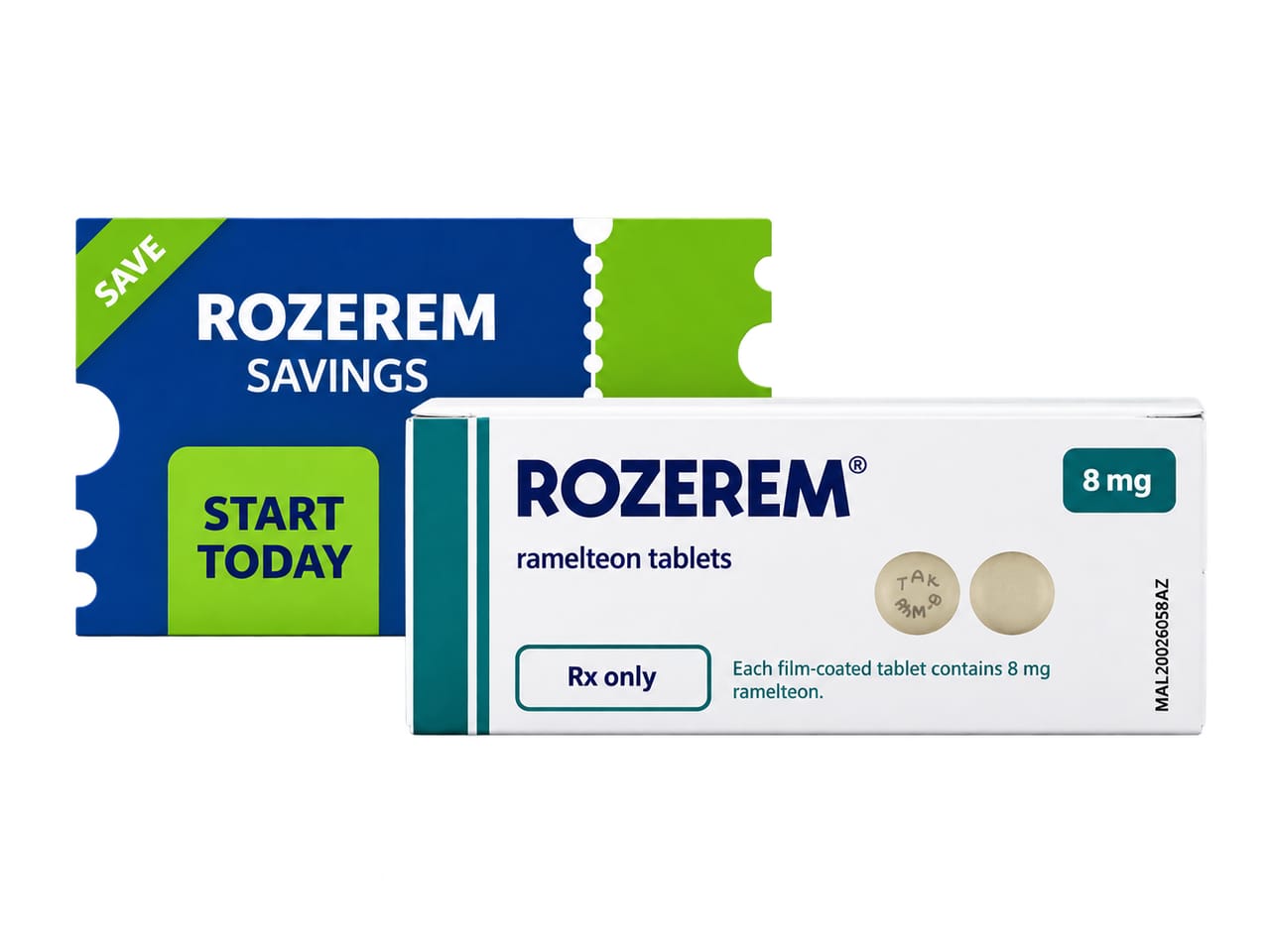
Rozerem Tablet (ramelteon) is a prescription sleep medicine from the miscellaneous anxiolytics, sedatives and hypnotics drug class, used to treat insomnia in adults who have trouble falling asleep. It is not known to be habit-forming and is not classified as a controlled substance. It works by acting on melatonin receptors in the brain to help regulate the sleep-wake cycle.
What is Rozerem Tablet
Rozerem is a prescription sleep medicine (sedative/hypnotic) used to treat insomnia in adults who have trouble falling asleep. It is not known to be habit-forming.
Rozerem Tablet uses
- Treats insomnia characterized by difficulty falling asleep (sleep-onset insomnia)
- Treats sleep-onset insomnia
- Helps reduce difficulty falling asleep
- Supports regulation of the sleep-wake cycle
Benefits of Rozerem Tablet
- Helps you fall asleep faster so you can get a full night's rest
- Not known to be habit-forming, unlike some other sleep medicines
- Does not appear to cause physical dependence or withdrawal symptoms
- Not a benzodiazepine
- Not classified as a controlled substance in the U.S.
- Low potential for physical dependence compared with many sedative-hypnotics
- Can be used for longer-term insomnia treatment when clinically appropriate
How Rozerem Tablet works
Rozerem acts on melatonin receptors in the brain (MT1 and MT2), mimicking the body's natural melatonin to help regulate the sleep-wake cycle (circadian rhythm) and promote sleep.
Rozerem Tablet dosage
Take Rozerem within 30 minutes before going to bed, not sooner. After taking it, only do activities needed to get ready for bed. Do not take it with or right after a high-fat meal, since fat can make it harder for your body to absorb the medicine and may delay its effect. Swallow the tablet whole; do not crush, chew, or break it. Only take this medicine if you have at least 7 to 8 hours available to sleep before you need to be active again. Do not take more often or in larger amounts than prescribed.
Call your doctor if your sleep problems do not improve after 7 to 10 days of use. Children and teens under 18 should not use this medicine, as safety and effectiveness have not been established. No overall differences in safety or effectiveness were seen between elderly and younger adults, but older adults should be monitored for sleep-related behaviors and thinking problems.
| Age group | Dose |
|---|---|
| Under 18 years | Safety and effectiveness are not established; no standard pediatric dose |
| 18–64 years | 8 mg once daily, taken about 30 minutes before bedtime |
| 65–74 years | Usually 8 mg once daily; no routine age-based dose adjustment |
| 75 years and older | Usually 8 mg once daily, with monitoring for dizziness or excessive sleepiness |
Available forms and strengths
- Tablet
Side effects of Rozerem Tablet
Common
- Drowsiness or tiredness
- Dizziness
- Fatigue
- Headache
- Nausea
- Worsening of insomnia or sleep problems
Serious
- Severe allergic reaction (anaphylaxis): swelling of tongue, lips, face, or throat; hives; trouble breathing; nausea and vomiting
- Engaging in activities while not fully awake with no memory of it, such as sleep-driving, sleep-walking, making and eating food, making phone calls, or having sex
- Worsening depression, unusual thoughts or behavior, hallucinations, or thoughts of hurting yourself
- Hormonal changes that can cause missed menstrual periods, nipple discharge, decreased interest in sex, or fertility problems
Warnings and precautions
- This medicine can cause a severe allergic reaction (anaphylaxis) that may involve swelling of the tongue or throat and can be life-threatening. If this happens, stop the medicine and get emergency help right away, and do not take it again.
- Some people have gotten out of bed and done activities like driving, eating, making phone calls, or having sex while not fully awake, with no memory of it afterward. This is more likely if you drink alcohol or take other sedating medicines. Tell your doctor right away if this happens.
- This medicine must not be combined with fluvoxamine (Luvox), as it can greatly increase levels of the drug in your body.
- Worsening insomnia or new changes in thinking or behavior may be a sign of an underlying medical or psychiatric condition that needs evaluation.
- This medicine can affect hormone levels, lowering testosterone and raising prolactin, which may cause missed periods, fertility problems, decreased sex drive, or unusual nipple discharge.
- This medicine has not been studied in people with severe sleep apnea and is not recommended for them; it should not be used by people with severe liver disease.
- Tell your doctor if you are pregnant or planning to become pregnant. Animal studies showed possible harm to a developing baby at much higher doses than the human dose, and this medicine should only be used in pregnancy if the benefit outweighs the risk.
- It is not known if this medicine passes into human breast milk. Caution should be used if taking it while breastfeeding, and you should talk with your doctor first.
- No dose adjustment is needed for people with kidney problems, including those with severe kidney impairment or who need dialysis.
- This medicine should not be used by people with severe liver disease. It should be used carefully in people with moderate liver disease, since it can build up to much higher levels in the body.
- Do not drink alcohol while taking this medicine, since alcohol can add to its sedating effects.
- This medicine can make you drowsy, dizzy, or less alert. Avoid driving or doing anything dangerous until you know how it affects you, and only do activities needed to get ready for bed after taking it.
Storage
- Store at room temperature away from moisture and heat
- Keep the bottle tightly closed when not in use
- Keep out of the reach of children
- Do not keep outdated medicine or medicine no longer needed
- Ask your healthcare professional how you should dispose of any medicine you do not use
- Do not store in the bathroom
When to see a doctor
- Get emergency medical help right away if you have signs of a severe allergic reaction: hives, difficulty breathing, nausea and vomiting, or swelling of the face, lips, tongue, or throat.
- Call your doctor right away if you find out you have done an activity like driving, eating, or making phone calls while not fully awake and don't remember it.
- Call your doctor if you have unusual thoughts or behavior, hallucinations, worsening depression, or thoughts of hurting yourself.
- Call your doctor if you have a missed menstrual period, nipple discharge, or loss of interest in sex.
- Call your doctor if your insomnia does not improve, or gets worse, after about 7 to 10 days of treatment.
- If you take too much of this medicine, seek emergency medical help or contact a poison control center right away.
Alternatives
- Lemborexant
- Suvorexant
- Doxepin
- Melatonin
Watch the video
FAQs
What is Rozerem Tablet used for?
Rozerem is a prescription sleep medicine used to treat insomnia in adults who have trouble falling asleep (sleep-onset insomnia). It works by acting on melatonin receptors to help regulate the sleep-wake cycle.
Is Rozerem habit-forming?
No, Rozerem is not known to be habit-forming, does not appear to cause physical dependence or withdrawal symptoms, and is not classified as a controlled substance in the U.S.
How should I take Rozerem Tablet?
Take Rozerem within 30 minutes before going to bed, not sooner, and swallow the tablet whole without crushing, chewing, or breaking it. Avoid taking it with or right after a high-fat meal, and only take it if you have at least 7 to 8 hours available to sleep.
What are the common side effects of Rozerem?
Common side effects include drowsiness or tiredness, dizziness, fatigue, headache, nausea, and worsening of insomnia or sleep problems.
Can Rozerem be taken with fluvoxamine?
No, Rozerem must not be combined with fluvoxamine (Luvox), as it can greatly increase levels of the drug in your body.
General information, not medical advice
Your prescriber and the leaflet in your pack know your situation. This page does not.
- Follow your prescriber and the leaflet
- Don't start, stop, or change a dose on your own
- Doses and warnings differ by country and product
Sources
Video
Related medicines

Ramelteon Tablet: Uses, Dosage, Side Effects, Precautions and Alternates
Miscellaneous anxiolytics, sedatives and hypnotics
Ramelteon Tablet is a non-habit-forming prescription sleep aid for insomnia that works like melatonin. Learn its dosage, side effects, and warnings.

Zaleplon Capsule: Uses, Dosage, Side Effects, Precautions and Alternates
Miscellaneous anxiolytics, sedatives and hypnotics
Zaleplon Capsule (Sonata) treats short-term insomnia by helping you fall asleep faster. Learn dosage, side effects, warnings, and precautions.