
Safety
General information, not medical advice
Your prescriber and the leaflet in your pack know your situation. This page does not.
- Follow your prescriber and the leaflet
- Don't start, stop, or change a dose on your own
- Doses and warnings differ by country and product
Semaglutide Injection: Uses, Dosage, Side Effects, Precautions and Alternates
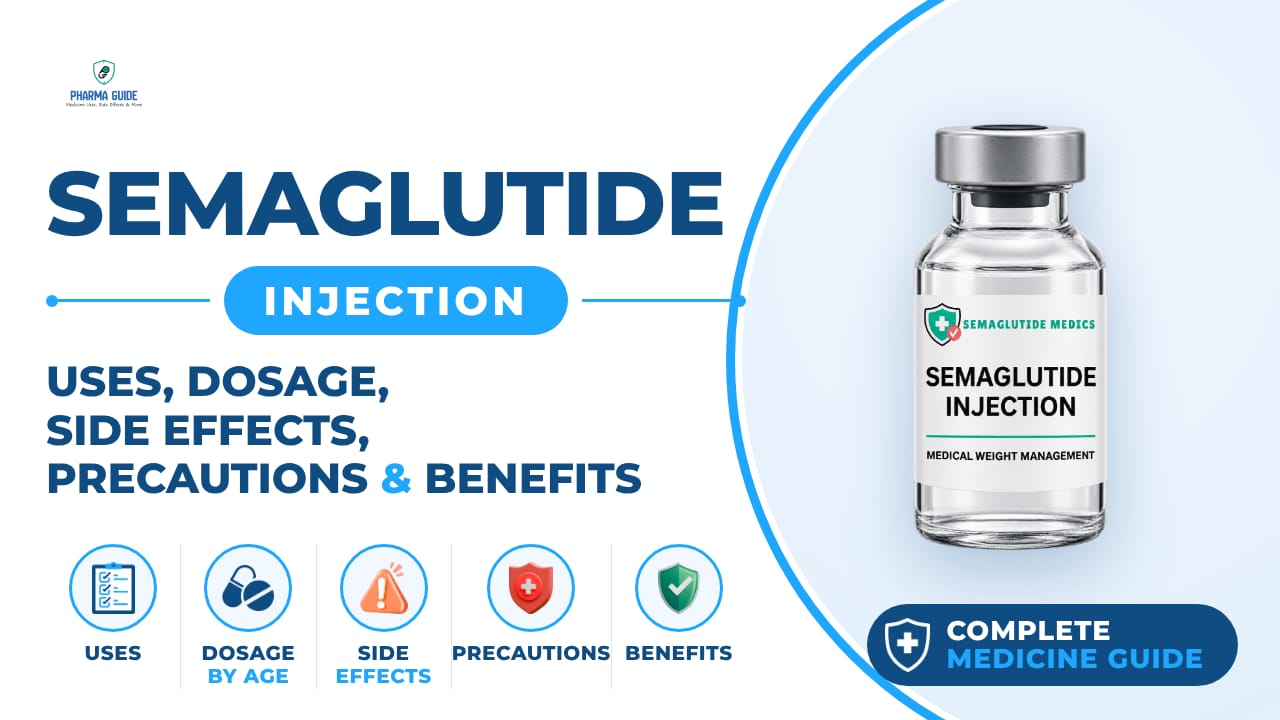
| Generic name | semaglutide |
|---|---|
| Drug class | Glucagon-like peptide-1 (GLP-1) receptor agonist |
| Forms | Solution for injection (prefilled pen), Solution for injection (prefilled syringe) |
Quick overview
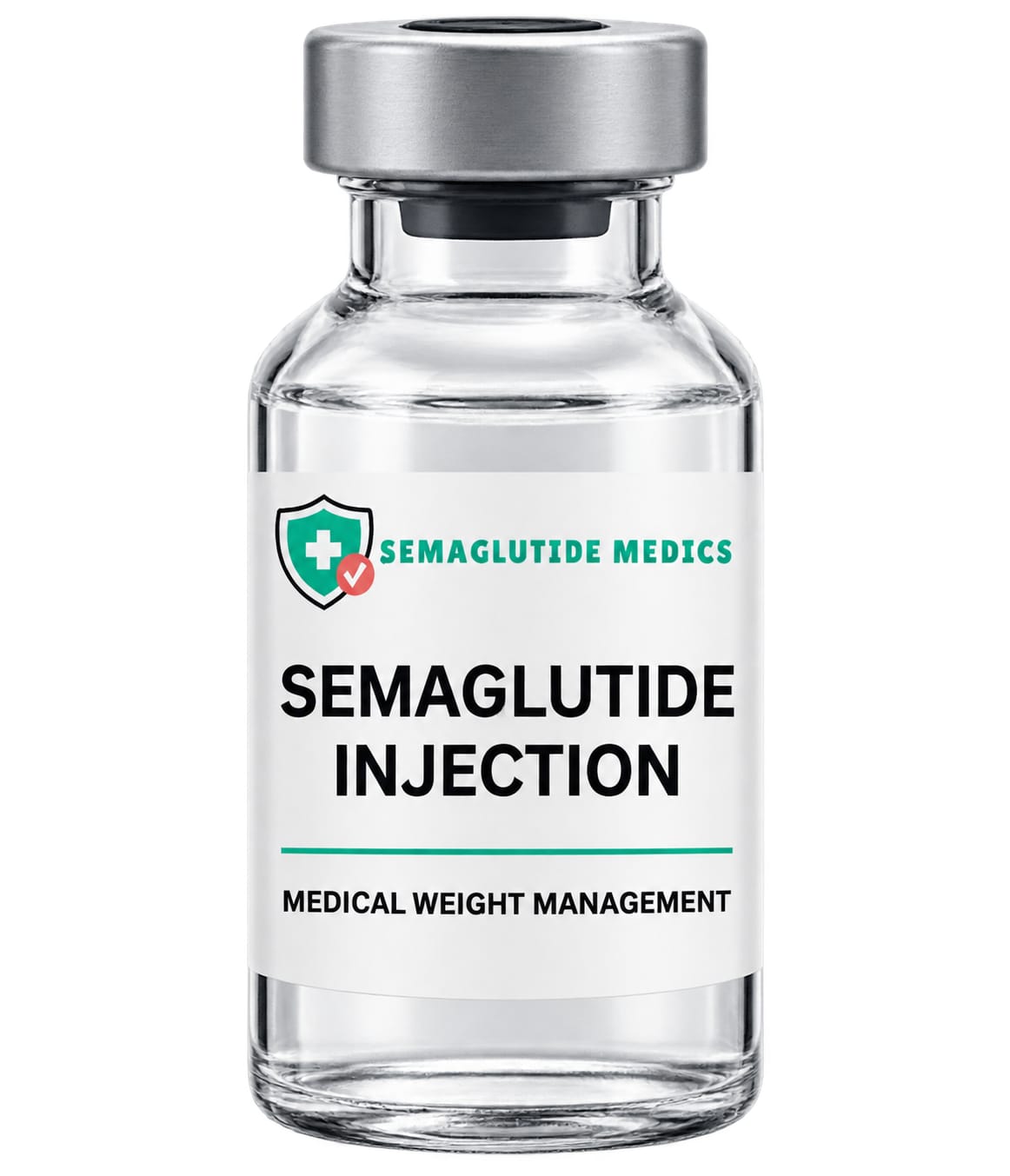
Semaglutide Injection (generic name: semaglutide) is a prescription medicine belonging to the GLP-1 receptor agonist drug class. It is given as a shot under the skin once a week and is used for type 2 diabetes and weight management, often alongside diet and exercise changes.
What is Semaglutide Injection
Semaglutide injection is a prescription medicine given once a week as a shot under the skin. It is used for type 2 diabetes and for weight management, often alongside diet and exercise changes.
Semaglutide Injection uses
- Control blood sugar in adults with type 2 diabetes, along with diet and exercise
- Lower the risk of heart attack, stroke, or death in adults with type 2 diabetes and heart or blood vessel disease
- Lower the risk of heart attack, stroke, or death in adults who are obese or overweight with heart or blood vessel disease
- Lower the risk of worsening kidney disease, kidney failure, and cardiovascular death in adults with type 2 diabetes and chronic kidney disease
- Help with weight loss and weight maintenance in adults with obesity or overweight who have a weight-related medical condition
- Treat metabolic dysfunction-associated steatohepatitis (MASH) with moderate to advanced liver scarring, but not cirrhosis
Benefits of Semaglutide Injection
- Helps control blood sugar levels
- Can lower the risk of major heart problems in certain patients
- May help protect kidney function in people with type 2 diabetes and chronic kidney disease
- Supports weight loss and helps keep weight off when combined with diet and exercise
- May improve liver health in people with MASH
How Semaglutide Injection works
Semaglutide copies the action of a natural body hormone called GLP-1. It tells the pancreas to release insulin when blood sugar is high, lowers the amount of sugar-raising hormone (glucagon) released, slows down how fast the stomach empties, and reduces appetite. Together, these actions help lower blood sugar and reduce food intake.
Semaglutide Injection dosage
This medicine is given as a shot under the skin of the stomach, thigh, or upper arm, once a week on the same day each week, at any time of day, with or without meals. Use a different injection site each time and rotate body areas; avoid areas that are tender, red, bruised, hard, scarred, or have stretch marks.
If used with insulin, do not mix the two in the same syringe; they may be injected in the same body area but not right next to each other. Check the liquid before injecting — it should be clear and colorless; do not use if cloudy, discolored, has particles, or if the pen/syringe has been dropped or damaged.
Wash hands with soap and water before and after giving the injection. Use a new needle for every injection and never share pens or syringes with another person. The day of weekly injection can be changed as long as at least 2 days have passed since the last dose.
Follow the special meal plan, exercise routine, and blood sugar testing schedule given by your doctor. Elderly patients may be more sensitive to the effects of this medicine than younger adults. Safety and effectiveness have not been established in children for most uses of this medicine.
| Age group | Dose |
|---|---|
| Under 18 years | Not recommended unless prescribed by a doctor |
| 18 Years and Above | Starting dose: 0.25 mg once weekly |
| Adults (Maintenance) | 0.5 mg, 1 mg, or 2 mg once weekly (as prescribed) |
| Older Adults (65+ years) | Usually same adult dosage; adjustment based on individual health needs |
Available forms and strengths
- Solution for injection (prefilled pen)
- Solution for injection (prefilled syringe)
Side effects of Semaglutide Injection
Common
- Belching
- Bloated or full feeling
- Constipation
- Diarrhea
- Excess gas
- Heartburn
- Nausea
- Passing gas
- Stomach discomfort, fullness, or pain
- Vomiting
- Indigestion
- Hair loss
- Change or loss of taste
Serious
- Signs of a possible thyroid tumor: lump or swelling in the neck, hoarseness, trouble swallowing, or shortness of breath
- Signs of pancreatitis: sudden and severe stomach pain, chills, constipation, nausea, vomiting, fever, or lightheadedness
- Signs of gallbladder problems: gaseous stomach pain, indigestion, recurrent fever, severe nausea or vomiting, stomach fullness, or yellow eyes or skin
- Vision changes, which may signal diabetic retinopathy
- Signs of severe allergic reaction: rash, itching, hoarseness, trouble breathing or swallowing, or swelling of hands, face, mouth, or throat
- Signs of dehydration or kidney problems: bloody urine, decreased urine, increased blood pressure, increased thirst, loss of appetite, lower back or side pain, swelling of face, fingers, or lower legs, trouble breathing, weight gain, or vomiting
- Fast or pounding heartbeat
- Signs of low blood sugar: anxiety, confusion, shakiness, sweating, fast heartbeat, or unusual tiredness
- Signs of high blood sugar: blurred vision, drowsiness, dry mouth, increased urination, fruit-like breath odor, or unusual thirst
Warnings and precautions
- Tell your doctor if you are pregnant or planning to become pregnant. You should stop using this medicine at least 2 months before you plan to become pregnant.
- There isn't enough research in women to know the risk to a nursing infant. Weigh the potential benefits against the potential risks before using this medicine while breastfeeding, and talk with your doctor.
- Tell your doctor if you have kidney disease. Dehydration from vomiting, diarrhea, or not drinking enough fluids can worsen kidney problems while using this medicine.
- This medicine is also used to treat a liver condition called MASH with moderate to advanced liver scarring, but it is not used in people who already have cirrhosis of the liver.
- Drinking alcohol may cause severe low blood sugar. Talk with your health care team about alcohol use while on this medicine.
- This medicine may increase the risk of thyroid tumors, including a type of thyroid cancer. It caused thyroid tumors in animal studies; it isn't known if this happens in humans. People with a personal or family history of certain thyroid cancers or an endocrine condition called MEN 2 generally should not use this medicine.
- This medicine may cause pancreatitis (swelling of the pancreas), which can be serious.
- Serious allergic reactions, including anaphylaxis and swelling of the face or throat, can occur and require immediate medical attention.
- This medicine should not be used by people with type 1 diabetes or diabetic ketoacidosis, since insulin is needed to control those conditions.
- Use is not recommended in people with severe gastroparesis (a condition where the stomach empties very slowly).
- This medicine may increase the risk of dehydration leading to serious kidney problems, especially if you have vomiting, diarrhea, or reduced fluid intake.
- If you are having surgery or a procedure requiring anesthesia or deep sedation, this medicine may increase the risk of stomach contents entering the lungs.
- Never share your injection pen or syringe with anyone else, even if the needle is changed, since this can spread infections between people.
Storage
- Keep out of the reach of children
- Do not keep outdated medicine or medicine no longer needed
- Ask your healthcare professional how you should dispose of any medicine you do not use
- Store in the refrigerator. Do not freeze
- Store your new, unused medicine pen or syringe in its original carton in the refrigerator
- You may store the opened pen in the refrigerator or at room temperature for a limited number of days depending on the product, then throw it away even if it still has medicine in it
- Do not store in the freezer or directly beside the refrigerator cooling element; do not use if it has been frozen
- Throw away used needles in a hard, closed container that needles cannot poke through, and keep this container away from children and pets
When to see a doctor
- Get medical help right away if you notice a lump or swelling in your neck, hoarseness, trouble swallowing, or shortness of breath, since these could be signs of a thyroid tumor.
- Get medical help right away for sudden and severe stomach pain, chills, constipation, nausea, vomiting, fever, or lightheadedness, which could mean pancreatitis.
- Seek immediate care for a rash, itching, hoarseness, trouble breathing or swallowing, or swelling of the hands, face, mouth, or throat, since these can be signs of a serious allergic reaction.
- Contact your doctor if you have blurred vision or other vision changes, which may indicate diabetic eye disease.
- Contact your doctor right away if you notice signs of dehydration or kidney trouble, such as reduced urination, swelling, increased thirst, or unusual tiredness.
- Call your doctor if you have thoughts of suicide or self-harm, worsening mood, or feelings of depression.
Alternatives
- Tirzepatide
- Dulaglutide
- Exenatide
Watch the video
FAQs
How often is Semaglutide Injection given?
It is given as a shot under the skin once a week, on the same day each week, at any time of day, with or without meals.
What is the starting dose of Semaglutide Injection?
The starting dose for adults 18 years and above is 0.25 mg once weekly, with maintenance doses of 0.5 mg, 1 mg, or 2 mg once weekly as prescribed.
What are the common side effects of Semaglutide Injection?
Common side effects include nausea, vomiting, diarrhea, constipation, belching, excess gas, heartburn, stomach discomfort, indigestion, hair loss, and change or loss of taste.
Can Semaglutide Injection be used with insulin?
Yes, but it should not be mixed with insulin in the same syringe; they may be injected in the same body area but not right next to each other.
How should Semaglutide Injection be stored?
Store new, unused pens or syringes in the refrigerator in their original carton without freezing; opened pens may be kept in the refrigerator or at room temperature for a limited number of days depending on the product.
General information, not medical advice
Your prescriber and the leaflet in your pack know your situation. This page does not.
- Follow your prescriber and the leaflet
- Don't start, stop, or change a dose on your own
- Doses and warnings differ by country and product
Sources
Video
Related medicines
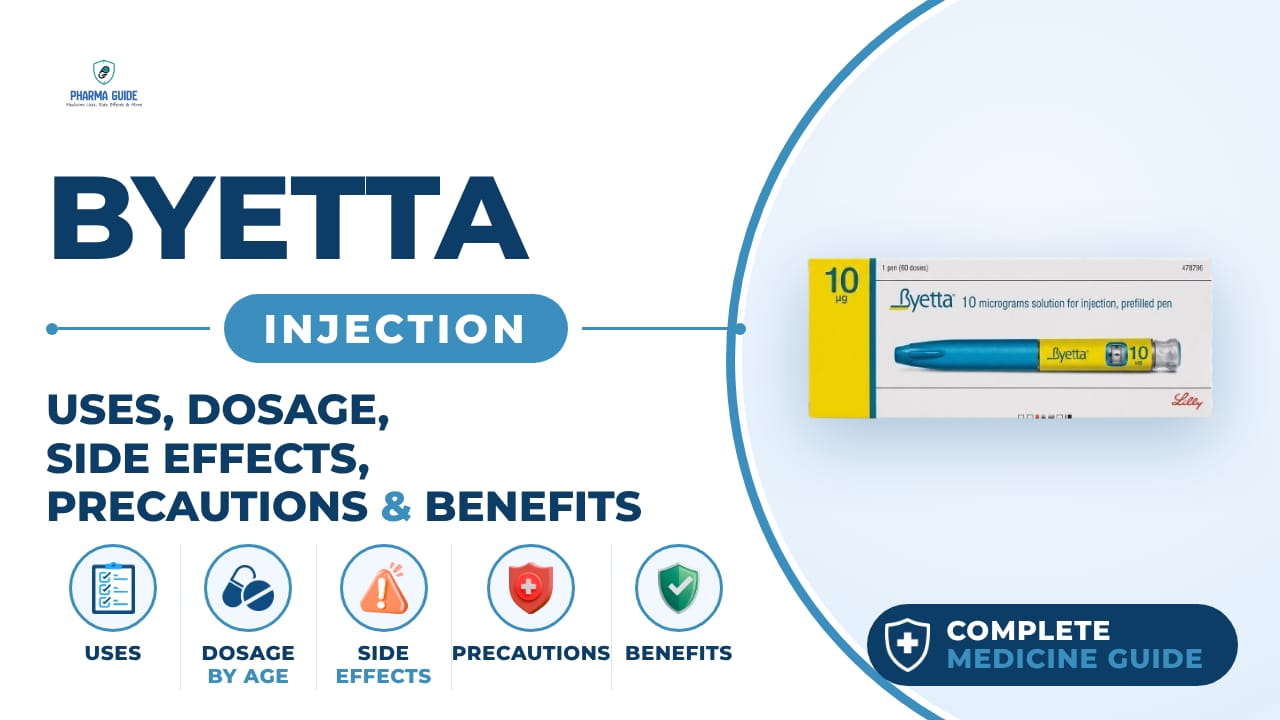
Byetta Injection: Uses, Dosage, Side Effects, Precautions and Alternates
glucagon-like peptide-1 (GLP-1) receptor agonist
Byetta Injection (exenatide) is a twice-daily GLP-1 medicine for type 2 diabetes used with diet and exercise. Learn dosage, side effects, and warnings.
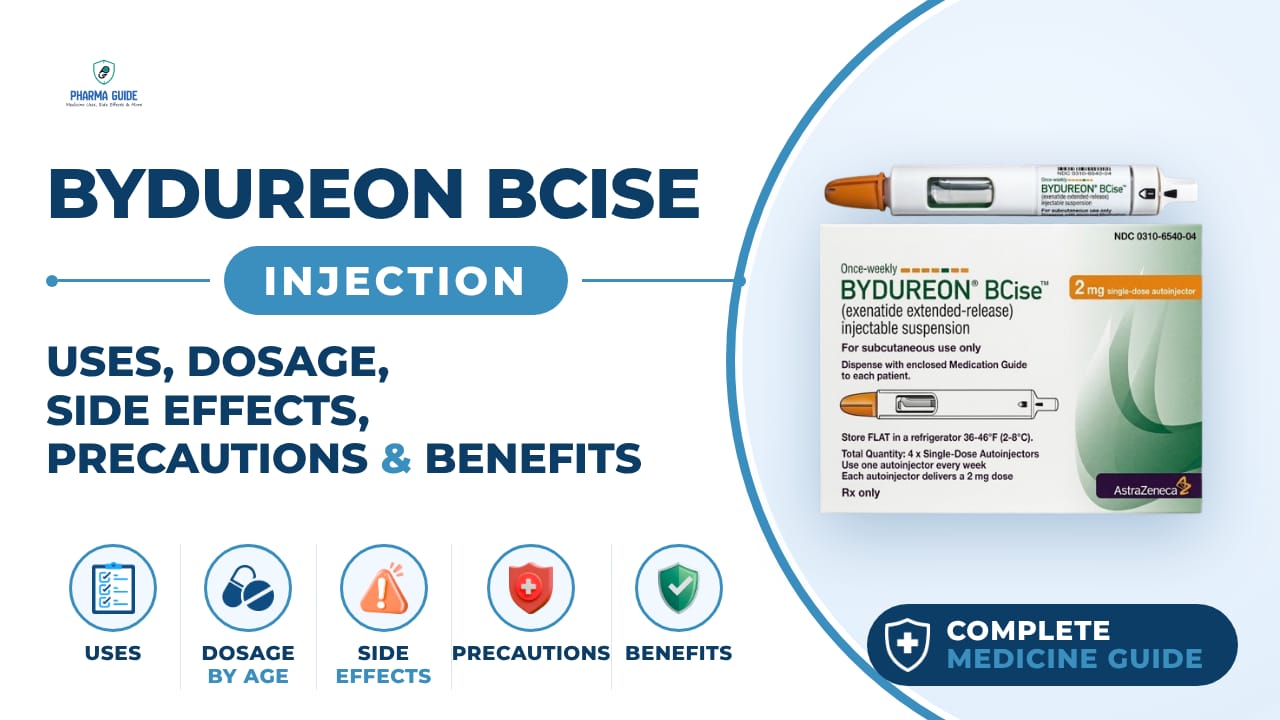
Bydureon BCise Injection: Uses, Dosage, Side Effects, Precautions and Alternates
glucagon-like peptide-1 (GLP-1) receptor agonist
Bydureon BCise Injection (exenatide) is a once-weekly GLP-1 medicine for type 2 diabetes in adults and children 10+, used with diet and exercise.