
Safety
General information, not medical advice
Your prescriber and the leaflet in your pack know your situation. This page does not.
- Follow your prescriber and the leaflet
- Don't start, stop, or change a dose on your own
- Doses and warnings differ by country and product
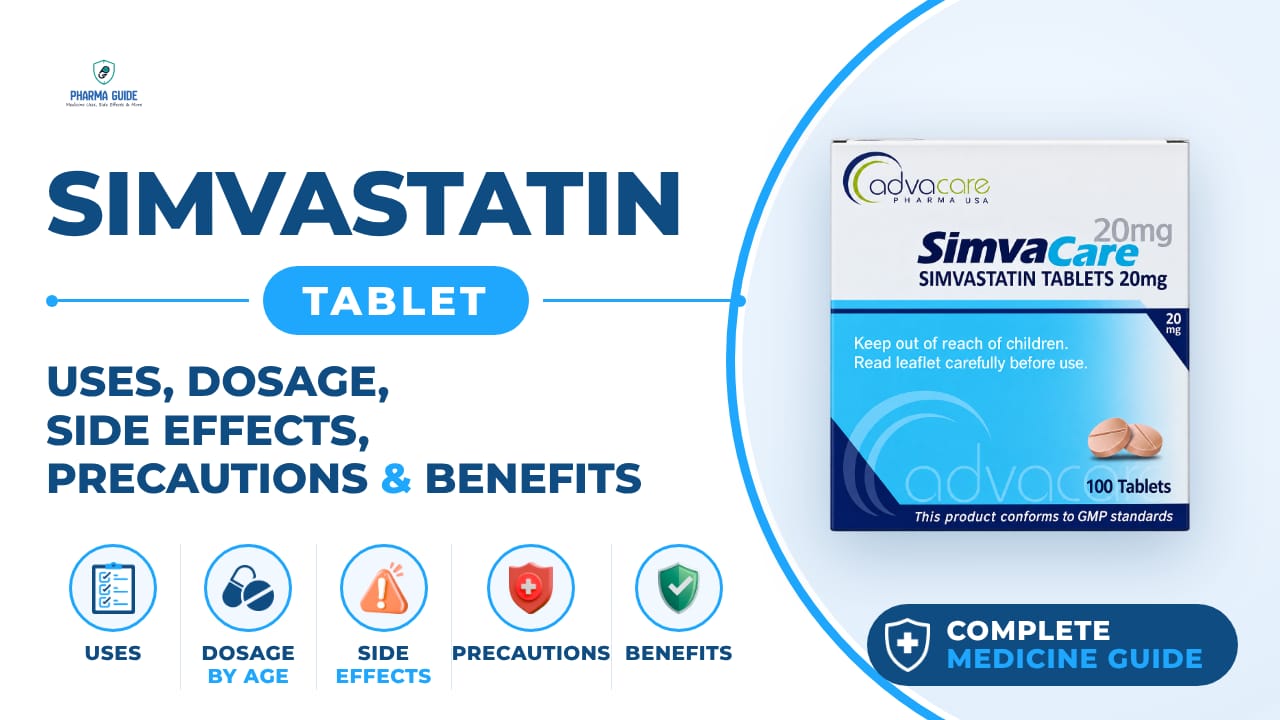
Simvastatin Tablet: Uses, Dosage, Side Effects, Precautions and Alternates
| Generic name | Simvastatin |
|---|---|
| Drug class | Statin (HMG-CoA reductase inhibitor) |
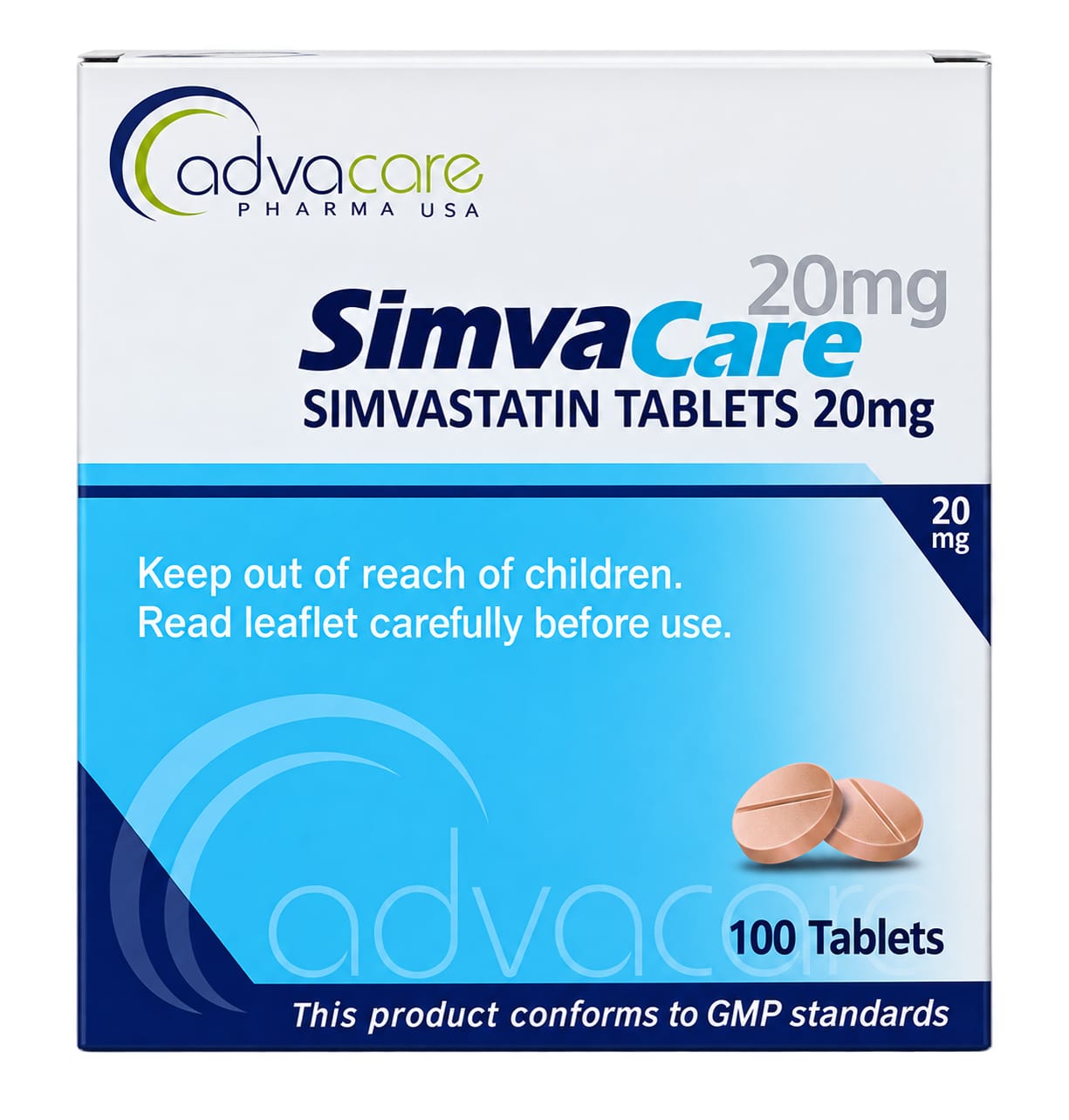
| Forms | Tablets (10 mg, 20 mg, and 40 mg) |
Quick overview
Simvastatin Tablet is a cholesterol-lowering medicine belonging to a group of medicines called statins. It is used to lower total cholesterol, bad cholesterol (LDL), and triglycerides, while raising good cholesterol (HDL). It is taken for high cholesterol and to reduce the risk of heart attack and stroke in people with or at high risk of coronary heart disease. It works by blocking an enzyme needed to make cholesterol in the body.
What is Simvastatin Tablet
Simvastatin is a cholesterol-lowering medicine that belongs to a group of medicines called statins. It is used to lower total cholesterol, bad cholesterol (LDL), and fatty substances called triglycerides in the blood, while raising good cholesterol (HDL).
Simvastatin Tablet uses
- Treats high cholesterol (raised cholesterol levels in the blood, also called hypercholesterolaemia, and mixed hyperlipidaemia)
- Treats a hereditary illness that increases cholesterol levels in the blood (homozygous familial hypercholesterolaemia)
- Used in people with coronary heart disease or at high risk of coronary heart disease (due to diabetes, history of stroke, or other blood vessel disease) to reduce the risk of heart disease problems
- Reduces the risk of heart attack and stroke
Benefits of Simvastatin Tablet
- Lowers bad cholesterol (LDL) and triglycerides while raising good cholesterol (HDL)
- May prolong life by reducing the risk of heart disease problems, regardless of the amount of cholesterol in the blood
- Helps prevent heart attack and stroke when combined with a healthy diet and exercise
How Simvastatin Tablet works
Simvastatin works by blocking an enzyme in the body that is needed to make cholesterol, which lowers the amount of cholesterol in the blood.
Simvastatin Tablet dosage
Take this medicine by mouth at the same time every day, in the evening. You can take it with or without food; if it upsets your stomach, take it with food. Swallow the tablet whole with enough water; do not crush, break, or chew it (the score line is only to help split the tablet for easier swallowing, not for dividing doses). Keep taking it unless your doctor or care team tells you to stop. Do not take with grapefruit juice.
If taken along with a cholesterol-lowering medicine containing a bile acid sequestrant, take this medicine at least 2 hours before or 4 hours after that medicine. If you miss a dose, take it as soon as you remember; if it is almost time for your next dose, skip the missed one and do not double up. Talk to your care team about use in children; it may be prescribed for children as young as 10 for certain conditions, with precautions.
| Age group | Dose |
|---|---|
| Under 10 years | Safety/effectiveness not established |
| 10–17 years | 10–40 mg once daily in the evening |
| 18–64 years | Usually 20–40 mg once daily in the evening |
| 65+ years | Usually adult dosing; individualize according to response and interaction/muscle-risk factors |
Available forms and strengths
- Tablets (10 mg, 20 mg, and 40 mg)
Side effects of Simvastatin Tablet
Common
- Constipation
- Headache
- Nausea
- Stomach pain
- Runny nose
- Sneezing
- Diarrhoea
- Muscle or joint pain
- Dizziness
- Acid or sour stomach
- Excessive gas
- Heartburn
- Skin rash
- Wind, indigestion, vomiting
- Tingling sensation
- Blurred or impaired vision
- Hair loss
- Weakness
Serious
- Allergic reactions such as skin rash, itching, hives, or swelling of the face, lips, tongue, or throat
- High blood sugar symptoms such as increased thirst, increased urination, unusual weakness or fatigue, blurry vision
- Liver injury symptoms such as right upper belly pain, loss of appetite, nausea, light-colored stool, dark yellow or brown urine, yellowing of skin or eyes, unusual weakness or fatigue
- Muscle injury symptoms such as unusual weakness or fatigue, muscle pain, dark yellow or brown urine, decreased urine output, muscle rupture or cramp
- Redness, blistering, peeling, or loosening of the skin, including inside the mouth
- Inflammation of the pancreas with severe abdominal pain
- Severe allergic reaction (anaphylaxis) causing difficulty breathing or dizziness
- Swelling of the face, tongue, and throat (angioedema)
- Muscle rupture
- Breast enlargement in men (gynecomastia)
- Confusion or memory loss
- Tendon problems, sometimes with tendon rupture
- Myasthenia gravis or ocular myasthenia (muscle weakness conditions)
Warnings and precautions
- Do not take simvastatin if you are pregnant, trying to become pregnant, or think you may be pregnant, because it can seriously harm your unborn baby. If you become pregnant while taking it, stop taking it right away and contact your doctor.
- Do not take simvastatin while breastfeeding, because it is not known if the medicine passes into breast milk.
- Tell your doctor if you have kidney problems, as this can increase your risk of muscle-related side effects and your doctor may prescribe a lower dose.
- Do not take simvastatin if you currently have liver problems. Your doctor should check your liver with a blood test before you start and if you have symptoms of liver problems while taking it.
- Drinking alcohol is not recommended while taking simvastatin, as it can increase the risk of liver damage.
- Simvastatin is not expected to affect your ability to drive or use machines, but some people may feel dizzy after taking it.
- Contact your doctor immediately if you have unexplained muscle pain, tenderness, or weakness, since this can rarely be serious, including muscle breakdown that can lead to kidney damage, and very rarely death.
- Do not take grapefruit juice with this medicine, since it can increase the levels of simvastatin in your body and raise the risk of side effects.
- If you need to take fusidic acid by mouth or injection for a bacterial infection, you will need to stop simvastatin temporarily, since combining them can rarely cause serious muscle breakdown.
- This medicine may increase blood sugar levels, and the risk may be higher if you already have diabetes.
- If you are having surgery or a medical procedure, tell your care team that you are taking this medicine, as you may need to stop it for a short time.
Storage
- Store below 25 degrees C, in the original package
- Keep out of the sight and reach of children
- Do not use after the expiry date stated on the carton; the expiry date refers to the last day of that month
- Do not throw away medicines via wastewater or household waste; ask your pharmacist how to dispose of medicines you no longer use
When to see a doctor
- Stop taking the medicine and tell your doctor immediately or go to the emergency room if you notice muscle pain, tenderness, weakness, muscle rupture, or cramp.
- Get medical help right away for signs of an allergic reaction, such as swelling of the face, tongue, and throat that makes it hard to breathe.
- Seek help for signs of liver problems, such as yellowing of the skin and eyes, itching, dark urine, or pale stool.
- Talk to your doctor if you have weakness in your arms or legs that gets worse after activity, double vision, drooping eyelids, difficulty swallowing, or shortness of breath.
- If you think you have taken too much of this medicine, contact a poison control center or emergency room right away.
Alternatives
- Alirocumab
- Ezetimibe
- Pitavastatin
- Lovastatin
- Bempedoic Acid
Watch the video
FAQs
What is Simvastatin Tablet used for?
It treats high cholesterol and a hereditary form of high cholesterol, and is used in people with or at high risk of coronary heart disease to reduce the risk of heart attack and stroke.
How should I take Simvastatin Tablet?
Take it by mouth at the same time every day in the evening, with or without food, and swallow the tablet whole with water without crushing, breaking, or chewing it. Avoid taking it with grapefruit juice.
What is the usual dosage of Simvastatin Tablet for adults?
Adults aged 18–64 usually take 20–40 mg once daily in the evening, while older adults generally follow adult dosing individualized based on response and risk factors.
What are the serious side effects of Simvastatin Tablet?
Serious side effects include muscle injury or rupture, liver injury symptoms, allergic reactions, pancreas inflammation, tendon problems, and breast enlargement in men.
Can I drink alcohol or take grapefruit juice with Simvastatin Tablet?
Alcohol is not recommended as it can increase the risk of liver damage, and grapefruit juice should be avoided as it can raise simvastatin levels and increase side effect risk.
General information, not medical advice
Your prescriber and the leaflet in your pack know your situation. This page does not.
- Follow your prescriber and the leaflet
- Don't start, stop, or change a dose on your own
- Doses and warnings differ by country and product
Sources
- Cleveland Clinic: Simvastatin Tablets (my.clevelandclinic.org)
- Drugs.com: Crestor (drugs.com/crestor.html)
- Practo: Simvastatin medicine info
- Bristol Laboratories: Simvastatin Tablets Patient Information Leaflet, PL 17907/0125-0127, March 2026
Video
Related medicines
Rosuvas Tablet: Uses, Dosage, Side Effects, Precautions and Alternates
Statin (HMG-CoA reductase inhibitor)
Rosuvas Tablet contains rosuvastatin, used to lower high cholesterol and triglycerides, protect the heart, and reduce risk of heart attack and stroke.
Storvas Tablet: Uses, Dosage, Side Effects, Precautions and Alternates
Statin (HMG-CoA reductase inhibitor)
Storvas Tablet (atorvastatin) lowers LDL cholesterol and triglycerides, raises HDL, and reduces heart attack and stroke risk. Know dosage and side effects.