
Safety
General information, not medical advice
Your prescriber and the leaflet in your pack know your situation. This page does not.
- Follow your prescriber and the leaflet
- Don't start, stop, or change a dose on your own
- Doses and warnings differ by country and product
Trinessa Tablet: Uses, Dosage, Side Effects, Precautions and Alternates
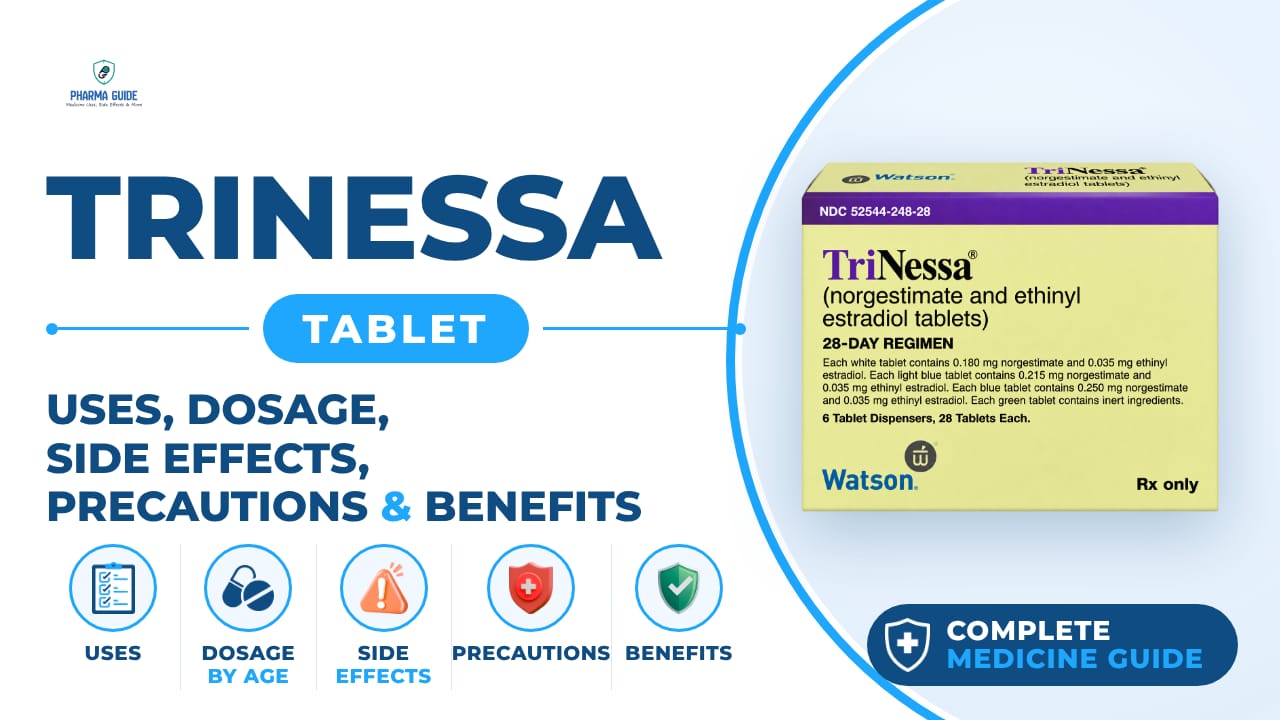
| Generic name | ethinyl estradiol and norgestimate |
|---|---|
| Drug class | Contraceptives |
| Forms | tablet |
Quick overview
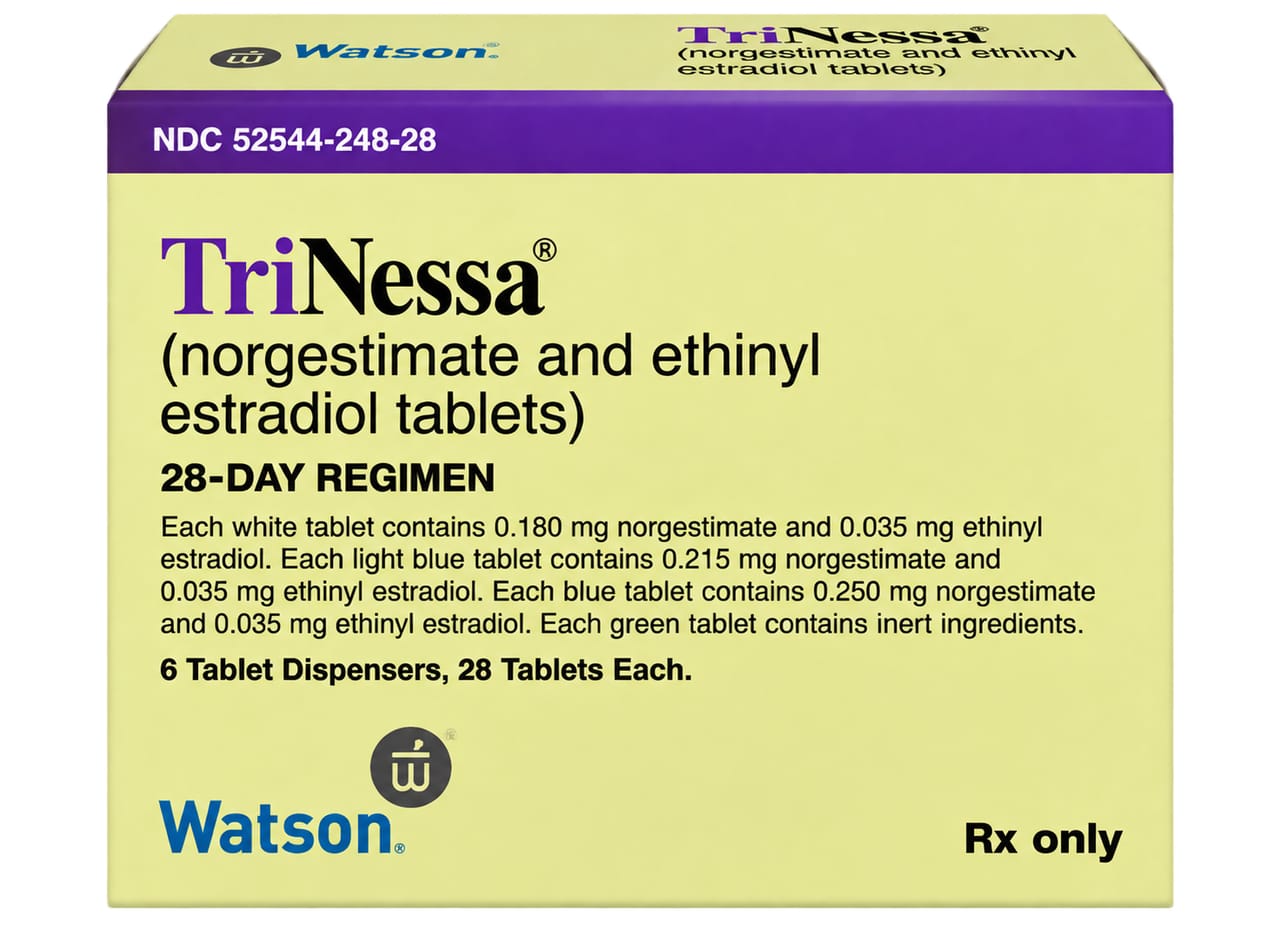
Trinessa Tablet contains ethinyl estradiol and norgestimate, two hormones combined in a birth control pill belonging to the contraceptives class. It is used to prevent pregnancy and may also help treat moderate acne in some women who are at least 15 years old and have already started menstruating. It works by preventing ovulation, thickening cervical mucus, and changing the uterine lining. It should be taken exactly as directed, one tablet daily, and carries certain risks such as blood clots, especially in smokers over 35.
What is Trinessa Tablet
Trinessa is a combination birth control pill containing two female hormones, an estrogen (ethinyl estradiol) and a progestin (norgestimate). It is used to prevent pregnancy and can also help treat moderate acne in some women.
Trinessa Tablet uses
- Prevents pregnancy (contraception)
- Treatment of moderate acne vulgaris in females at least 15 years of age who have started having menstrual periods and want to use the pill for birth control
Benefits of Trinessa Tablet
- May make menstrual cycles more regular
- May decrease menstrual blood loss and lower the chance of iron deficiency anemia
- May decrease painful periods
- May lower the chance of ovarian cysts
- May lower the chance of ectopic pregnancy
- May lower the chance of noncancerous breast lumps and fibrocystic breast disease
- May lower the chance of pelvic infections
- May lower the chance of cancer of the ovary and lining of the uterus
How Trinessa Tablet works
This medicine works mainly by stopping the ovaries from releasing an egg each month. It also thickens the mucus at the cervix, making it harder for sperm to reach an egg, and it changes the lining of the uterus, making it less likely that a fertilized egg can attach.
Trinessa Tablet dosage
Take one pill every day at the same time, no more than 24 hours apart. Take pills in the exact order shown in the pack, starting with the first active pill. Do not skip pills even if you have spotting, bleeding between periods, or feel sick to your stomach. When you finish a pack, start the next pack the day after your last pill; do not wait any days between packs.
Taking this medicine after your evening meal or at bedtime may help with stomach upset or nausea. If you vomit or have diarrhea, your pills may not work as well, so use a back-up birth control method. You may need to use a back-up method of birth control, such as condoms with spermicide, when you first start using this medicine. This product has not been studied in women over 65 years of age and is not indicated for use in this population.
| Age group | Dose |
|---|---|
| Under 15 years | Not recommended for acne; contraceptive use requires medical evaluation |
| 15–17 years | 1 tablet once daily, following the pack order |
| 18–64 years | 1 tablet once daily at the same time each day |
| 65+ years | Generally not indicated; medical assessment required |
Available forms and strengths
- Tablet
Side effects of Trinessa Tablet
Common
- Stomach pain, gas, nausea, vomiting
- Breast tenderness
- Acne, darkening of facial skin
- Headache, nervousness, mood changes
- Problems with contact lenses
- Changes in weight
- Breakthrough bleeding
- Vaginal itching or discharge
- Rash
- Bloating, dizziness, stomach cramping
- Nipple discharge
- Increased hair growth or loss of scalp hair
- Decreased sex drive
Serious
- Signs of a stroke: sudden numbness or weakness (especially on one side of the body), sudden severe headache, slurred speech, problems with vision or balance
- Signs of a blood clot: sudden vision loss, stabbing chest pain, feeling short of breath, coughing up blood, pain or warmth in one or both legs
- Heart attack symptoms: chest pain or pressure, pain spreading to your jaw or shoulder, nausea, sweating
- Liver problems: loss of appetite, upper stomach pain, tiredness, fever, dark urine, clay-colored stools, jaundice (yellowing of the skin or eyes)
- Severe headache, pounding in your neck or ears
- Swelling in your hands, ankles, or feet
- Changes in the pattern or severity of migraine headaches
- A breast lump
- Symptoms of depression: sleep problems, weakness, tired feeling, mood changes
- Signs of an allergic reaction: hives, difficult breathing, swelling of your face, lips, tongue, or throat
Warnings and precautions
- Do not use this medicine if you are pregnant. Using it during pregnancy could harm your unborn baby. Tell your doctor right away if you think you might be pregnant or if you miss two periods in a row.
- This medicine can pass into breast milk and may reduce the amount and quality of your milk, and it may affect a nursing baby. Talk with your doctor before breastfeeding while using this medicine.
- The effect of kidney problems on this medicine has not been studied, but tell your doctor if you have kidney disease.
- Do not use this medicine if you have liver disease or liver tumors, since hormones may not be processed normally by a damaged liver, and it can cause liver problems.
- Smoking while taking this medicine, especially if you are over 35, greatly increases your risk of dangerous blood clots, heart attack, and stroke. You should not take this medicine if you smoke and are over 35 years old.
- This medicine can increase your risk of blood clots, stroke, or heart attack, and this risk is highest during your first year of use or when restarting after stopping for four weeks or more.
- Do not use this medicine if you have uncontrolled high blood pressure, heart disease, circulation problems, unexplained vaginal bleeding, liver disease or liver tumors, severe migraines, or if you have ever had a heart attack, stroke, blood clot, or certain cancers.
- This medicine does not protect against HIV/AIDS or other sexually transmitted diseases. Only condoms can help protect against these infections.
- Do not take this medicine together with certain hepatitis C medicines, as this combination is not safe.
- If you need major surgery or will be on long-term bed rest, you may need to stop taking this medicine for a short time because of the increased risk of blood clots.
Storage
- Store this medicine at room temperature away from moisture and heat.
- Store at 25°C (77°F); excursions permitted to 15° - 30°C (59° - 86°F).
- Protect from light.
- Keep out of reach of children.
When to see a doctor
- Get emergency medical help right away if you have signs of an allergic reaction such as hives, trouble breathing, or swelling of your face, lips, tongue, or throat.
- Call your doctor right away if you have sharp chest pain, coughing up blood, or sudden shortness of breath, which could mean a blood clot in the lung.
- Call your doctor right away if you have sudden severe headache, vomiting, dizziness, fainting, trouble with vision or speech, or weakness or numbness in an arm or leg, which could mean a stroke.
- Call your doctor right away if you have crushing chest pain or heaviness in the chest, which could mean a heart attack.
- Call your doctor right away if you have sudden partial or complete loss of vision, which could mean a blood clot in the eye.
- Call your doctor right away if you notice a breast lump.
- Call your doctor right away if you have severe pain or tenderness in the stomach area, which could mean a ruptured liver tumor.
- Call your doctor right away if you have trouble sleeping, weakness, lack of energy, fatigue, or a change in mood, which could mean severe depression.
- Call your doctor right away if you have yellowing of the skin or eyes, often along with fever, tiredness, loss of appetite, dark urine, or light-colored stools, which could mean a liver problem.
- Call your doctor right away if you have pain, tenderness, or swelling in the calf of your leg, which could mean a blood clot in the leg.
Alternatives
- Tri-Sprintec
- MonoNessa
- Sprintec
Watch the video
FAQs
What is Trinessa Tablet used for?
Trinessa is used to prevent pregnancy and can also help treat moderate acne in females at least 15 years old who have started having menstrual periods and want to use the pill for birth control.
How does Trinessa Tablet work?
It works mainly by stopping the ovaries from releasing an egg each month, thickening cervical mucus to make it harder for sperm to reach an egg, and changing the uterine lining so a fertilized egg is less likely to attach.
How should I take Trinessa Tablet?
Take one pill every day at the same time, no more than 24 hours apart, in the exact order shown in the pack. Do not skip pills even if you have spotting or nausea, and start the next pack the day after finishing the last pill without waiting.
What are the serious side effects of Trinessa Tablet?
Serious side effects include signs of stroke, blood clots, heart attack symptoms, liver problems, severe headache, swelling in hands or feet, changes in migraine patterns, a breast lump, depression symptoms, and allergic reactions.
Who should not take Trinessa Tablet?
You should not use it if you are pregnant, have liver disease or liver tumors, uncontrolled high blood pressure, heart disease, circulation problems, unexplained vaginal bleeding, severe migraines, or a history of heart attack, stroke, blood clot, or certain cancers. Smokers over 35 should also avoid it.
General information, not medical advice
Your prescriber and the leaflet in your pack know your situation. This page does not.
- Follow your prescriber and the leaflet
- Don't start, stop, or change a dose on your own
- Doses and warnings differ by country and product
Sources
Video
Related medicines
Plan B Tablet: Uses, Dosage, Side Effects, Precautions and Alternates
Contraceptives
Plan B Tablet is an emergency contraceptive that helps prevent pregnancy after unprotected sex. Learn how it works, dosage, side effects, and precautions.
Opcicon One-Step Tablet: Uses, Dosage, Side Effects, Precautions and Alternates
Contraceptives
Opcicon One-Step Tablet (levonorgestrel 1.5 mg) is an emergency contraceptive for use after unprotected sex. Learn dosage, side effects, and warnings.