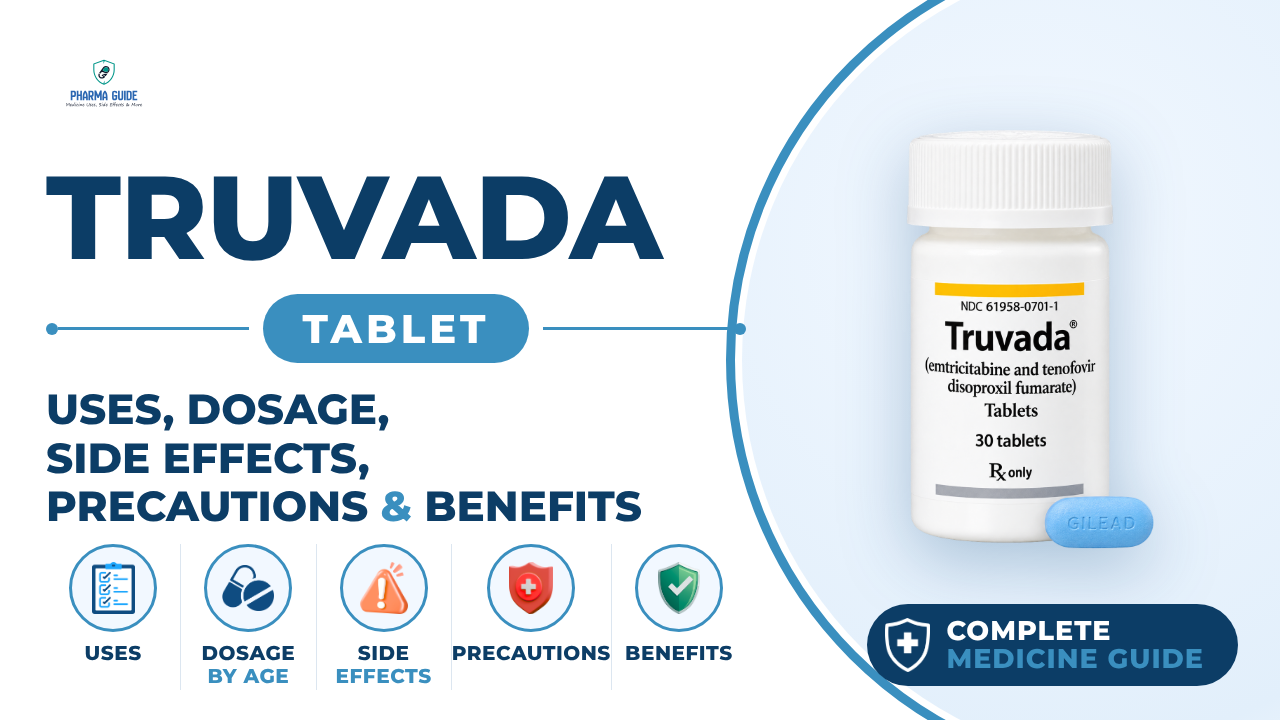
Truvada Tablet: Uses, Dosage, Side Effects, Precautions and Alternates
| Generic name | emtricitabine and tenofovir disoproxil fumarate |
|---|---|
| Drug class | Antiviral combination (nucleoside analog HIV-1 reverse transcriptase inhibitors) |
| Forms | Film-coated oral tablet |
Quick overview
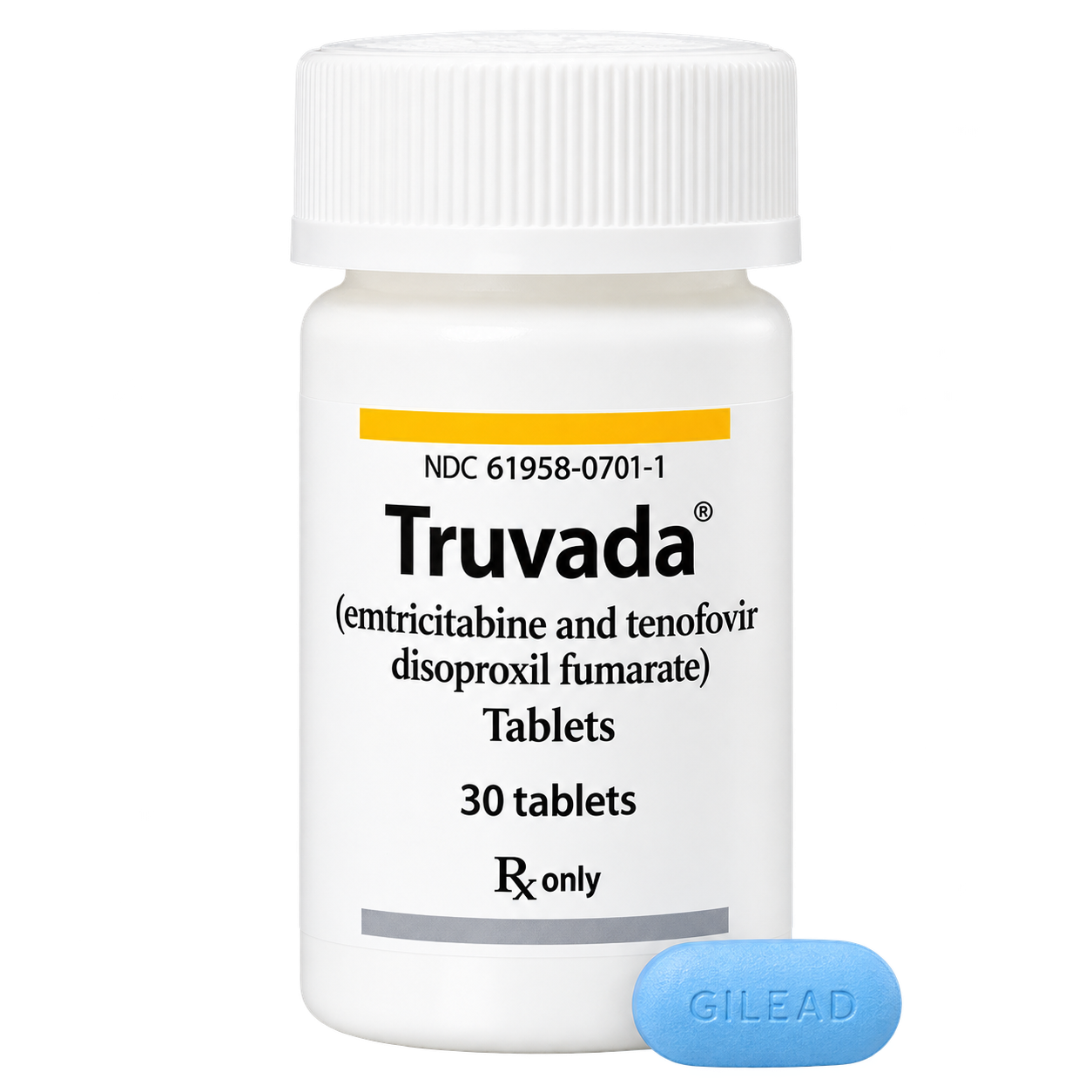
Truvada Tablet contains emtricitabine and tenofovir disoproxil fumarate, an antiviral combination of nucleoside analog HIV-1 reverse transcriptase inhibitors. It is used together with other HIV medicines to treat HIV-1 infection, and it can also be used on its own to help prevent HIV-1 infection (PrEP) in people at high risk who are confirmed HIV-negative. It is taken as one tablet once daily.
What is Truvada Tablet
Truvada is a tablet that combines two antiviral medicines, emtricitabine and tenofovir disoproxil fumarate. It is used together with other HIV medicines to treat HIV-1 infection, and it can also be used on its own to help prevent HIV-1 infection in people at high risk (called PrEP).
Truvada Tablet uses
- Treatment of HIV-1 infection in adults and children, used together with other antiretroviral medicines
- Prevention of HIV-1 infection (PrEP) in adults and adolescents at high risk who are confirmed HIV-negative
Benefits of Truvada Tablet
- Used with other antiretroviral medicines to treat HIV-1 infection
- Helps prevent HIV from multiplying (viral suppression)
- Effective HIV treatment helps preserve immune-system function
- Can also be prescribed for HIV pre-exposure prophylaxis (PrEP) in appropriate HIV-negative individuals
How Truvada Tablet works
Truvada contains two drugs that are changed by the body into active forms that block an HIV enzyme called reverse transcriptase, which the virus needs to copy itself. By stopping the virus from building its genetic material, Truvada reduces the amount of HIV in the blood and helps protect the immune system.
Truvada Tablet dosage
Take one tablet once a day, at the same time each day. It can be taken with or without food. For HIV-1 treatment, Truvada must always be used together with other anti-HIV-1 medicines. Children should swallow the tablet whole; tell the doctor if your child cannot swallow it.
Do not miss doses, since missing doses can make the virus harder to treat or increase the risk of getting HIV-1 if using it for prevention. If a dose is missed, take it as soon as remembered that same day, but do not take two doses at the same time. Do not stop or change the dose without first talking to a healthcare provider. People with kidney problems may need a longer gap between doses, as advised by their healthcare provider.
| Age group | Dose |
|---|---|
| 12–17 Years | For patients ≥35 kg: 200 mg Emtricitabine + 300 mg Tenofovir DF once daily |
| Adults (18–64 Years) | 200 mg Emtricitabine + 300 mg Tenofovir DF once daily |
| Older Adults (65+ Years) | 200 mg Emtricitabine + 300 mg Tenofovir DF once daily, with kidney-function assessment |
Available forms and strengths
- Film-coated oral tablet
Side effects of Truvada Tablet
Common
- Diarrhea
- Nausea
- Fatigue
- Headache
- Dizziness
- Depression
- Insomnia
- Abnormal dreams
- Rash
- Abdominal pain
- Weight loss
Serious
- Lactic acidosis (buildup of acid in the blood)
- Severe liver problems, including liver enlargement and fatty liver
- Worsening of hepatitis B after stopping treatment
- New or worsening kidney problems, including kidney failure and Fanconi syndrome
- Decreases in bone mineral density (bone thinning), which may lead to fractures
- Immune reconstitution syndrome (inflammatory response as the immune system recovers)
- Allergic reactions, including swelling of the face, lips, tongue, or throat
- Changes in body fat distribution
Warnings and precautions
- Truvada can cause a serious buildup of acid in the blood (lactic acidosis) and severe liver problems, including fatal cases. These are more likely in women, people who are very overweight, or those who have taken this type of medicine for a long time.
- If you have hepatitis B and stop taking Truvada, your hepatitis B may suddenly flare up and become worse than before. Your liver will need to be monitored closely for several months after stopping.
- Truvada does not stop you from passing HIV to others through sex, shared needles, or blood contact, so you should keep practicing safer sex and other precautions.
- If you use Truvada for prevention (PrEP) but actually already have HIV, the virus can become resistant to the medicine and harder to treat, so you must be confirmed HIV-negative before starting and tested regularly while taking it.
- Truvada should not be combined with certain other HIV or hepatitis B medicines that contain the same or similar ingredients.
- It is not fully known if Truvada can harm an unborn baby. You and your healthcare provider will decide together if Truvada is right for you during pregnancy, and there is a registry to track outcomes in people who take it while pregnant.
- People with HIV should not breastfeed because of the risk of passing HIV to the baby. It isn't known for certain if Truvada passes into breast milk or if it could harm a baby.
- Truvada can cause new or worsening kidney problems, including kidney failure. Your doctor will check your kidney function with blood and urine tests before and during treatment, and the dosing schedule may need to be adjusted if you have reduced kidney function.
- Tell your doctor if you have liver problems, including hepatitis B infection, before starting Truvada, since stopping the medicine can cause a serious flare-up of hepatitis B.
Storage
- Store at 25°C (77°F); brief changes between 15–30°C (59–86°F) are allowed
- Keep the container tightly closed
- Dispense and keep only in the original container
- Do not use if the seal over the bottle opening is broken or missing
- Keep out of reach of children
When to see a doctor
- Get medical help right away if you feel very weak or tired, have unusual muscle pain, trouble breathing, stomach pain with nausea and vomiting, feel cold especially in your arms and legs, feel dizzy or lightheaded, or have a fast or irregular heartbeat — these can be signs of lactic acidosis.
- Seek help right away if your skin or the white part of your eyes turn yellow, your urine turns dark, your stools turn light in color, you lose your appetite for several days, or you feel sick to your stomach with stomach pain — these may be signs of liver problems.
- Get emergency help immediately if you have signs of an allergic reaction, such as hives, difficulty breathing, or swelling of your face, lips, tongue, or throat.
- If you take too much Truvada, contact your healthcare provider or go to the nearest emergency room right away.
Alternatives
- Biktarvy
- Genvoya
- Odefsey
FAQs
What is Truvada Tablet used for?
Truvada is used together with other HIV medicines to treat HIV-1 infection, and it can also be used alone to help prevent HIV-1 infection (PrEP) in people at high risk who are confirmed HIV-negative.
How is Truvada Tablet taken?
Truvada is taken as one tablet once a day, at the same time each day, with or without food. For HIV-1 treatment, it must always be used together with other anti-HIV-1 medicines.
What are the common side effects of Truvada Tablet?
Common side effects include diarrhea, nausea, fatigue, headache, dizziness, depression, insomnia, abnormal dreams, rash, abdominal pain, and weight loss.
Can Truvada Tablet be used for HIV prevention?
Yes, Truvada can be prescribed on its own for HIV pre-exposure prophylaxis (PrEP) in adults and adolescents at high risk who are confirmed HIV-negative, with regular testing while taking it.
What precautions should be followed when stopping Truvada Tablet?
If you have hepatitis B and stop taking Truvada, your hepatitis B may suddenly flare up and become worse, so your liver will need to be monitored closely for several months after stopping.
Sources
- FDA Prescribing Information for Truvada (H.J. Harkins Company, Inc. / Gilead Sciences, Inc.), revised 12/2011
- Medical News Today, 'Truvada side effects: What you should know'
- Drugs.com, 'Truvada' drug information page
Video