
Safety
General information, not medical advice
Your prescriber and the leaflet in your pack know your situation. This page does not.
- Follow your prescriber and the leaflet
- Don't start, stop, or change a dose on your own
- Doses and warnings differ by country and product
Viagra Tablet: Uses, Dosage, Side Effects, Precautions and Alternates
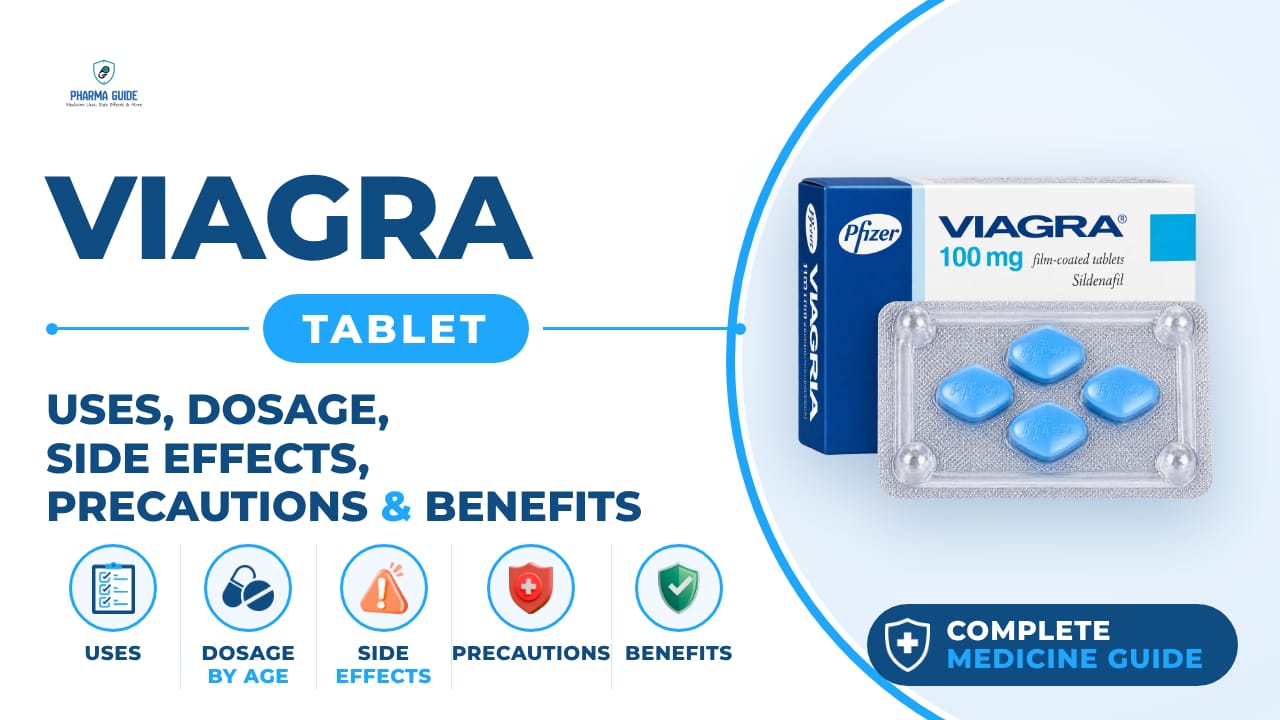
| Generic name | sildenafil |
|---|---|
| Drug class | Phosphodiesterase type 5 (PDE5) inhibitor |
| Forms | Film-coated tablet (25 mg, 50 mg, 100 mg), Orodispersible tablet (50 mg), Orodispersible film (50 mg) |
Quick overview
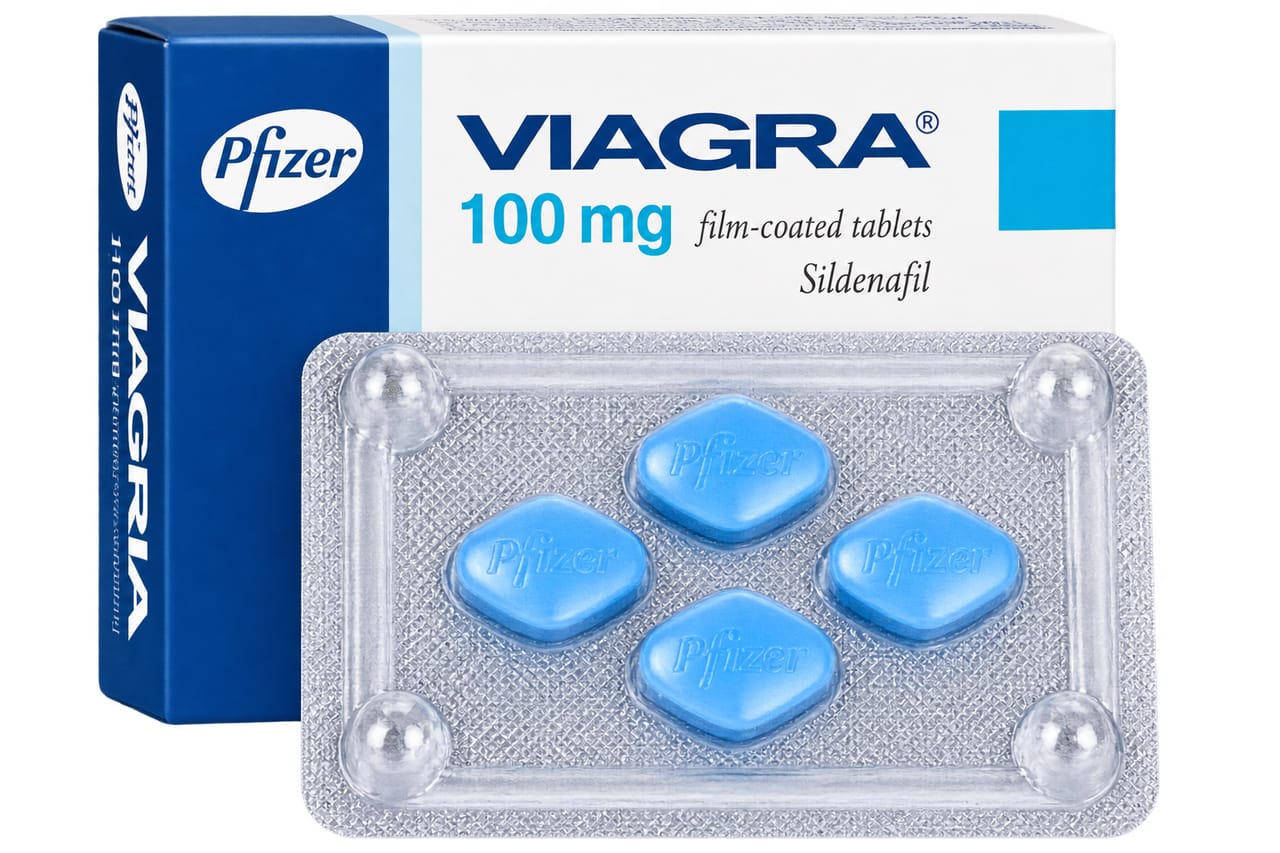
Viagra Tablet contains the active ingredient sildenafil and belongs to the phosphodiesterase type 5 (PDE5) inhibitor class. It is a brand-name prescription medicine taken by mouth to treat erectile dysfunction (ED) in adult men. Viagra is not approved for use in women or in anyone under 18 years old, and it does not protect against sexually transmitted infections.
What is Viagra Tablet
Viagra is a brand-name prescription medicine that contains the active ingredient sildenafil. It is taken by mouth to treat erectile dysfunction (ED) in adult men, which is when a man cannot get or keep an erection firm enough for satisfactory sexual activity. Viagra is not approved for use in women or in anyone under 18 years old, and it does not protect against sexually transmitted infections.
Viagra Tablet uses
- Treating erectile dysfunction (ED) in adult men
- Sometimes used off-label for Raynaud's disease, though it is not approved for this use
Benefits of Viagra Tablet
- Helps men with ED get and keep an erection firm enough for sexual activity when they are sexually aroused
- Can be taken only when needed, rather than every day
- Available in different strengths so the dose can be adjusted to balance effect and side effects
- Improved erections were reported in the majority of men across several clinical studies, including those with diabetes, spinal cord injury, or psychological causes of ED
How Viagra Tablet works
During sexual arousal, the body releases a chemical called nitric oxide in the penis, which raises the level of another chemical called cyclic GMP (cGMP). cGMP relaxes blood vessels and muscles in the penis so blood can flow in and cause an erection. Normally an enzyme called PDE5 breaks cGMP down, ending the erection. Viagra blocks PDE5, so cGMP stays active longer, allowing blood flow to build up and an erection to happen and be maintained — but only if you are sexually stimulated.
Viagra Tablet dosage
Take Viagra by mouth, swallowing the tablet whole with a glass of water; do not crush, split, or chew it unless your doctor or pharmacist says this is safe. The orodispersible tablet should be placed on the tongue and allowed to dissolve, then swallowed with or without water; take it right after removing it from the blister. The orodispersible film should be placed on the tongue with a dry finger and allowed to dissolve; you may swallow your saliva during this but should not swallow the film itself.
Take it as needed, generally about one hour before sexual activity, though it can be taken anywhere from 30 minutes to 4 hours beforehand. Do not take it more than once a day. You can take the film-coated tablet with or without food, but a heavy or high-fat meal can delay how quickly it starts working. The orodispersible tablet and orodispersible film work best on an empty stomach, since a high-fat meal can significantly delay their effect.
Viagra only works if you are sexually aroused — it will not cause an erection on its own. If you feel dizzy or faint after taking a dose, lie down until the feeling passes. People 65 years and older, and those with liver or kidney problems, are often started on a lower dose. Do not take Viagra together with other treatments for erectile dysfunction.
| Age group | Dose |
|---|---|
| Under 18 Years | Not recommended unless prescribed by a specialist |
| Adults (18–64 Years) | 50 mg taken about 1 hour before sexual activity; may be adjusted to 25–100 mg |
| Older Adults (65+ years) | 25 mg starting dose may be considered; adjusted based on response and health condition |
Available forms and strengths
- Film-coated tablet (25 mg, 50 mg, 100 mg)
- Orodispersible tablet (50 mg)
- Orodispersible film (50 mg)
Side effects of Viagra Tablet
Common
- Headache
- Flushing
- Indigestion
- Nasal congestion (stuffy nose)
- Mild and temporary vision changes, such as a blue tinge in vision, blurred vision, and sensitivity to light
- Back pain
- Muscle pain
- Nausea
- Dizziness
- Rash
Serious
- Priapism — an erection lasting more than 4 hours, which is a medical emergency
- Sudden decrease or loss of vision in one or both eyes (possible sign of NAION)
- Sudden decrease or loss of hearing, sometimes with ringing in the ears or dizziness
- Allergic reaction, including swelling of the face, lips, tongue, or throat, and trouble breathing
- Chest pain, irregular heartbeat, heart attack, or stroke
- Dangerously low blood pressure, especially when combined with certain other medications
- Serious skin reactions with peeling, blistering, and fever
- Seizures
Warnings and precautions
- Never take Viagra with nitrate medicines (often used for chest pain) or recreational drugs called poppers, because the combination can cause a dangerous drop in blood pressure that can lead to heart attack or stroke.
- Do not take Viagra with riociguat, a medicine for pulmonary hypertension, as the combination can cause a dangerous drop in blood pressure.
- Sexual activity carries some risk for the heart, so Viagra should not generally be used by men who have been advised to avoid sex due to a heart condition, such as unstable angina or severe heart failure.
- Viagra is not recommended if you've recently had a stroke or heart attack, have very low blood pressure, or have certain inherited eye diseases like retinitis pigmentosa.
- If you've already lost vision in one eye due to a condition called NAION, you should not take Viagra, since it might raise the risk of this happening again.
- Combining Viagra with alpha-blocker medicines (used for blood pressure or prostate problems) can cause a sudden drop in blood pressure, so your doctor may start you on a lower dose.
- Viagra should be used carefully in people with conditions that make priapism more likely, such as sickle cell anemia, multiple myeloma, leukemia, or a physical deformity of the penis.
- Ritonavir greatly increases the amount of sildenafil in the blood, so combining them isn't advised, and if used together the sildenafil dose must be strictly limited.
- Combining Viagra with other PDE5 inhibitors or other erectile dysfunction treatments hasn't been studied and is not recommended.
- Viagra is not approved for use in women, including during pregnancy, and there isn't enough research to know if it's safe in pregnancy. Viagra is not approved for use in women, so there's no established safety information for breastfeeding either.
- People with severe kidney problems process the drug more slowly, so a lower starting dose is often used and safety hasn't been studied in the most severe cases. People with liver problems clear the drug more slowly, so a lower dose is usually recommended, and Viagra should not be used at all in severe liver impairment.
- There's no specific ban on alcohol with Viagra, but drinking a lot can worsen side effects like dizziness and flushing, and can also make it harder to get an erection.
- Viagra can cause dizziness and affect your vision, so know how you react to it before driving or using machinery.
Storage
- Film-coated tablets: do not store above 30°C; store in the original package to protect from moisture
- Orodispersible tablets: do not require special temperature storage conditions, but store in the original package to protect from moisture
- Orodispersible films: do not require any special storage conditions
- Keep out of the sight and reach of children
- Do not use after the expiry date shown on the pack
- Do not throw away medicines via wastewater or household waste; ask your pharmacist how to dispose of medicines you no longer use
When to see a doctor
- Get emergency help right away if you have an erection lasting more than 4 hours, since untreated priapism can permanently damage the penis.
- Stop taking Viagra and see a doctor immediately if you have a sudden loss or decrease of vision in one or both eyes.
- Stop taking Viagra and get prompt medical attention if you notice a sudden decrease or loss of hearing, which may come with ringing in the ears or dizziness.
- If you have chest pain, dizziness, or nausea during or after sex that doesn't go away with rest, stop the activity and get medical help right away, without using nitrate medicines for the chest pain.
- Seek emergency care for signs of a severe allergic reaction, such as sudden wheezing, difficulty breathing, dizziness, or swelling of the eyelids, face, lips, or throat.
- If you think you've taken too much Viagra, contact your doctor or a poison control service, or go to the nearest emergency room if symptoms are severe.
Alternatives
- Cialis (Tadalafil)
- Levitra (Vardenafil)
- Mirodenafil
Watch the video
FAQs
How does Viagra Tablet work?
During sexual arousal, Viagra blocks the PDE5 enzyme so cGMP stays active longer, allowing blood flow to build up and an erection to happen and be maintained, but only with sexual stimulation.
When should I take Viagra Tablet?
Take it as needed, generally about one hour before sexual activity, though it can be taken anywhere from 30 minutes to 4 hours beforehand, and not more than once a day.
What are the common side effects of Viagra Tablet?
Common side effects include headache, flushing, indigestion, nasal congestion, mild vision changes, back pain, muscle pain, nausea, dizziness, and rash.
Can I take Viagra Tablet with nitrate medicines?
No, Viagra should never be taken with nitrate medicines or poppers, as the combination can cause a dangerous drop in blood pressure leading to heart attack or stroke.
Is Viagra Tablet safe for older adults?
People 65 years and older are often started on a lower dose, such as 25 mg, which may be adjusted based on response and health condition.
General information, not medical advice
Your prescriber and the leaflet in your pack know your situation. This page does not.
- Follow your prescriber and the leaflet
- Don't start, stop, or change a dose on your own
- Doses and warnings differ by country and product
Sources
Video
Related medicines
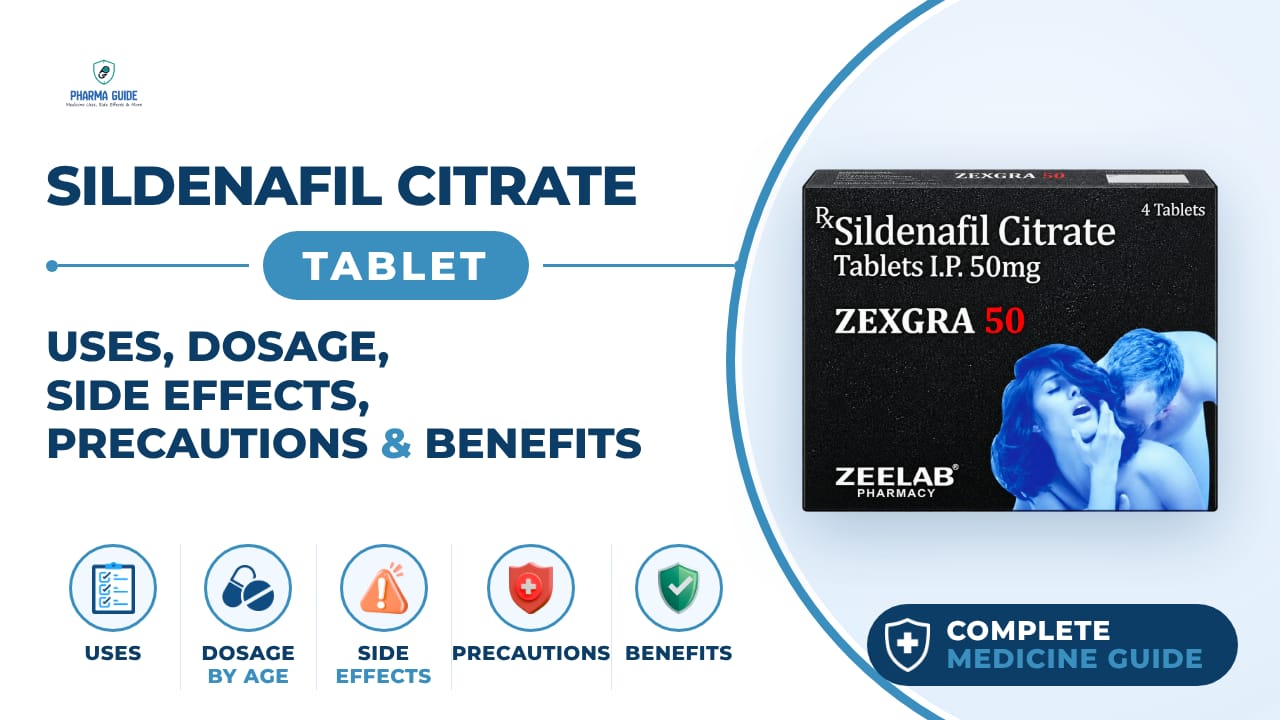
Sildenafil Citrate Tablet: Uses, Dosage, Side Effects, Precautions and Alternates
Phosphodiesterase type 5 (PDE5) inhibitor
Sildenafil Citrate Tablet treats erectile dysfunction and pulmonary arterial hypertension by relaxing blood vessels. Learn uses, dosage, side effects, and
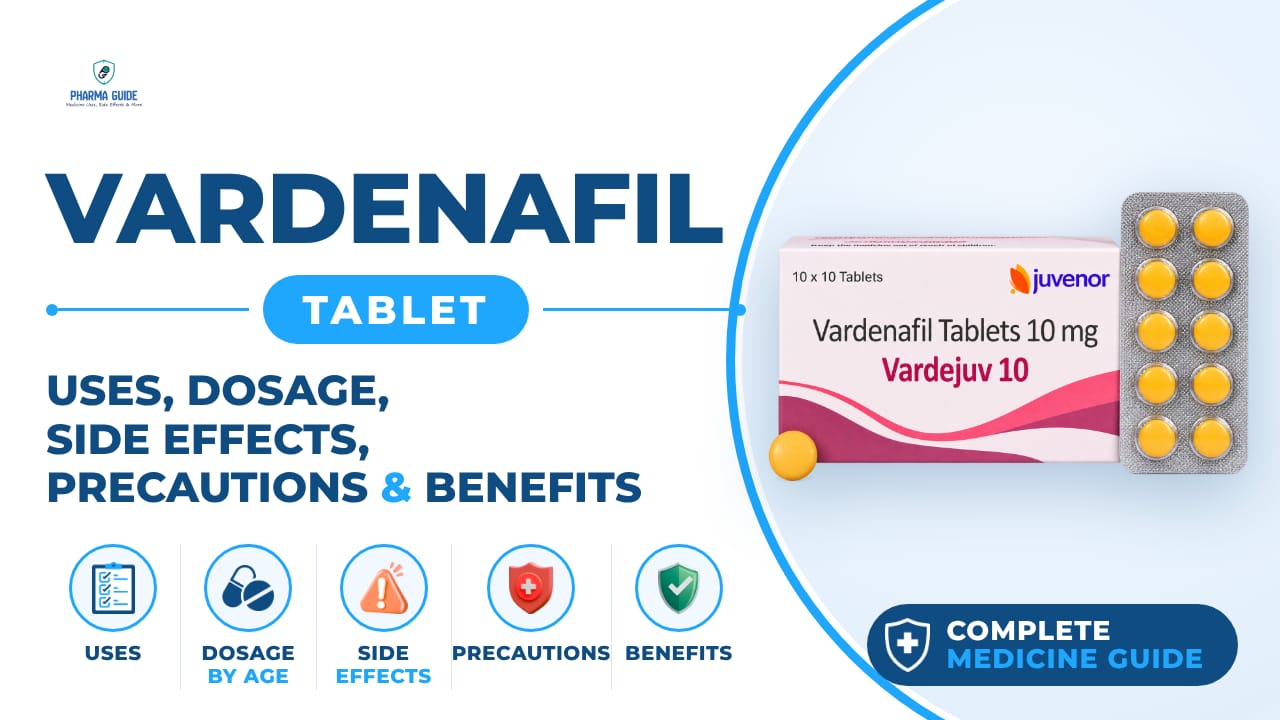
Vardenafil Tablet: Uses, Dosage, Side Effects, Precautions and Alternates
Phosphodiesterase type 5 (PDE5) inhibitor
Vardenafil Tablet is a PDE5 inhibitor used to treat erectile dysfunction. Learn how it works, dosage by age, side effects, and safety warnings.