Vibramycin Capsule: Uses, Dosage, Side Effects, Precautions and Alternates
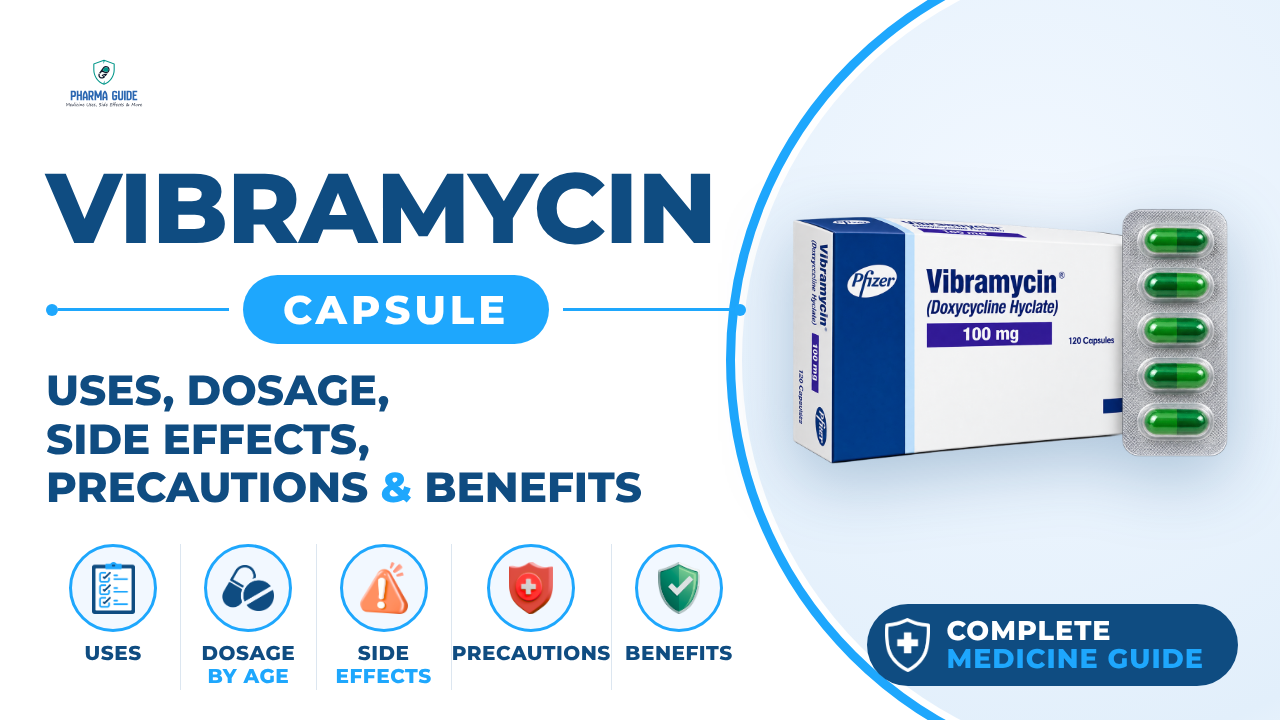
| Generic name | Doxycycline (as hyclate) |
|---|---|
| Drug class | Tetracyclines |
| Forms | Capsule, Tablet, Delayed-release capsule, Delayed-release tablet, Syrup, Oral suspension |
Quick overview
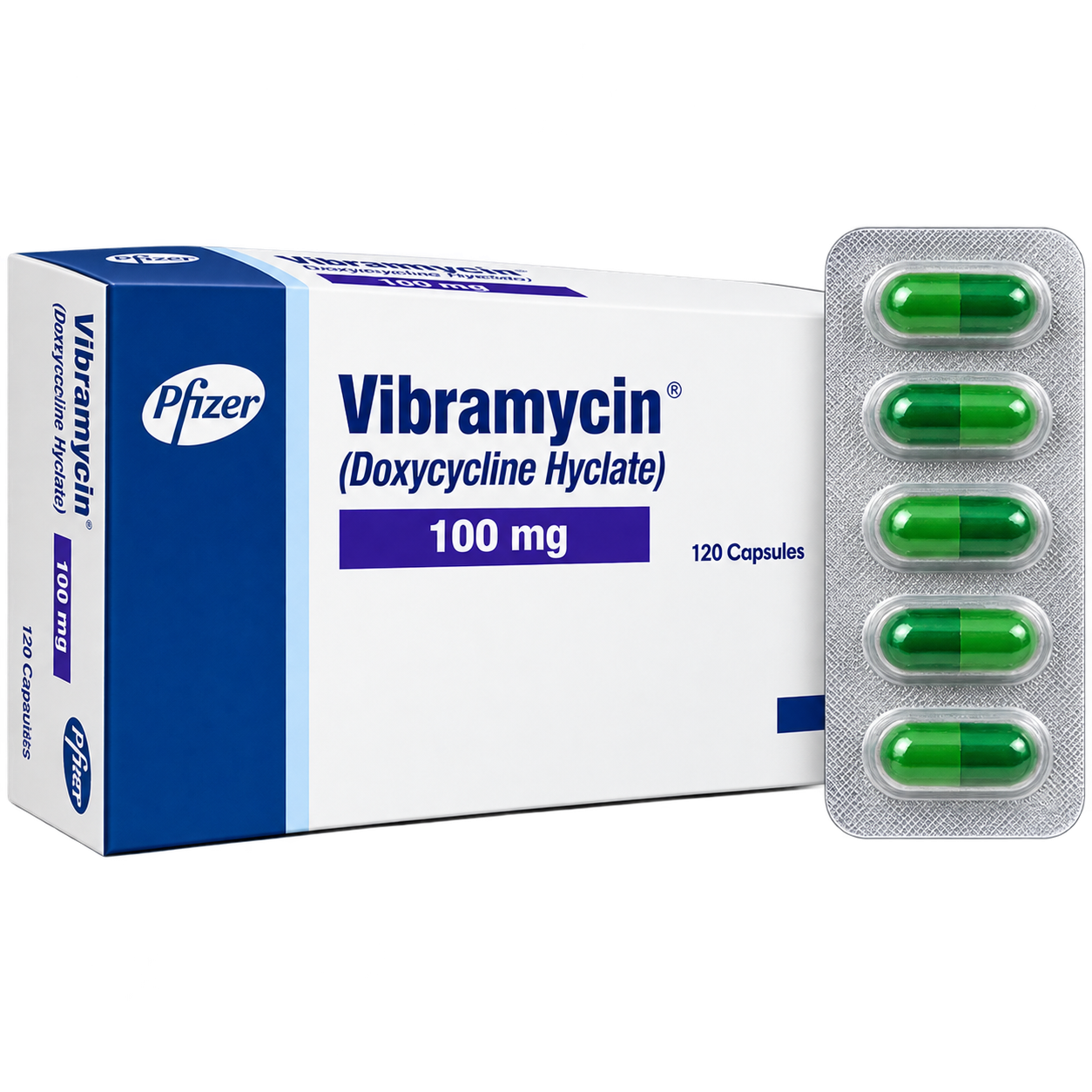
Vibramycin Capsule contains doxycycline, an antibiotic from the tetracycline group, used to treat many different bacterial infections. It works by killing bacteria or stopping their growth, and it will not work against colds, flu, or other viral infections. It is taken by mouth, usually once or twice daily depending on age and condition, and treatment should be completed in full even if symptoms improve early.
What is Vibramycin Capsule
Vibramycin contains doxycycline, an antibiotic belonging to a group of medicines called tetracyclines. It is used to treat many different types of bacterial infections. It will not work for colds, flu, or other virus infections.
Vibramycin Capsule uses
- Chest, lung or nasal infections such as bronchitis, pneumonia, and sinusitis
- Urinary tract infections such as cystitis and urethritis
- Eye infections
- Sexually transmitted diseases such as gonorrhoea, syphilis, and chlamydia
- Fevers associated with louse or tick bites
- Malaria, when chloroquine is not effective
- Acne and blemishes caused by rosacea
- Preventing scrub typhus, Rocky Mountain spotted fever, travellers' diarrhoea, malaria, cholera and leptospirosis
- Anthrax infection after possible exposure
Benefits of Vibramycin Capsule
- Treats many different bacterial infections throughout the body
- Can be used to prevent certain infections such as malaria and travellers' diarrhoea
How Vibramycin Capsule works
Doxycycline works by killing bacteria or stopping their growth. It blocks the process bacteria use to make the proteins they need to survive.
Vibramycin Capsule dosage
Take Vibramycin capsules with a full glass of water when sitting or standing. It is best to take Vibramycin in the morning if possible, or at least 1 hour before going to bed. Do not lie down for at least thirty minutes after taking Vibramycin, so the capsule can move into the stomach and prevent irritation of the throat or gullet.
If your stomach is upset, Vibramycin can be taken with food or milk. For the treatment of infections, Vibramycin can be taken with or without food. Swallow the capsule whole. Do not break, crush, chew, or open it. Drink plenty of fluids to avoid throat irritation and ulceration. Alcohol may reduce the effect of Vibramycin and should be avoided.
Keep taking the medicine for the full course of treatment, even when you begin to feel better. If you are using this medicine to prevent malaria, start taking it 1 or 2 days before you travel, take it every day during your trip, and continue for 4 weeks after you return.
| Age group | Dose |
|---|---|
| 8–11 years (≤45 kg) | First day: 4.4 mg/kg/day divided into 2 doses; then 2.2 mg/kg/day |
| 8–11 years (>45 kg) | Adult dose |
| 12–17 years (>45 kg) | 200 mg on first day, then 100 mg once daily |
| 18 years+ (Any) | 200 mg on first day, then 100 mg once daily |
Available forms and strengths
- Capsule
- Tablet
- Delayed-release capsule
- Delayed-release tablet
- Syrup
- Oral suspension
Side effects of Vibramycin Capsule
Common
- Feeling or being sick (nausea and vomiting)
- Stomach upset
- Diarrhoea
- Skin rash
- Itching
- Vaginal itching or discharge
- Worsening of systemic lupus erythematosus (joint pain, skin rash and fever)
- Pericarditis (inflammation affecting the heart)
- Heartburn
Serious
- Sudden wheeziness, difficulty breathing, tightness in chest, fever, swelling of eyelids, face or lips, rash or itching (allergic reaction)
- Severe, persistent or bloody diarrhoea, which may be a sign of serious bowel inflammation
- Severe headache with visual disturbance such as blurred vision or loss of vision (increased pressure in the skull)
- Serious skin reactions such as blistering, peeling skin, mouth or genital ulcers (Stevens-Johnson Syndrome, Toxic Epidermal Necrolysis, or DRESS)
- Fever, swollen lymph nodes or skin rash (DRESS)
- Jarisch-Herxheimer reaction (fever, chills, headache, muscle pain, skin rash)
- Inflammation and/or ulcers of the gullet
- Blood disorders (tiredness, easy bruising, infections)
- Low blood pressure
- Increased heart rate
- Inflammation of the pancreas causing severe pain in the abdomen and back
- Yellow skin and eyes (jaundice), inflammation and damage to the liver
Warnings and precautions
- Do not take Vibramycin if you are pregnant or trying to become pregnant.
- It may harm an unborn baby and can affect tooth and bone development.
- Do not take Vibramycin if you are breast-feeding.
- Talk to your doctor before taking Vibramycin if you have kidney problems, as the effects may be increased because of slower removal of the medicine from the body.
- Talk to your doctor or pharmacist before taking Vibramycin if you have liver problems.
- Alcohol may reduce the effect of Vibramycin and should be avoided.
- This medicine should not affect your ability to drive or use machines.
- Do not use this medicine during tooth development (pregnancy, infancy or in children below 8 years old) as it may cause permanent discolouration or affect the proper growth of teeth.
- Avoid exposure to strong sunlight or UV light while taking this medicine as your skin may be more sensitive to sunburn than normal.
- If you develop severe, prolonged or bloody diarrhoea during or after using Vibramycin, tell your doctor immediately as it may be a sign of bowel inflammation (pseudomembranous colitis).
- Do not take Vibramycin if you have a condition where you have difficulties swallowing.
- Tell your doctor if you develop swallowing difficulty or throat or stomach discomfort after taking it.
- This medicine may cause increased pressure inside the head, more likely in women of childbearing age who are overweight or have a history of intracranial hypertension.
- Do not take antacids containing aluminium, calcium or magnesium, or any product containing iron, including vitamin or mineral supplements, at the same time as Vibramycin.
Storage
- Keep this medicine out of the sight and reach of children.
- Keep your medicine below 25ºC.
- Do not use this medicine after the expiry date which is stated on the carton and blister after EXP.
- Do not throw away any medicines via wastewater or household waste. Ask your pharmacist how to throw away medicines you no longer use.
When to see a doctor
- Tell your doctor immediately if you experience symptoms of an allergic reaction such as sudden wheeziness, difficulty breathing, tightness in the chest, fever, swelling of eyelids, face or lips, rash or itching.
- Tell your doctor straight away if you get serious skin reactions such as skin rash with blistering or peeling, or mouth or genital ulcers often with flu-like symptoms.
- Tell your doctor if you get a severe headache with changes in vision such as blurred vision or loss of vision.
- If you take too much Vibramycin, contact your doctor or nearest hospital emergency department immediately and take the labelled medicine package with you.
Alternatives
- Adoxa
- Doryx
- Monodox
- Oracea
- Periostat
- Vibra-Tabs
- Vibramycin Hyclate
FAQs
What is Vibramycin Capsule used for?
Vibramycin Capsule is used to treat bacterial infections such as chest, lung and nasal infections, urinary tract infections, eye infections, sexually transmitted diseases like gonorrhoea, syphilis and chlamydia, fevers from louse or tick bites, malaria when chloroquine is not effective, acne and rosacea. It is also used to prevent infections like scrub typhus, Rocky Mountain spotted fever, travellers' diarrhoea, malaria, cholera, leptospirosis, and anthrax after exposure.
How should I take Vibramycin Capsule?
Take it with a full glass of water while sitting or standing, preferably in the morning or at least 1 hour before bed. Do not lie down for at least thirty minutes afterward. Swallow the capsule whole without breaking, crushing, chewing, or opening it, and drink plenty of fluids to avoid throat irritation.
Can I take Vibramycin Capsule with food or antacids?
If your stomach is upset, you can take it with food or milk; for treating infections it can be taken with or without food. However, you should not take antacids containing aluminium, calcium or magnesium, or any product containing iron, including vitamin or mineral supplements, at the same time as Vibramycin.
What are the common side effects of Vibramycin Capsule?
Common side effects include nausea and vomiting, stomach upset, diarrhoea, skin rash, itching, vaginal itching or discharge, heartburn, worsening of systemic lupus erythematosus, and pericarditis.
Is Vibramycin Capsule safe during pregnancy?
No, you should not take Vibramycin if you are pregnant or trying to become pregnant, as it may harm an unborn baby and affect tooth and bone development. It should also be avoided while breast-feeding.
Sources
- Package leaflet: Information for the user - Vibramycin Capsules 100 mg (HPRA)
- RxList - Vibramycin (doxycycline calcium oral)
- Drugs.com - Vibramycin Calcium (Oral)
Video