
Safety
General information, not medical advice
Your prescriber and the leaflet in your pack know your situation. This page does not.
- Follow your prescriber and the leaflet
- Don't start, stop, or change a dose on your own
- Doses and warnings differ by country and product
Xanax Tablet: Uses, Dosage, Side Effects, Precautions and Alternates
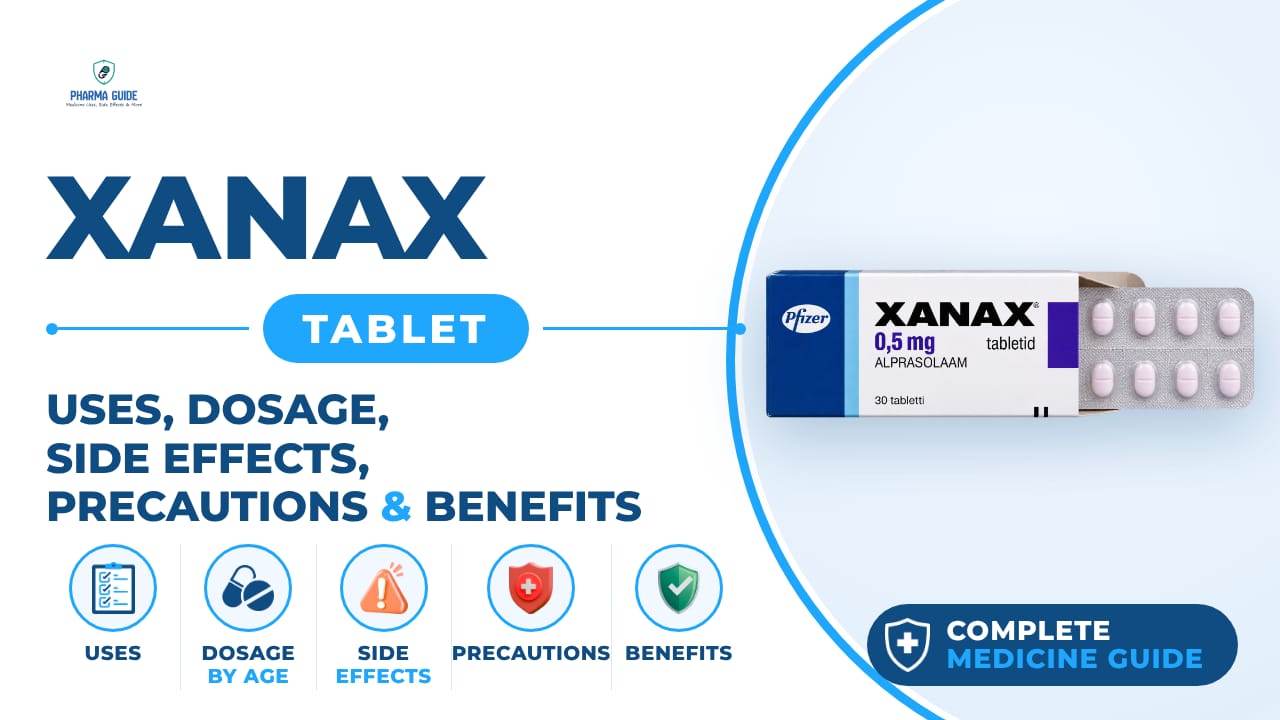
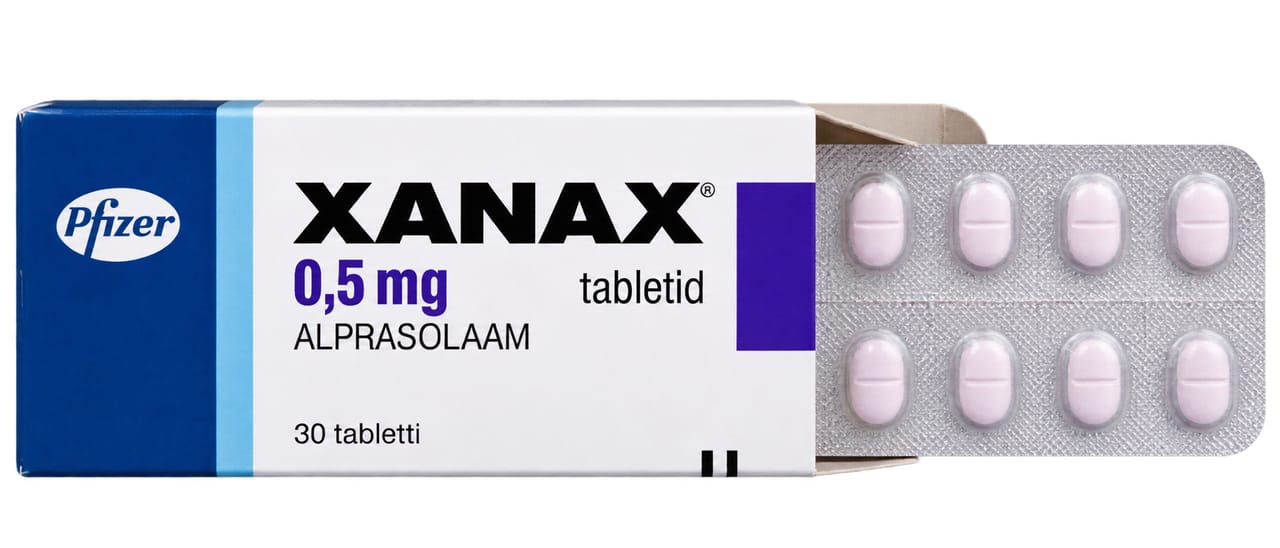
| Generic name | alprazolam |
|---|---|
| Drug class | Benzodiazepine |
| Forms | Immediate-release tablets, Extended-release tablets |
Quick overview
Xanax Tablet (alprazolam) is a benzodiazepine medicine used to calm the brain and nervous system. It is used to treat anxiety disorders, short-term anxiety symptoms, panic disorder with or without agoraphobia, and anxiety caused by depression. It works by boosting the activity of a calming brain chemical called GABA. Xanax should be taken exactly as prescribed, and it comes in immediate-release and extended-release tablet forms.
What is Xanax Tablet
Xanax is a benzodiazepine medicine used to calm the brain and nervous system. It contains the active ingredient alprazolam.
Xanax Tablet uses
- Treatment of anxiety disorders
- Short-term relief of symptoms of anxiety
- Treatment of panic disorder with or without agoraphobia (fear of places or situations that might cause panic, helplessness, or embarrassment)
- Anxiety caused by depression
Benefits of Xanax Tablet
- Can help reduce feelings of anxiety and worry
- Can reduce the number and severity of panic attacks
- May help you feel calmer and more relaxed
How Xanax Tablet works
Xanax is thought to work by boosting the activity of a calming brain chemical called GABA, which slows down brain and nervous system activity and helps reduce anxiety.
Xanax Tablet dosage
Take Xanax exactly as your doctor prescribes and follow the instructions on your prescription label. Do not take more than prescribed or use it for longer than prescribed. Swallow extended-release tablets whole; do not crush, chew, or divide them. Regular tablets may be taken multiple times a day; doses should be spread evenly through your waking hours.
Do not stop taking Xanax suddenly; your doctor will help you lower the dose gradually. Do not share this medicine with anyone else. Tell your doctor if your symptoms do not improve or get worse. A high-fat meal eaten close to a dose can change how quickly the extended-release tablet is absorbed.
| Age group | Dose |
|---|---|
| Under 18 Years | Not recommended unless prescribed by a doctor |
| 18–64 Years (Adults) | Usually 0.25–0.5 mg 2–3 times daily (as prescribed) |
| Older Adults (65+ years) | Usually 0.25 mg 2–3 times daily initially; adjusted carefully |
Available forms and strengths
- Immediate-release tablets
- Extended-release tablets
Side effects of Xanax Tablet
Common
- Drowsiness
- Light-headedness
- Feeling sleepy or tired
- Trouble with coordination
- Memory problems
- Slurred speech
- Dry mouth
- Constipation
- Headache
- Irritability
- Nausea
- Blurred vision
- Change in sex drive
- Weight changes
Serious
- Weak or shallow breathing
- Feeling like you might pass out
- Seizures
- Hallucinations or risk-taking behavior
- Increased energy or decreased need for sleep
- Racing thoughts, agitation, or being very talkative
- Double vision
- Yellowing of the skin or eyes (jaundice)
- Severe allergic reaction: hives, trouble breathing, swelling of face, lips, tongue, or throat
- Serious mood or behavior changes, confusion, or suicidal thoughts, especially after stopping the medicine
Warnings and precautions
- Tell your doctor if you are pregnant or planning to become pregnant. Taking Xanax late in pregnancy can cause the baby to be born with sedation or withdrawal symptoms that may need medical treatment.
- You should not breastfeed while taking Xanax, since the medicine can pass into breast milk and may harm the baby.
- Tell your doctor if you have kidney disease, since this may affect how the medicine is processed by your body.
- Tell your doctor if you have liver disease. People with liver problems may need a lower starting dose because the medicine stays in the body longer.
- Avoid drinking alcohol while taking Xanax, since it can cause dangerous side effects or death.
- Avoid driving or operating heavy machinery until you know how Xanax affects you, since it can cause dizziness or drowsiness that may lead to falls, accidents, or injuries.
- Xanax can slow or stop your breathing, especially if combined with opioids or alcohol.
- Misusing Xanax can lead to addiction, overdose, or death. Keep it somewhere others cannot access it.
- Do not stop taking Xanax suddenly without talking to your doctor, as this can cause life-threatening withdrawal symptoms, which may last a year or more.
- Xanax is a controlled substance because it can be misused or lead to dependence. Keep it safe and never give it to others.
- Combining Xanax with opioids can cause extreme sleepiness, breathing problems, coma, and death.
- Xanax may worsen depression and has been linked to episodes of mania in people with depression.
Storage
- Store Xanax at room temperature between 68°F to 77°F (20°C to 25°C)
- Keep away from moisture, heat, and light
- Keep in a safe place where children and others cannot reach or misuse it
- Dispense in tight, child-resistant containers
When to see a doctor
- Get emergency medical help right away if you have signs of an allergic reaction, such as hives, difficulty breathing, or swelling of the face, lips, tongue, or throat.
- A caregiver should get emergency help if you have slow breathing with long pauses, blue-colored lips, or if you are hard to wake up.
- After stopping Xanax, get medical help right away if you notice unusual muscle movements, being unusually active or talkative, sudden severe mood or behavior changes, confusion, hallucinations, seizures, or thoughts of suicide.
- Call your doctor right away if your depression gets worse or you have thoughts of suicide while taking this medicine.
- If you think you have taken too much Xanax, seek emergency medical attention right away.
Alternatives
- Klonopin
- Hydroxyzine
- Clonazepam
Watch the video
FAQs
What is Xanax Tablet used for?
Xanax is used to treat anxiety disorders, short-term anxiety symptoms, panic disorder with or without agoraphobia, and anxiety caused by depression.
How does Xanax Tablet work?
Xanax works by boosting the activity of a calming brain chemical called GABA, which slows down brain and nervous system activity and helps reduce anxiety.
What is the usual adult dose of Xanax?
Adults aged 18-64 usually take 0.25-0.5 mg 2-3 times daily, as prescribed by a doctor.
Can I stop taking Xanax suddenly?
No, you should not stop taking Xanax suddenly. Your doctor will help you lower the dose gradually, since stopping suddenly can cause life-threatening withdrawal symptoms that may last a year or more.
What are the common side effects of Xanax Tablet?
Common side effects include drowsiness, light-headedness, feeling sleepy or tired, trouble with coordination, memory problems, slurred speech, dry mouth, constipation, and headache.
General information, not medical advice
Your prescriber and the leaflet in your pack know your situation. This page does not.
- Follow your prescriber and the leaflet
- Don't start, stop, or change a dose on your own
- Doses and warnings differ by country and product
Sources
- Drugs.com - Xanax (https://www.drugs.com/xanax.html)
- Healthline - Xanax For Depression (https://www.healthline.com/health/depression/xanax-for-depression)
- American Addiction Centers - Xanax Abuse (https://americanaddictioncenters.org/xanax-treatment/long-term-severe)
- FDA Prescribing Information for XANAX XR and XANAX Tablets
- UK Package Leaflet for Xanax 250 microgram and 500 microgram Tablets
Video
Related medicines
Lonazep Tablet: Uses, Dosage, Side Effects, Precautions and Alternates
Benzodiazepine
Lonazep Tablet contains clonazepam, used for anxiety, panic attacks, insomnia, and epilepsy. Learn about dosage, benefits, side effects, and precautions.
Benzodiazepines Capsule: Uses, Dosage, Side Effects, Precautions and Alternates
Benzodiazepine
Benzodiazepines Capsule (Diazepam) treats severe anxiety, muscle spasms, seizures, and alcohol withdrawal. Learn uses, dosage, side effects, and precautions.