
Safety
General information, not medical advice
Your prescriber and the leaflet in your pack know your situation. This page does not.
- Follow your prescriber and the leaflet
- Don't start, stop, or change a dose on your own
- Doses and warnings differ by country and product
Xenazine Tablet: Uses, Dosage, Side Effects, Precautions and Alternates
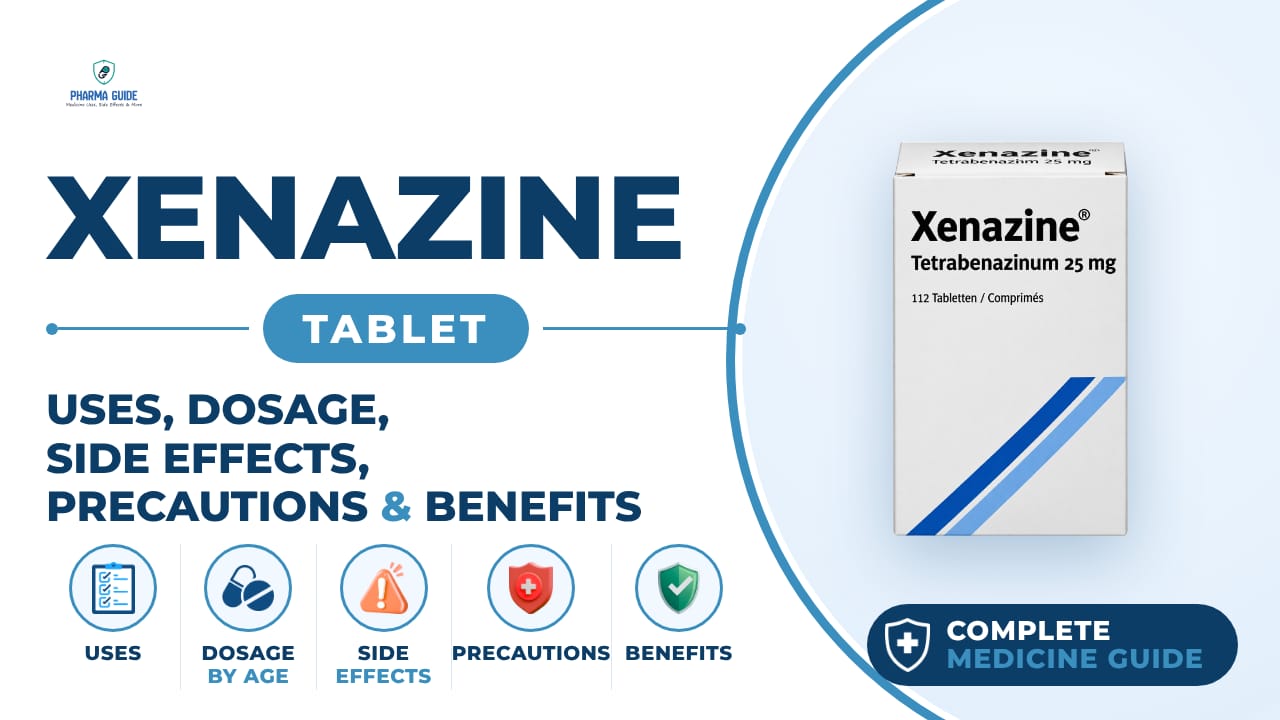
| Generic name | tetrabenazine |
|---|---|
| Drug class | VMAT2 inhibitor (vesicular monoamine transporter 2 inhibitor) |
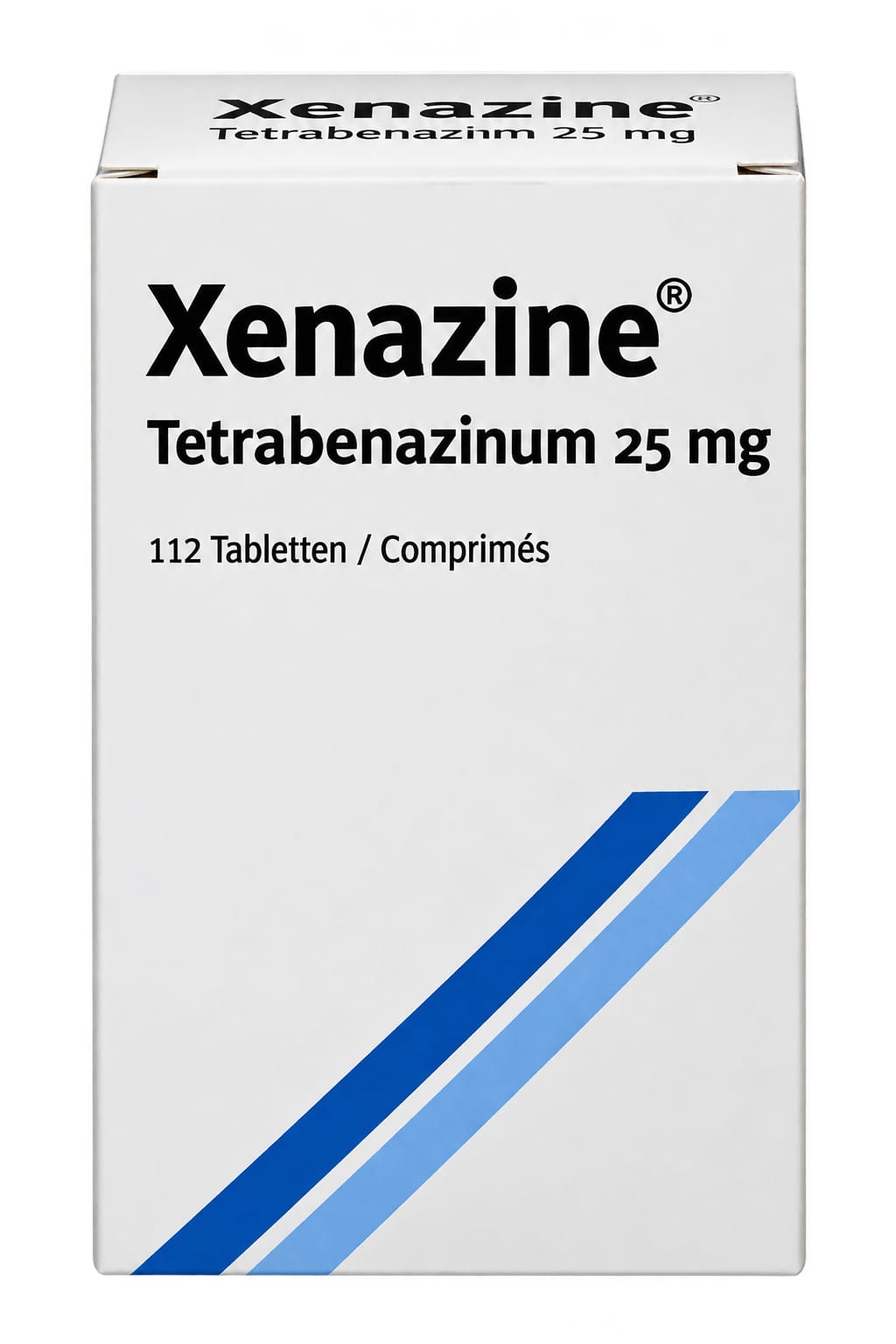
| Forms | Tablet (12.5 mg), Tablet (25 mg) |
Quick overview
Xenazine Tablet contains tetrabenazine, a VMAT2 inhibitor. It is a prescription medicine used to treat involuntary movements (chorea) seen in Huntington's disease, and it is also used to treat seizures associated with Dravet syndrome, often alongside clobazam and other prescribed seizure medicines. It does not cure Huntington's disease or treat other symptoms like thinking or mood problems. It works by lowering certain brain chemicals linked to these conditions.
What is Xenazine Tablet
Xenazine is a prescription tablet containing tetrabenazine, used to treat the involuntary movements (chorea) seen in Huntington's disease. It does not cure Huntington's disease or treat other symptoms like thinking or mood problems.
Xenazine Tablet uses
- Treats seizures associated with Dravet syndrome.
- Used alongside clobazam and other prescribed seizure medicines.
- Helps manage severe, recurrent seizures associated with Dravet syndrome.
- Supports seizure control in eligible patients aged 6 months and older.
- Used as part of a specialist-supervised epilepsy treatment plan.
Benefits of Xenazine Tablet
- May reduce involuntary jerking movements.
- May improve control of body movements.
- May make everyday activities easier.
- May reduce movement-related disruption to daily life.
- May support better comfort and functioning.
How Xenazine Tablet works
Doctors believe chorea may be caused by overactivity of a brain chemical called dopamine. Xenazine works by blocking a protein called VMAT2, which lowers the amount of dopamine and other similar brain chemicals (serotonin, norepinephrine, histamine), and this may help reduce chorea.
Xenazine Tablet dosage
Xenazine is taken by mouth as a tablet and can be taken with or without food. Your doctor will increase your dose gradually, usually each week over several weeks, until the best dose for you is found. If you stop taking it or miss a dose, involuntary movements may return or worsen within 12 to 18 hours after the last dose. Do not double your dose if you miss one — ask your doctor in advance what to do if a dose is missed. Tell your doctor if you stop taking it for more than 5 days — do not restart without talking to your doctor first. If your doctor needs you to take a higher daily amount, you may need a blood test first to check that it's safe for you. Treatment can be stopped without gradually lowering the dose first.
| Age group | Dose |
|---|---|
| Under 18 years | Not recommended |
| 18–64 years | 12.5 mg, once/day |
| 65+ years | 12.5 mg, once/day |
Available forms and strengths
- Tablet (12.5 mg)
- Tablet (25 mg)
Side effects of Xenazine Tablet
Common
- Sleepiness (sedation)
- Tiredness (fatigue)
- Trouble sleeping (insomnia)
- Depression
- Anxiety
- Restlessness
- Agitation
- Nausea
Serious
- Worsening depression, suicidal thoughts, or suicidal actions
- Neuroleptic Malignant Syndrome (high fever, stiff muscles, problems thinking, fast or uneven heartbeat, increased sweating)
- Parkinsonism (shaking, body stiffness, trouble moving or keeping balance)
- Akathisia (strong urge to move, restlessness)
- Trouble swallowing, which can increase risk of pneumonia
- Irregular heartbeat / QT interval changes that can lead to a dangerous abnormal heart rhythm
- Dizziness or fainting from blood pressure drops when changing position (orthostatic hypotension)
- Tardive dyskinesia (uncontrolled facial grimacing, tongue movements, lip smacking, rapid eye blinking) that may not go away
- Allergic reaction (rash, itching, swelling of face/lips/tongue/throat, trouble breathing)
Warnings and precautions
- This medicine can increase the risk of depression and suicidal thoughts or actions in people with Huntington's disease. It should not be used in people who are actively suicidal or whose depression is untreated or not well controlled.
- This medicine should not be combined with other drugs that are known to affect heart rhythm (prolong the QT interval), including certain antipsychotics, some antibiotics, and certain heart rhythm medicines, since doing so can raise the risk of a dangerous irregular heartbeat.
- A rare but potentially fatal reaction called Neuroleptic Malignant Syndrome has been reported with this medicine, causing high fever, muscle stiffness, confusion, and irregular heartbeat or blood pressure.
- This medicine should not be taken with monoamine oxidase inhibitor (MAOI) medicines.
- This medicine should not be taken with reserpine, and at least 20 days should pass after stopping reserpine before starting this medicine.
- Doses above 50 mg a day should not be given unless a genetic test (CYP2D6) has been done first, to check how the body processes the drug.
- It is not known if Xenazine can harm an unborn baby. Tell your doctor if you are pregnant or plan to become pregnant, since the medicine should only be used in pregnancy if the benefit outweighs the risk.
- It isn't known if tetrabenazine passes into breast milk. You and your doctor should decide whether to stop breastfeeding or stop the medicine, considering how important the drug is for you.
- The effect of kidney problems on how this drug is processed by the body has not been studied.
- This medicine must not be used by people with liver problems, since it is not metabolized normally and can build up to unsafe levels.
- Drinking alcohol while taking this medicine can add to sleepiness and make it worse.
- This medicine can make you sleepy, so avoid driving or operating dangerous machinery until you know how it affects you.
Storage
- Store at room temperature (20–25°C).
- Keep in a dry place.
- Protect from light and moisture.
- Keep in the original packaging.
- Keep out of reach of children.
When to see a doctor
- Get emergency help right away if you develop high fever, very stiff muscles, confusion, a very fast or uneven heartbeat, or heavy sweating, as these could be signs of a serious reaction.
- Call your doctor right away if you feel sad, lose interest in things you enjoy, feel hopeless, become more irritable or aggressive, or have thoughts of hurting yourself or ending your life.
- Tell your doctor right away if you feel dizzy or faint while taking this medicine, since this could be related to blood pressure changes.
- Tell your doctor if you notice increased coughing or trouble swallowing, since this can raise the risk of pneumonia.
Alternatives
- Austedo (deutetrabenazine)
- Tetrabenazine (generic)
- Ingrezza (valbenazine)
Watch the video
FAQs
What is Xenazine Tablet used for?
Xenazine Tablet, containing tetrabenazine, is used to treat involuntary movements (chorea) seen in Huntington's disease. It does not cure Huntington's disease or treat other symptoms like thinking or mood problems.
How does Xenazine Tablet work?
Xenazine works by blocking a protein called VMAT2, which lowers the amount of dopamine and other similar brain chemicals (serotonin, norepinephrine, histamine), helping to reduce chorea caused by overactivity of dopamine.
What is the dosage of Xenazine Tablet?
Xenazine is taken by mouth with or without food. For adults 18-64 years and those 65+, the dose is 12.5 mg once daily, with gradual increases by the doctor over several weeks to find the best dose. It is not recommended for those under 18 years.
What are the serious side effects of Xenazine Tablet?
Serious side effects include worsening depression or suicidal thoughts, Neuroleptic Malignant Syndrome, parkinsonism, akathisia, trouble swallowing, irregular heartbeat or QT interval changes, dizziness or fainting from blood pressure drops, and tardive dyskinesia.
What precautions should be taken with Xenazine Tablet?
Xenazine should not be used in people who are actively suicidal or have untreated depression, should not be combined with QT-prolonging drugs, MAOIs, or reserpine, and must not be used by people with liver problems. Alcohol can worsen sleepiness caused by this medicine.
General information, not medical advice
Your prescriber and the leaflet in your pack know your situation. This page does not.
- Follow your prescriber and the leaflet
- Don't start, stop, or change a dose on your own
- Doses and warnings differ by country and product
Sources
Video
Related medicines
Ingrezza Capsule: Uses, Dosage, Side Effects, Precautions and Alternates
VMAT2 inhibitor (vesicular monoamine transporter 2 inhibitor)
Ingrezza Capsule (valbenazine) treats tardive dyskinesia and Huntington's chorea by lowering dopamine release. Learn dosage, side effects, and precautions.
Tetrabenazine Tablet: Uses, Dosage, Side Effects, Precautions and Alternates
VMAT2 inhibitor (vesicular monoamine transporter 2 inhibitor)
Tetrabenazine Tablet treats Huntington's chorea, senile chorea, and hemiballismus. Learn uses, dosage, side effects, warnings, and alternatives.