
Safety
General information, not medical advice
Your prescriber and the leaflet in your pack know your situation. This page does not.
- Follow your prescriber and the leaflet
- Don't start, stop, or change a dose on your own
- Doses and warnings differ by country and product
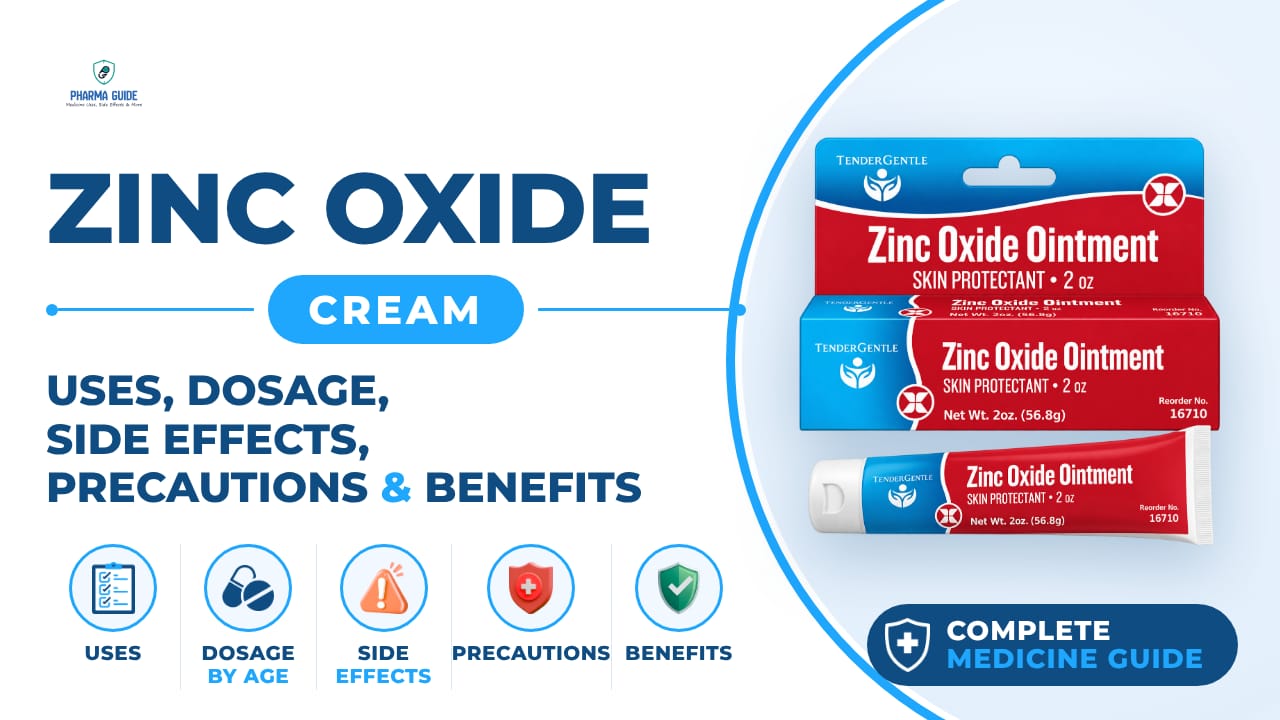
Zinc Oxide Cream: Uses, Dosage, Side Effects, Precautions and Alternates
| Generic name | zinc oxide |
|---|---|
| Drug class | Miscellaneous topical agents |
| Forms | Cream, Ointment, Paste, Lotion, Rectal suppository, Topical dressing, Powder, Spray |
Quick overview
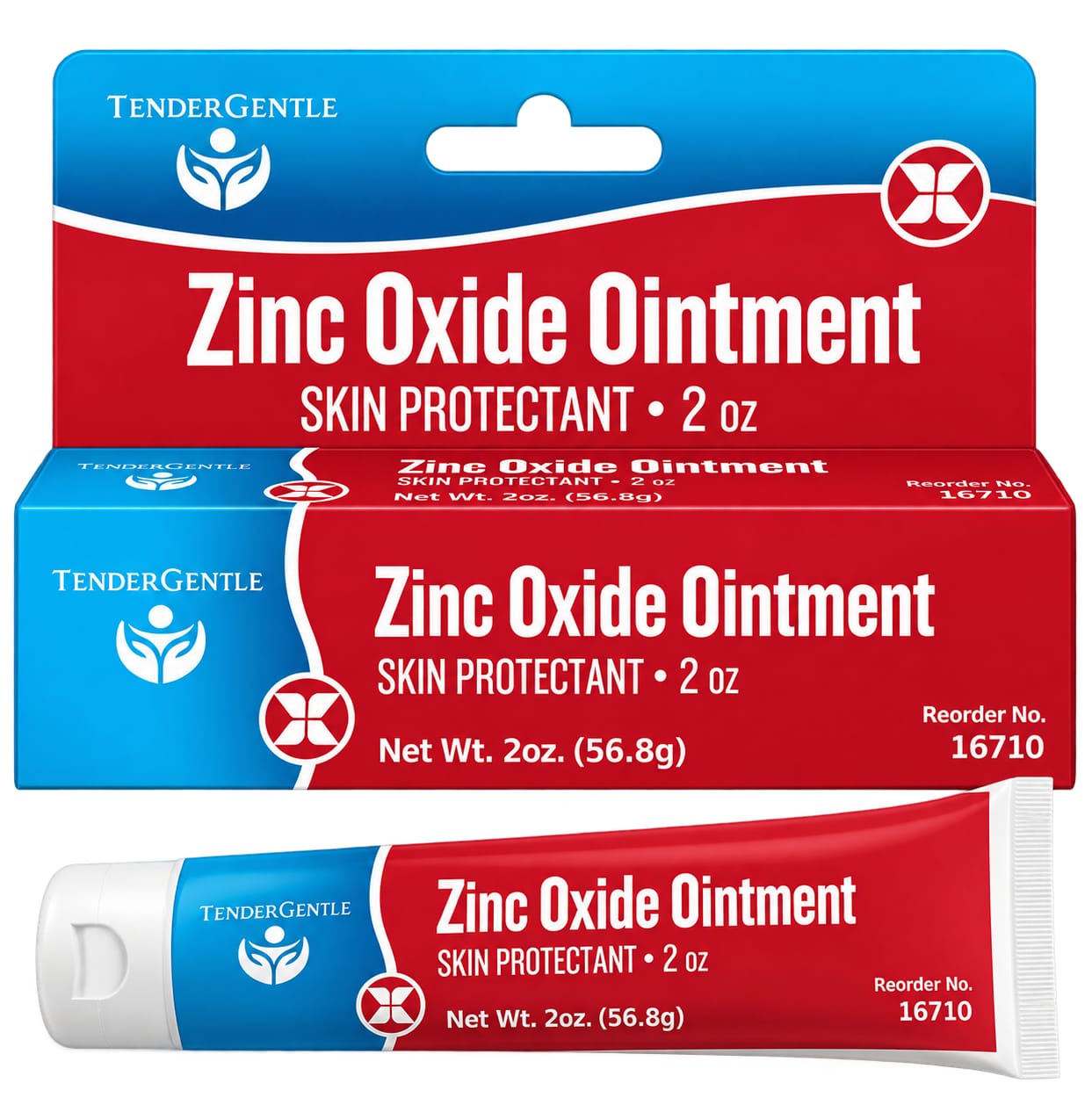
Zinc Oxide Cream is a topical skin product made from a white mineral powder called zinc oxide. It forms a protective barrier on the skin and is used to treat or prevent minor skin irritations like diaper rash, cuts, burns, and chapped skin. It belongs to the miscellaneous topical agents drug class and is generally well tolerated with a favorable safety profile.
What is Zinc Oxide Cream
Zinc oxide cream is a topical (skin) product made from a white mineral powder called zinc oxide. It forms a protective barrier on the skin and is used to treat or prevent minor skin irritations like diaper rash, cuts, burns, and chapped skin.
Zinc Oxide Cream uses
- Diaper rash
- Minor burns
- Severely chapped skin
- Other minor skin irritations
- Eczema (as an adjunct to standard treatment)
- Hemorrhoids (rectal suppository form)
- Incontinence-associated dermatitis
- Chafing and friction prevention
- Minor cuts and grazes
Benefits of Zinc Oxide Cream
- Forms a protective barrier that shields skin from moisture, irritants, and friction
- Helps skin heal from irritation
- Has mild astringent properties that help reduce weeping from minor skin lesions
- Generally well tolerated with a favorable safety profile
How Zinc Oxide Cream works
Zinc oxide works by forming a protective barrier on the skin. This barrier shields the skin from moisture, irritants, and friction, and helps the skin heal.
Zinc Oxide Cream dosage
This medication is for external use only; do not take it by mouth. Wash your hands before and after use. Wash the affected area and pat it dry before applying. Apply a generous or thin layer to the affected area, depending on the product label. Do not cover the treated area with a bandage or dressing unless your care team tells you to. Avoid getting this medication in your eyes; if you do, rinse with plenty of cool water.
For diaper rash, apply at each diaper change, and also before bedtime or any time there will be a long gap between changes. Change wet or soiled diapers promptly and keep the diaper area clean and dry. If you miss a dose, use it as soon as you can, but do not double up doses. Do not use other skin products on the same area without asking your care team first. Talk to your care team about using this medication in children.
| Age group | Dose |
|---|---|
| Under 6 Months | Apply a thin layer as directed by a healthcare provider |
| 6 Months–2 Years | Apply a thin layer to affected skin as needed |
| 2–12 Years | Apply a thin layer 1–3 times daily or as directed |
| 13 Years and Above | Apply a thin layer to affected area as needed |
Available forms and strengths
- Cream
- Ointment
- Paste
- Lotion
- Rectal suppository
- Topical dressing
- Powder
- Spray
Side effects of Zinc Oxide Cream
Common
- Skin sensitivity or irritation
- Temporary stinging or burning sensation upon application
- Dryness at the application site
- A white residue on the skin or clothing
Serious
- Allergic reaction: rash, itching, hives, swelling of the face, lips, tongue, or throat
- Difficulty breathing
- Symptoms that do not go away after a few days of treatment
- Worsening of symptoms (increased redness, skin irritation, or rash)
- Rectal bleeding or continued pain (with rectal suppository use)
Warnings and precautions
This medicine is for external use only. If it gets in your eyes, rinse them thoroughly with water. Do not use zinc oxide on deep wounds or severe burns, and avoid using other skin medications on treated areas unless your doctor says it's okay. This product will not treat a bacterial or fungal infection. Contact your doctor if you notice signs of infection, such as redness, warmth, or oozing.
Do not use this product on broken or blistered skin, and keep it away from the eye area. Tell your doctor if you are allergic to zinc, or to ingredients like dimethicone, lanolin, cod liver oil, petroleum jelly, parabens, mineral oil, or wax, since you should not use this medicine if so.
This medicine is not recommended for use in pregnant women unless necessary. Talk with your doctor about the risks and benefits before using it, or ask a doctor before use if you are pregnant. It is also not recommended for use while breastfeeding unless necessary; if used, make sure the infant does not swallow it, and ask a doctor before use.
Apply only to clean, dry skin as directed, and avoid contact with eyes, mouth, and other sensitive areas. It is not known how this medicine interacts with alcohol, so it's best to check with your doctor before drinking alcohol while using it. Do not use if you are allergic to zinc oxide or any ingredient in the product, and avoid applying excessive amounts unless specifically recommended.
Storage
- Store at room temperature.
- Keep closed while not in use.
- Keep out of reach of children and pets.
- Throw away unused medication after the expiration date.
- Protect from light and moisture, and keep out of the reach of children.
- Do not dispose of medications in wastewater (e.g., down the sink or in the toilet) or in household garbage; ask your pharmacist how to dispose of medications that are no longer needed or have expired.
When to see a doctor
- Get emergency medical help if you notice signs of an allergic reaction, such as hives, trouble breathing, or swelling of the face, lips, tongue, or throat.
- Call your doctor if your symptoms haven't improved after 7 days of treatment.
- If using the rectal suppository form, stop use and call your doctor if you have rectal bleeding or ongoing pain.
- Contact your doctor right away if you develop rashes, itching, or swelling of the skin, throat, or tongue.
- If you think you have taken too much of this medicine, contact a poison control center or emergency room right away.
Alternatives
- Calamine Lotion
- Aloe Vera Gel
- Panthenol Cream
Watch the video
FAQs
What is Zinc Oxide Cream used for?
It is used to treat or prevent minor skin irritations such as diaper rash, minor burns, severely chapped skin, minor cuts and grazes, chafing, incontinence-associated dermatitis, and as an adjunct for eczema. A rectal suppository form is used for hemorrhoids.
How does Zinc Oxide Cream work?
It works by forming a protective barrier on the skin that shields it from moisture, irritants, and friction, helping the skin heal.
How should Zinc Oxide Cream be applied?
It is for external use only. Wash and dry the affected area, then apply a generous or thin layer as directed on the label. Avoid covering with a bandage unless told to by your care team, and avoid contact with the eyes.
What are the side effects of Zinc Oxide Cream?
Common side effects include skin sensitivity or irritation, temporary stinging or burning, dryness at the application site, and white residue on skin or clothing. Serious effects include allergic reactions, difficulty breathing, worsening symptoms, or rectal bleeding with suppository use.
When should I see a doctor while using Zinc Oxide Cream?
Seek emergency help for signs of an allergic reaction like hives, trouble breathing, or facial swelling. Call your doctor if symptoms haven't improved after 7 days, or if using the rectal suppository and you have rectal bleeding or ongoing pain.
General information, not medical advice
Your prescriber and the leaflet in your pack know your situation. This page does not.
- Follow your prescriber and the leaflet
- Don't start, stop, or change a dose on your own
- Doses and warnings differ by country and product
Sources
Video
Related medicines
Desitin Ointment: Uses, Dosage, Side Effects, Precautions and Alternates
miscellaneous topical agents
Desitin Ointment contains zinc oxide to treat and prevent diaper rash by forming a protective moisture barrier. Learn uses, dosage, and side effects.
Exorex Lotion: Uses, Dosage, Side Effects, Precautions and Alternates
miscellaneous topical agents
Exorex Lotion is a coal tar emulsion for mild-to-moderate psoriasis that reduces scaling, redness, and itching. Learn uses, dosage, and precautions.