
Safety
General information, not medical advice
Your prescriber and the leaflet in your pack know your situation. This page does not.
- Follow your prescriber and the leaflet
- Don't start, stop, or change a dose on your own
- Doses and warnings differ by country and product
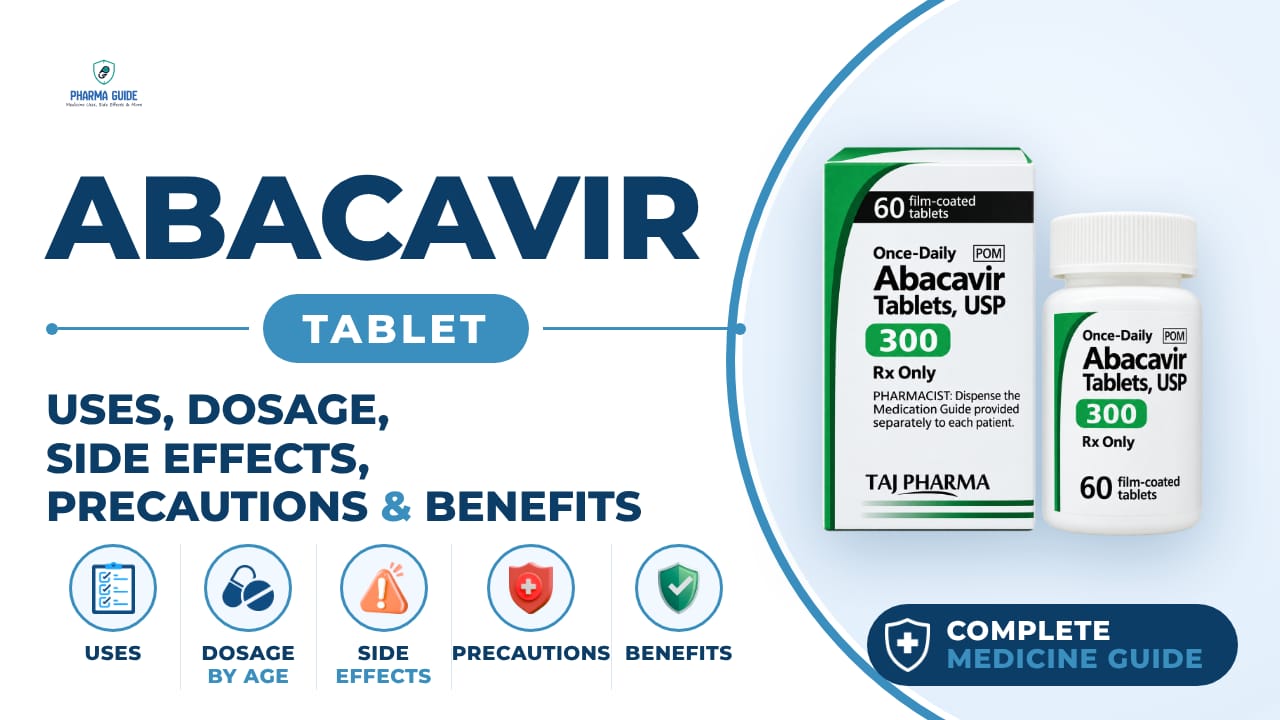
Abacavir Tablet: Uses, Dosage, Side Effects, Precautions and Alternates
| Generic name | abacavir |
|---|---|
| Drug class | Nucleoside Reverse Transcriptase Inhibitor (NRTI) |
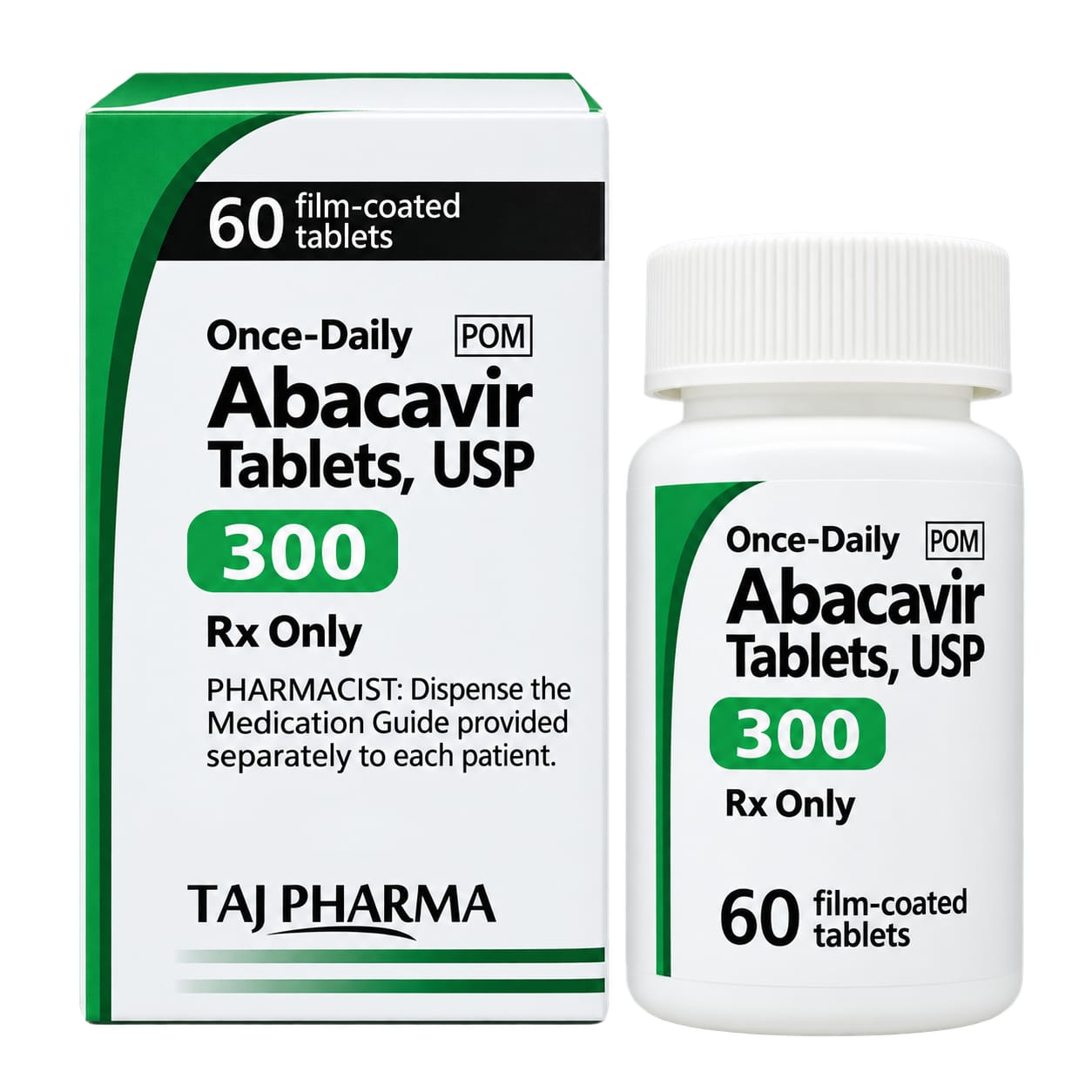
| Forms | Tablet (300 mg), Oral solution (20 mg/mL) |
Quick overview
Abacavir Tablet, known generically as abacavir, is a Nucleoside Reverse Transcriptase Inhibitor (NRTI) used together with other HIV medicines to treat HIV-1 infection. It is not a cure for HIV or AIDS and does not stop the spread of HIV to others. It works by blocking an enzyme HIV needs to multiply, which may help reduce viral load and support CD4 cell counts.
What is Abacavir Tablet
Abacavir is an antiviral prescription medicine used together with other HIV medicines to treat HIV-1 infection. It is not a cure for HIV or AIDS and does not stop the spread of HIV to others.
Abacavir Tablet uses
- Treatment of HIV-1 infection, used in combination with other antiretroviral medicines
- Treats HIV-1 infection
- Helps reduce HIV viral load
- Helps maintain CD4 cell counts
- Blocks HIV reverse transcriptase
- Used as part of combination antiretroviral therapy
Benefits of Abacavir Tablet
- May help reduce the amount of HIV-1 in the blood (viral load)
- May help increase the number of CD4+ (T) cells that help fight off other infections
- May help improve the immune system and reduce the risk of death or infections that happen when the immune system is weak
How Abacavir Tablet works
Abacavir is changed by the body into an active form that blocks an enzyme HIV needs (reverse transcriptase), which stops the virus from multiplying.
Abacavir Tablet dosage
Take abacavir exactly as your healthcare provider tells you; do not change your dose or stop without talking to your provider. It can be taken with or without food, and if it upsets your stomach, you can take it with food. Tell your healthcare provider if you or your child has trouble swallowing tablets, since a liquid form is also available. Dosing for children is based on body weight. Always take abacavir together with other HIV medicines, and do not let your supply run out before refilling. Stay under the care of a healthcare provider while taking this medicine.
| Age group | Dose |
|---|---|
| Under 3 months | Safety and effectiveness not established |
| 3 months–17 years, 14 to <20 kg | 300 mg once daily or 150 mg twice daily |
| 18–64 years | 600 mg once daily or 300 mg twice daily |
Available forms and strengths
- Tablet (300 mg)
- Oral solution (20 mg/mL)
Side effects of Abacavir Tablet
Common
- Nausea
- Headache
- Generally not feeling well (malaise)
- Tiredness/fatigue
- Vomiting
- Bad dreams or sleep problems
- Diarrhea
- Abdominal pain
- Skin rash
- Fever and chills (more common in children)
- Ear, nose, or throat infections (more common in children)
Serious
- Serious, sometimes fatal, allergic (hypersensitivity) reactions
- Lactic acidosis (build-up of acid in the blood)
- Serious liver problems, including liver enlargement and fat buildup in the liver (hepatomegaly with steatosis)
- Immune reconstitution syndrome (changes in the immune system that can trigger inflammation from hidden infections)
- Increased risk of heart attack (myocardial infarction)
- Serious skin reactions such as Stevens-Johnson syndrome or toxic epidermal necrolysis
Warnings and precautions
- Abacavir can cause serious and sometimes fatal allergic (hypersensitivity) reactions. The risk is much higher in people with a gene variation called HLA-B*5701, so your provider should test for this before you start the medicine.
- If you have ever had an allergic reaction to abacavir, never take abacavir or any other abacavir-containing medicine again, because this can cause severe, life-threatening symptoms within hours, including very low blood pressure or death.
- If you stop taking abacavir for any reason other than an allergic reaction, talk to your healthcare provider before starting it again, and only restart when you are near medical help, since restarting can also rarely cause a serious reaction.
- Lactic acidosis and severe liver problems, including fatal cases, have happened with abacavir and similar medicines.
- Starting HIV treatment can cause your immune system to react to hidden infections your body was already fighting, a condition called immune reconstitution syndrome.
- Abacavir may increase the risk of heart attack, although study results have been inconsistent.
- Abacavir should be used during pregnancy only if necessary. Talk with your healthcare provider about the risks and benefits, and ask about enrolling in a pregnancy registry that tracks outcomes for women who take antiretroviral medicines during pregnancy.
- Mothers with HIV should not breastfeed while taking abacavir because HIV can be passed to the baby through breast milk.
- Usually no routine renal dose adjustment is required.
- Abacavir is not recommended for people with moderate to severe liver (hepatic) impairment, and a lower dose is needed for those with mild liver impairment. Tell your healthcare provider if you have or have had liver problems, including hepatitis B or C.
- Drinking alcohol while taking abacavir is not recommended because it can increase the risk of severe liver damage, and alcohol can also raise the amount of abacavir in your blood.
- Avoid driving if dizziness or fatigue occurs.
Storage
- Store at room temperature, between 20° to 25°C (68° to 77°F)
- Keep abacavir tablets and all medicines out of the reach of children
- Do not use if the original seal over the container opening is broken or missing
- Throw away medicine that is no longer needed or expired, following guidelines for safe disposal of unused medicines
When to see a doctor
- Call your healthcare provider right away if you get symptoms from two or more of these groups: fever; rash; nausea, vomiting, diarrhea, or stomach pain; general ill feeling, extreme tiredness, or achiness; or shortness of breath, cough, or sore throat — these may be signs of a dangerous allergic reaction.
- Get medical help right away if you feel very weak or tired, have unusual muscle pain, trouble breathing, stomach pain with nausea and vomiting, feel cold especially in your arms and legs, feel dizzy or light-headed, or have a fast or irregular heartbeat — these can be signs of lactic acidosis.
- Call your healthcare provider right away if your skin or the white part of your eyes turns yellow, your urine turns dark, your stools become light-colored, you lose your appetite for several days, or you have nausea or pain on the right side of your stomach — these can be signs of serious liver problems.
- Tell your healthcare provider right away if you notice new symptoms of infection after starting this medicine, as this could be a sign of immune reconstitution syndrome.
- If you think you have taken too much abacavir, contact a poison control center or go to the nearest hospital emergency room right away.
- Call your care team right away if you develop fevers or flu-like symptoms along with a rash, especially if the rash turns into blisters or peeling skin, or if you notice a red rash with swelling of the face, lips, or lymph nodes — these may be signs of a serious skin reaction.
Alternatives
- Tenofovir disoproxil fumarate
- Tenofovir alafenamide
- Lamivudine
Watch the video
FAQs
What is Abacavir Tablet used for?
Abacavir is an antiviral prescription medicine used together with other HIV medicines to treat HIV-1 infection. It is not a cure for HIV or AIDS and does not stop the spread of HIV to others.
How does Abacavir Tablet work?
Abacavir is changed by the body into an active form that blocks an enzyme HIV needs called reverse transcriptase, which stops the virus from multiplying.
What are the serious side effects of Abacavir Tablet?
Serious side effects include severe, sometimes fatal, allergic reactions, lactic acidosis, serious liver problems such as hepatomegaly with steatosis, immune reconstitution syndrome, increased risk of heart attack, and serious skin reactions like Stevens-Johnson syndrome or toxic epidermal necrolysis.
Who should not take Abacavir Tablet?
People who have ever had an allergic reaction to abacavir should never take it again, as this can cause severe, life-threatening symptoms. The risk of serious allergic reaction is much higher in people with the HLA-B*5701 gene variation, so testing is recommended before starting the medicine.
Can I drink alcohol while taking Abacavir Tablet?
Drinking alcohol while taking abacavir is not recommended because it can increase the risk of severe liver damage and can also raise the amount of abacavir in your blood.
General information, not medical advice
Your prescriber and the leaflet in your pack know your situation. This page does not.
- Follow your prescriber and the leaflet
- Don't start, stop, or change a dose on your own
- Doses and warnings differ by country and product
Sources
Video
Related medicines
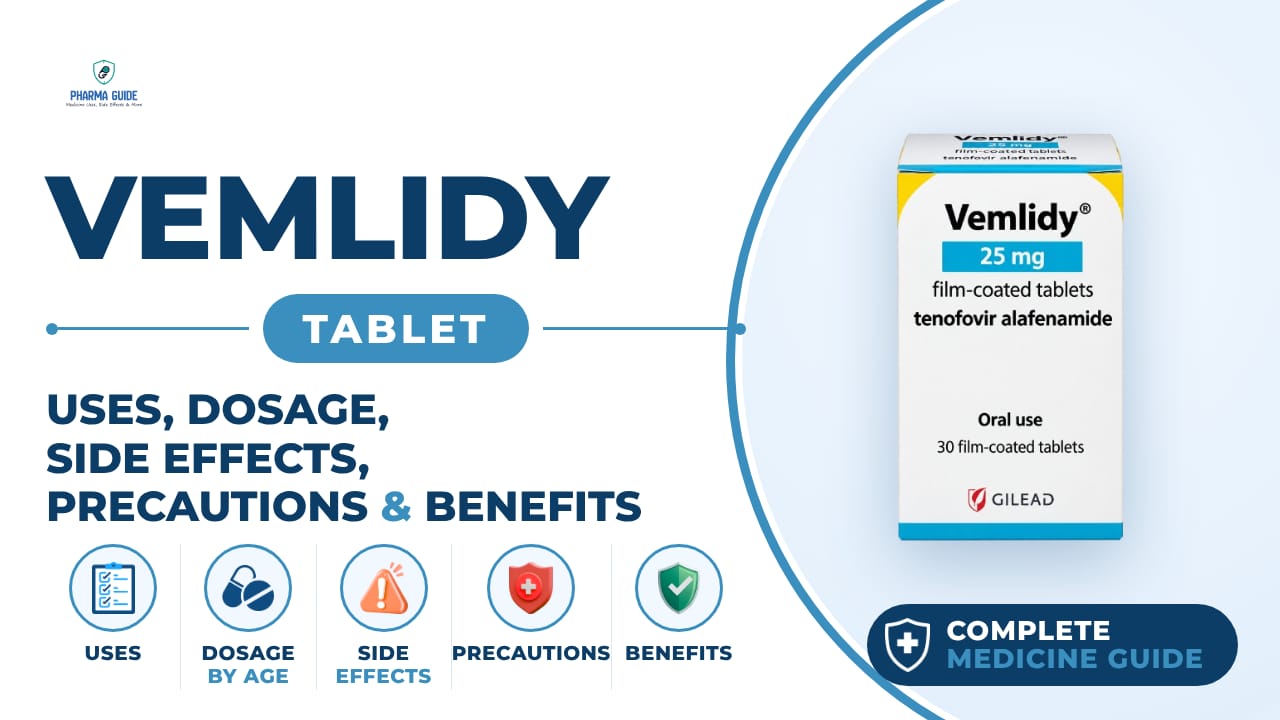
Vemlidy Tablet: Uses, Dosage, Side Effects, Precautions and Alternates
nucleoside reverse transcriptase inhibitor (NRTI)
Vemlidy Tablet treats chronic hepatitis B in adults by blocking viral replication. Learn about its dosage, benefits, side effects, and precautions.

Injectafer Injection: Uses, Dosage, Side Effects, Precautions and Alternates
Iron products
Injectafer (ferric carboxymaltose) treats iron deficiency anemia and heart failure-related iron deficiency via IV. Learn uses, dosage, side effects, and