
Safety
General information, not medical advice
Your prescriber and the leaflet in your pack know your situation. This page does not.
- Follow your prescriber and the leaflet
- Don't start, stop, or change a dose on your own
- Doses and warnings differ by country and product
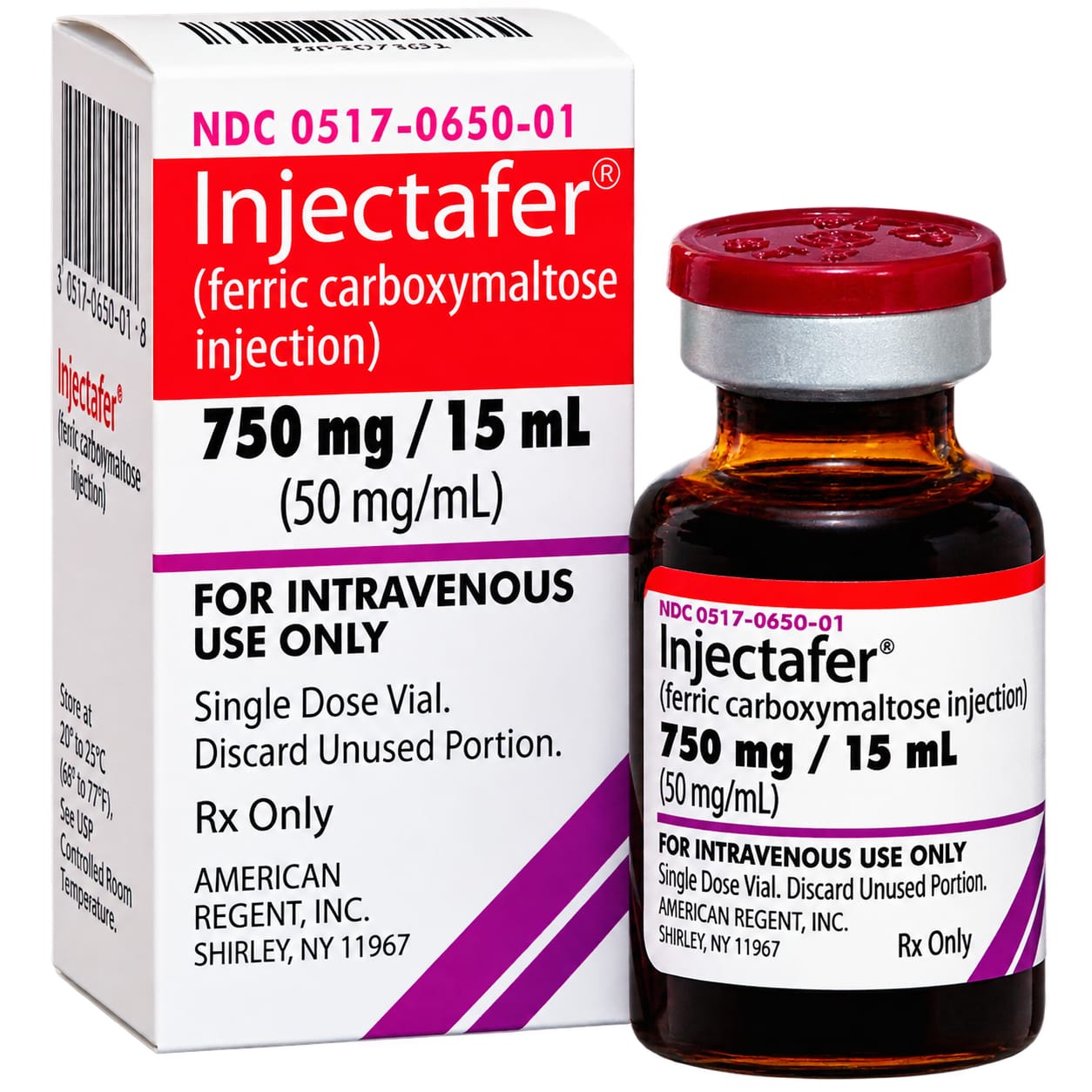
Injectafer Injection: Uses, Dosage, Side Effects, Precautions and Alternates

| Generic name | ferric carboxymaltose injection |
|---|---|
| Drug class | Iron products |
| Forms | Injection for intravenous use (solution) |
Quick overview
Injectafer (ferric carboxymaltose injection) is an injectable iron replacement product given into a vein. It is used to treat iron deficiency anemia and iron deficiency in certain heart failure patients. Because it is given into a vein, the iron in Injectafer goes directly into the bloodstream. It belongs to the iron products drug class.
What is Injectafer Injection
Injectafer is an injectable iron replacement product given into a vein. It is used to treat iron deficiency anemia and iron deficiency in certain heart failure patients. Because it is given into a vein, the iron in Injectafer goes directly into the bloodstream.
Injectafer Injection uses
- Treats iron deficiency anemia (IDA) in adults and children 1 year of age and older who cannot tolerate oral iron or who have not responded well to oral iron
- Treats iron deficiency anemia in adults who have non-dialysis-dependent chronic kidney disease
- Treats iron deficiency in adults with New York Heart Association (NYHA) class II/III heart failure to improve exercise capacity
Benefits of Injectafer Injection
- Delivers iron directly into the bloodstream when oral iron has not worked or cannot be tolerated
- May improve the ability to exercise in adults with iron deficiency and heart failure
How Injectafer Injection works
Injectafer is a complex of iron and a carbohydrate polymer that releases iron into the body, which the body then uses to help produce red blood cells that carry oxygen.
Injectafer Injection dosage
Injectafer is given into a vein (intravenously) by a healthcare provider, either as a slow injection or as an infusion. It is usually given in two doses at least 7 days apart for iron deficiency anemia, or 6 weeks apart for iron deficiency with heart failure. It may be given as a single-dose treatment if your healthcare provider decides it is right for you, and treatment may be repeated if needed. Your healthcare provider will watch you during the infusion and for at least 30 minutes afterward for signs of an allergic reaction. Tell your healthcare provider right away if you notice any leaking or discoloration at the injection site during the infusion.
| Age group | Dose |
|---|---|
| Under 1 year | Not established / not recommended |
| 1–11 years | 15 mg/kg IV per dose, given in 2 doses at least 7 days apart; maximum 750 mg per dose |
| 12–17 years | 15 mg/kg IV per dose, given in 2 doses at least 7 days apart; maximum 750 mg per dose |
| 18 years & older | 750 mg IV twice, at least 7 days apart, for a total of 1,500 mg per course, for patients ≥50 kg |
| Older adults | Same adult regimen, with dosing adjusted according to clinical status |
Available forms and strengths
Injection for intravenous use (solution)
Side effects of Injectafer Injection
Common
- Nausea
- High blood pressure
- Flushing
- Injection site reactions
- Skin redness or discoloration
- Low levels of phosphate in the blood
- Dizziness
- Rash (in children)
- Headache (in children)
- Vomiting (in children)
Serious
- Serious, life-threatening allergic reactions
- Low blood phosphate levels that can lead to softening of bones and broken bones, especially with repeated treatments
- High blood pressure, sometimes with facial flushing, dizziness, or nausea
- Infection in the digestive system (reported in children)
- Increased liver enzyme levels (reported in children)
- Decreased platelet levels (reported in children)
- Decreased white blood cell levels (reported in children)
Warnings and precautions
- Injectafer can cause severe, prolonged low blood phosphate levels (hypophosphatemia), which can lead to hospitalization, softening of the bones (osteomalacia), and fractures needing medical treatment. This can happen even in people with normal phosphate levels and no risk factors.
- Serious, life-threatening allergic reactions, some of which have been fatal, have occurred in people receiving Injectafer.
- Injectafer can cause high blood pressure, sometimes with facial flushing, dizziness, or nausea, usually shortly after the dose and resolving within 30 minutes.
- If the medicine leaks outside the vein during the injection (extravasation), it can cause long-lasting brown discoloration of the skin at that site.
- Do not use Injectafer if you are allergic to ferric carboxymaltose or any of its ingredients.
- Injectafer may harm an unborn baby. Tell your healthcare provider right away if you become pregnant or think you might be pregnant during treatment.
- Injectafer passes into breast milk. It is not known if it will harm your baby, so talk to your healthcare provider about the best way to feed your baby during treatment.
- Injectafer is used to treat iron deficiency anemia in adults with non-dialysis-dependent chronic kidney disease.
- Tell your doctor about your alcohol use before starting Injectafer treatment.
Storage
- Store at 20°C to 25°C (68°F to 77°F); excursions permitted to 15°C to 30°C (59°F to 86°F)
- Do not freeze
- Discard unused portion
When to see a doctor
- Tell your healthcare provider right away if you have signs of an allergic reaction, such as low blood pressure, dizziness or lightheadedness, loss of consciousness, trouble breathing, swelling, fast heartbeat, cold or clammy skin, blue-colored feet or hands, itching, rash, hives, or wheezing.
- Tell your healthcare provider if you have signs of low blood phosphate levels, such as feeling very tired, muscle weakness or pain, bone or joint pain, or broken bones.
- If your symptoms seem serious or you think you are having a medical emergency, get emergency help right away.
Alternatives
- Venofer (iron sucrose)
- FeroSul
- Infed
- Feraheme
- Monoferric (ferric derisomaltose)
- Accrufer
- Iron sucrose
- Ferrous sulfate
Watch the video
FAQs
What is Injectafer used for?
Injectafer treats iron deficiency anemia in adults and children 1 year and older who cannot tolerate or haven't responded to oral iron, iron deficiency anemia in adults with non-dialysis-dependent chronic kidney disease, and iron deficiency in adults with NYHA class II/III heart failure to improve exercise capacity.
How is Injectafer given?
Injectafer is given into a vein by a healthcare provider as a slow injection or infusion, usually in two doses at least 7 days apart for iron deficiency anemia or 6 weeks apart for heart failure-related iron deficiency. It may also be given as a single-dose treatment, with repeat treatment if needed.
What are the serious side effects of Injectafer?
Serious side effects include life-threatening allergic reactions, severe low blood phosphate levels that can lead to softened bones and fractures, and high blood pressure sometimes with facial flushing, dizziness, or nausea.
Can Injectafer cause low phosphate levels?
Yes, Injectafer can cause severe, prolonged low blood phosphate levels that may lead to hospitalization, softening of the bones, and fractures requiring medical treatment, even in people with normal phosphate levels and no risk factors.
Is Injectafer safe during pregnancy or breastfeeding?
Injectafer may harm an unborn baby, so you should tell your healthcare provider right away if you become or think you might be pregnant. It also passes into breast milk, so discuss the best feeding option with your healthcare provider during treatment.
General information, not medical advice
Your prescriber and the leaflet in your pack know your situation. This page does not.
- Follow your prescriber and the leaflet
- Don't start, stop, or change a dose on your own
- Doses and warnings differ by country and product
Sources
Video
Related medicines
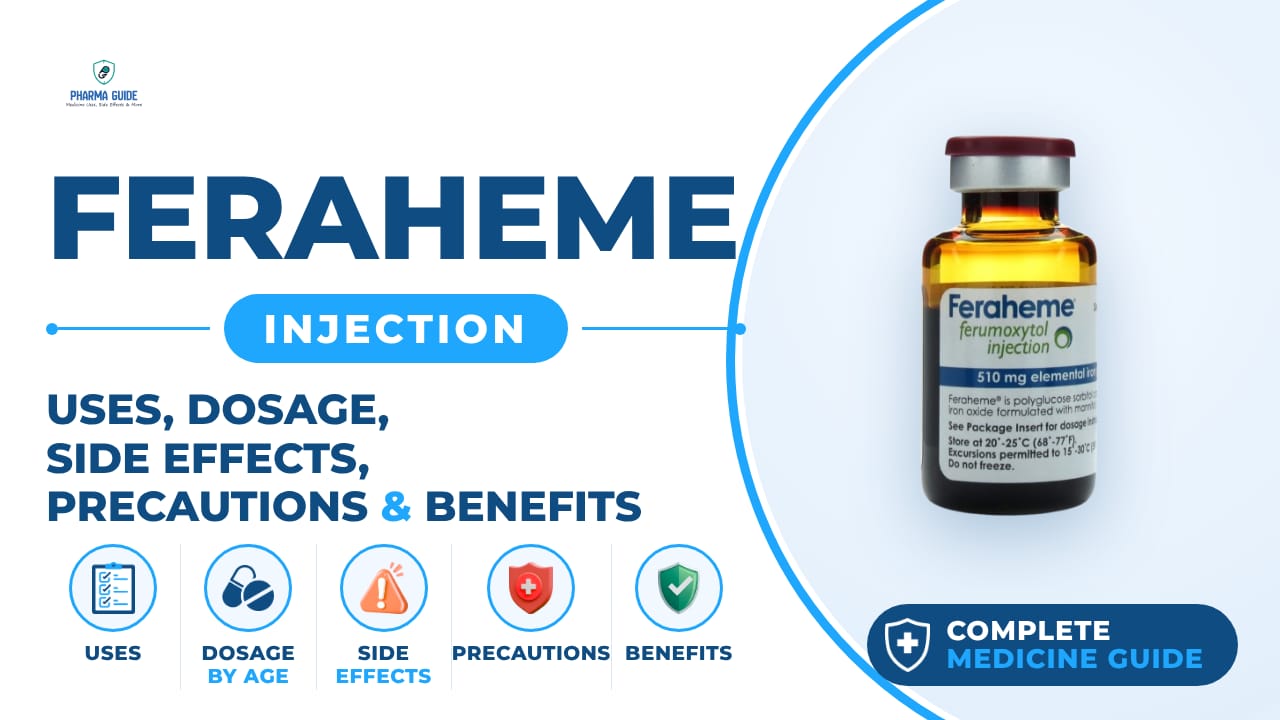
Feraheme Injection: Uses, Dosage, Side Effects, Precautions and Alternates
Iron products
Feraheme Injection (ferumoxytol) treats iron deficiency anemia in adults, including those with chronic kidney disease. Learn dosage, side effects, and warnings.
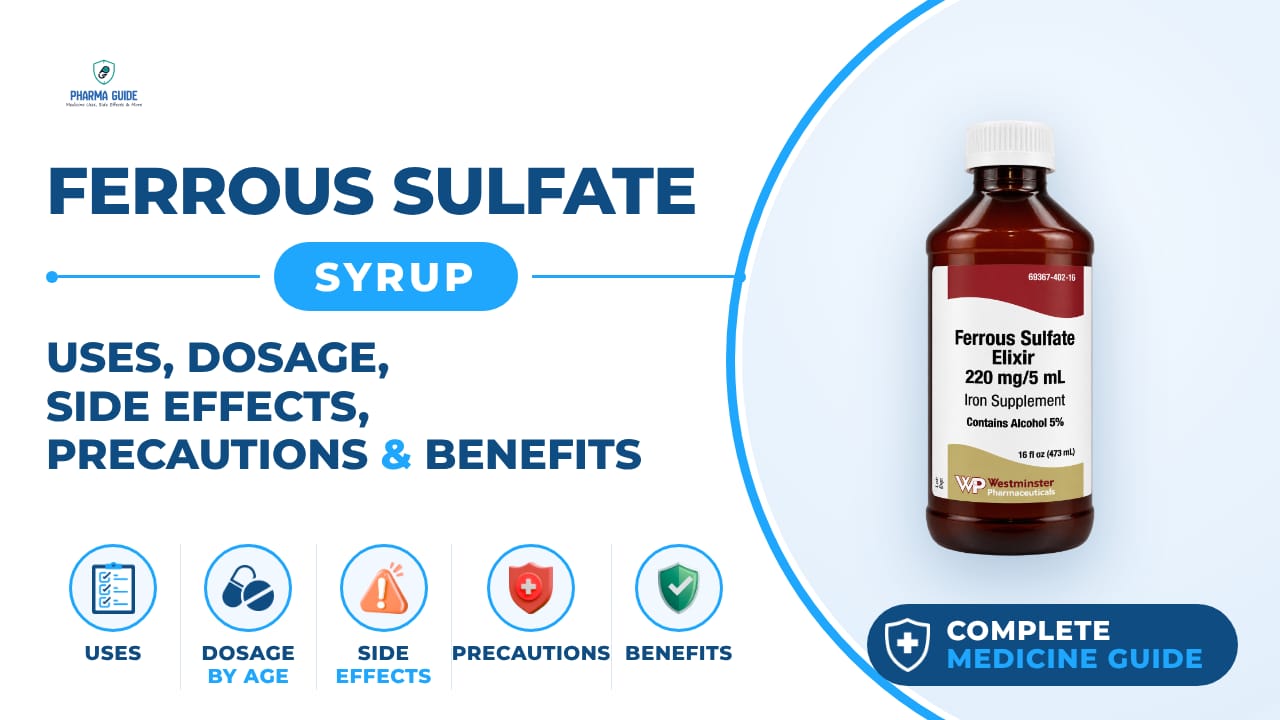
Ferrous Sulfate Syrup: Uses, Dosage, Side Effects, Precautions and Alternates
Iron products
Ferrous Sulfate Syrup treats and prevents iron deficiency anemia, including in pregnancy. Learn uses, dosage, side effects, and safety precautions.