
Safety
General information, not medical advice
Your prescriber and the leaflet in your pack know your situation. This page does not.
- Follow your prescriber and the leaflet
- Don't start, stop, or change a dose on your own
- Doses and warnings differ by country and product
Feraheme Injection: Uses, Dosage, Side Effects, Precautions and Alternates
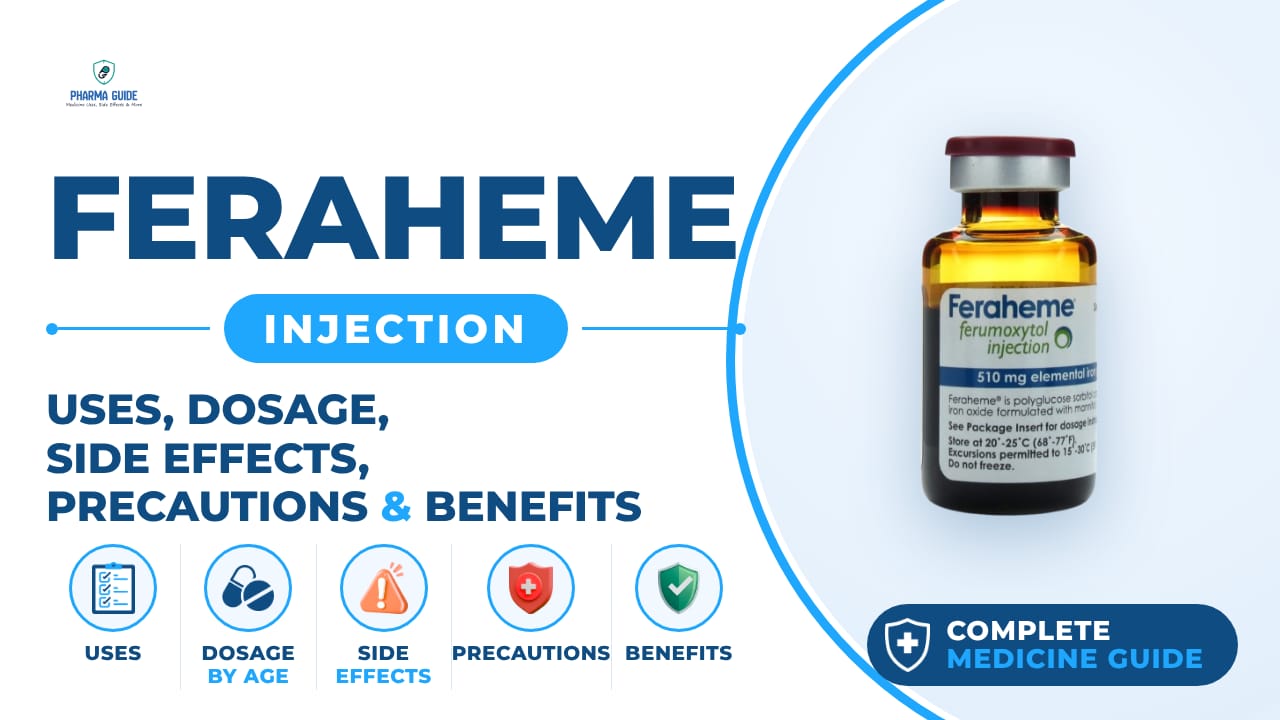
| Generic name | ferumoxytol |
|---|---|
| Drug class | Iron products |
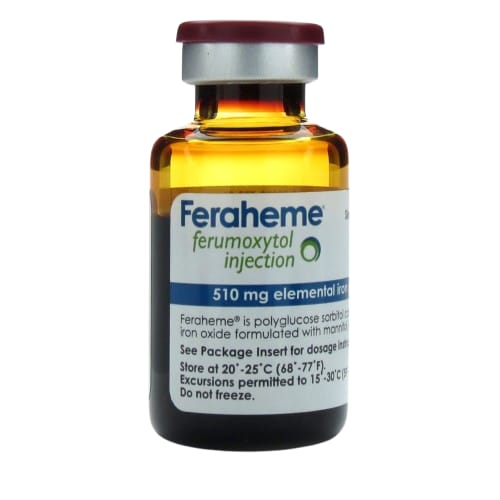
| Forms | Injection (single use vials, 510 mg iron per 17 mL) |
Quick overview
Feraheme Injection (ferumoxytol) is an iron replacement product given by injection to treat iron deficiency anemia in adults. It is used in adults with chronic kidney disease and in those who have not responded to or cannot tolerate oral iron. Feraheme works by releasing iron into the body to help make hemoglobin, improving hemoglobin levels and other markers of iron status.
What is Feraheme Injection
Feraheme is a type of iron given by injection. In your body, iron becomes part of hemoglobin and myoglobin. Hemoglobin carries oxygen through your blood to tissues and organs, and myoglobin helps your muscle cells store oxygen. Feraheme is an iron replacement product used to treat iron deficiency anemia (low red blood cells caused by a lack of iron in the body).
Feraheme Injection uses
- Treats iron deficiency anemia (IDA) in adults
- Given to adults with IDA and chronic kidney disease
- Given to adults with IDA when iron taken by mouth has not worked or is not tolerated
Benefits of Feraheme Injection
- Increases hemoglobin levels in people with iron deficiency anemia
- Improves iron levels (transferrin saturation and ferritin) in people with iron deficiency anemia
How Feraheme Injection works
Feraheme is made of iron coated with a carbohydrate shell that keeps the iron separate from your blood until it reaches certain cells in the liver, spleen, and bone marrow. Inside these cells, the iron is released and either stored or sent into the blood to be used in making hemoglobin.
Feraheme Injection dosage
Feraheme is given into a vein by a healthcare provider, not taken by mouth. Each dose is given slowly over at least 15 minutes, and you should be lying down or partly reclined while receiving the infusion. You will be watched for at least 30 minutes after each dose to check for an allergic reaction. Feraheme is usually given as two doses, given 3 to 8 days apart.
If you are on hemodialysis, this medicine is given after your blood pressure is stable and you have completed at least one hour of dialysis. Do not take iron supplements or vitamin/mineral supplements that your doctor has not prescribed or recommended, since this medicine can make it harder for your body to absorb iron taken by mouth. This medicine is not approved for use in children under 18 years old. Tell any doctor who treats you that you received this injection, because it can affect MRI scan results for up to 3 months.
| Age group | Dose |
|---|---|
| Under 18 years | Safety and effectiveness not established; specialist advice required |
| 18–64 years | 510 mg IV, followed by another 510 mg IV 3–8 days later |
| 65 years & older | 510 mg IV, followed by another 510 mg IV 3–8 days later |
| Adults | 510 mg IV × 2 doses, 3–8 days apart |
Available forms and strengths
- Injection (single use vials, 510 mg iron per 17 mL)
Side effects of Feraheme Injection
Common
- Headache
- Dizziness
- Diarrhea
- Constipation
- Nausea
- Swelling in your arms, hands, legs, or feet
Serious
- Signs of a severe allergic reaction: hives, itching, wheezing, trouble breathing, swelling of the face, lips, tongue, or throat, or feeling like you might pass out
- Low blood pressure (hypotension)
- Severe or ongoing vomiting or diarrhea
- Seizure
- Kidney problems - swelling, urinating less, feeling tired or short of breath
- Heart problems - chest pain, fast or pounding heartbeats, rapid weight gain, feeling short of breath
- Iron overload
Warnings and precautions
- This medicine can cause serious and sometimes fatal allergic reactions, even in people who have used it before without a reaction. Early symptoms may include low blood pressure, fainting, unresponsiveness, or cardiac arrest. It should only be given where staff and treatments for severe allergic reactions are immediately available, and you will be watched for at least 30 minutes after each infusion.
- Do not use this medicine if you have ever had an allergic reaction to an injectable form of iron, or if you have iron overload syndrome or any anemia not caused by iron deficiency.
- This medicine can cause low blood pressure. You will be monitored for signs of this after each dose.
- Taking too much iron through this medicine can build up excess iron in the body. This medicine should not be given to people who already have iron overload, and blood tests will be done to check iron levels regularly.
- This medicine can affect the results of an MRI scan for up to 3 months after your injection. It will not affect other imaging tests such as X-rays, CT scans, ultrasounds, or nuclear imaging.
- Older adults with multiple or serious health conditions who have an allergic reaction or low blood pressure after this medicine may have more severe outcomes.
- Tell your doctor if you are pregnant or plan to become pregnant. It is not known if this medicine will harm an unborn baby, but it may cause severe reactions in the mother that could affect the baby's heartbeat. Untreated iron deficiency anemia during pregnancy may raise the risk of premature birth or low birth weight, so the benefit of treatment may outweigh the risks.
- It is not known if this medicine passes into breast milk. You and your healthcare provider should decide whether you will receive this medicine or breastfeed, not both.
- This medicine is used to treat iron deficiency anemia in people with chronic kidney disease, but it can cause kidney-related side effects such as swelling, urinating less, feeling tired, or feeling short of breath. Call your doctor if these occur.
Storage
- Store at 20° to 25°C (68° to 77°F). Excursions permitted to 15° – 30°C (59° – 86°F) [see USP controlled room temperature].
When to see a doctor
- Get emergency medical help right away if you have signs of a severe allergic reaction: hives, itching, wheezing, trouble breathing, a lightheaded feeling like you might pass out, or swelling of your face, lips, tongue, or throat.
- Call your doctor right away if you feel lightheaded like you might pass out, have severe or ongoing vomiting or diarrhea, have a seizure, or have signs of kidney problems (swelling, urinating less, feeling tired or short of breath) or heart problems (chest pain, fast or pounding heartbeat, rapid weight gain, shortness of breath).
- Tell your healthcare provider or get medical help right away if you notice a rash, itching, dizziness or lightheadedness, swelling of the tongue or throat, or wheezing or trouble breathing.
Alternatives
- FeroSul
- Infed
- Ferrous sulfate
Watch the video
FAQs
What is Feraheme Injection used for?
Feraheme is used to treat iron deficiency anemia in adults, including those with chronic kidney disease and those who have not responded to or cannot tolerate oral iron.
How is Feraheme given?
Feraheme is given by a healthcare provider as an injection into a vein, slowly over at least 15 minutes. It is usually given as two doses, 3 to 8 days apart, and you are monitored for at least 30 minutes after each dose for allergic reactions.
What are the common side effects of Feraheme?
Common side effects include headache, dizziness, diarrhea, constipation, nausea, and swelling in the arms, hands, legs, or feet.
Does Feraheme affect MRI scans?
Yes, Feraheme can affect the results of an MRI scan for up to 3 months after injection, though it does not affect X-rays, CT scans, ultrasounds, or nuclear imaging. Tell any doctor treating you that you received this injection.
Can Feraheme cause serious allergic reactions?
Yes, Feraheme can cause serious and sometimes fatal allergic reactions, even in people who have used it before without a reaction. It should only be given where staff and treatments for severe allergic reactions are immediately available.
General information, not medical advice
Your prescriber and the leaflet in your pack know your situation. This page does not.
- Follow your prescriber and the leaflet
- Don't start, stop, or change a dose on your own
- Doses and warnings differ by country and product
Sources
Video
Related medicines

Injectafer Injection: Uses, Dosage, Side Effects, Precautions and Alternates
Iron products
Injectafer (ferric carboxymaltose) treats iron deficiency anemia and heart failure-related iron deficiency via IV. Learn uses, dosage, side effects, and
Ferrous Sulfate Syrup: Uses, Dosage, Side Effects, Precautions and Alternates
Iron products
Ferrous Sulfate Syrup treats and prevents iron deficiency anemia, including in pregnancy. Learn uses, dosage, side effects, and safety precautions.