
Safety
General information, not medical advice
Your prescriber and the leaflet in your pack know your situation. This page does not.
- Follow your prescriber and the leaflet
- Don't start, stop, or change a dose on your own
- Doses and warnings differ by country and product
Adderall Tablet: Uses, Dosage, Side Effects, Precautions and Alternates
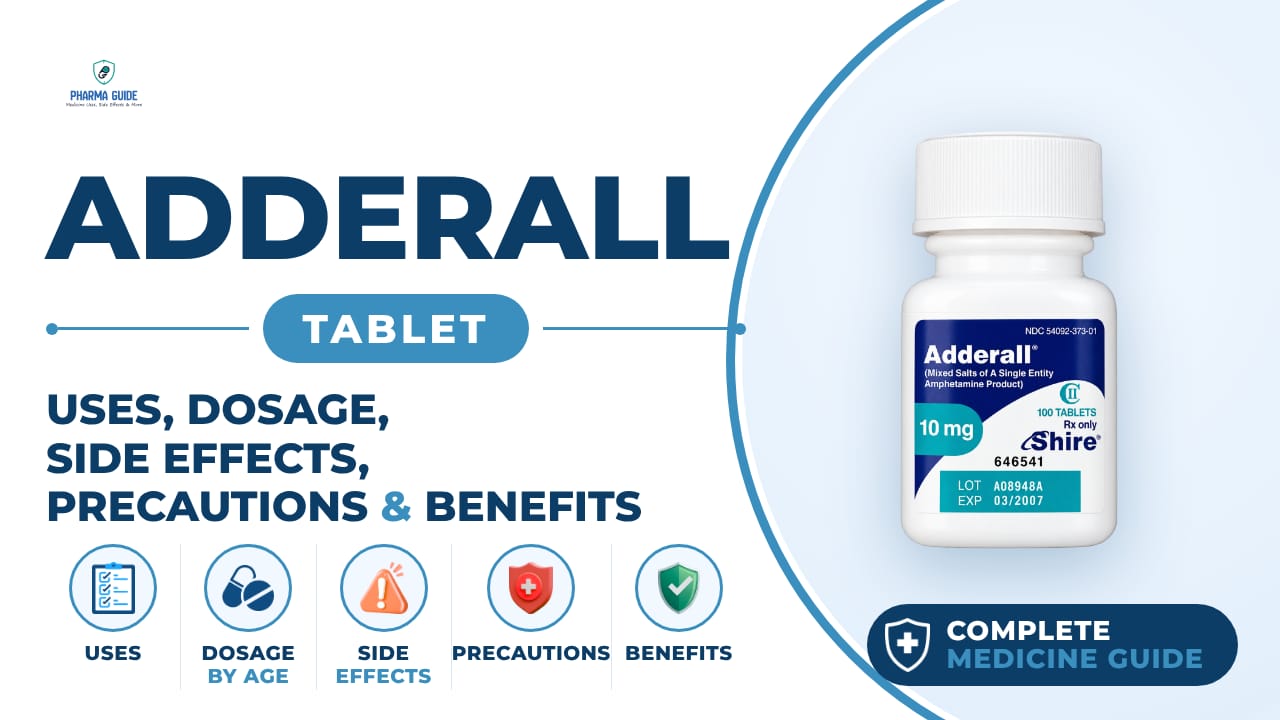
| Generic name | amphetamine and dextroamphetamine |
|---|---|
| Drug class | CNS stimulants |
| Forms | oral tablets, extended-release tablets (Adderall XR), extended-release capsules (Mydayis) |
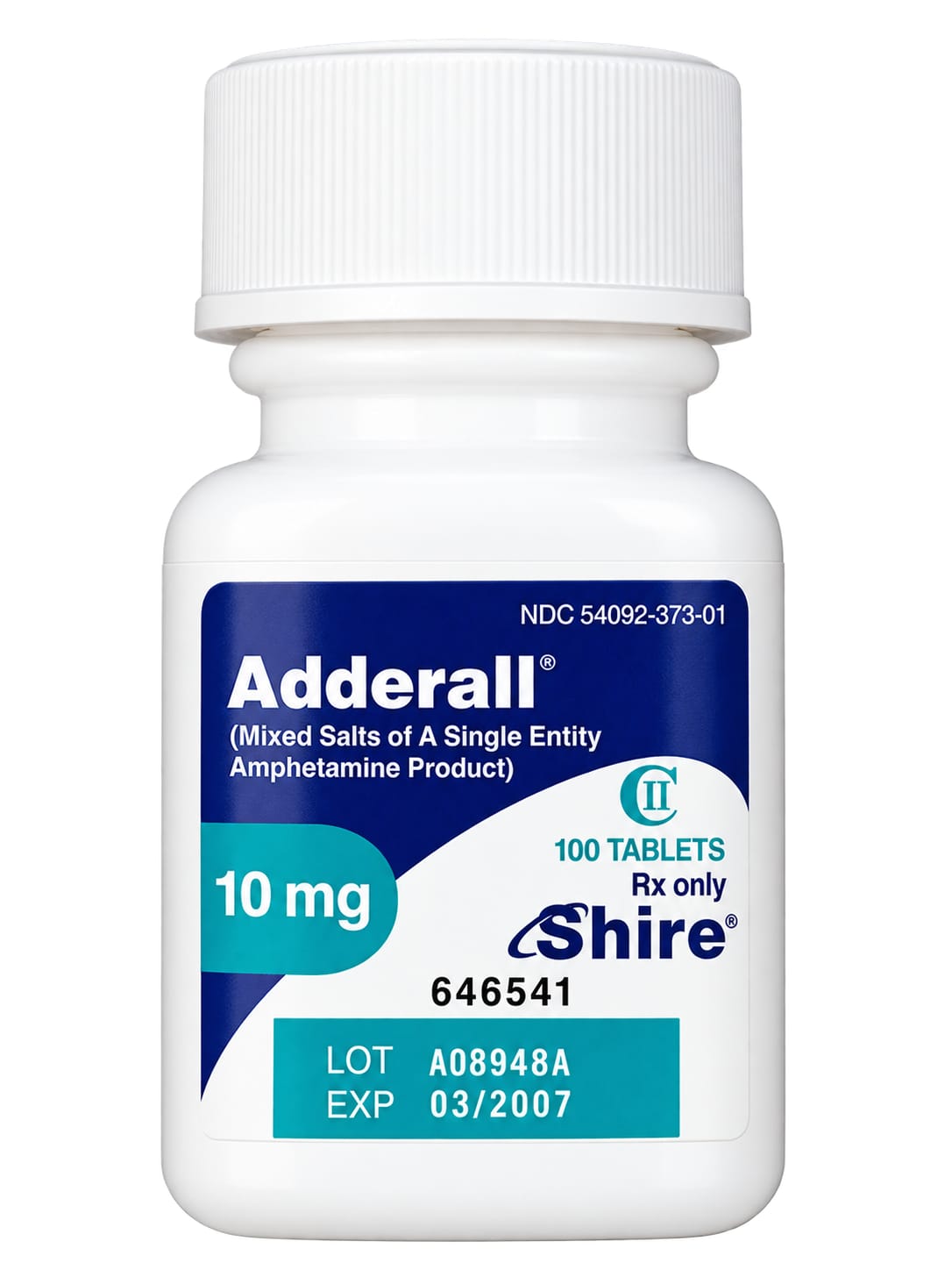
Quick overview
Adderall Tablet contains amphetamine and dextroamphetamine, a combination of central nervous system stimulants. It is used to treat attention deficit hyperactivity disorder (ADHD) in children 3 to 17 years of age and in adults, and to treat narcolepsy in people 6 years and older. It works by increasing levels of dopamine and norepinephrine in the brain, which helps with attention, impulse control, and wakefulness. Adderall carries a risk of abuse, dependence, and serious side effects, so it should be used exactly as prescribed.
What is Adderall Tablet
Adderall is a central nervous system stimulant medicine that contains a combination of amphetamine and dextroamphetamine. It is used to treat attention deficit hyperactivity disorder (ADHD) and narcolepsy, a sleep disorder.
Adderall Tablet uses
- Treats attention deficit hyperactivity disorder (ADHD) in children 3 to 17 years of age and in adults
- Treats narcolepsy in people 6 years and older
Benefits of Adderall Tablet
- May help increase attention and decrease impulsiveness and hyperactivity in people with ADHD
- Can improve focus, decrease restlessness, and help control impulsive behavior
- Taking stimulants at the start of the day can promote daytime wakefulness, which may also help a person sleep better at night
How Adderall Tablet works
Adderall affects brain chemicals called dopamine and norepinephrine, increasing their levels in the brain. Dopamine plays a role in feeling pleasure and motivation, while norepinephrine helps you stay awake, think clearly, and pay attention. This helps with hyperactivity, impulse control, and wakefulness.
Adderall Tablet dosage
Take Adderall exactly as prescribed, following all directions on your prescription label. The first dose of the day is usually taken when you first wake up; taking it in the afternoon may cause trouble sleeping. It can be taken with or without food.
Do not crush or chew an extended-release capsule; swallow it whole, or open the capsule and sprinkle the medicine into a spoonful of applesauce and swallow right away without chewing. Do not divide the medicine in the capsule, and do not save a sprinkled mixture for later use. Never share this medicine with another person.
If a dose is missed, take it as soon as you remember, but not late in the day; skip it if it is almost evening, and do not take extra medicine to make up for a missed dose. Try not to take Adderall after 5 p.m., or after 2 p.m. for the extended-release version, to avoid trouble sleeping.
Use exactly as prescribed by your doctor or pharmacist.
Available forms and strengths
- Oral tablets
- Extended-release tablets (Adderall XR)
- Extended-release capsules (Mydayis)
Side effects of Adderall Tablet
Common
- Stomach pain
- Loss of appetite
- Weight loss
- Mood changes
- Feeling nervous
- Fast heart rate
- Headache
- Dizziness
- Sleep problems (insomnia)
- Dry mouth
- Anxiety
- Weakness
- Constipation
- Less interest in sex
- Twitching
Serious
- Signs of heart problems, such as chest pain, trouble breathing, or feeling like you might pass out
- Signs of psychosis, such as hallucinations, new behavior problems, aggression, hostility, or paranoia
- Signs of circulation problems, such as numbness, pain, a cold feeling, unexplained wounds, or skin color changes (pale, red, or blue appearance) in your fingers or toes
- A seizure
- Muscle twitches (tics)
- Changes in your vision
- Major increase in blood pressure
- Intense muscle pain or weakness
- An erection that hurts or lasts too long
- Slow speech
- Teeth grinding
- Rash or hives
- Skin that starts peeling or blistering
- Swelling of face, tongue, eyes, or throat
Warnings and precautions
- Adderall has a high chance of abuse and misuse and may lead to substance use problems, including addiction. Misuse can lead to overdose and death.
- Stimulants have caused stroke, heart attack, and sudden death in people with high blood pressure, heart disease, or a heart defect.
- Adderall may cause new or worse behavior and thought problems, new or worse bipolar illness, or new psychotic or manic symptoms.
- You may have blood circulation problems that can cause numbness, pain, or discoloration in your fingers or toes.
- Do not use Adderall if you have used an MAO inhibitor in the past 14 days, or if you have received a methylene blue injection, as a dangerous drug interaction could occur.
- Children should have their height and weight checked often during treatment because Adderall can slow growth.
- Taking Adderall with certain other medicines may cause serotonin syndrome, which can be life-threatening.
- Adderall is habit-forming and should never be shared with anyone else, especially someone with a history of drug abuse or addiction.
- Taking Adderall during pregnancy can cause premature birth, low birth weight, or withdrawal symptoms in the newborn baby. Tell your healthcare provider if you are pregnant or plan to become pregnant.
- Adderall passes into breast milk and may harm a nursing baby. You should not breastfeed during treatment with Adderall.
- Tell your healthcare provider if you or your family have ever had kidney problems before taking Adderall.
- Tell your healthcare provider if you or your family have ever had liver problems before taking Adderall.
- Alcohol affects the way your body processes Adderall, which could result in unusual side effects, including sleepiness.
- This medicine may impair your thinking or reactions, so be careful if you drive or do anything that requires you to be alert.
Storage
- Store Adderall at room temperature between 68°F and 77°F (20°C and 25°C)
- Protect Adderall from light
- Store Adderall in a safe place, such as a locked cabinet, and keep it out of the reach of children
- Dispose of remaining, unused, or expired Adderall through a medicine take-back program at a DEA-authorized collection site
- If no take-back program is available, mix Adderall with an undesirable, nontoxic substance such as dirt, cat litter, or used coffee grounds, place it in a sealed container, and throw it away in the household trash
When to see a doctor
- Get emergency medical help if you have signs of an allergic reaction: hives, difficult breathing, or swelling of your face, lips, tongue, or throat.
- Call your healthcare provider right away or go to the nearest hospital emergency room if you have signs of heart problems, such as chest pain, shortness of breath, or fainting.
- Call your healthcare provider right away if you have any new or worsening mental symptoms, especially hearing voices, seeing or believing things that are not real, or new manic symptoms.
- Call your doctor right away if you have unexplained wounds appearing on your fingers or toes during treatment.
- Stop taking Adderall and get medical help right away if you develop agitation, hallucinations, fever, sweating, shivering, fast heart rate, muscle stiffness, twitching, loss of coordination, nausea, vomiting, or diarrhea.
- If you or your child takes too much Adderall, contact your healthcare provider or poison control right away, or go to the nearest hospital emergency room, since an overdose could be fatal.
Alternatives
- Guanfacine
- Atomoxetine
- Methylphenidate
Watch the video
FAQs
What is Adderall Tablet used for?
Adderall is used to treat attention deficit hyperactivity disorder (ADHD) in children 3 to 17 years of age and in adults, and to treat narcolepsy in people 6 years and older.
How does Adderall Tablet work?
Adderall increases levels of dopamine and norepinephrine in the brain, which helps with attention, impulse control, and wakefulness.
When should I take Adderall to avoid sleep problems?
The first dose is usually taken when you wake up. Try not to take Adderall after 5 p.m., or after 2 p.m. for the extended-release version, to avoid trouble sleeping.
What are the serious side effects of Adderall Tablet?
Serious side effects include signs of heart problems, signs of psychosis such as hallucinations or paranoia, circulation problems in fingers or toes, seizures, muscle twitches, vision changes, major blood pressure increases, and severe allergic reactions like swelling or skin peeling.
What are the alternatives to Adderall Tablet?
Alternatives mentioned include guanfacine, atomoxetine, and methylphenidate.
General information, not medical advice
Your prescriber and the leaflet in your pack know your situation. This page does not.
- Follow your prescriber and the leaflet
- Don't start, stop, or change a dose on your own
- Doses and warnings differ by country and product
Sources
Video
Related medicines
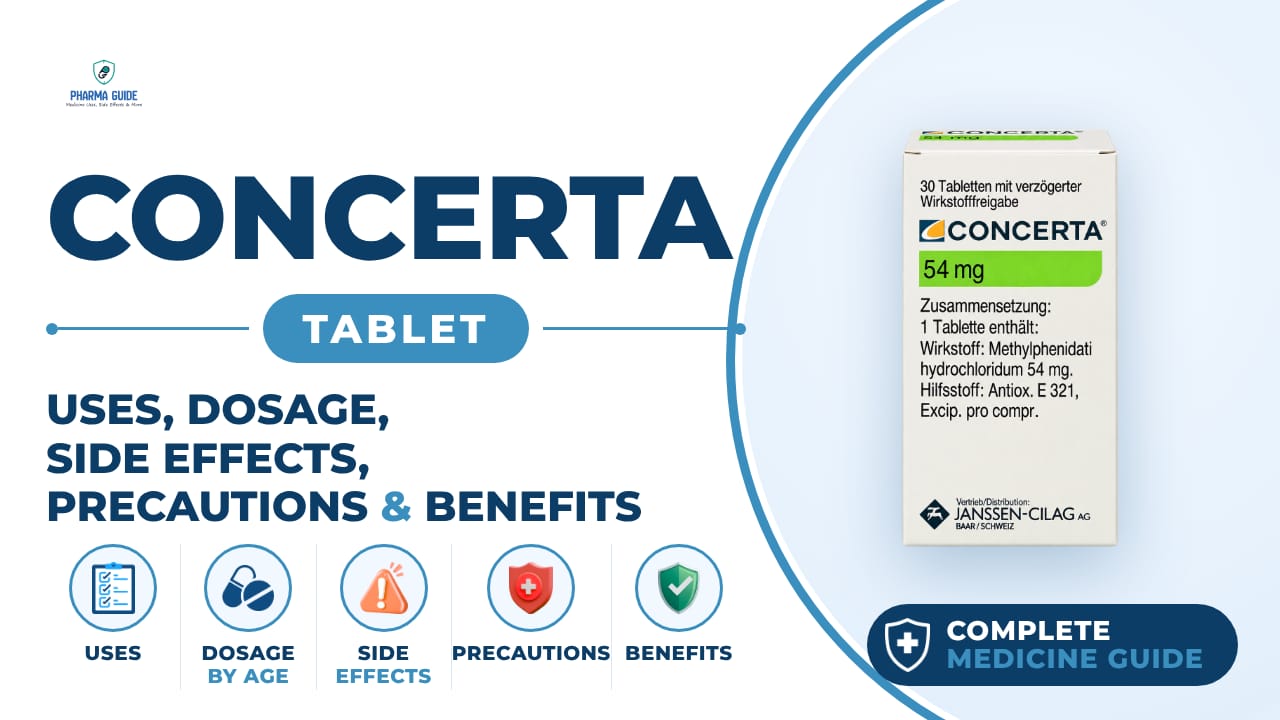
Concerta Tablet: Uses, Dosage, Side Effects, Precautions and Alternates
CNS stimulants
Concerta Tablet is an extended-release stimulant for ADHD in children, teens, and adults. Learn uses, dosage, side effects, and precautions.
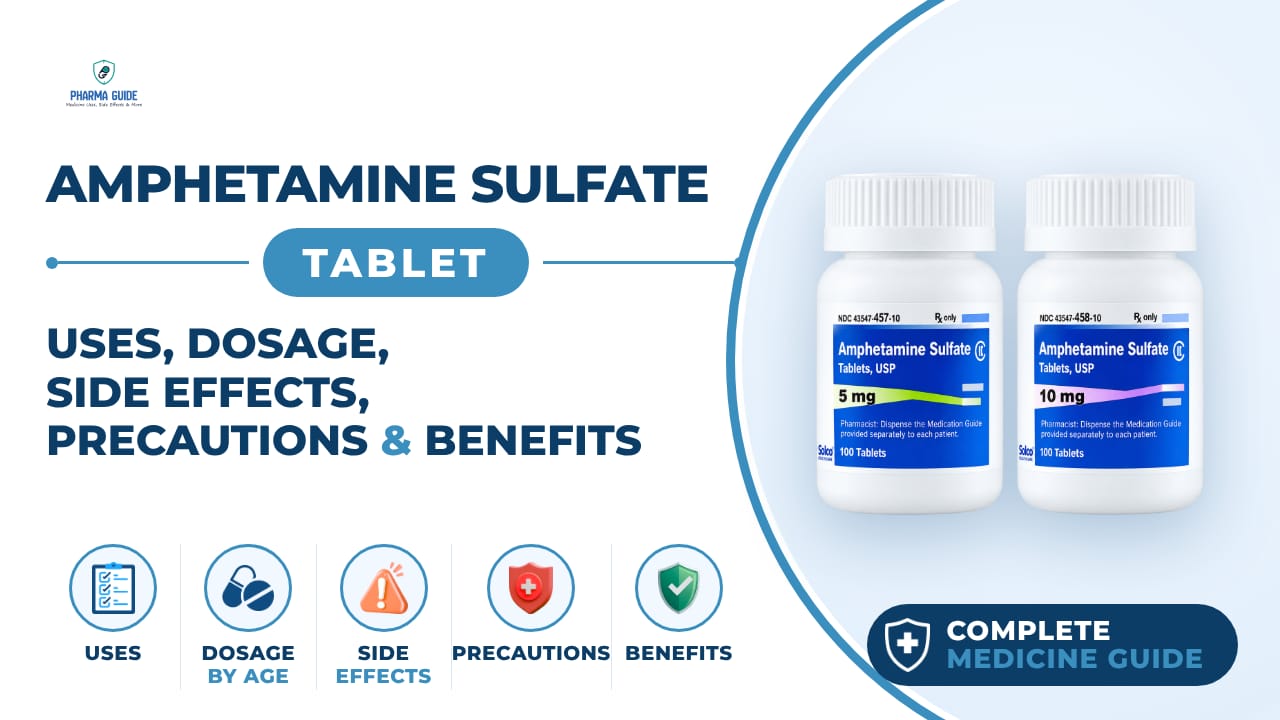
Amphetamine Sulfate Tablet: Uses, Dosage, Side Effects, Precautions and Alternates
CNS stimulants
Amphetamine Sulfate Tablet is a Schedule II CNS stimulant used for narcolepsy, ADHD, and short-term obesity treatment. Learn dosage, side effects, and