
Safety
General information, not medical advice
Your prescriber and the leaflet in your pack know your situation. This page does not.
- Follow your prescriber and the leaflet
- Don't start, stop, or change a dose on your own
- Doses and warnings differ by country and product
Concerta Tablet: Uses, Dosage, Side Effects, Precautions and Alternates
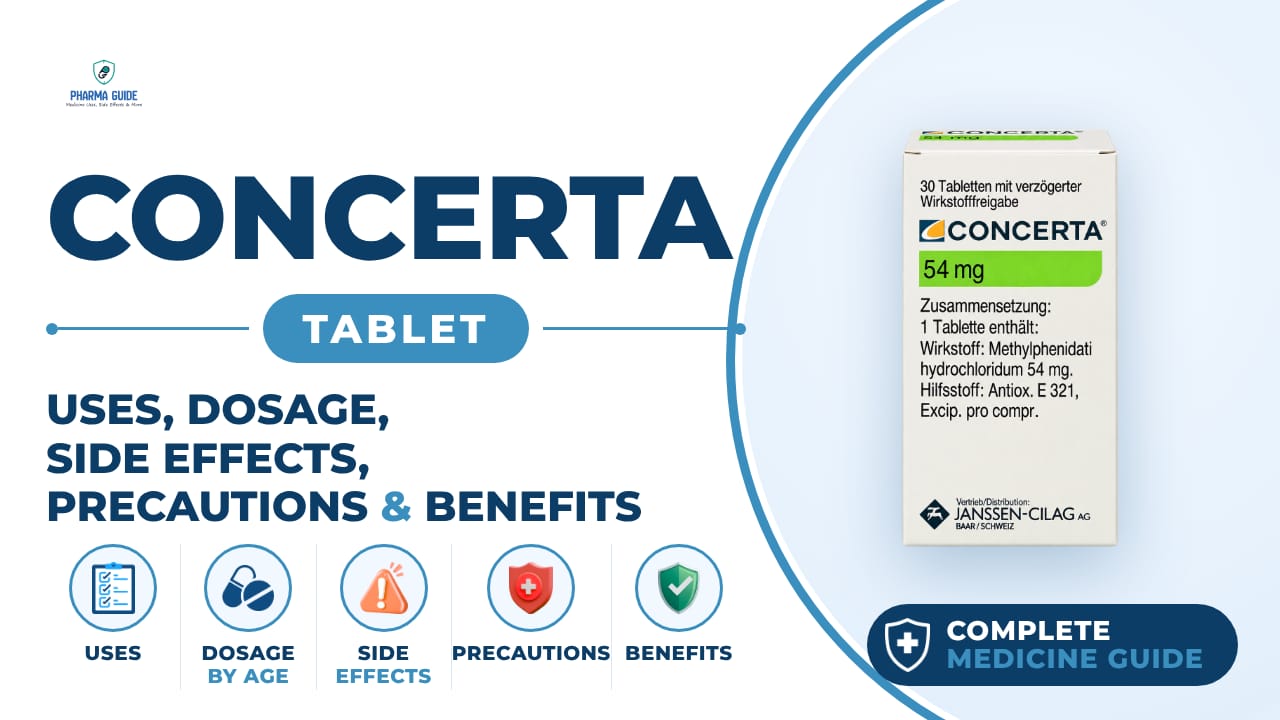
| Generic name | methylphenidate |
|---|---|
| Drug class | CNS stimulants |
| Forms | Extended-release tablet |
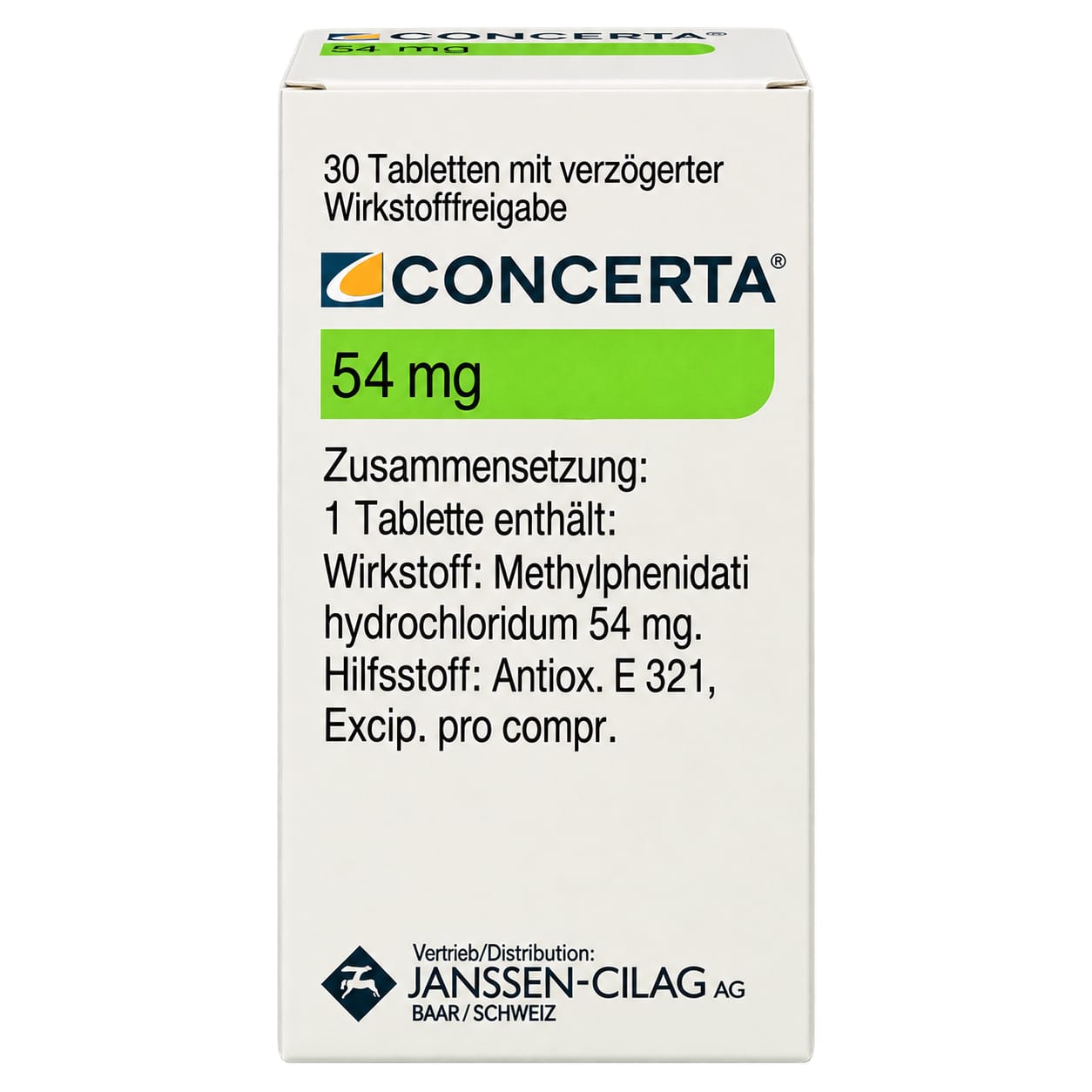
Quick overview
Concerta Tablet (methylphenidate) is a central nervous system stimulant prescription medicine used to treat attention deficit hyperactivity disorder (ADHD). It is an extended-release form of methylphenidate that releases medicine slowly over the day so fewer doses are needed. It is approved for children 6 years and older, adolescents, and adults up to age 65, and is used as part of a total treatment program that may include counseling or other therapies.
What is Concerta Tablet
Concerta is a central nervous system stimulant prescription medicine used to treat attention deficit hyperactivity disorder (ADHD). It is an extended-release form of methylphenidate, which means it releases medicine slowly over the day so fewer doses are needed.
Concerta Tablet uses
- Treats attention deficit hyperactivity disorder (ADHD) in children 6 years and older, adolescents, and adults up to age 65
- Used as part of a total treatment program for ADHD that may include counseling or other therapies
- Sometimes prescribed off-label by doctors for other conditions such as certain sleep disorders
Benefits of Concerta Tablet
- Helps improve attention and focus on tasks
- Helps manage hyperactivity and impulse control
- May help with organizing tasks and improving listening skills
How Concerta Tablet works
Concerta changes the levels of certain natural brain chemicals, including dopamine and norepinephrine. Dopamine helps create feelings of motivation and reward, while norepinephrine helps the brain pay attention. By boosting these chemicals, Concerta helps improve focus and reduce hyperactivity.
Concerta Tablet dosage
Take this medicine exactly as your doctor prescribes and follow the directions on your prescription label. It is usually taken once daily in the morning; taking it later in the day may cause trouble sleeping. It can be taken with or without food, but take it the same way each time. Swallow extended-release tablets whole; do not crush or chew them, since this can release the medicine too quickly and increase side effects. Only break the tablet if it is scored and your doctor or pharmacist tells you to. Try to take it at the same time every day to help you remember. Do not change your dose or stop taking it suddenly without talking to your doctor, since stopping suddenly can cause mood changes or other problems. Children taking this medicine should have their height and weight checked often. You may notice the empty tablet shell in a bowel movement; this is normal and not a cause for concern.
| Age group | Dose |
|---|---|
| Under 6 Years | Not recommended |
| 6–17 Years | Dose must be individually prescribed and adjusted by a qualified healthcare professional |
| Adults (18–64 Years) | Dose must be individually prescribed and adjusted |
| Older Adults (65+ Years) | Individualized dosing after medical evaluation |
Available forms and strengths
- Extended-release tablet
Side effects of Concerta Tablet
Common
- Sweating
- Increased blood pressure
- Mood changes, anxiety, feeling nervous or irritable
- Trouble sleeping
- Fast heart rate, pounding heartbeats or fluttering in chest
- Loss of appetite, weight loss
- Dry mouth, nausea, vomiting, stomach pain, indigestion
- Headache, dizziness
- Congestion and throat pain
- Fever
- Stomachaches or diarrhea
- Twitching and tics, especially with long-term use
Serious
- Signs of heart problems: chest pain, trouble breathing, feeling like you might pass out
- Signs of psychosis: hallucinations, new behavior problems, aggression, hostility, paranoia
- Signs of poor blood circulation in fingers or toes: numbness, pain, cold feeling, unexplained wounds, or skin color changes
- Painful or prolonged erection lasting 4 hours or longer
- Eye problems: changes in vision, eye pain, swelling, or redness
- Signs of tics: new or worsening repeated movements or sounds, or worsening Tourette's syndrome
- Signs of serotonin syndrome: agitation, hallucinations, fever, sweating, shivering, fast heart rate, muscle stiffness, twitching, loss of coordination, nausea, vomiting, or diarrhea
- Slowed growth in children
- Seizures
- Blockages of the intestines or esophagus
- Signs of an allergic reaction: hives, difficulty breathing, swelling of face, lips, tongue, or throat
- Signs of a stroke: one-sided weakness, slurred speech, sudden vision changes, confusion
Warnings and precautions
- Do not use this medicine if you have glaucoma, tics or Tourette's syndrome, or severe anxiety, tension, or agitation.
- This medicine can be habit-forming and is a drug of abuse. Tell your doctor if you have had problems with drug or alcohol abuse, and keep the medication where others cannot get to it.
- Stimulant medicines like this one have caused stroke, heart attack, and sudden death in people with high blood pressure, heart disease, or a heart defect.
- Do not take this medicine if you have used a medicine called an MAO inhibitor in the past 14 days, as a dangerous interaction could occur.
- This medicine may cause new or worsening psychosis, such as unusual thoughts or behavior, especially if you have a history of depression, mental illness, or bipolar disorder.
- Stopping this medicine suddenly without a doctor's guidance may cause serious symptoms such as depression, suicidal thoughts, or other mood changes.
- Becoming dependent on this medicine during pregnancy can cause early birth or low birth weight in the baby. Tell your doctor if you are pregnant or planning to become pregnant, since methylphenidate should only be used in pregnancy if truly necessary.
- Ask your doctor if it is safe to breastfeed while using this medicine, since the drug can pass into breast milk. Watch for symptoms in the baby such as agitation, sleep problems, feeding problems, or reduced weight gain.
- Concerta is a prescription controlled stimulant and should be used only under medical supervision. Blood pressure, heart rate, appetite, weight, sleep, and growth may require monitoring.
- Avoid drinking alcohol while taking this medicine, since it may worsen dizziness and other side effects. Avoid driving or doing anything dangerous until you know how this medicine affects you, since it may slow your reactions.
Storage
- Store Concerta tightly closed at room temperature, away from moisture, heat, and light
- Keep your medicine in a place where no one can use it improperly
- Do not keep leftover medicine; ask your pharmacist about a drug take-back program
- You may also mix leftover medicine with cat litter or coffee grounds in a sealed plastic bag and throw the bag in the trash
When to see a doctor
- Get emergency medical help right away if you have signs of an allergic reaction such as hives, difficulty breathing, or swelling of your face, lips, tongue, or throat.
- Call your doctor right away if you have chest pain, trouble breathing, or feel like you might pass out.
- Seek medical attention right away if you notice symptoms of serotonin syndrome, such as agitation, hallucinations, fever, sweating, fast heart rate, muscle stiffness, twitching, or loss of coordination.
- Seek immediate medical attention for fainting, seizures, chest pain, or signs of a stroke such as one-sided weakness, slurred speech, sudden vision changes, or confusion.
- If an erection lasts 4 hours or longer or is painful, stop the medicine and contact your doctor right away.
- If you think you may have taken too much of this medicine, seek emergency medical attention right away, as an overdose could be fatal.
Alternatives
- Clonidine ER
- Guanfacine ER
- Atomoxetine
- Focalin XR (Dexmethylphenidate)
Watch the video
FAQs
What is Concerta Tablet used for?
Concerta is used to treat attention deficit hyperactivity disorder (ADHD) in children 6 years and older, adolescents, and adults up to age 65, as part of a total treatment program that may include counseling or other therapies.
How should Concerta Tablet be taken?
Concerta is usually taken once daily in the morning, as taking it later may cause trouble sleeping. It can be taken with or without food but should be taken the same way each time. The extended-release tablet should be swallowed whole and not crushed or chewed.
What are the common side effects of Concerta Tablet?
Common side effects include sweating, increased blood pressure, mood changes, trouble sleeping, fast heart rate, loss of appetite, weight loss, dry mouth, nausea, headache, dizziness, and twitching or tics, especially with long-term use.
Who should not take Concerta Tablet?
Concerta should not be used by people with glaucoma, tics or Tourette's syndrome, or severe anxiety, tension, or agitation, and should not be taken with an MAO inhibitor used in the past 14 days.
Is Concerta Tablet habit-forming?
Yes, Concerta can be habit-forming and is a drug of abuse, so it should be kept where others cannot access it and used only under medical supervision.
General information, not medical advice
Your prescriber and the leaflet in your pack know your situation. This page does not.
- Follow your prescriber and the leaflet
- Don't start, stop, or change a dose on your own
- Doses and warnings differ by country and product
Sources
Video
Related medicines
Amphetamine Sulfate Tablet: Uses, Dosage, Side Effects, Precautions and Alternates
CNS stimulants
Amphetamine Sulfate Tablet is a Schedule II CNS stimulant used for narcolepsy, ADHD, and short-term obesity treatment. Learn dosage, side effects, and
Adderall Tablet: Uses, Dosage, Side Effects, Precautions and Alternates
CNS stimulants
Adderall Tablet treats ADHD and narcolepsy by boosting dopamine and norepinephrine. Learn its uses, dosage, side effects, warnings, and alternatives.