
Safety
General information, not medical advice
Your prescriber and the leaflet in your pack know your situation. This page does not.
- Follow your prescriber and the leaflet
- Don't start, stop, or change a dose on your own
- Doses and warnings differ by country and product
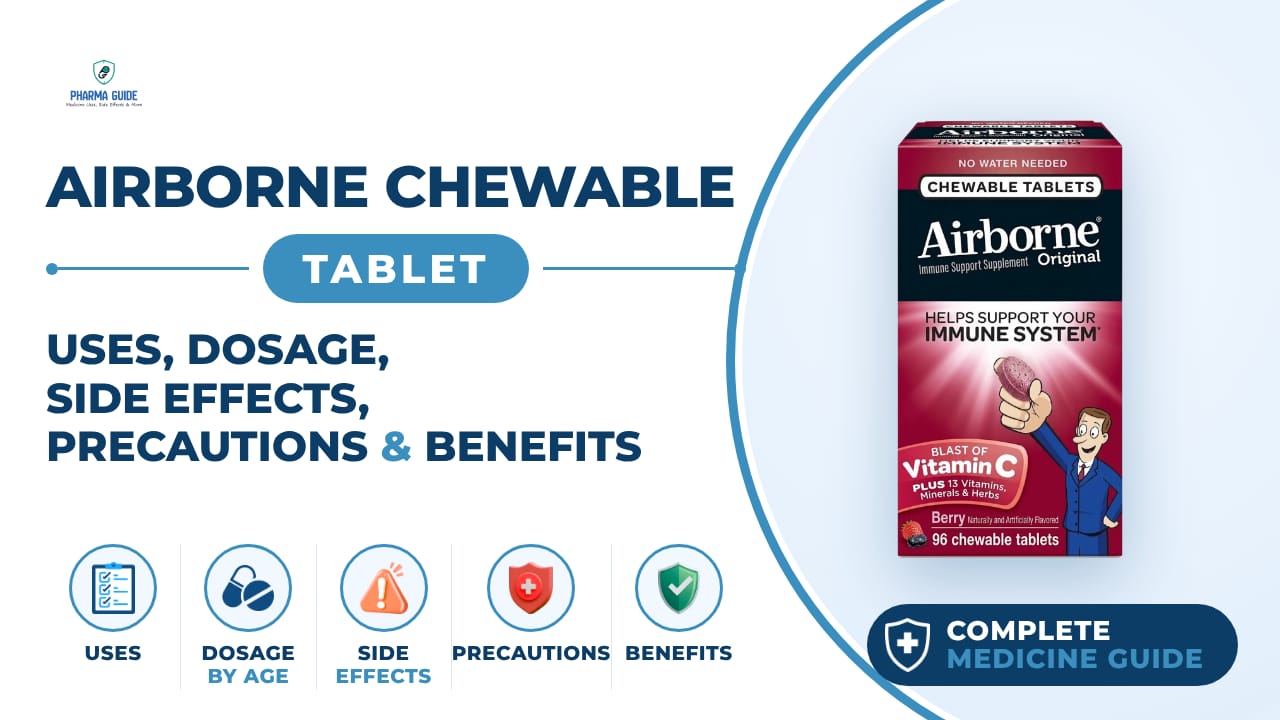
Airborne Chewable Tablet: Uses, Dosage, Side Effects, Precautions and Alternates
| Generic name | multivitamin with minerals |
|---|---|
| Drug class | vitamin and mineral combinations |
| Forms | gummy, chewable tablet, lozenge, tablet, powder |

Quick overview
Airborne Chewable Tablet is a dietary supplement, not a drug, containing a combination of vitamins, minerals, herbal extracts, amino acids, antioxidants, and electrolytes. It was originally marketed to help prevent the common cold and support immune function, though it has not gone through the same testing and approval process as medicines. It is generally intended for occasional, short-term use to supplement vitamin and mineral intake.
What is Airborne Chewable Tablet
Airborne is a dietary supplement that contains herbal extracts, amino acids, antioxidants, electrolytes, vitamins, and other ingredients. It was originally marketed to help prevent the common cold and support immune function, but it is sold as a supplement, not a drug, so it has not gone through the same testing and approval process as medicines.
Airborne Chewable Tablet uses
- Dietary vitamin supplementation.
- Supporting normal immune function.
- Supplementing vitamin C intake.
- Supplementing zinc and other minerals.
- Providing additional nutrients when dietary intake is insufficient.
Benefits of Airborne Chewable Tablet
- Supports normal immune system function.
- Provides vitamin C and other essential nutrients.
- Helps protect cells from oxidative stress.
- Supports normal collagen formation.
- Helps supplement dietary vitamin and mineral intake.
How Airborne Chewable Tablet works
Airborne's vitamins, minerals, and amino acids are involved in normal immune system function, but there is no strong evidence that the amounts in the supplement actually boost immunity or prevent colds.
Airborne Chewable Tablet dosage
Follow the directions on the product label for how many tablets to take and how often. Airborne is generally meant for occasional, short-term use rather than regular daily use over a long period.
People who are pregnant or breastfeeding should not take Airborne unless a healthcare provider tells them to. Children under 4 years old should not take Airborne; a children's gummy version is intended for ages 4 and up.
Talk to your healthcare provider before using Airborne if you take antacids, antibiotics, blood thinners, water pills, NSAIDs like ibuprofen or aspirin, sulfa drugs, or vitamin A-related medicines such as tretinoin or isotretinoin.
| Age group | Dose |
|---|---|
| Under 18 years | Not recommended |
| 18–64 years | 4 tablets, once/day |
| 65+ years | 4 tablets, once/day |
Available forms and strengths
- Gummy
- Chewable tablet
- Lozenge
- Tablet
- Powder
Side effects of Airborne Chewable Tablet
Common
- Upset stomach
- Nausea
- Abdominal discomfort
- Diarrhea
- Constipation
Serious
- Signs of an allergic reaction such as hives, difficulty breathing, or swelling of the face, lips, tongue, or throat
- In people with kidney failure, very high doses of vitamin C can cause serious problems such as oxalate deposits in bone and soft tissue and can interfere with how the body absorbs and uses vitamin B12
- Very high doses of vitamin C can increase oxalate and urate excretion and may cause kidney stones
Warnings and precautions
- Never take more than the recommended dose of this multivitamin and mineral product.
- There is no solid scientific evidence that Airborne tablets can prevent or lower the risk of colds, protect against germs, shorten a cold, or protect against illness in crowded places.
- People who may be allergic to any ingredient in Airborne should avoid it or check with a doctor first, and anyone taking other medications or with other health conditions should talk to a doctor before use.
- Taking more than the recommended amount of Airborne can cause an overdose of certain nutrients, especially vitamin C, which can cause stomach upset such as nausea, diarrhea, or cramps.
- People who are pregnant should not take Airborne unless a healthcare provider tells them to.
- People who are breastfeeding should not take Airborne unless a healthcare provider tells them to.
- People with kidney failure may be at higher risk of serious side effects from taking too much vitamin C, including oxalate deposits in bone and soft tissue and reduced absorption of vitamin B12.
- Follow the dosage instructions on your specific Airborne package.
- Ask a pediatrician before giving it to children.
- Consult a healthcare professional before use if pregnant, breastfeeding, taking medicines, or having a medical condition.
Storage
- Store in a cool, dry place.
- Keep the container tightly closed.
- Protect from direct sunlight and moisture.
- Keep out of reach of children.
- Do not use after the expiry date.
When to see a doctor
- Get emergency medical help right away if you have signs of an allergic reaction, such as hives, trouble breathing, or swelling of your face, lips, tongue, or throat.
Alternatives
- Centrum
- Redoxon
- Emergen-C
Watch the video
FAQs
What is Airborne Chewable Tablet used for?
It is used for dietary vitamin supplementation, supporting normal immune function, supplementing vitamin C and zinc, and providing extra nutrients when dietary intake is insufficient.
Does Airborne Chewable Tablet prevent colds?
There is no solid scientific evidence that Airborne can prevent or lower the risk of colds, protect against germs, shorten a cold, or protect against illness in crowded places.
What is the dosage for Airborne Chewable Tablet?
For adults aged 18 to 64 and those 65 and older, the dose is 4 tablets once a day. It is not recommended for people under 18 years old.
What are the side effects of Airborne Chewable Tablet?
Common side effects include upset stomach, nausea, abdominal discomfort, diarrhea, and constipation. Serious effects can include allergic reactions and, in people with kidney failure, complications from very high vitamin C doses.
Can pregnant or breastfeeding women take Airborne Chewable Tablet?
People who are pregnant or breastfeeding should not take Airborne unless a healthcare provider tells them to.
General information, not medical advice
Your prescriber and the leaflet in your pack know your situation. This page does not.
- Follow your prescriber and the leaflet
- Don't start, stop, or change a dose on your own
- Doses and warnings differ by country and product
Sources
Video
Related medicines
Centrum Advance Tablet: Uses, Dosage, Side Effects, Precautions and Alternates
vitamin and mineral combinations
Centrum Advance Tablet is a daily multivitamin with vitamin D and zinc that supports energy release, immune function, and metabolism alongside a healthy diet.
Caltrate Tablet: Uses, Dosage, Side Effects, Precautions and Alternates
Vitamin and mineral combinations
Caltrate Tablet combines calcium and vitamin D to support bone health, prevent deficiency, and reduce osteoporosis risk. Learn uses, dosage, and side effects.