
Safety
General information, not medical advice
Your prescriber and the leaflet in your pack know your situation. This page does not.
- Follow your prescriber and the leaflet
- Don't start, stop, or change a dose on your own
- Doses and warnings differ by country and product
Caltrate Tablet: Uses, Dosage, Side Effects, Precautions and Alternates
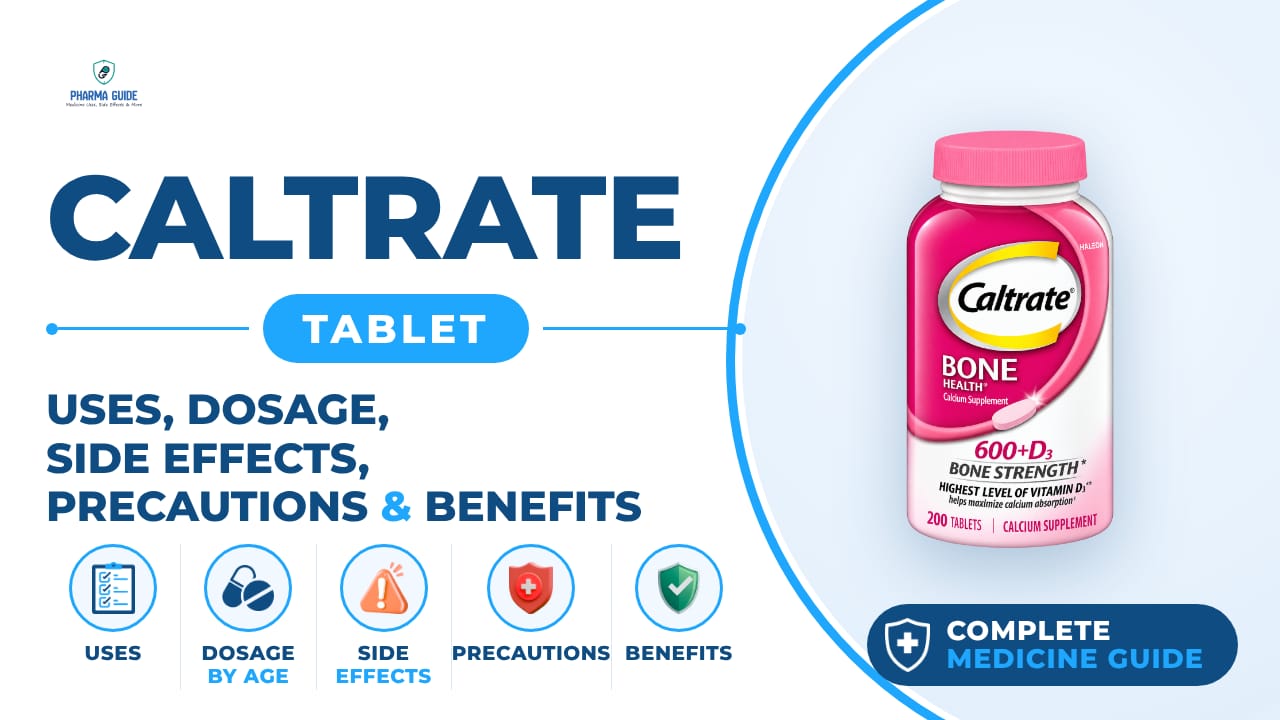
| Generic name | Calcium and vitamin D combination |
|---|---|
| Drug class | Vitamin and mineral combinations |
| Forms | Tablet, Chewable tablet, Soft chew, Gummy, Powder, Liquid |
Quick overview
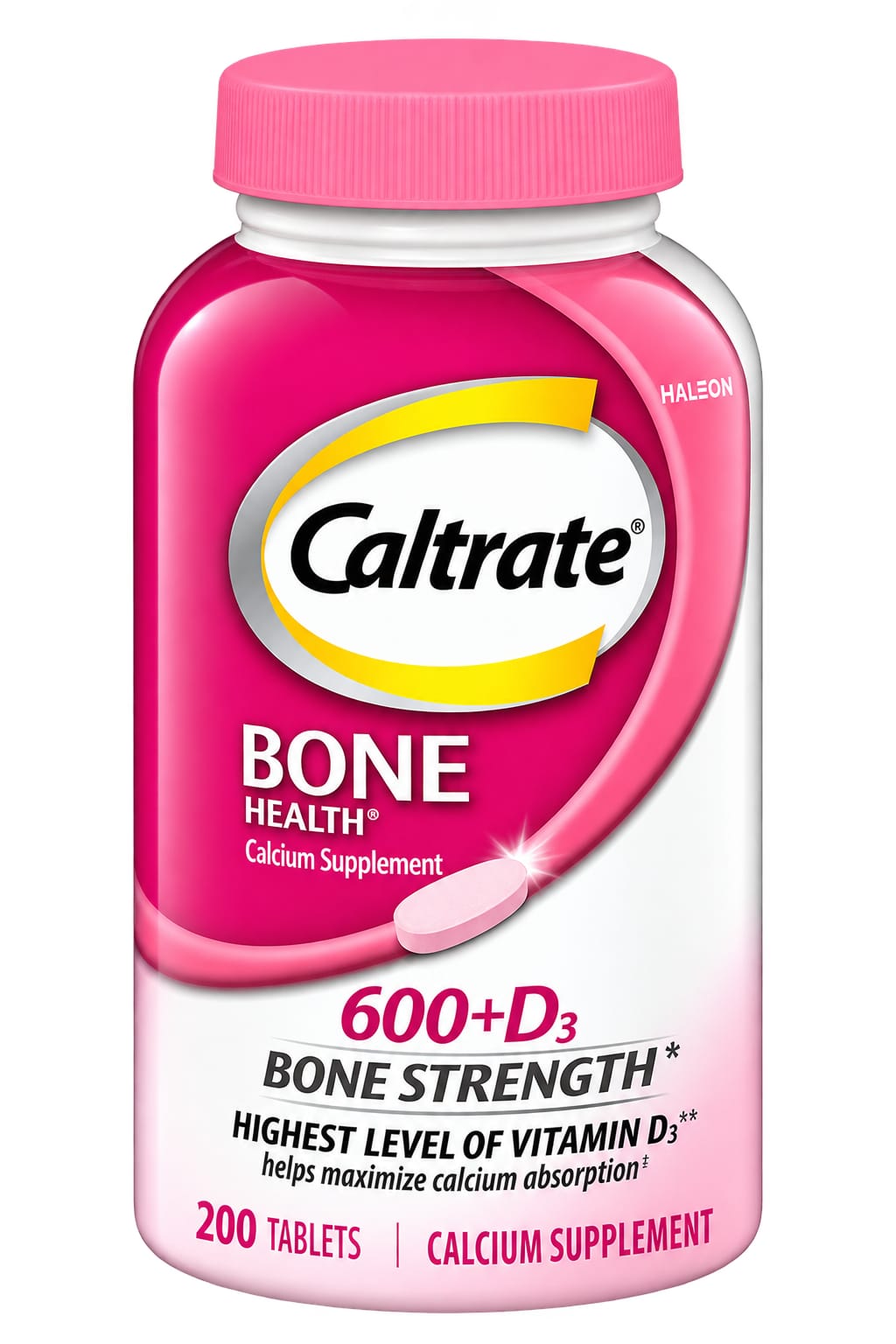
Caltrate Tablet is a combination of calcium and vitamin D, belonging to the vitamin and mineral combinations drug class. Calcium supports bone formation and maintenance, while vitamin D helps the body absorb calcium effectively. It is used to support bone health, treat or prevent calcium deficiency, and help reduce the risk of osteoporosis in various situations. Caltrate is available in several forms, including tablets, chewable tablets, soft chews, gummies, powder, and liquid.
What is Caltrate Tablet
Caltrate is a calcium and vitamin D supplement used to support bone health. Calcium is a mineral needed for bone formation and maintenance, and vitamin D helps the body absorb calcium.
Caltrate Tablet uses
- Caltrate 600+D Tablet is specially formulated to help strengthen bones and reduce the risk of osteoporosis by providing essential calcium and vitamin D.
- Caltrate 600 + D is used to treat or prevent a calcium deficiency.
- Caltrate is recommended in case of osteoporosis (bone decalcifications) in the elderly, following menopause, taking corticosteroids, in case of recovery of mobility in case of prolonged immobilization or in case of calcium deficiency following an increase in needs (growth, pregnancy, breastfeeding).
- It is used to help growth and good health.
- It is used to prevent or treat soft, brittle bones (osteoporosis).
Benefits of Caltrate Tablet
- Provides calcium for strong bones and teeth
- Contains vitamin D3 to enhance calcium absorption
- Helps prevent osteoporosis and bone-related issues
- Halal-certified and suitable for daily use
How Caltrate Tablet works
Caltrate provides calcium, which is needed for strong bones. Vitamin D3 helps your body absorb more of that calcium so it can reach your bones. Taking it regularly may help lower the risk of weak bones and fractures over time.
Caltrate Tablet dosage
Swallow the tablet whole with a glass of water, preferably during or after a meal for better absorption. Take with food, or without food depending on the specific product label — check your product's label. Chewable tablets should be chewed well before swallowing; some brands may be swallowed whole or dissolved in the mouth. Do not crush, chew, or break an extended-release tablet; swallow it whole. Take with a full glass of water.
It is recommended that Caltrate be taken at least 2 hours away from meals containing foods rich in oxalic acid (such as spinach, rhubarb, sorrel, cocoa, tea) or phytic acid (such as wholegrain cereals, pulses, oilseeds, chocolate).
| Age group | Dose |
|---|---|
| Under 12 Years | Use only if prescribed by a healthcare professional |
| 12–17 Years | Follow the age-specific product directions or medical advice |
| Adults (18–64 Years) | Usually 1 tablet daily with food, depending on product strength |
| Older Adults (65+ Years) | Usually 1 tablet daily with food, as advised |
Available forms and strengths
- Tablet
- Chewable tablet
- Soft chew
- Gummy
- Powder
- Liquid
Side effects of Caltrate Tablet
Common
- Irregular heartbeat
- Weakness, drowsiness, headache
- Dry mouth, or a metallic taste in the mouth
- Muscle or bone pain
- Mild stomach discomfort
- Constipation
- Bloating
- Gas
- Upset stomach or throwing up
Serious
- Signs of an allergic reaction: hives; difficult breathing; swelling of the face, lips, tongue, or throat
- Signs of too much calcium in the body: nausea, vomiting, constipation, increased thirst or urination, muscle weakness, bone pain, confusion, lack of energy, or feeling tired
- Digestive problems, itching, hives, and skin rash
Warnings and precautions
- Do not use this medicine if you have high calcium in the urine, high blood calcium, calcium-based kidney stones, or prolonged immobilization with excess calcium.
- This medicine should be used carefully if you have kidney problems.
- There are interactions with other medicines. Leave at least a 2-hour gap between doses if you are being treated with digitalis, thiazide diuretics, tetracycline antibiotics, iron salts, bisphosphonates, or estramustine.
- Ask a doctor or pharmacist if this medicine is safe for you if you have kidney disease, kidney stones, heart disease, cancer, high blood calcium levels, circulation problems, or a parathyroid gland disorder.
- Taking too much vitamin D can cause problems. Do not take more than your doctor recommends.
- If you are allergic to tartrazine (FD&C Yellow No. 5) or have phenylketonuria (PKU), talk with your doctor, as some products contain these substances.
- There is limited information about using this medicine during pregnancy. Use only if clearly needed, and ask your doctor before use.
- Use with caution while breastfeeding and watch the infant for any adverse reactions. Ask your doctor before use.
- Use cautiously if you have kidney problems; your doctor may need to adjust your dose or monitor you.
- Use cautiously if you have liver problems; liver function monitoring may be needed.
- There isn't much information available about combining alcohol with this medicine.
- There isn't much information available about how this medicine affects driving.
Storage
- Store at room temperature away from moisture and heat.
- Store at room temperature. Keep bottle tightly closed. Protect from moisture.
- Store at room temperature in a dry place. Do not store in a bathroom.
- Keep all drugs in a safe place. Keep all drugs out of the reach of children and pets.
- Throw away unused or expired drugs. Do not flush down a toilet or pour down a drain unless you are told to do so. Check with your pharmacist if you have questions about the best way to throw out drugs. There may be drug take-back programs in your area.
When to see a doctor
- Get emergency medical help right away if you notice signs of an allergic reaction such as hives, difficulty breathing, or swelling of your face, lips, tongue, or throat.
- Call your doctor right away if you have signs of too much calcium in your body, such as nausea, vomiting, constipation, increased thirst or urination, muscle weakness, bone pain, confusion, lack of energy, or feeling tired.
- Get medical help right away if you have signs of a severe allergic reaction, like rash, hives, itching, red or swollen or blistered or peeling skin (with or without fever), wheezing, chest or throat tightness, trouble breathing, swallowing or talking, unusual hoarseness, or swelling of the mouth, face, lips, tongue, or throat.
- Seek attention from your local doctor right away if a surgical wound becomes very red, hot, and more swollen, as this could be an infection.
- If you think there has been an overdose, get medical care right away and be ready to describe what was taken, how much, and when.
Alternatives
- Osteocare
- Calcium Sandoz
- Centrum Calcium
Watch the video
FAQs
What is Caltrate Tablet used for?
Caltrate Tablet is used to strengthen bones, treat or prevent calcium deficiency, and reduce the risk of osteoporosis, including in cases like menopause, aging, corticosteroid use, prolonged immobilization, or increased calcium needs during growth, pregnancy, or breastfeeding.
How should I take Caltrate Tablet?
Swallow the tablet whole with a glass of water, preferably during or after a meal. Chewable tablets should be chewed well before swallowing. Avoid taking it within 2 hours of foods rich in oxalic acid or phytic acid, as they can reduce calcium absorption.
What are the common side effects of Caltrate Tablet?
Common side effects include irregular heartbeat, weakness, drowsiness, headache, dry mouth or metallic taste, muscle or bone pain, mild stomach discomfort, constipation, bloating, gas, and upset stomach or vomiting.
Who should avoid taking Caltrate Tablet?
Caltrate should not be used by people with high calcium in urine or blood, calcium-based kidney stones, or prolonged immobilization with excess calcium. It should be used cautiously in those with kidney or liver problems.
What forms does Caltrate come in?
Caltrate is available in several forms, including tablets, chewable tablets, soft chews, gummies, powder, and liquid.
General information, not medical advice
Your prescriber and the leaflet in your pack know your situation. This page does not.
- Follow your prescriber and the leaflet
- Don't start, stop, or change a dose on your own
- Doses and warnings differ by country and product
Sources
Video
Related medicines
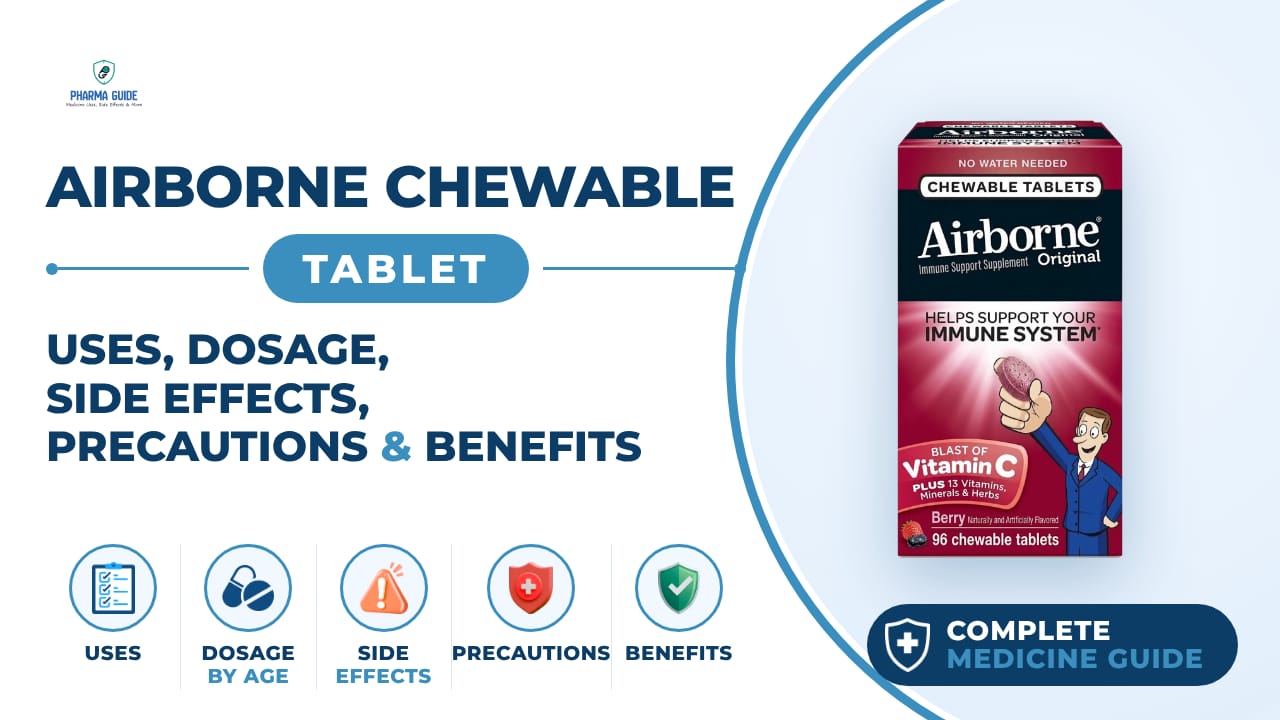
Airborne Chewable Tablet: Uses, Dosage, Side Effects, Precautions and Alternates
vitamin and mineral combinations
Airborne Chewable Tablet is a vitamin and mineral supplement for occasional immune support. Learn uses, dosage, side effects, and precautions.
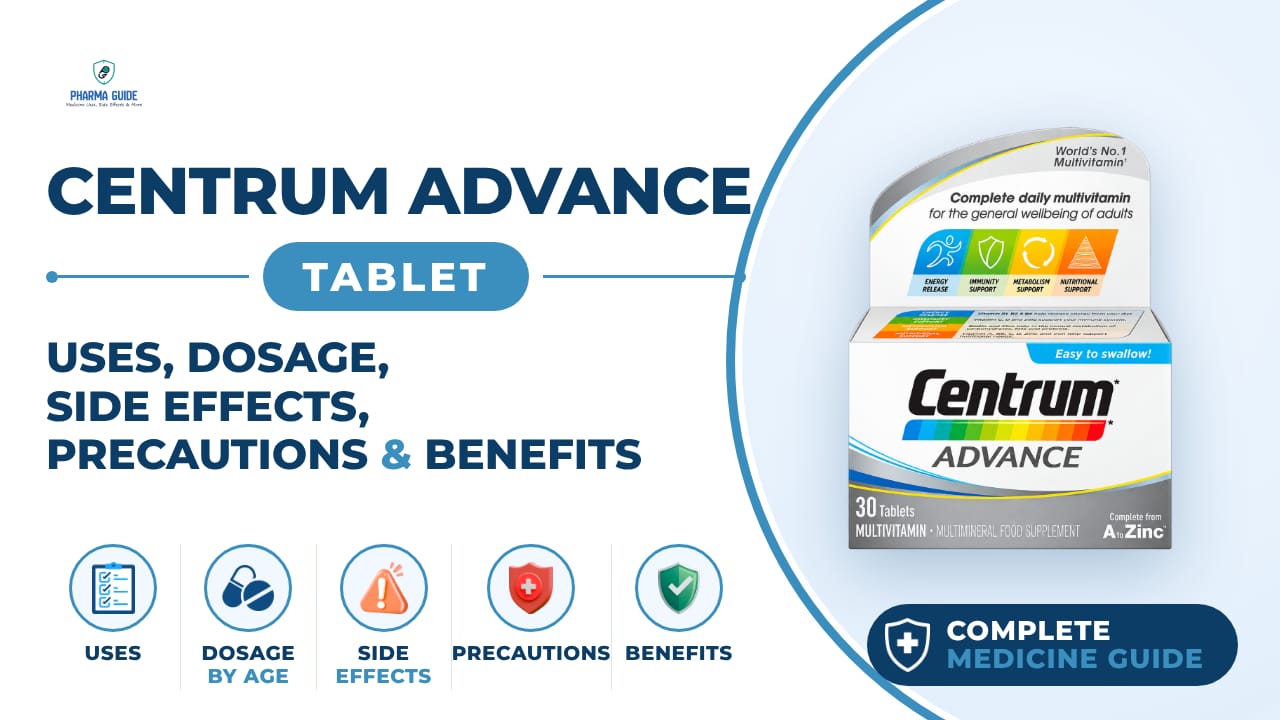
Centrum Advance Tablet: Uses, Dosage, Side Effects, Precautions and Alternates
vitamin and mineral combinations
Centrum Advance Tablet is a daily multivitamin with vitamin D and zinc that supports energy release, immune function, and metabolism alongside a healthy diet.