
Safety
General information, not medical advice
Your prescriber and the leaflet in your pack know your situation. This page does not.
- Follow your prescriber and the leaflet
- Don't start, stop, or change a dose on your own
- Doses and warnings differ by country and product
Aldactone-A Tablet: Uses, Dosage, Side Effects, Precautions and Alternates
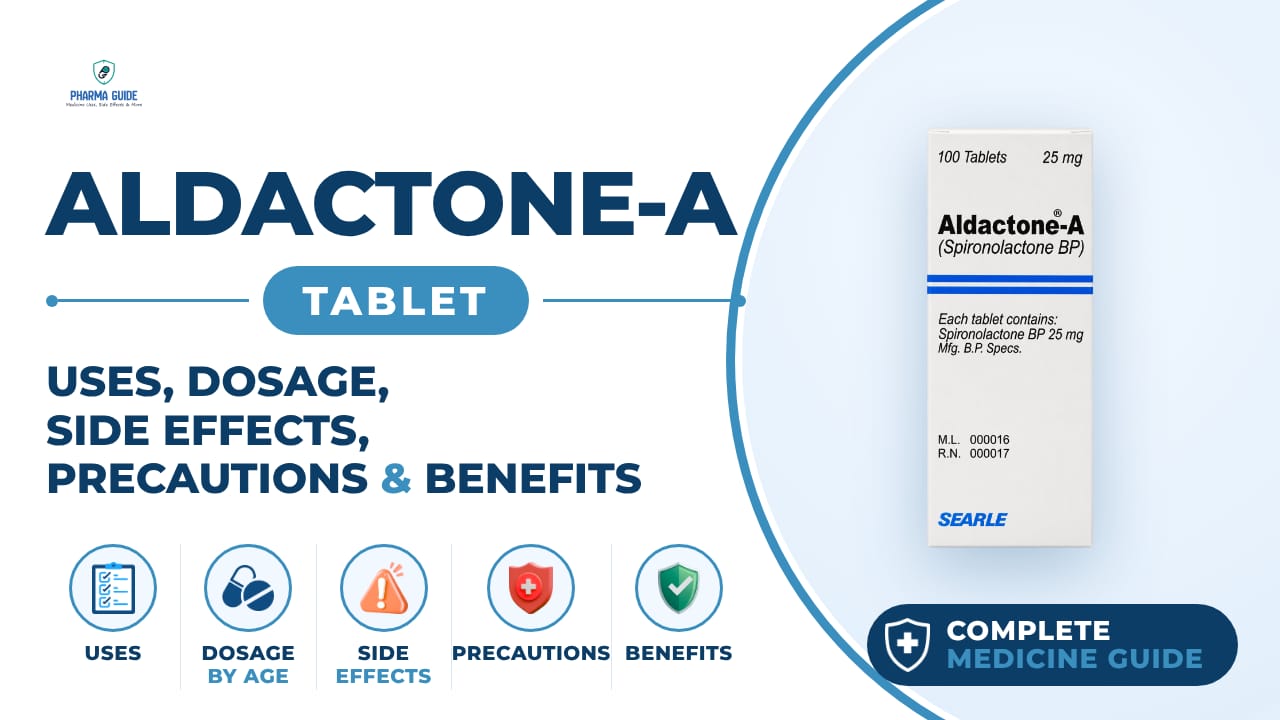
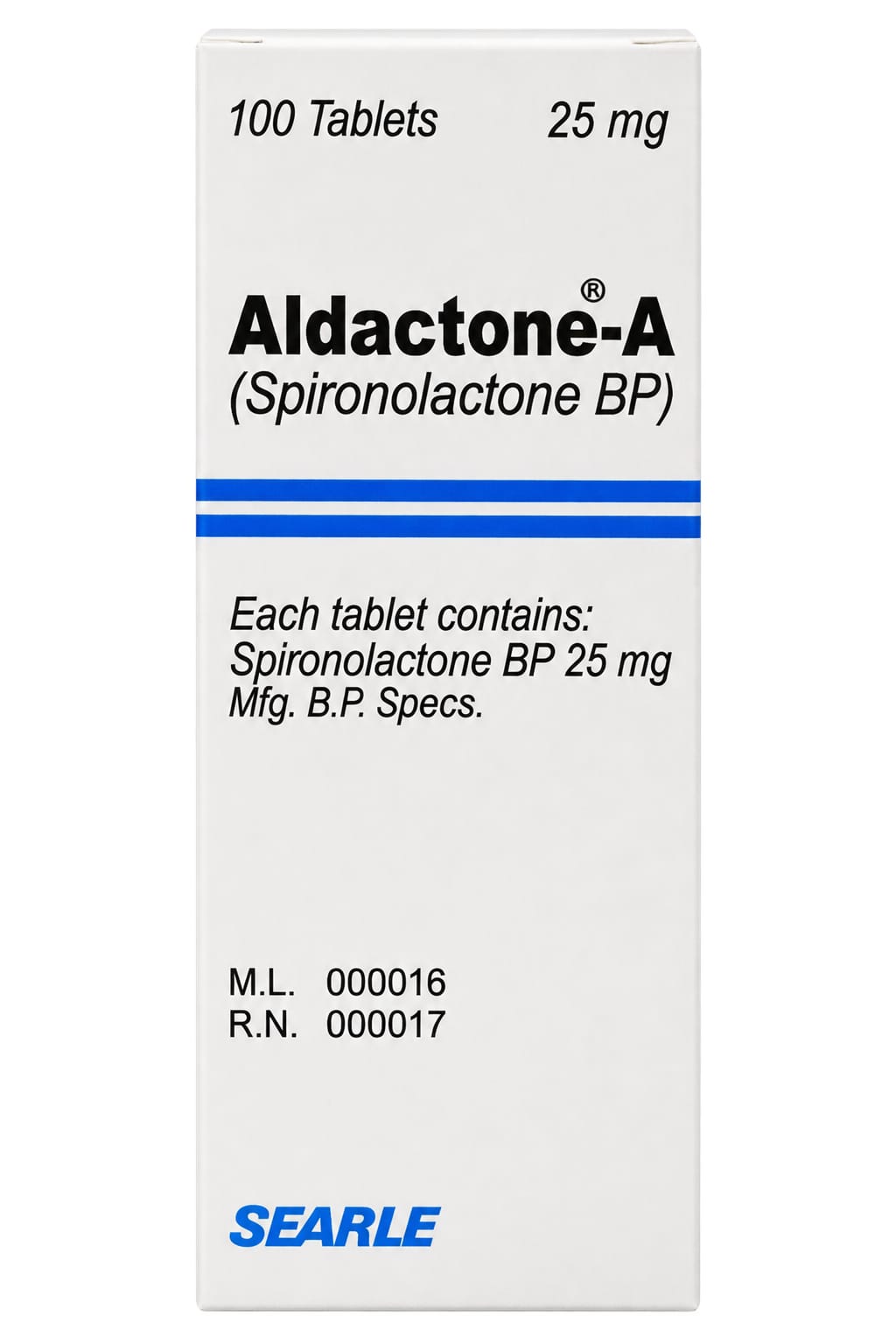
| Generic name | Spironolactone |
|---|---|
| Drug class | Aldosterone receptor antagonist (potassium-sparing diuretic) |
| Forms | Oral tablet (25 mg, 50 mg, 100 mg strengths mentioned across sources) |
Quick overview
Aldactone-A Tablet contains spironolactone, a potassium-sparing diuretic that works by blocking the hormone aldosterone. It is used for high blood pressure, swelling or fluid buildup from heart, liver, or kidney conditions, primary hyperaldosteronism, and low potassium levels. It helps the body remove extra salt and water while holding on to potassium. It should be used exactly as prescribed, with attention to kidney and liver function, potassium intake, and pregnancy status.
What is Aldactone-A Tablet
Aldactone-A is a tablet medicine containing spironolactone. It is a type of water pill (diuretic) that helps your body get rid of extra salt and water without losing too much potassium.
Aldactone-A Tablet uses
- High blood pressure (hypertension)
- Swelling and fluid buildup (edema) from heart failure, liver disease, or kidney problems
- Primary hyperaldosteronism (a condition where the body makes too much of a hormone called aldosterone)
- Low potassium levels (hypokalemia)
Benefits of Aldactone-A Tablet
- Helps lower blood pressure
- Reduces swelling and fluid retention caused by heart, liver, or kidney conditions
- Helps balance potassium levels in the blood
- Can help reduce the need for hospital stays in people with severe heart failure
How Aldactone-A Tablet works
This medicine blocks the hormone aldosterone from working in the kidneys. This causes the kidneys to remove extra salt and water from the body while holding on to potassium, which helps control blood pressure and reduce swelling.
Aldactone-A Tablet dosage
This medicine can be taken with or without food, but take it the same way every time. It is usually taken once a day in the morning, or split into two doses with breakfast and lunch. Try to take your dose at the same time each day. Tablets can be split, cut in half, or crushed if your doctor approves, but should not be chewed and should be swallowed. If you miss a dose, take it as soon as you remember, but if it is almost time for your next dose, skip the missed one — do not take two doses together. Keep taking this medicine even if you feel well, especially for high blood pressure, since it often has no symptoms. Avoid salt substitutes, potassium supplements, and foods very high in potassium such as bananas, prunes, raisins, and orange juice unless your doctor tells you otherwise.
| Age group | Dose |
|---|---|
| Children | Dose based on body weight and medical condition (only as prescribed) |
| Adults (18–64 Years) | 1 tablet once daily; dose depends on strength and condition |
| Older Adults (65+ Years) | Lower starting dose may be required, adjusted according to kidney function and response |
Available forms and strengths
- Oral tablet (25 mg, 50 mg, 100 mg strengths mentioned across sources)
Side effects of Aldactone-A Tablet
Common
- Confusion
- Dizziness
- Drowsiness
- Headache
- Itching
- Menstrual problems, including irregular periods and bleeding after menopause
- Nausea and vomiting
- Diarrhea
- Reduced sex drive and erectile dysfunction
- Abdominal cramps
- Breast swelling or tenderness
- Muscle cramps or spasms
- Loss of appetite
- Dry mouth or thirst
- Frequent urination
Serious
- Increased urination
- Dizziness
- Low blood pressure
- Dehydration
- Increased potassium levels
- Low sodium levels
Warnings and precautions
- Do not use potassium supplements or salt substitutes unless your doctor tells you to, and avoid foods high in potassium such as bananas, prunes, raisins, and orange juice, since this medicine can cause high potassium levels.
- This medicine can cause breast enlargement (gynecomastia) which is usually reversible if the drug is stopped, though in rare cases some breast enlargement may not go away.
- This medicine can cause serious problems with body salts and fluids, including high or low potassium, low sodium, and kidney effects, especially in older adults and people with existing kidney or liver problems.
- In people with severe liver cirrhosis, this medicine can sometimes cause a reversible acid imbalance in the blood, and strong water-pill treatment may trigger serious brain effects related to liver disease.
- Do not take this medicine if you cannot pass urine, have severe kidney disease, have high potassium levels, have Addison's disease, or are allergic to spironolactone.
- This medicine should not be used during pregnancy. Talk to your doctor about birth control if you can become pregnant.
- It is not recommended to breastfeed while using this medicine, as it can pass into breast milk.
- This medicine should be used carefully in people with kidney problems, and should not be used at all in people with severe kidney disease or no urine output.
- People with liver problems should use this medicine carefully, since changes in body fluid and salt levels can trigger serious liver-related complications.
- Drinking alcohol can make some side effects worse, including dizziness and low blood pressure. Talk to your doctor about how much alcohol is safe for you.
- This medicine can cause dizziness, drowsiness, or fainting, especially when you first start taking it. Avoid driving or operating machinery until you know how it affects you.
Storage
- Store this medicine at room temperature, away from direct light and heat.
- Store at 15 to 25°C, away from heat and moisture.
- Keep out of reach and sight of children.
When to see a doctor
- Get emergency help right away if you have signs of a severe allergic reaction, such as hives, trouble breathing, or swelling of your face, lips, tongue, or throat.
- Call your doctor right away if you feel like you might pass out, have little or no urination, or have signs of high potassium such as nausea, weakness, tingling, chest pain, or irregular heartbeat.
- Seek medical help if you notice signs of other salt imbalances, such as increased thirst or urination, confusion, vomiting, muscle pain, slurred speech, severe weakness, numbness, or loss of coordination.
- Get urgent medical attention if you notice severe skin reactions like blistering, peeling skin, or sores in the mouth, eyes, or genitals, which can be signs of a serious skin condition.
- If you think you or someone else has taken too much of this medicine, contact a doctor, hospital emergency department, or your local poison control center right away, even if there are no symptoms yet.
Alternatives
- Spironolactone
- Bumetanide
- Eplerenone
Watch the video
FAQs
What is Aldactone-A Tablet used for?
It is used for high blood pressure, swelling or fluid buildup from heart, liver, or kidney conditions, primary hyperaldosteronism, and low potassium levels.
How does Aldactone-A Tablet work?
It blocks the hormone aldosterone from working in the kidneys, causing the kidneys to remove extra salt and water while holding on to potassium, which helps control blood pressure and reduce swelling.
What foods should be avoided while taking Aldactone-A Tablet?
Avoid salt substitutes, potassium supplements, and foods very high in potassium such as bananas, prunes, raisins, and orange juice unless your doctor tells you otherwise, since this medicine can cause high potassium levels.
What are the common side effects of Aldactone-A Tablet?
Common side effects include confusion, dizziness, drowsiness, headache, itching, menstrual problems, nausea and vomiting, diarrhea, reduced sex drive, breast swelling or tenderness, muscle cramps, loss of appetite, dry mouth, and frequent urination.
Can Aldactone-A Tablet be used during pregnancy?
No, this medicine should not be used during pregnancy, and you should talk to your doctor about birth control if you can become pregnant.
General information, not medical advice
Your prescriber and the leaflet in your pack know your situation. This page does not.
- Follow your prescriber and the leaflet
- Don't start, stop, or change a dose on your own
- Doses and warnings differ by country and product
Sources
Video
Related medicines
Spironolactone Tablet: Uses, Dosage, Side Effects, Precautions and Alternates
Aldosterone receptor antagonist (potassium-sparing diuretic)
Spironolactone tablet is a potassium-sparing diuretic for heart failure, high blood pressure, fluid retention, and low potassium. Learn dosage, side effects,

Injectafer Injection: Uses, Dosage, Side Effects, Precautions and Alternates
Iron products
Injectafer (ferric carboxymaltose) treats iron deficiency anemia and heart failure-related iron deficiency via IV. Learn uses, dosage, side effects, and