
Safety
General information, not medical advice
Your prescriber and the leaflet in your pack know your situation. This page does not.
- Follow your prescriber and the leaflet
- Don't start, stop, or change a dose on your own
- Doses and warnings differ by country and product
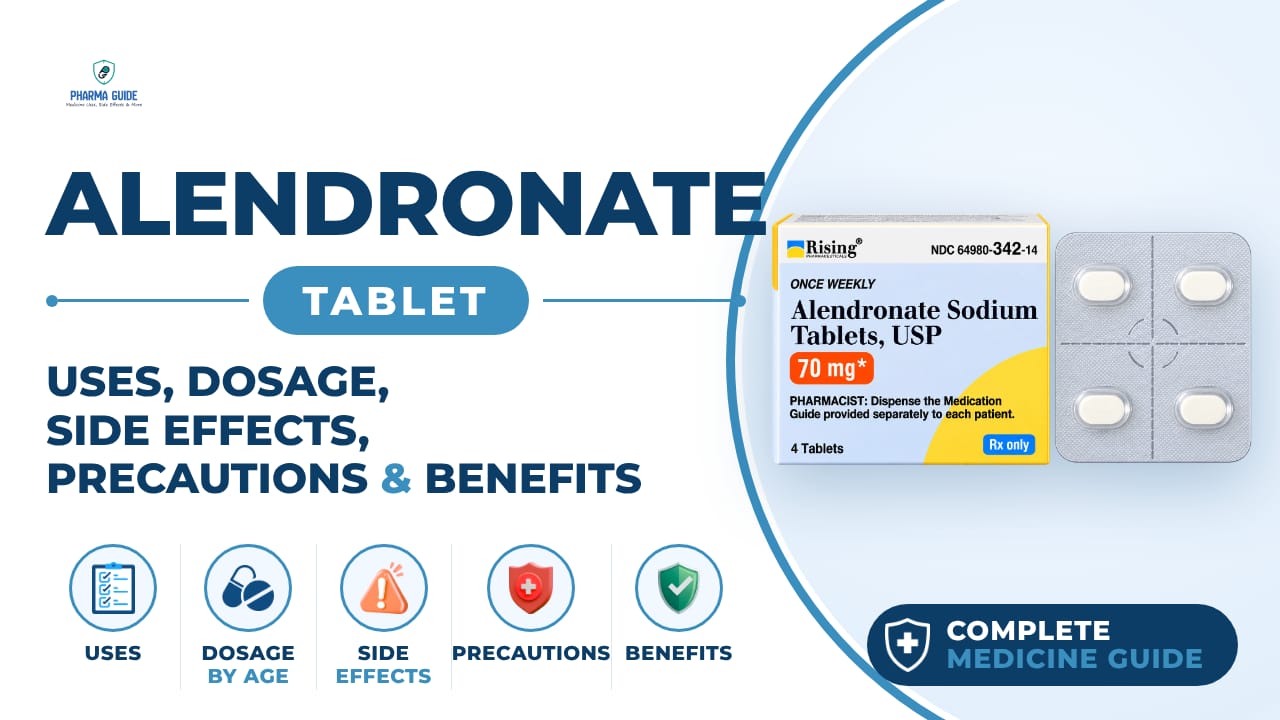
Alendronate Tablet: Uses, Dosage, Side Effects, Precautions and Alternates
| Generic name | Alendronic acid (alendronate sodium) |
|---|---|
| Drug class | Bisphosphonate |
| Forms | Tablet, Oral solution, Effervescent (dissolvable) tablet |
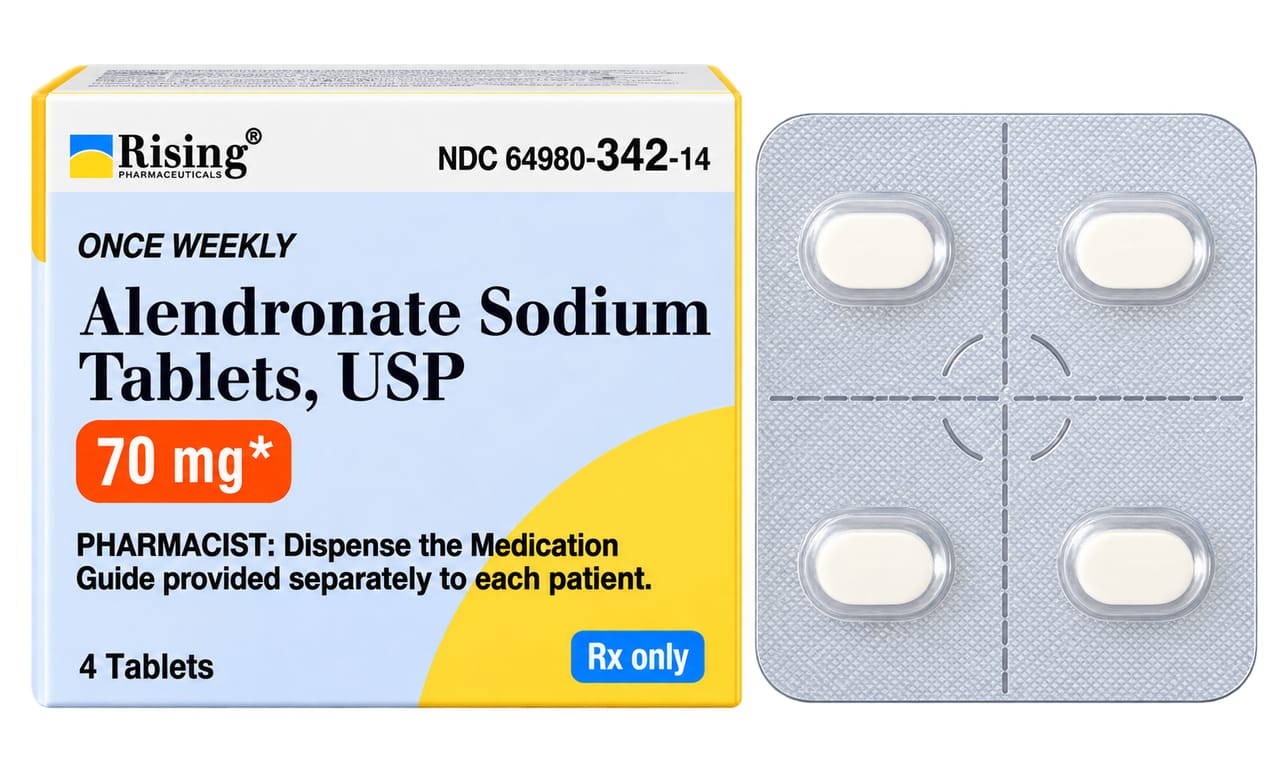
Quick overview
Alendronate Tablet (alendronic acid, alendronate sodium) is a prescription bisphosphonate medicine used to treat bone diseases such as osteoporosis, where bones become more porous, weaker, and more likely to break. It is used in postmenopausal women, men, people on long-term steroids, and people with Paget's disease of bone. It works by slowing bone breakdown, which helps make bones stronger over time.
What is Alendronate Tablet
Alendronate is a prescription medicine that belongs to a group of medicines called bisphosphonates. It is used to treat bone diseases like osteoporosis, where bones become more porous, weaker, and more likely to break.
Alendronate Tablet uses
- Treatment and prevention of osteoporosis in postmenopausal women
- Treatment to increase bone mass in men with osteoporosis
- Treatment of glucocorticoid (steroid)-induced osteoporosis
- Treatment of Paget's disease of bone
Benefits of Alendronate Tablet
- Increases bone mass and reduces the chance of fractures, including hip and spine fractures, in postmenopausal women
- Increases bone mass in men with osteoporosis
- Reduces height loss related to spinal fractures
How Alendronate Tablet works
Alendronate attaches to bone and slows down the breakdown of old bone. This gives bone-building cells time to rebuild normal bone, which makes bones stronger and less likely to break.
Alendronate Tablet dosage
Take this medicine first thing in the morning, before eating, drinking, or taking any other medicine for the day. Swallow the tablet whole with a full glass of plain water only; do not use mineral water, coffee, tea, soda, or juice. Do not chew, suck, or crush the tablet, since this can irritate or ulcerate the mouth or throat. Take the tablet while sitting or standing, not lying down.
After taking the tablet, stay upright (sitting, standing, or walking) for at least 30 minutes and until after you have eaten your first food of the day. Do not take this medicine at bedtime or before getting up for the day. Wait at least 30 minutes after taking this medicine before taking other medicines, including antacids, calcium, or other supplements.
If taking the weekly dose, choose one day each week that fits your schedule and take it on that same day every week. If you miss a weekly dose, take it the next morning you remember, then go back to your normal weekly schedule; do not take two doses on the same day. If you miss a daily dose, do not take it later in the day; skip the missed dose and continue your normal schedule the next day.
| Age group | Dose |
|---|---|
| Under 18 years | Not recommended |
| 18–64 years | 70 mg once weekly or 10 mg once daily |
| 65+ years | 70 mg once weekly or 10 mg once daily |
Available forms and strengths
- Tablet
- Oral solution
- Effervescent (dissolvable) tablet
Side effects of Alendronate Tablet
Common
- Stomach or abdominal pain
- Heartburn or acid regurgitation
- Indigestion (dyspepsia)
- Nausea
- Constipation
- Diarrhea
- Passing gas (flatulence)
- Bone, joint, or muscle pain
- Headache
- Unusual taste
- Hair loss
- Flu-like symptoms such as aching muscles or feeling unwell
Serious
- Difficulty or pain when swallowing, chest pain, or new or worsening heartburn (possible esophagus problems)
- Muscle spasms, twitches, cramps, or numbness/tingling around the mouth, fingers, or toes (signs of low blood calcium)
- Severe or incapacitating bone, joint, or muscle pain
- Jaw pain, swelling, numbness, loose teeth, or delayed healing after dental work (possible jawbone problems)
- New or unusual pain in the hip, groin, or thigh (possible unusual thigh bone fracture)
- Allergic reactions such as hives, swelling of the face, lips, tongue, or throat, or trouble breathing
- Severe skin reactions, including blistering or peeling skin
- Black, tar-like, or bloody stools
- Worsening of asthma
- Eye pain, redness, or blurred vision
Warnings and precautions
- This medicine can cause irritation, inflammation, or ulcers of the esophagus (the tube connecting the mouth and stomach), which may sometimes bleed.
- Stop taking it and call your doctor right away if you get chest pain, new or worsening heartburn, or pain or trouble swallowing.
- This medicine can lower the calcium level in your blood. Low blood calcium must be treated before starting this medicine, since it can get worse during treatment.
- Some people taking this medicine have developed severe jawbone problems. Your doctor may want you to see a dentist before starting treatment, and good mouth care is important during treatment.
- Some people taking this medicine have had unusual fractures in the thigh bone, which can happen with little or no injury. Symptoms may include new or unusual pain in the hip, groin, or thigh.
- Do not take this medicine if you have certain esophagus problems, cannot sit or stand upright for at least 30 minutes, have low blood calcium, or are allergic to it or any of its ingredients.
- It is not known if this medicine can harm an unborn baby. Tell your doctor if you are pregnant, trying to become pregnant, or think you might be pregnant. If you become pregnant while taking this medicine, stop taking it and contact your doctor.
- It is not known if this medicine passes into breast milk or if it could harm a nursing baby. Tell your doctor if you are breastfeeding or plan to breastfeed.
- This medicine is not recommended for people with serious kidney problems. Tell your doctor if you have kidney disease.
- Tell your doctor if you drink alcohol. Drinking too much alcohol regularly may increase your risk of developing osteoporosis, so you may need to cut down.
- Be careful when driving or using machines until you know how this medicine affects you, since it can make some people feel dizzy, giddy, or cause blurred vision.
Storage
- Store in a well-closed container at room temperature, 20° to 25°C (68° to 77°F); brief exposure to 15° to 30°C (59° to 86°F) is permitted
- Keep the tablets in the blister pack until it is time to take them
- Store in a cool, dry place away from moisture, heat, or sunlight; do not store in the bathroom, near a sink, in the car, or on window sills
- Keep out of the reach of children
- If you no longer need the medicine or it is out of date, take it to a pharmacy for safe disposal; do not use after the expiry date
When to see a doctor
- Stop taking this medicine and call your doctor right away if you get chest pain, new or worsening heartburn, or trouble or pain when swallowing
- Call your doctor right away if you have symptoms of low blood calcium, such as muscle spasms, twitches, or cramps, or numbness or tingling in your fingers, toes, or around your mouth
- Tell your doctor immediately if you develop pain in your hip or thigh, as this may be a sign of a stress fracture
- Tell your doctor immediately if you break a bone or develop bone, muscle, or joint pain
- Call your doctor or go to the emergency department right away if you notice signs of an allergic reaction, such as shortness of breath, wheezing, swelling of the face, lips, tongue, or other body parts, rash, itching, hives, or severe skin reactions
- Go to the emergency department if you notice black, tar-like, or bloody stools, which may indicate a severe stomach or duodenal ulcer
- Tell your doctor and dentist right away if you develop jaw pain, swelling, infection, or delayed healing, especially after dental work
Alternatives
- Risedronate
- Ibandronate
- Teriparatide
Watch the video
FAQs
What is Alendronate Tablet used for?
It treats and prevents osteoporosis in postmenopausal women, increases bone mass in men with osteoporosis, treats glucocorticoid (steroid)-induced osteoporosis, and treats Paget's disease of bone.
How should I take Alendronate Tablet?
Take it first thing in the morning before eating, drinking, or taking other medicine, with a full glass of plain water, while sitting or standing. Stay upright for at least 30 minutes and until after your first food of the day, and do not take it at bedtime or before getting up.
What should I do if I miss a dose of Alendronate?
If you miss a weekly dose, take it the next morning you remember, then resume your normal weekly schedule without taking two doses the same day. If you miss a daily dose, skip it and continue your normal schedule the next day.
What are the serious side effects of Alendronate Tablet?
Serious effects include esophagus problems (pain or difficulty swallowing, chest pain, worsening heartburn), low blood calcium symptoms, severe bone/joint/muscle pain, jawbone problems, unusual thigh bone fractures, allergic reactions, severe skin reactions, and black or bloody stools.
Who should not take Alendronate Tablet?
It should not be taken by people with certain esophagus problems, those who cannot sit or stand upright for at least 30 minutes, those with low blood calcium, or anyone allergic to it or its ingredients. It is also not recommended for people with serious kidney problems.
General information, not medical advice
Your prescriber and the leaflet in your pack know your situation. This page does not.
- Follow your prescriber and the leaflet
- Don't start, stop, or change a dose on your own
- Doses and warnings differ by country and product
Sources
Video
Related medicines
Zoledronic Acid Injection: Uses, Dosage, Side Effects, Precautions and Alternates
bisphosphonate
Zoledronic Acid Injection treats osteoporosis, Paget's disease, and cancer-related bone problems. Learn about its uses, dosage, side effects, and precautions.
Fosamax Tablet: Uses, Dosage, Side Effects, Precautions and Alternates
Bisphosphonate
Fosamax Tablet (alendronate) treats and prevents osteoporosis and Paget's disease by slowing bone loss. Learn dosage, side effects, and precautions.