
Safety
General information, not medical advice
Your prescriber and the leaflet in your pack know your situation. This page does not.
- Follow your prescriber and the leaflet
- Don't start, stop, or change a dose on your own
- Doses and warnings differ by country and product
Alerid Tablet: Uses, Dosage, Side Effects, Precautions and Alternates
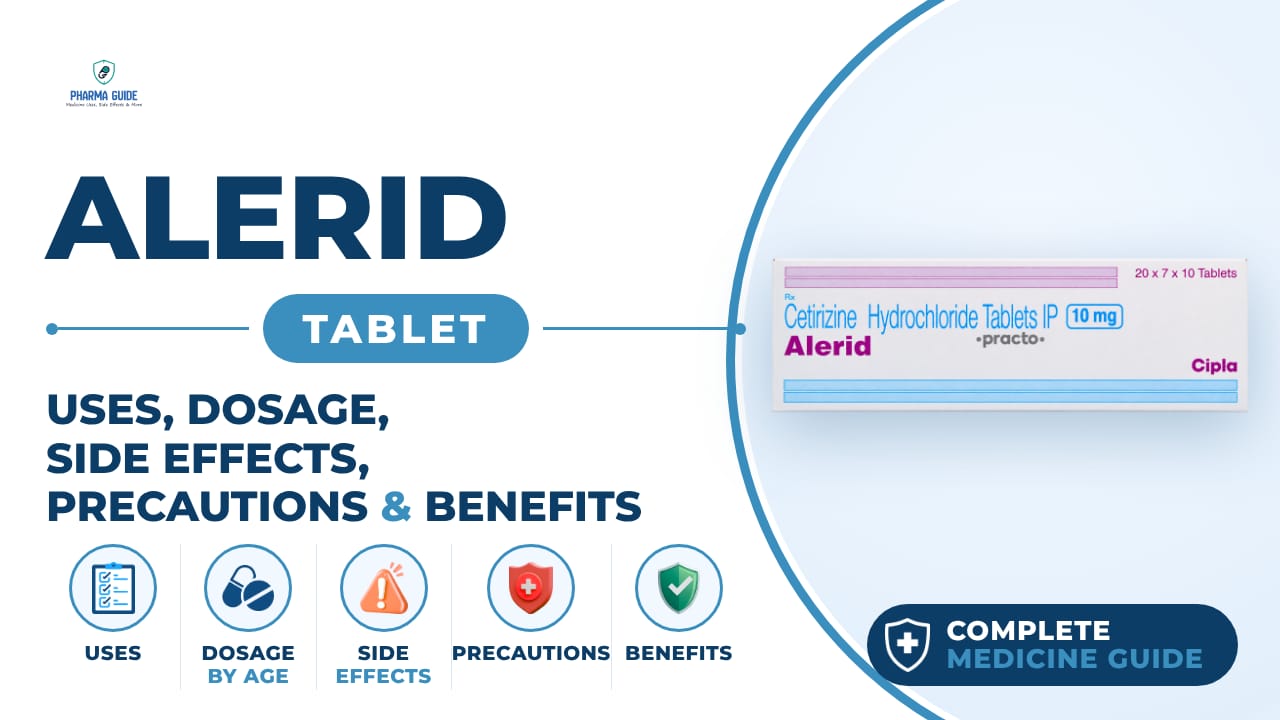
| Generic name | Cetirizine |
|---|---|
| Drug class | Antihistamine |
| Forms | Tablet, Syrup |
Quick overview
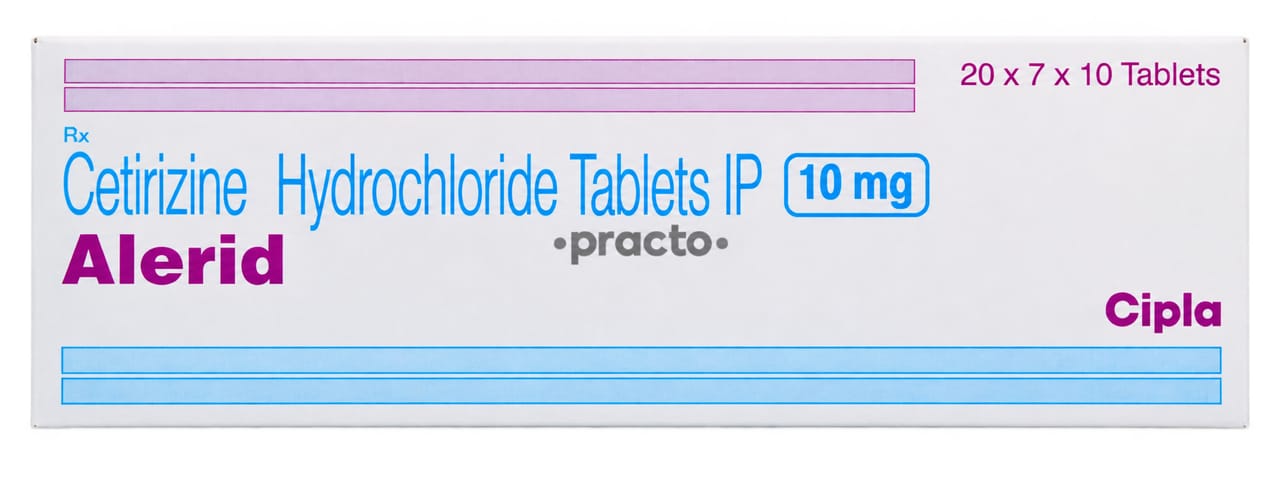
Alerid Tablet contains cetirizine, an antihistamine used to treat common allergy symptoms such as sneezing, runny nose, itchy throat, itchy or watery eyes, and skin rash. It works by blocking histamine, the chemical responsible for these allergic reactions. It is available as a tablet and syrup, and dosage depends on age. It is not recommended for children under 6 years old.
What is Alerid Tablet
Alerid Tablet is an anti-allergic medicine (antihistamine) used to treat common allergy symptoms such as sneezing, runny nose, itchy throat, itchy or watery eyes, and skin rash.
Alerid Tablet uses
- Allergic Rhinitis (runny nose, sneezing from pollen, dust, pet dander)
- Chronic Urticaria / Chronic Hives (itchy, raised hives on skin)
- Skin Allergies (itching and redness)
- Conjunctivitis
- Allergic reactions from insect bites and stings
Benefits of Alerid Tablet
- Provides relief from blocked or runny nose, sneezing, and itchy or watery eyes
- Helps relieve allergic reactions from insect bites
- Eases symptoms of hives and eczema such as rash, swelling, itching, and irritation
- Has minimal side effects for many people
- Can be taken flexibly, only on days with symptoms, or regularly for prevention
How Alerid Tablet works
Alerid Tablet contains cetirizine, an antihistamine that blocks the action of histamine, a chemical the body releases during an allergic reaction. Histamine causes sneezing, a runny or stuffy nose, itching, and watery eyes, so blocking it reduces these allergy symptoms.
Alerid Tablet dosage
Alerid Tablet can be taken with or without food. Take the tablet with a glass of water, and swallow it whole without crushing or chewing it. Take it at the same time each day for better results, often recommended in the evening or at bedtime, following your doctor's instructions. Finish the entire course of treatment even if you feel better, since stopping suddenly may cause symptoms to return. This medicine is not recommended for children below 6 years of age.
| Age group | Dose |
|---|---|
| Under 2 Years | Use only if prescribed by a healthcare professional |
| 2–5 Years | 2.5–5 mg once daily as directed |
| 6–11 Years | 5–10 mg once daily |
| 12–64 Years | 10 mg once daily |
| Older Adults (65+ Years) | 5–10 mg once daily; adjust if kidney problems are present |
Available forms and strengths
- Tablet
- Syrup
Side effects of Alerid Tablet
Common
- Sleepiness
- Tiredness
- Dizziness
- Headache
- Diarrhoea
- Nausea
- Dry mouth
- Stomach pain
- Change or loss of taste
- Blurred vision
- Sore throat
Serious
- Drowsiness or sleepiness
- Fatigue
- Dry mouth
- Headache
- Dizziness
- Stomach discomfort
Warnings and precautions
- There is not enough safety information about this medicine in pregnant women, so the risk to the baby is not known. If you are pregnant, only use it if your doctor has prescribed it.
- This medicine passes into breast milk. A high dose or long-term use may cause drowsiness and other effects in your baby. Talk to your doctor before using it while breastfeeding.
- Do not use this medicine if you have severe kidney problems, because impaired kidneys cannot clear it properly, which can cause the drug to build up and lead to serious side effects. People with milder kidney problems should ask their doctor about dose adjustments.
- Use this medicine with extreme caution if you have mild to moderate liver problems. Your doctor may check your liver function while you use it.
- Drinking alcohol while taking this medicine is not recommended, as it can increase the risk of side effects like dizziness, drowsiness, and trouble concentrating.
- This medicine may cause dizziness or drowsiness. Avoid driving or operating machinery if you feel these effects while taking it.
- Avoid this medicine if you are allergic to it. If you notice worsening allergic symptoms like skin rash, redness, itching, sneezing, or breathing difficulties after taking it, get medical help right away.
- This medicine may increase sleepiness and impaired thinking when taken with other medicines that have a sedative effect. Tell your doctor about all the medicines and supplements you are taking.
- Elderly people should use this medicine with caution because they have a higher risk of side effects. Doctors may suggest closer monitoring, dose changes, or a different medicine depending on the person's condition.
- This medicine is not recommended for children under 6 years old because there isn't enough safety and effectiveness information for that age group.
- Use this medicine cautiously if you have trouble emptying your bladder completely (urinary retention), as it may make this condition worse.
- This medicine may cause excessive drowsiness. Use caution with sedative-type medicines like sleeping pills or tranquilizers, and get medical help right away if you have serious side effects.
Storage
- Store at room temperature between 20-25°C (68-77°F)
- Keep the tablets in their original packaging to protect from moisture
- Store away from direct sunlight and heat sources
- Keep out of reach of children and pets
- Do not use the tablets if they are past their expiration date
- Store in a dry place, away from excess humidity
- Do not transfer tablets to other containers unless directed by a doctor
- Dispose of any unused or expired medication properly according to local regulations
When to see a doctor
- Get medical help immediately if you notice worsening allergic symptoms such as skin rash, redness, itching, sneezing, or difficulty breathing after taking this medicine.
- If you take too much of this medicine by accident, get medical help right away. Signs of taking too much can include drowsiness, extreme tiredness, and dry mouth.
- Contact your doctor if side effects like sleepiness, tiredness, nausea, or dry mouth continue for a long time or become severe.
Alternatives
- Levocetirizine
- Desloratadine
- Bilastine
Watch the video
FAQs
What is Alerid Tablet used for?
Alerid Tablet is used to treat allergic rhinitis, chronic urticaria, skin allergies, conjunctivitis, and allergic reactions from insect bites and stings.
How does Alerid Tablet work?
It contains cetirizine, an antihistamine that blocks histamine, the chemical the body releases during allergic reactions, reducing sneezing, runny or stuffy nose, itching, and watery eyes.
What is the dosage of Alerid Tablet for adults?
Adults aged 12 to 64 years are generally recommended 10 mg once daily, while older adults may need 5-10 mg once daily with adjustments if kidney problems are present.
Can Alerid Tablet be given to children?
Alerid Tablet is not recommended for children under 6 years old due to insufficient safety and effectiveness information for that age group.
What are the common side effects of Alerid Tablet?
Common side effects include sleepiness, tiredness, dizziness, headache, diarrhoea, nausea, dry mouth, stomach pain, change or loss of taste, blurred vision, and sore throat.
General information, not medical advice
Your prescriber and the leaflet in your pack know your situation. This page does not.
- Follow your prescriber and the leaflet
- Don't start, stop, or change a dose on your own
- Doses and warnings differ by country and product
Sources
Video
Related medicines
Nytol Tablet: Uses, Dosage, Side Effects, Precautions and Alternates
Antihistamine
Nytol Tablet contains diphenhydramine, used for short-term relief of occasional sleeplessness. Learn its dosage, benefits, side effects, and precautions.
Cyproheptadine Tablet: Uses, Dosage, Side Effects, Precautions and Alternates
Antihistamine
Cyproheptadine Tablet is an antihistamine used for allergies, hives, and migraine headaches. Learn its uses, dosage, side effects, and precautions.