
Safety
General information, not medical advice
Your prescriber and the leaflet in your pack know your situation. This page does not.
- Follow your prescriber and the leaflet
- Don't start, stop, or change a dose on your own
- Doses and warnings differ by country and product
Aleve Arthritis Tablet: Uses, Dosage, Side Effects, Precautions and Alternates
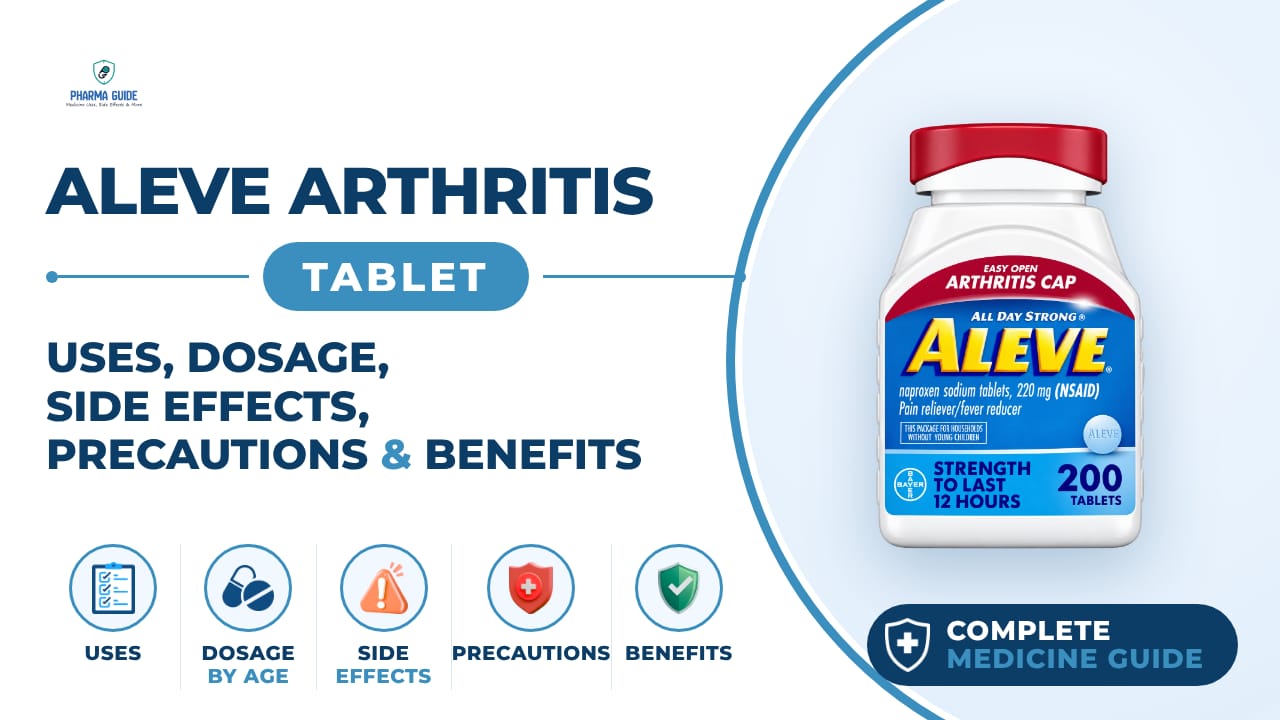
| Generic name | Naproxen sodium |
|---|---|
| Drug class | Non-steroidal anti-inflammatory drug (NSAID) |
| Forms | Tablet, Caplet |
Quick overview
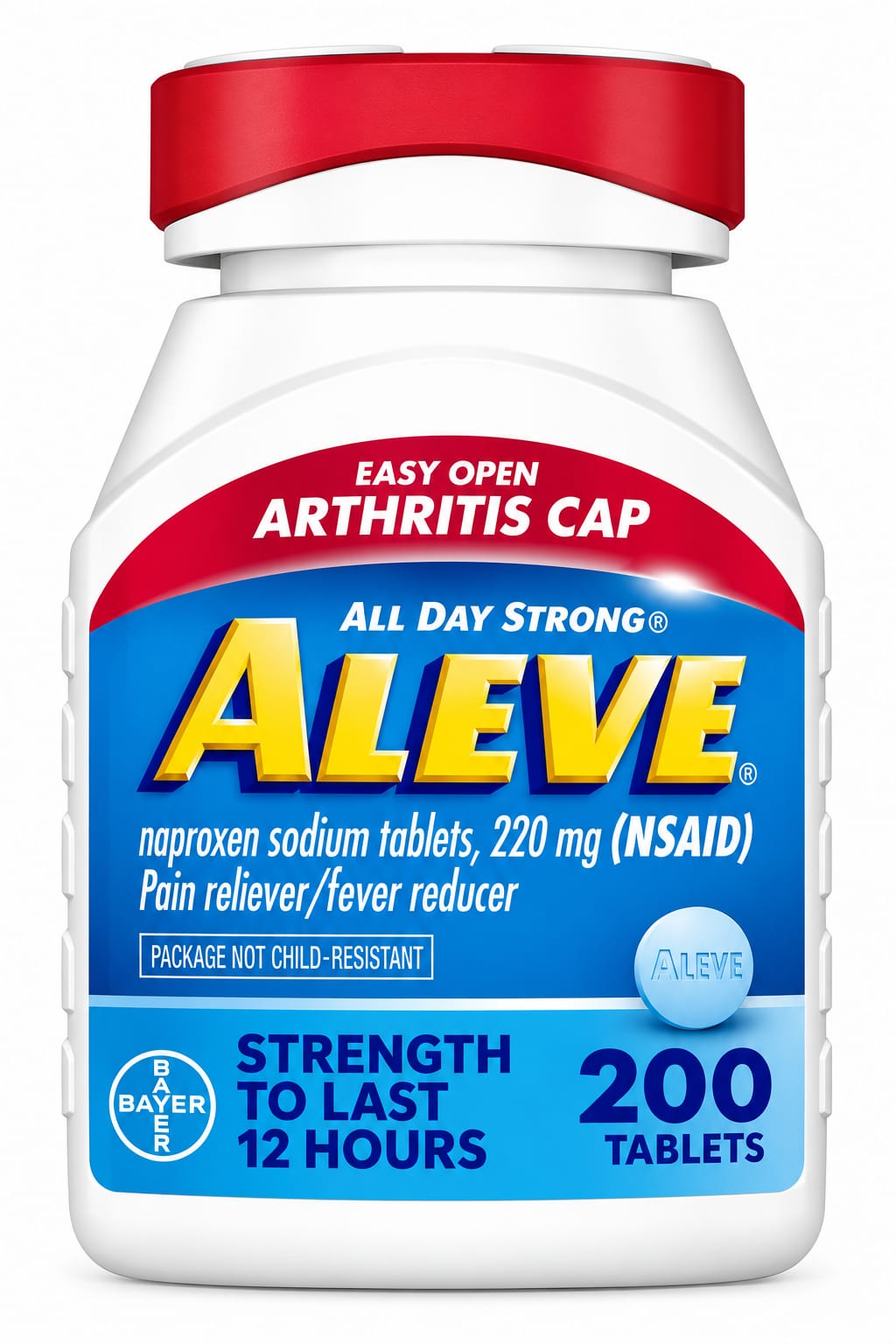
Aleve Arthritis Tablet contains naproxen sodium, a non-steroidal anti-inflammatory drug (NSAID), available as a tablet with 220 mg of naproxen sodium. It is used for short-term relief of pain and inflammation, including osteoarthritis, muscle injuries, migraines, and menstrual cramps. It works by blocking enzymes that cause pain, swelling, and fever. It carries risks of stomach, heart, kidney, and liver problems, so it should be used exactly as directed.
What is Aleve Arthritis Tablet
Aleve is the brand name for naproxen, available as a tablet containing 220 mg of naproxen sodium. It is a non-steroidal anti-inflammatory drug (NSAID) used for short-term relief of pain and inflammation.
Aleve Arthritis Tablet uses
- Osteoarthritis joint stiffness and pain
- Acute injuries such as sprains, strains, and muscle aches
- Migraine headaches
- Menstrual cramps
- Rheumatoid arthritis joint pain
- Tendonitis
- Bursitis
- Psoriatic arthritis
- Ankylosing spondylitis
- Gout
- Headaches, backache, toothache, and the common cold
- Lowering fever
Benefits of Aleve Arthritis Tablet
- Relieves minor aches, pains, and inflammation
- Effects last longer than some other NSAIDs
- Available over the counter
How Aleve Arthritis Tablet works
Naproxen blocks enzymes called COX-1 and COX-2 that the body uses to make prostaglandins. Prostaglandins cause inflammation, pain, swelling, and fever, so blocking them reduces these symptoms.
Aleve Arthritis Tablet dosage
Take by mouth with or without food, but with a full glass of water to help lessen stomach upset. It's best to take it with food or milk to help ease or prevent stomach-related side effects. Stay as close to your regular dosing schedule as possible; if you miss a dose, skip it or take it as soon as you remember, then wait before your next dose. Consult a pediatrician before giving this medicine to children under 12. Stop taking it and contact your doctor if pain gets worse or lasts more than 10 days, or if fever lasts 3 days or more. Avoid taking with other NSAIDs such as ibuprofen to reduce the risk of stomach bleeding, stroke, and heart attack.
| Age group | Dose |
|---|---|
| Under 12 years | OTC use is generally not recommended unless directed by a doctor |
| 12–17 years | Usually 220 mg every 8–12 hours as needed; for the first dose, 440 mg may be used if directed by the product label |
| 18–64 years | 220 mg every 8–12 hours as needed; the first dose may be 440 mg |
| 65–74 years | Prefer the lowest effective dose; usually no more than 220 mg every 12 hours unless a clinician advises otherwise |
Available forms and strengths
- Tablet (220 mg naproxen sodium)
- Caplet
Side effects of Aleve Arthritis Tablet
Common
- Heartburn
- Stomach pain
- Nausea
- Constipation
- Diarrhea
- Gas
- Headache
- Dizziness
- Drowsiness
- Difficulty sleeping
- Bruising
- Itching
- Tinnitus (ringing in the ears)
Serious
- Stomach bleeding or ulcers (vomiting blood, bloody or dark stools, severe stomach pain)
- Heart attack (chest pain or tightness, pain radiating to shoulder, arm, neck, or jaw)
- Heart failure (trouble breathing, swelling, sudden weight gain, fast heartbeat)
- Stroke (weakness in one part of body or face, slurred speech, trouble walking)
- Kidney problems (tiredness, dry and itchy skin, low appetite, urinating less than usual, foamy or bloody urine, muscle cramps)
- Liver problems (swelling of stomach, yellowing of skin or eyes, dark or brown urine)
- Severe allergic reaction (hives, rash, swelling of lips or tongue, difficulty breathing, anaphylaxis)
- Serious skin reactions (Stevens-Johnson syndrome, toxic epidermal necrolysis, blistering, peeling skin)
Warnings and precautions
- This medicine raises the risk of stomach ulcers and bleeding, which can happen at any time during treatment, sometimes without warning symptoms.
- This medicine may raise the risk of blood clots, which can cause a heart attack or stroke, and the risk may increase the longer it is used.
- Do not take this medicine if you have had an allergic or asthma-type reaction to aspirin or other NSAIDs in the past, as severe reactions can occur even without prior problems.
- Do not take this medicine right before or after heart bypass surgery.
- Never take this medicine together with other NSAIDs like ibuprofen, as this increases the risk of stomach bleeding, stroke, and heart attack.
- Naproxen can cause harm to an unborn baby, especially in the second half of pregnancy, including heart or kidney problems or complications during delivery. It is not to be used in the third trimester. Talk to your doctor about risks and benefits before taking it while pregnant.
- Naproxen has been found in breast milk. It should be avoided while breastfeeding unless a doctor says it is clearly needed.
- This medicine can cause kidney problems, especially in older adults or people with existing kidney disease, heart failure, liver problems, high blood sugar, or dehydration.
- Though rare, this medicine can cause serious liver problems that can lead to liver failure, especially in people with a history of liver problems.
- It's best to avoid alcohol while taking this medicine because it can raise the risk of stomach bleeding and other stomach-related side effects.
- Some people may feel drowsy, dizzy, or have blurred vision while taking this medicine, so caution is needed when driving or using machinery.
Storage
- Store in its original, light-resistant container at room temperature and away from heat and moisture
- Discard any expired medicine
- Keep out of reach of children and pets
When to see a doctor
- Get emergency help right away if you have signs of a severe allergic reaction, such as sudden hives or rash, trouble breathing, wheezing, irregular heartbeat, sudden severe diarrhea, dizziness, or swelling of the face, mouth, or throat.
- Seek emergency care right away if you notice signs of a stomach ulcer, such as severe upper belly pain, feeling full quickly, nausea or vomiting, bloating, heartburn, belching, or dark, tarry stools.
- Seek emergency care right away if you are vomiting blood or have dark, coffee-ground-like vomit.
- Seek emergency care right away for sharp chest pain or tightness, trouble walking or seeing, feeling faint, or pain spreading to the shoulder, arm, back, neck, or jaw, as these may be signs of a heart attack or stroke.
- Get medical help immediately if you notice signs of liver problems, such as severe tiredness, yellowing of skin or eyes, dark urine, clay-colored stool, or itching, and stop the medicine right away.
- Stop use and get emergency medical attention immediately if you have difficulty breathing, facial swelling, skin reddening, shock, hives, rash, or itching.
Alternatives
- Ibuprofen
- Acetaminophen
- Diclofenac topical gel
- Celecoxib
Watch the video
FAQs
What is Aleve Arthritis Tablet used for?
It is used for short-term relief of pain and inflammation from osteoarthritis, muscle injuries, migraines, menstrual cramps, rheumatoid arthritis, tendonitis, bursitis, psoriatic arthritis, ankylosing spondylitis, gout, headaches, backache, toothache, common cold symptoms, and lowering fever.
How does Aleve Arthritis Tablet work?
Naproxen blocks enzymes called COX-1 and COX-2 that the body uses to make prostaglandins, which cause inflammation, pain, swelling, and fever, so blocking them reduces these symptoms.
What is the typical dosage for adults?
For adults 18-64 years, the usual dose is 220 mg every 8-12 hours as needed, and the first dose may be 440 mg. It should be taken with a full glass of water, with or without food, though taking it with food or milk may help prevent stomach upset.
Can Aleve Arthritis Tablet be taken with other NSAIDs like ibuprofen?
No, it should never be taken together with other NSAIDs such as ibuprofen, as this increases the risk of stomach bleeding, stroke, and heart attack.
Is Aleve Arthritis Tablet safe during pregnancy?
Naproxen can harm an unborn baby, especially in the second half of pregnancy, including heart or kidney problems or complications during delivery, and it is not to be used in the third trimester. Talk to a doctor about risks and benefits before use during pregnancy.
General information, not medical advice
Your prescriber and the leaflet in your pack know your situation. This page does not.
- Follow your prescriber and the leaflet
- Don't start, stop, or change a dose on your own
- Doses and warnings differ by country and product
Sources
Video
Related medicines
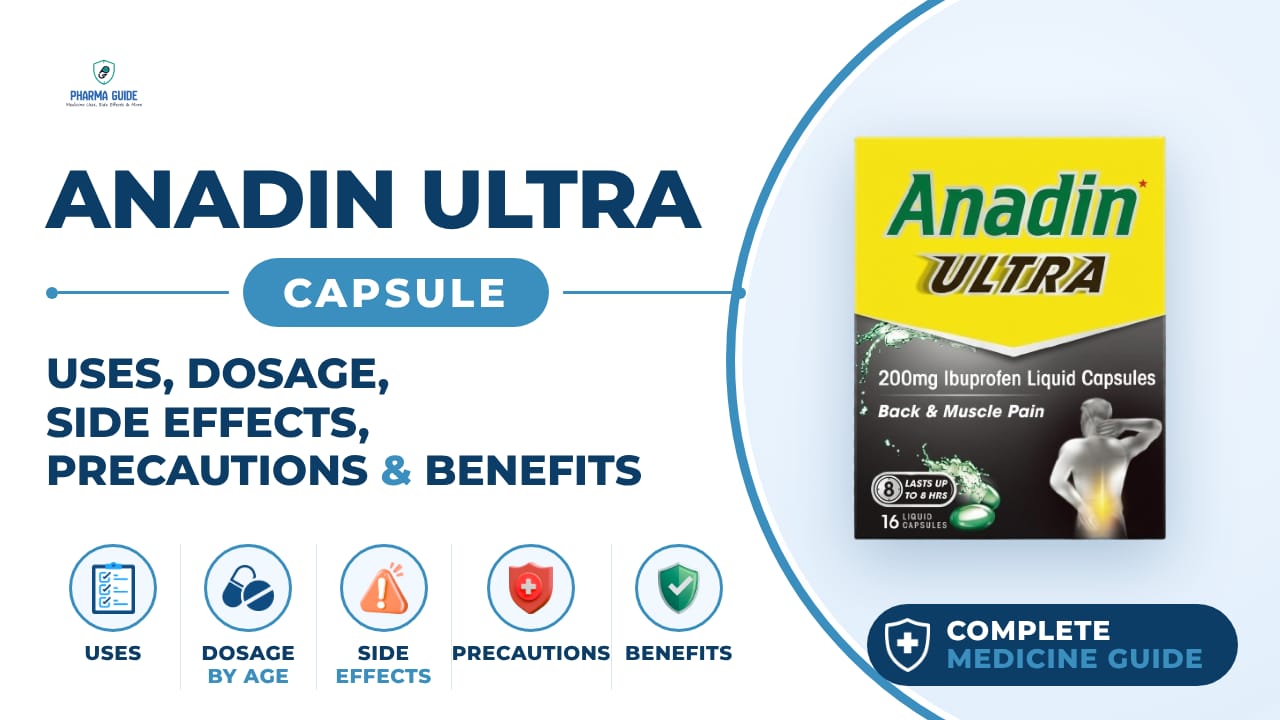
Anadin Ultra Capsule: Uses, Dosage, Side Effects, Precautions and Alternates
Non-steroidal anti-inflammatory drug (NSAID)
Anadin Ultra Capsule contains 200mg ibuprofen in a fast-dissolving liquid gel. Learn its uses, dosage, side effects and precautions before taking it.

Difflam Spray: Uses, Dosage, Side Effects, Precautions and Alternates
Non-steroidal anti-inflammatory drug (NSAID)
Difflam Spray contains benzydamine hydrochloride, an NSAID with local anaesthetic action used to relieve sore throat, tonsillitis, and mouth ulcers.