
Safety
General information, not medical advice
Your prescriber and the leaflet in your pack know your situation. This page does not.
- Follow your prescriber and the leaflet
- Don't start, stop, or change a dose on your own
- Doses and warnings differ by country and product
Difflam Spray: Uses, Dosage, Side Effects, Precautions and Alternates
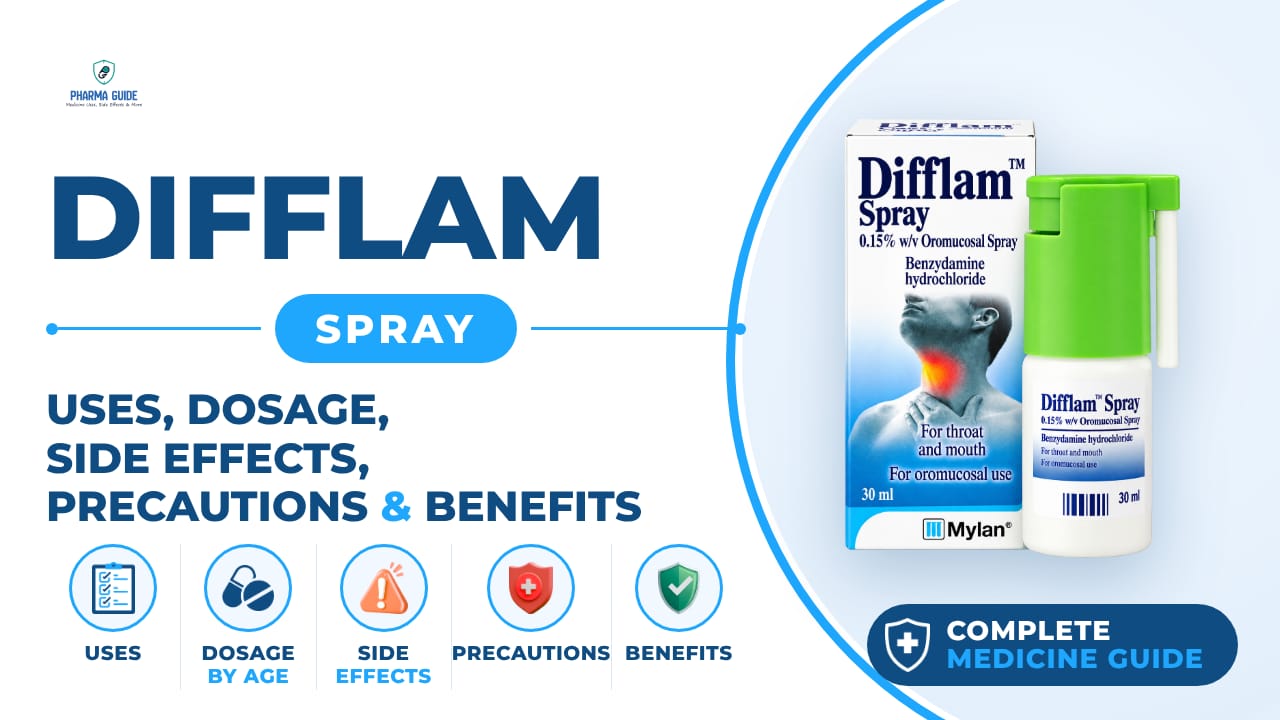
| Generic name | Benzydamine hydrochloride |
|---|---|
| Drug class | Non-steroidal anti-inflammatory drug (NSAID) |
| Forms | Spray, solution |
Quick overview
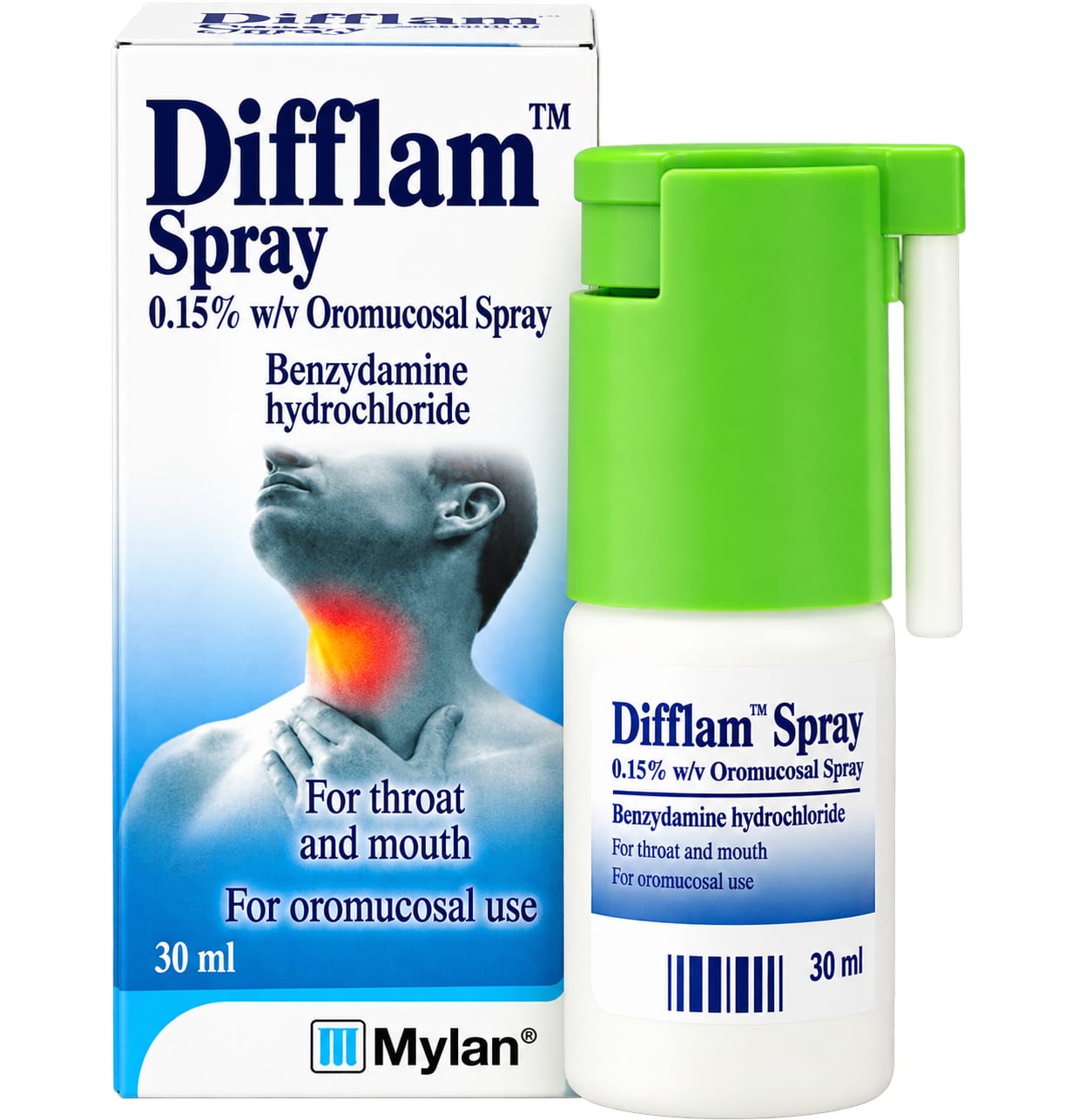
Difflam Spray contains benzydamine hydrochloride, a non-steroidal anti-inflammatory drug (NSAID) with local anaesthetic properties. It is a medicated throat and mouth spray used to relieve pain, swelling, and discomfort in conditions such as sore throat, tonsillitis, and mouth ulcers. The spray is applied directly to the affected area for targeted relief and should not be used continuously for more than 7 days unless advised by a doctor.
What is Difflam Spray
Difflam Spray is a medicated throat and mouth spray that contains benzydamine hydrochloride, a non-steroidal anti-inflammatory drug (NSAID) with local anaesthetic properties.
Difflam Spray uses
- Sore throat
- Tonsillitis
- Mouth ulcers
- Post oral surgery or radiation mucositis
- Sore tongue and gums
- Discomfort associated with dentures or dental work
- Pharyngitis
- Swelling, redness and inflammatory conditions of the mouth and throat
Benefits of Difflam Spray
- Helps relieve pain and inflammation in the mouth and throat
- Can soothe sore throat, mouth ulcers, and irritated gums
- Helps reduce redness, swelling, and tenderness in affected areas
- Provides a mild local anaesthetic effect, helping numb painful areas
- May be useful after dental procedures or minor mouth and throat surgery when advised
- The spray allows direct application to the painful area for targeted relief
How Difflam Spray works
Benzydamine hydrochloride works by blocking the chemicals in the body that cause pain and swelling where it is applied. When sprayed directly onto the sore area in the mouth or throat, it numbs the area and reduces swelling, giving fast, targeted relief without being absorbed much into the bloodstream.
Difflam Spray dosage
Direct the spray onto the affected area in the mouth or throat. This spray is not recommended for children under 6 years. To use the spray, hold the bottle upright, then lift the spray tube through 90° until it is horizontal.
The first time you use the spray, you need to prime it by pointing the spray-tube away from your face and pressing down firmly on the green plunger until a fine spray appears. Aim the spray-tube at the sore part of your mouth or throat and press down on the green plunger; one press releases one puff.
After spraying, wipe the end of the spray-tube with a tissue to prevent it from getting blocked, and push the spray-tube back down after use to stop puffs being accidentally released. Do not use near your eyes; if spray gets in the eyes, wash immediately with cold water. Uninterrupted treatment should not be used for more than 7 days unless a doctor advises otherwise.
| Age group | Dose |
|---|---|
| Under 6 years | 1 spray per 4 kg body weight, up to a maximum of 4 sprays per dose, every 1½–3 hours |
| 6–11 years | 4 sprays per dose every 1½–3 hours |
| 12–17 years | 4–8 sprays per dose every 1½–3 hours |
| Adults | 4–8 sprays per dose every 1½–3 hours |
| 65+ years | Usually the same adult dose |
Available forms and strengths
- Spray, solution
Side effects of Difflam Spray
Common
- Numbness or a stinging sensation in the mouth or throat
- Dry mouth
- Nausea
Serious
- Hypersensitivity reactions (such as skin rash or itching)
- Photosensitisation (increased sensitivity to sunlight) — rare
- Bronchospasm (wheezing or difficulty breathing) — rare
Warnings and precautions
- Do not use this medicine if you are allergic to benzydamine or other anti-inflammatory medicines. If an allergic reaction occurs, stop using it and see your doctor right away.
- This medicine is not recommended for children under 6 years of age.
- Do not use this medicine for more than 7 days in a row unless your doctor tells you to.
- Avoid getting the spray in your eyes.
- Do not use this medicine if you are allergic to benzydamine hydrochloride or any other ingredient in it, or if you are allergic to aspirin or other NSAIDs, or if you have previously had an allergic reaction such as asthma, hives, or swelling after taking an NSAID.
- Pregnancy: The safety of this medicine during pregnancy has not been fully established. Caution is advised, especially in the third trimester. Talk to your doctor or pharmacist before use if you are pregnant or trying to become pregnant.
- Breastfeeding: The safety of this medicine while breastfeeding has not been fully established. Speak to your doctor or pharmacist before use if you are breastfeeding.
- Alcohol: There is no known major interaction between this medicine and alcohol, since the spray works locally in the mouth and throat with little absorption into the body. However, alcohol may irritate a sore throat or mouth, so it is best avoided while you have symptoms.
- Driving: This medicine is not expected to affect your ability to drive or use machinery, because it works locally and is not absorbed much into the bloodstream, so it is unlikely to cause drowsiness or clumsiness.
Storage
- Store below 30°C (86°F) or as directed on the specific product label.
- Keep in a cool, dry place away from excessive heat.
- Protect from direct sunlight and extreme temperatures.
- Keep the bottle tightly closed and upright when not in use.
- Do not freeze and avoid storing in hot or humid areas.
- Keep out of reach and sight of children.
When to see a doctor
- If your symptoms do not improve or get worse, contact your doctor.
- If you get any serious side effects, stop using this medicine and get medical advice straight away.
- If your symptoms continue, see your doctor or pharmacist.
Alternatives
- Hexylresorcinol Lozenges
- Chlorhexidine Throat Spray
- Difflam Oral Rinse
- Difflam Lozenges
Watch the video
FAQs
What is Difflam Spray used for?
Difflam Spray is used to relieve pain, swelling, and discomfort from sore throat, tonsillitis, mouth ulcers, pharyngitis, post oral surgery or radiation mucositis, sore tongue and gums, and discomfort from dentures or dental work.
How does Difflam Spray work?
It contains benzydamine hydrochloride, which blocks the chemicals in the body that cause pain and swelling where it is applied, numbing the area and reducing swelling with little absorption into the bloodstream.
How long can I use Difflam Spray?
Uninterrupted treatment should not be used for more than 7 days in a row unless a doctor advises otherwise.
Can children use Difflam Spray?
It is not recommended for children under 6 years of age. Children aged 6 and above have specific dosing based on age and body weight.
Does Difflam Spray cause drowsiness or affect driving?
No, it is not expected to affect your ability to drive or use machinery, because it works locally and is not absorbed much into the bloodstream.
General information, not medical advice
Your prescriber and the leaflet in your pack know your situation. This page does not.
- Follow your prescriber and the leaflet
- Don't start, stop, or change a dose on your own
- Doses and warnings differ by country and product
Sources
Video
Related medicines
Aleve Arthritis Tablet: Uses, Dosage, Side Effects, Precautions and Alternates
Non-steroidal anti-inflammatory drug (NSAID)
Aleve Arthritis Tablet (naproxen sodium 220 mg) relieves pain, inflammation, and fever. Learn uses, dosage, side effects, warnings, and alternatives.
Anadin Ultra Capsule: Uses, Dosage, Side Effects, Precautions and Alternates
Non-steroidal anti-inflammatory drug (NSAID)
Anadin Ultra Capsule contains 200mg ibuprofen in a fast-dissolving liquid gel. Learn its uses, dosage, side effects and precautions before taking it.