Aleve Tablet: Uses, Dosage, Side Effects, Precautions and Alternates
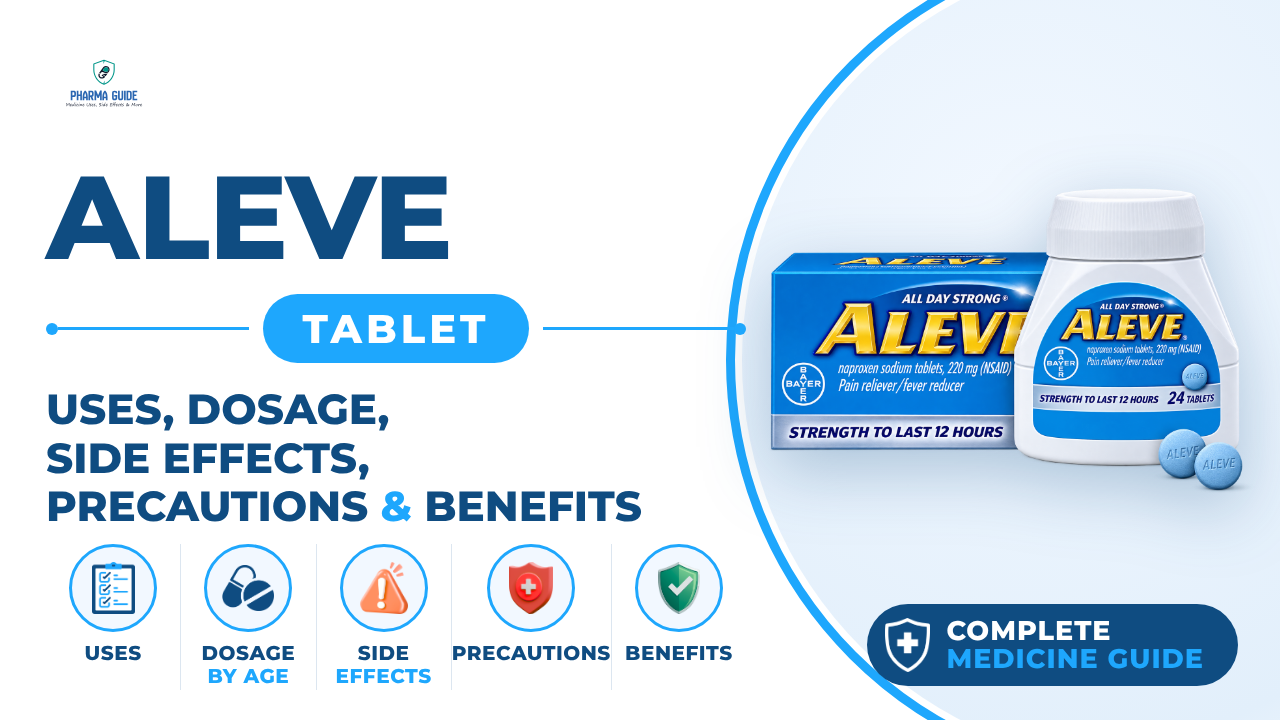
| Generic name | naproxen (naproxen sodium) |
|---|---|
| Drug class | Nonsteroidal anti-inflammatory drug (NSAID) |
| Forms | Tablet, Caplet, Liquid Gels |
Quick overview
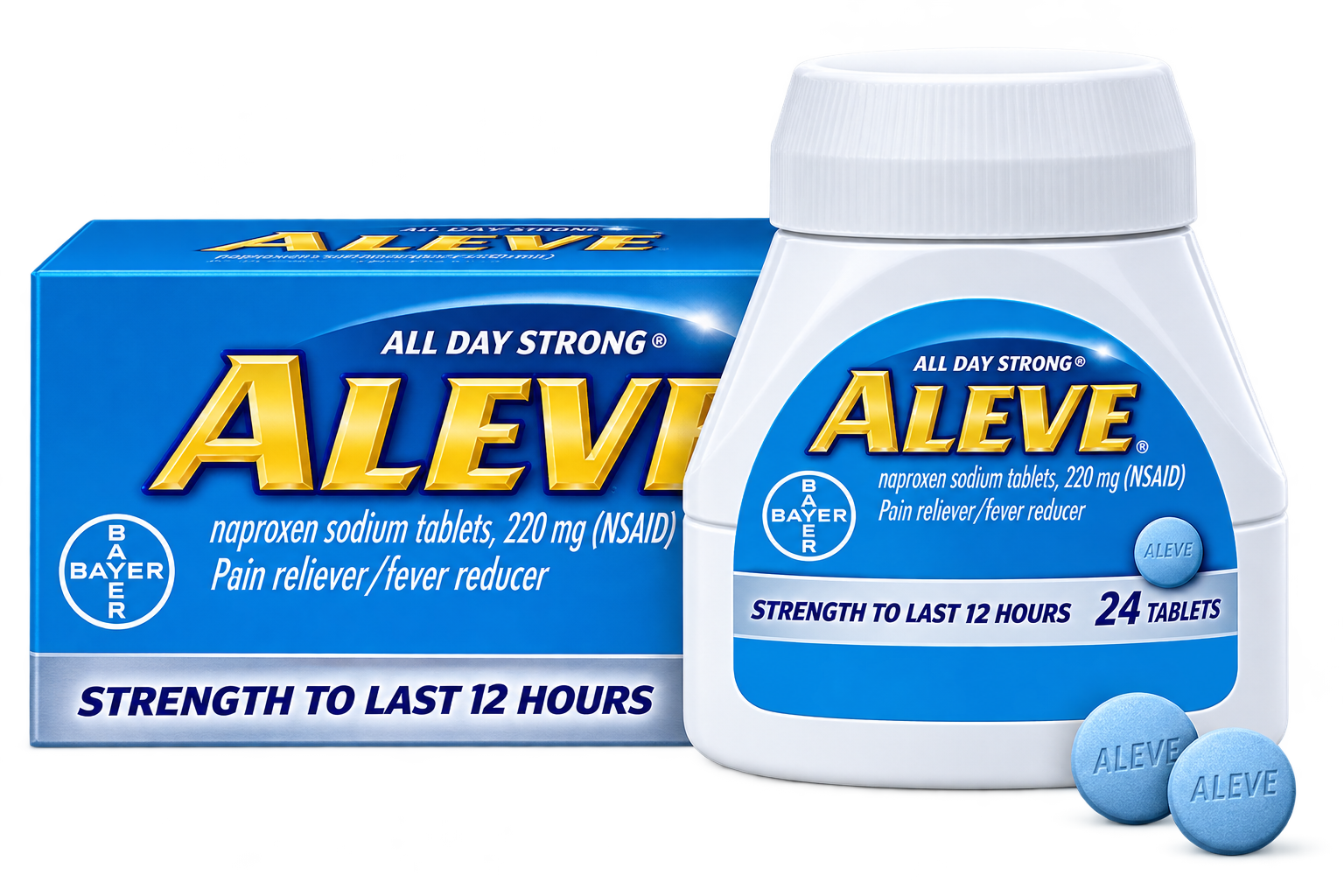
Aleve Tablet contains naproxen (naproxen sodium), a nonsteroidal anti-inflammatory drug (NSAID). It is used to temporarily relieve minor aches and pains and to reduce fever. Common side effects include stomach upset and headache, while serious risks include stomach bleeding and heart or stroke-related events. It should be used exactly as directed, with dosing based on age.
What is Aleve Tablet
Aleve is a nonsteroidal anti-inflammatory drug (NSAID). It is used to temporarily relieve minor aches and pains and to reduce fever.
Aleve Tablet uses
- Temporarily relieves minor aches and pains due to arthritis
- Muscular aches
- Backache
- Menstrual cramps
- Headache
- Toothache
- Aches and pains from the common cold
- Temporarily reduces fever
Benefits of Aleve Tablet
- Temporarily relieves minor aches and pains
- Reduces fever
- Works at both the site of pain and centrally
How Aleve Tablet works
Naproxen works by reducing hormones (prostaglandins) that cause inflammation and pain in the body. It blocks the enzymes that make these substances, which helps lower pain, fever, and swelling.
Aleve Tablet dosage
- Use Aleve exactly as directed on the label, or as prescribed by your doctor.
- Do not take this medicine in larger amounts or for longer than recommended.
- Use the lowest dose that is effective in treating your condition.
- Each dose should be swallowed with a full glass of water and can be taken with or without food; taking it with a meal may slightly delay how quickly it is absorbed.
- If you use Aleve long-term, you may need frequent medical tests.
- Ask a doctor before giving Aleve to a child younger than 12 years old.
- Do not give this medicine to a child without medical advice.
| Age group | Dose |
|---|---|
| Under 12 years | Ask a doctor |
| 12–17 years | 1 tablet (220 mg) every 8–12 hours as needed |
| 18–59 years | 1 tablet (220 mg) every 8–12 hours; first dose may be 2 tablets |
| 60+ years | Same labeled dose, but medical/pharmacist advice is advisable because bleeding and other NSAID risks increase with age |
Available forms and strengths
- Tablet
- Caplet
- Liquid Gels
Side effects of Aleve Tablet
Common
- Indigestion
- Heartburn
- Stomach pain
- Nausea
- Headache
- Dizziness
- Drowsiness
- Bruising
- Itching
- Rash
- Swelling
- Ringing in the ears
Serious
- Signs of a heart attack or stroke such as chest pain spreading to the jaw or shoulder, sudden numbness or weakness on one side of the body, slurred speech, or feeling short of breath
- Signs of stomach bleeding such as bloody or tarry stools, coughing up blood, or vomit that looks like coffee grounds
- Shortness of breath, even with mild exertion
- Swelling or rapid weight gain
- The first sign of any skin rash, no matter how mild
- Liver problems such as nausea, upper stomach pain, itching, tiredness, loss of appetite, dark urine, clay-colored stools, or yellowing of the skin or eyes
- Kidney problems such as little or no urinating, painful urination, swelling in the feet or ankles, or feeling tired or short of breath
- Low red blood cells (anemia) with pale skin, feeling light-headed, rapid heart rate, or trouble concentrating
- Severe skin reaction with fever, sore throat, swelling in the face or tongue, burning eyes, skin pain, and a red or purple rash with blistering and peeling
- Signs of an allergic reaction such as runny or stuffy nose, wheezing or trouble breathing, hives, or swelling in the face or throat
Warnings and precautions
- Naproxen can increase your risk of a fatal heart attack or stroke, especially if you use it long term, take high doses, or have heart disease.
- Even people without heart disease could have a stroke or heart attack while taking this medicine.
- Do not use this medicine just before or after heart bypass surgery (coronary artery bypass graft, or CABG).
- Aleve may cause stomach or intestinal bleeding, which can be fatal.
- This can happen without warning, especially in older adults.
- You should not use Aleve if you are allergic to naproxen, or if you have ever had an asthma attack or severe allergic reaction after taking aspirin or an NSAID.
- Avoid taking aspirin or other NSAIDs unless your doctor tells you to, since many over-the-counter products contain similar medicines and taking them together can give you too much.
- If you are pregnant, you should not take Aleve unless your doctor tells you to.
- Taking an NSAID during the last 20 weeks of pregnancy can cause serious heart or kidney problems in the unborn baby and possible pregnancy complications.
- It may not be safe to breastfeed while using Aleve. Ask your doctor about any risk.
- Ask a doctor or pharmacist if it is safe for you to use this medicine if you have kidney disease.
- Ask a doctor or pharmacist if it is safe for you to use this medicine if you have liver disease.
- Avoid drinking alcohol while using this medicine.
- It may increase your risk of stomach bleeding.
Storage
- Store at room temperature away from moisture, heat, and light.
- Keep the bottle tightly closed when not in use.
- Keep this and all other medicines out of the reach of children.
When to see a doctor
- Get emergency medical help if you have chest pain, weakness, shortness of breath, slurred speech, or problems with vision or balance.
- Get emergency medical help if you have signs of an allergic reaction such as runny or stuffy nose, wheezing or trouble breathing, hives, or swelling in your face or throat, or a severe skin reaction with fever, sore throat, burning eyes, skin pain, or a red or purple rash with blistering and peeling.
- Get emergency medical help if you have signs of a heart attack or stroke: chest pain spreading to your jaw or shoulder, sudden numbness or weakness on one side of the body, slurred speech, or feeling short of breath.
- Stop using Aleve and call your doctor at once if you have signs of stomach bleeding such as bloody or tarry stools, coughing up blood, or vomit that looks like coffee grounds.
- For an overdose, seek emergency medical attention or call your local poison control center.
Alternatives
- Ibuprofen
- Diclofenac
- Aceclofenac
- Meloxicam
- Celecoxib
- Etoricoxib
FAQs
What is Aleve Tablet used for?
Aleve is an NSAID used to temporarily relieve minor aches and pains from arthritis, muscle aches, backache, menstrual cramps, headache, toothache, and the common cold, and to reduce fever.
What is the dosage of Aleve for adults?
Adults aged 18-59 typically take 1 tablet (220 mg) every 8-12 hours as needed, with the first dose possibly being 2 tablets. The lowest effective dose should be used.
Can children take Aleve Tablet?
Ask a doctor before giving Aleve to a child younger than 12 years old, and do not give it to a child without medical advice. Those aged 12-17 can take 1 tablet (220 mg) every 8-12 hours as needed.
What are the serious side effects of Aleve?
Serious side effects include signs of heart attack or stroke, stomach bleeding (bloody or tarry stools, vomit like coffee grounds), liver or kidney problems, severe skin reactions, and allergic reactions with swelling or trouble breathing.
Is it safe to drink alcohol while taking Aleve?
No, you should avoid drinking alcohol while using Aleve because it may increase your risk of stomach bleeding.
Sources
Video
Related medicines
Nonsteroidal anti-inflammatory drug (NSAID)
Feldene Capsule: Uses, Dosage, Side Effects, Precautions and Alternates
Feldene Capsule (piroxicam) relieves pain and inflammation in rheumatoid arthritis, osteoarthritis and ankylosing spondylitis. Learn dosage, side effects and
Nonsteroidal anti-inflammatory drug (NSAID)
Voltaren Tablet: Uses, Dosage, Side Effects, Precautions and Alternates
Voltaren Tablet (diclofenac sodium) is an NSAID for pain and inflammation in joint, muscle and tendon conditions. Learn uses, dosage, and side effects.