
Safety
General information, not medical advice
Your prescriber and the leaflet in your pack know your situation. This page does not.
- Follow your prescriber and the leaflet
- Don't start, stop, or change a dose on your own
- Doses and warnings differ by country and product
Allegra Allergy Tablet: Uses, Dosage, Side Effects, Precautions and Alternates
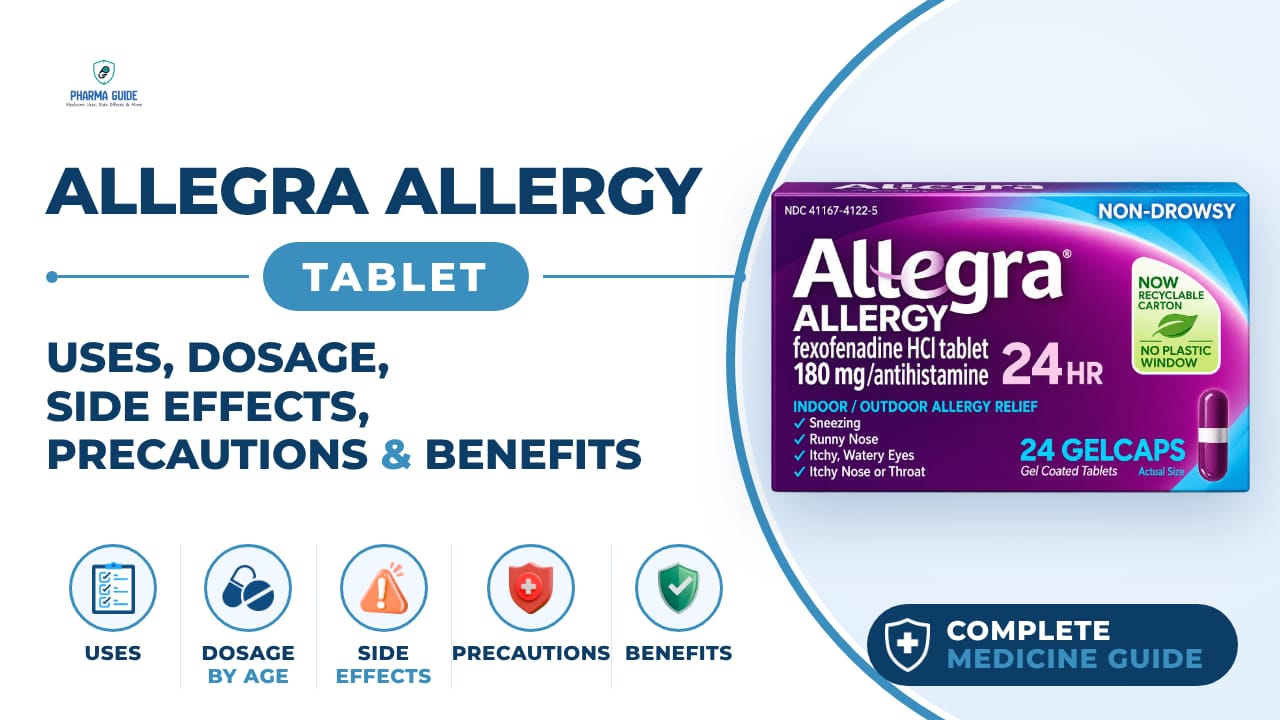
| Generic name | fexofenadine |
|---|---|
| Drug class | Antihistamines |
| Forms | tablets, oral suspension, disintegrating/dissolve tablets |
Quick overview
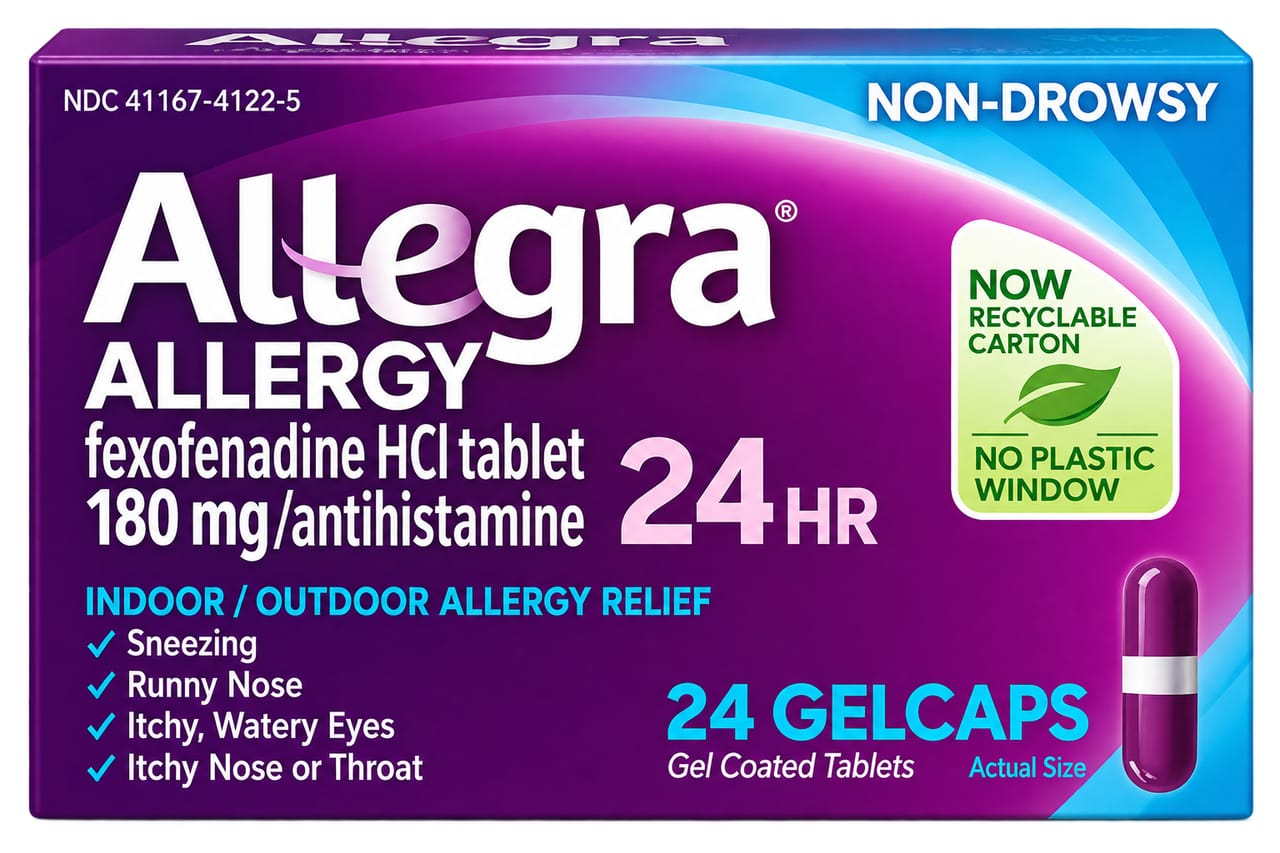
Allegra Allergy Tablet (fexofenadine) is an over-the-counter antihistamine used to treat allergy symptoms like sneezing, itching, watery eyes, and runny nose. It can also treat hives from chronic idiopathic urticaria in adults and children over 12. Allegra works by blocking histamine and is less likely to cause drowsiness than older antihistamines.
What is Allegra Allergy Tablet
Allegra is an over-the-counter antihistamine used to treat allergy symptoms like sneezing, itching, watery eyes, and a runny nose. It can also be used to treat hives from a condition called chronic idiopathic urticaria in adults and children over 12.
Allegra Allergy Tablet uses
- Treats allergy symptoms including sneezing, itching, watery eyes, and runny nose in adults and children
- Treats hives caused by chronic idiopathic urticaria in adults and children over 12 years of age
- Allegra-D is used for nasal and sinus congestion caused by allergies and colds
Benefits of Allegra Allergy Tablet
- Relieves symptoms such as watery eyes, runny or blocked nose, itching, sneezing, and swelling
- Helps manage symptoms of seasonal allergies and chronic idiopathic urticaria
- Improves quality of life by reducing the impact of allergy symptoms on daily activities
- Non-drowsy, making it suitable for use during the day
- Much less likely to cause drowsiness and sedation compared with some older antihistamines
How Allegra Allergy Tablet works
Allegra works by blocking histamine, a chemical your body releases during an allergic reaction. Histamine causes symptoms like watery eyes, runny nose, sneezing, itching, and hives. By blocking histamine from attaching to its receptors, Allegra reduces these allergy symptoms. It is less likely to make you drowsy than older antihistamines because it does not easily enter the brain.
Allegra Allergy Tablet dosage
Take exactly as directed on the label, or as prescribed by your doctor. Take this medicine only with water. Take the disintegrating tablet on an empty stomach. Shake the oral suspension before measuring a dose, and use a proper dosing cup or measuring device, not a kitchen spoon. Children's dissolve tablets should only be removed from the package just before they are taken; place the tablet on the tongue and let it dissolve without chewing, swallowing several times as it dissolves. Allegra-D tablets should be swallowed whole; do not divide, crush, chew, or dissolve them. Call your doctor if your symptoms do not improve or if they get worse. You can take this medicine with or without food. It is advised to take this medication at the same time every day. Do not miss or skip a dose.
| Age group | Dose |
|---|---|
| Under 6 years | Tablet dosing is generally not established; pediatric liquid formulations may be used when prescribed |
| 6–11 years | Common pediatric dose: 30 mg twice daily |
| 18–64 years | 60 mg twice daily or 180 mg once daily |
| 65–74 years | Usually follows adult dosing, but reduced kidney function may require a lower dose |
Available forms and strengths
- Tablets
- Oral suspension
- Disintegrating/dissolve tablets
Side effects of Allegra Allergy Tablet
Common
- Headache
- Back pain
- Cold symptoms such as stuffy nose, sinus pain, sore throat
- Indigestion
- Dry mouth
- Drowsiness
- Fatigue
- Dizziness
Serious
- Flu-like symptoms (fever, chills, unusual tiredness)
- New or worsening cough
- Pain
- Signs of an ear infection—fever, ear pain or full feeling, trouble hearing, drainage from the ear, fussiness in a child
- Signs of an allergic reaction: hives, difficulty breathing, swelling of face, lips, tongue, or throat
Warnings and precautions
- Do not use this medicine if you've ever had an allergic reaction to it or any of its ingredients.
- Do not take Allegra with fruit juice such as apple, orange, or grapefruit, since this can reduce how well your body absorbs the medicine.
- Do not take Allegra with antacids containing aluminum or magnesium.
- If you have been prescribed an epinephrine injector for severe allergy symptoms, never use this product as a substitute for it.
- This product will not prevent hives caused by known triggers like foods, insect stings, medicines, or latex, and avoiding the cause is the only way to prevent them.
- Do not take Allegra-D if you are currently taking a prescription MAOI medicine, or for two weeks after stopping an MAOI.
- Ask a doctor before using Allegra if you are pregnant. Ask a doctor before using Allegra if you are breastfeeding. Ask a doctor or pharmacist if this medicine is safe for you if you have kidney disease.
- No routine liver-specific adjustment is usually required. Using Allegra with other substances that cause drowsiness can increase that effect.
- This may apply more to older adults or those also drinking alcohol. Know how Allegra affects you before driving or doing tasks that need focus, since it can rarely cause drowsiness or dizziness.
Storage
- Store this medicine in its original package at room temperature, away from moisture and heat
- Do not allow liquid medicine to freeze
- Store in a cool, dry place, away from direct sunlight
When to see a doctor
- Get emergency help immediately if you have hives along with trouble swallowing, dizziness, loss of consciousness, swelling of the tongue or around the mouth, trouble speaking, wheezing, trouble breathing, or drooling, as these may be signs of a life-threatening reaction.
- Stop using this medicine and ask a doctor if you have an allergic reaction, if your symptoms do not improve after 3 days of treatment, or if your hives have lasted more than 6 weeks.
- Get emergency medical help if you have signs of an allergic reaction such as hives, difficulty breathing, or swelling of your face, lips, tongue, or throat.
- If you experience shortness of breath or throat swelling, seek emergency help right away, as these can be signs of a life-threatening allergic reaction.
- In case of overdose, get medical help or contact your local poison control center right away.
Alternatives
- Cetirizine
- Levocetirizine
- Loratadine
- Bilastine
Watch the video
FAQs
What is Allegra Allergy Tablet used for?
It treats allergy symptoms like sneezing, itching, watery eyes, and runny nose, and can also treat hives from chronic idiopathic urticaria in adults and children over 12.
How does Allegra work?
Allegra blocks histamine, a chemical released during allergic reactions that causes symptoms like watery eyes, runny nose, sneezing, itching, and hives. It does not easily enter the brain, making it less likely to cause drowsiness.
What is the adult dosage for Allegra?
For ages 18-64, the common dose is 60 mg twice daily or 180 mg once daily.
Can I take Allegra with fruit juice?
No, Allegra should not be taken with fruit juice such as apple, orange, or grapefruit, since this can reduce how well your body absorbs the medicine.
What are common side effects of Allegra?
Common side effects include headache, back pain, cold symptoms like stuffy nose and sore throat, indigestion, dry mouth, drowsiness, fatigue, and dizziness.
General information, not medical advice
Your prescriber and the leaflet in your pack know your situation. This page does not.
- Follow your prescriber and the leaflet
- Don't start, stop, or change a dose on your own
- Doses and warnings differ by country and product
Sources
Video
Related medicines
Allegra Tablet: Uses, Dosage, Side Effects, Precautions and Alternates
Antihistamines
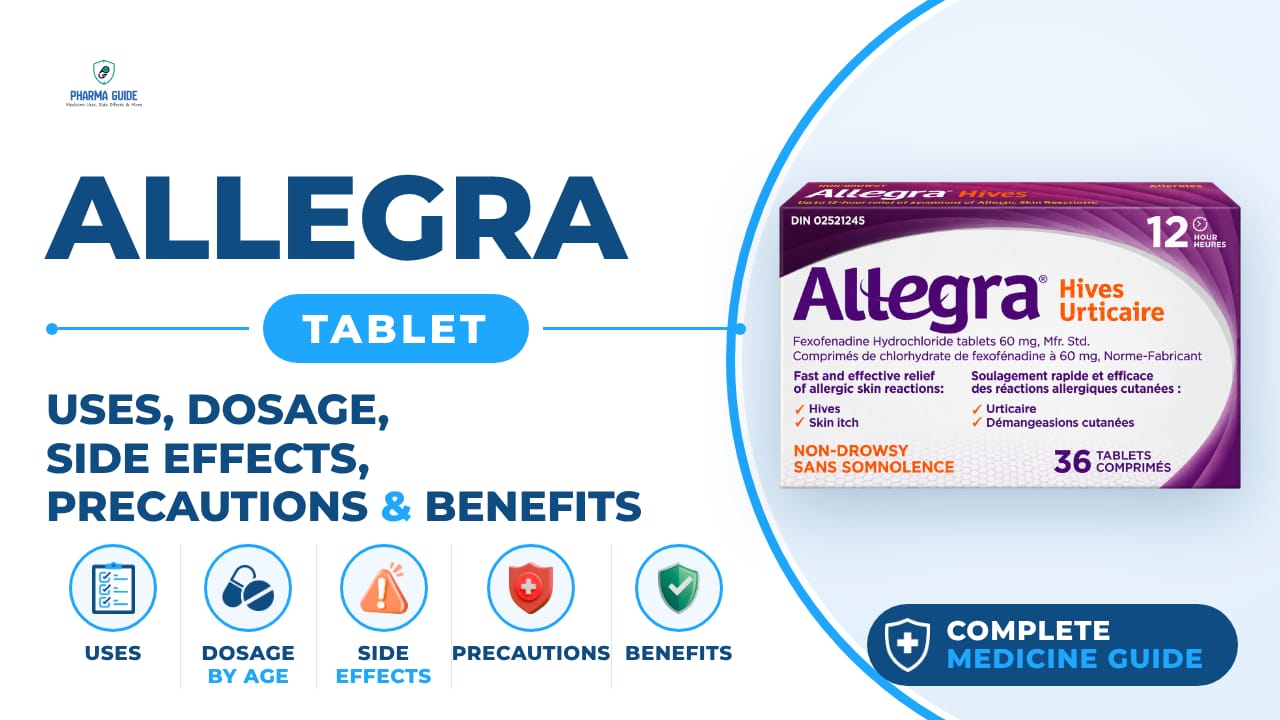
Allegra Tablet (fexofenadine) relieves allergy symptoms and hives with less drowsiness. Learn uses, dosage, side effects, and precautions before taking it.

Injectafer Injection: Uses, Dosage, Side Effects, Precautions and Alternates
Iron products
Injectafer (ferric carboxymaltose) treats iron deficiency anemia and heart failure-related iron deficiency via IV. Learn uses, dosage, side effects, and