
Safety
General information, not medical advice
Your prescriber and the leaflet in your pack know your situation. This page does not.
- Follow your prescriber and the leaflet
- Don't start, stop, or change a dose on your own
- Doses and warnings differ by country and product
Alli Capsule: Uses, Dosage, Side Effects, Precautions and Alternates
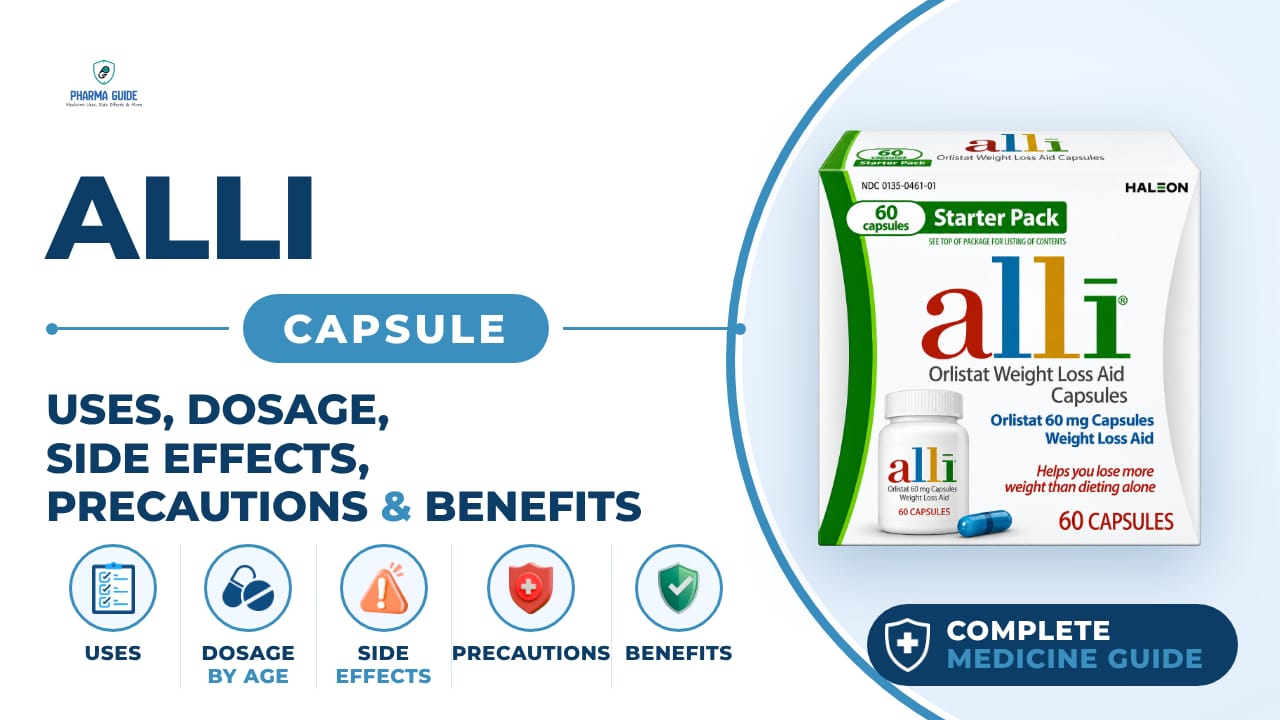
| Generic name | orlistat |
|---|---|
| Drug class | Peripherally acting antiobesity agents |
| Forms | capsule |
Quick overview
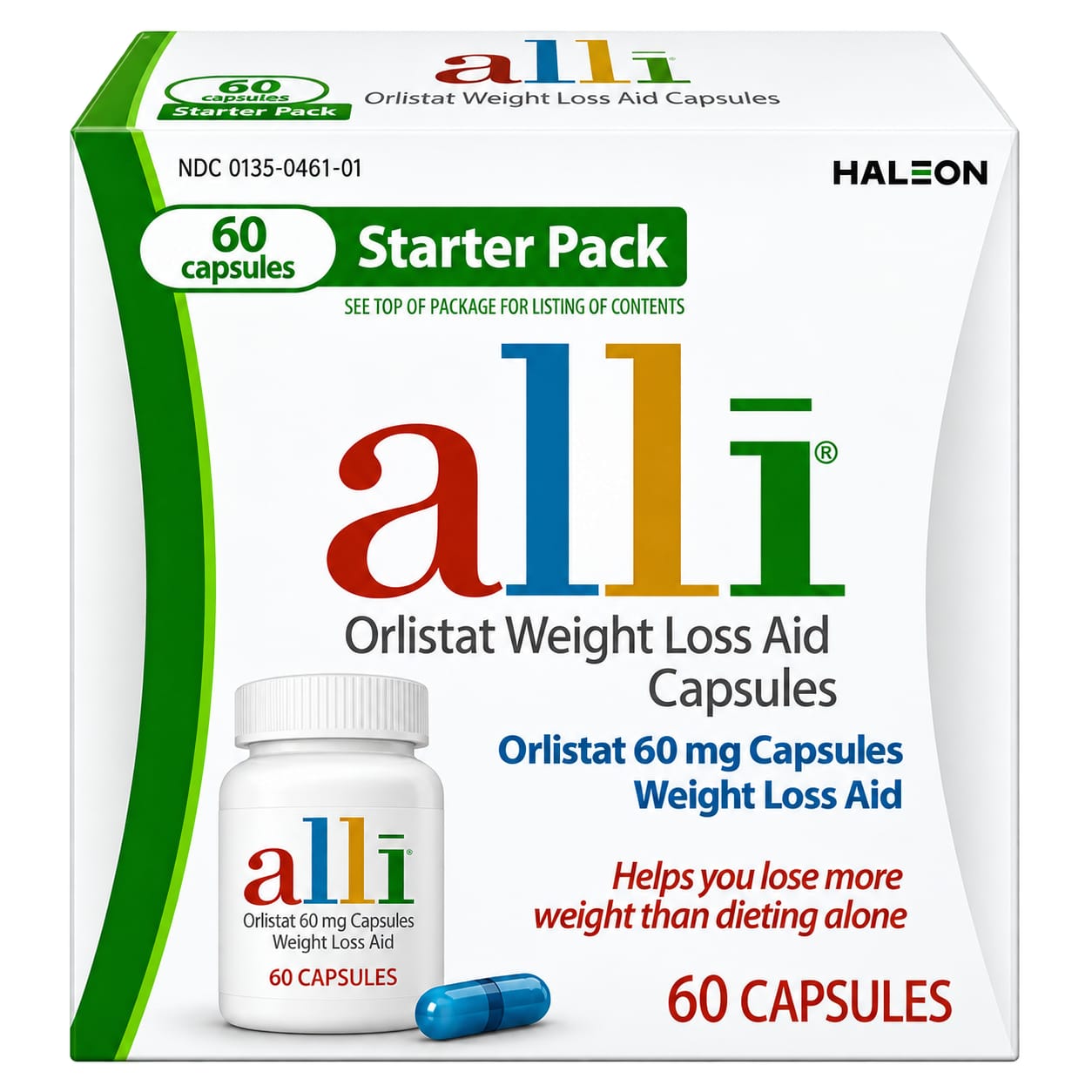
Alli (orlistat 60 mg) is an FDA-approved, over-the-counter weight loss pill for overweight adults aged 18 and older. It contains orlistat, the same active ingredient found in the prescription medicine Xenical (120 mg), but at half the dose. Alli is used alongside a reduced-calorie, low-fat diet and regular physical activity to support weight loss by reducing the absorption of some dietary fat.
What is Alli Capsule
Alli (orlistat 60 mg) is an FDA-approved, over-the-counter weight loss pill for overweight adults aged 18 and older. It contains orlistat, the same active ingredient as the prescription medicine Xenical (120 mg), but at half the dose.
Alli Capsule uses
- Weight loss in overweight adults aged 18 and older when used alongside a reduced-calorie, low-fat diet and regular physical activity
- Used as a weight-loss aid in eligible adults
- Reduces absorption of some dietary fat
- Used as part of a medically appropriate weight-management plan
Benefits of Alli Capsule
- Helps produce modest weight loss when combined with a reduced-calorie, low-fat diet and exercise
- Blocks a digestive enzyme called lipase, so unabsorbed fat passes naturally through bowel movements instead of being taken in by the body
How Alli Capsule works
Alli blocks enzymes called lipases in your stomach and small intestine that normally break down dietary fat for absorption. When these enzymes are blocked, some of the fat you eat passes through your digestive system unabsorbed and leaves the body in your stool. Because this fat is never absorbed, you take in fewer calories, which supports weight loss. Alli does not affect appetite or brain chemistry — it works only within the digestive tract.
Alli Capsule dosage
Take one capsule with water immediately before, during, or up to one hour after each meal that contains fat. Do not take more than three capsules in a single day. Skip the dose if you miss a meal or if the meal contains no fat. Use alongside a reduced-calorie, low-fat diet, spreading your fat, carbohydrate, and protein intake across three main meals.
Take a multivitamin once a day at bedtime throughout treatment, since alli can reduce absorption of certain vitamins. Check with your doctor before starting any new exercise program. If you stop taking alli, continue following your diet and exercise program. If your weight starts to increase after stopping, speak with your healthcare provider about whether to restart.
| Age group | Dose |
|---|---|
| Under 18 years | Not recommended |
| 18 years and older | 60 mg orally, up to 3 times daily with each main meal containing fat |
Available forms and strengths
- Capsule, 60 mg
Side effects of Alli Capsule
Common
- Gas with oily spotting
- Loose stools
- More frequent bowel movements that may be difficult to control
- Fatty or oily stools
- Urgent bowel movements
- Stomach pain
- Bowel leakage
- Bloating, particularly in people with type 2 diabetes
- Headache
- Fatigue
- Anxiety
- Respiratory or urinary infections
- Menstrual irregularity
- Dental or gum problems
- Low blood sugar in people with type 2 diabetes
Serious
- Signs of liver injury such as itching, yellowing of the eyes or skin, dark urine, or loss of appetite
- Signs of acute kidney injury or kidney stones such as back or groin pain, painful urination, blood in urine, swelling of the feet or legs, or less frequent urination
- Severe or ongoing stomach pain
- Seizures becoming more frequent or severe in people taking seizure medication
- Serious allergic reaction
- Rectal bleeding
- Diverticulitis symptoms
- Hepatitis symptoms
- Gallstones
- Pancreatitis
Warnings and precautions
- Do not use alli if you are pregnant. Do not use alli if you are breastfeeding.
- Ask a doctor before use if you have ever had kidney disease or kidney stones. Stop taking alli and ask a doctor right away if you develop signs of kidney injury or kidney stones, such as back or groin pain, painful urination, blood in urine, swelling of the feet or legs, or less frequent urination.
- Rare cases of liver injury have been reported in people taking orlistat. Stop taking alli and ask a doctor right away if you notice itching, yellowing of the eyes or skin, dark urine, or a sudden loss of appetite.
- There is no major direct interaction between orlistat and alcohol, but alcohol adds calories and may worsen weight-management goals. Heavy alcohol use can also increase liver-related risk, so it is best to limit or avoid it.
- Alli does not usually impair driving or alertness. You can generally drive normally unless you personally experience side effects that make you feel unwell.
- Do not use alli if you have had an organ transplant, because orlistat can interfere with the medicines used to prevent your body from rejecting the transplanted organ.
- Do not use alli if you are allergic to any ingredient in the product.
- Do not use alli if you are taking cyclosporine, have a condition that affects how your body absorbs food, or are not overweight.
- Ask a doctor before use if you have ever had gallbladder problems, kidney disease or kidney stones, or pancreatitis.
- Do not take alli with other weight loss products without first talking to a healthcare provider.
- Alli can reduce the body's absorption of vitamin K, which may reduce how well blood thinners like warfarin work; a doctor should monitor clotting levels during use.
- Alli may reduce how much amiodarone the body absorbs, so tell your doctor if you take this heart medicine while using alli.
- Losing weight with alli may improve blood sugar control, so diabetes medication doses may need adjusting; let your healthcare provider know you are taking alli.
- Some people have experienced changes in thyroid hormone levels while taking orlistat; ask your doctor whether thyroid medication needs to be taken at a different time of day.
- Some people taking orlistat alongside HIV medication have experienced a loss of viral control, so a doctor should monitor HIV levels if both are used together.
- Do not use if you have chronic malabsorption syndrome or cholestasis, or if you take ciclosporin, warfarin, or another anticoagulant.
Storage
- Store at room temperature between 20 and 25°C (68 to 77°F)
- Keep away from excessive light, moisture, and heat above 30°C (86°F)
- Keep out of reach of children
- Keep the blister pack inside the outer carton to protect it from light and moisture
- Store below 25°C
When to see a doctor
- Stop taking alli and ask a doctor right away if you notice itching, yellowing of the eyes or skin, dark urine, or loss of appetite, as these may be signs of liver injury.
- Stop taking alli and ask a doctor right away if you develop back or groin pain, painful urination, blood in your urine, swelling of the feet or legs, or less frequent urination, as these may be signs of kidney injury or kidney stones.
- Seek medical help if you experience severe or ongoing stomach pain, which may indicate a serious medical condition.
- Stop taking alli and speak with a doctor if you take seizure medication and notice your seizures becoming more frequent or severe.
- Stop taking alli and consult your doctor if you develop a serious allergic reaction, rectal bleeding, diverticulitis symptoms, hepatitis symptoms, gallstones, or pancreatitis.
- If you take more alli than directed, seek medical attention promptly.
Alternatives
- Xenical
- Wegovy
- Saxenda (Liraglutide)
Watch the video
FAQs
What is Alli Capsule used for?
Alli (orlistat 60 mg) is used for weight loss in overweight adults aged 18 and older when combined with a reduced-calorie, low-fat diet and regular physical activity.
How does Alli Capsule work?
Alli blocks lipase enzymes in the stomach and small intestine that normally break down dietary fat, so some fat passes through the digestive system unabsorbed and leaves the body in stool, reducing calorie intake.
What is the dosage for Alli Capsule?
Take one 60 mg capsule with water immediately before, during, or up to one hour after each fat-containing meal, up to three times daily. Skip the dose if a meal is skipped or contains no fat.
What are the common side effects of Alli Capsule?
Common side effects include gas with oily spotting, loose or fatty stools, urgent or more frequent bowel movements, stomach pain, bloating, headache, fatigue, and menstrual irregularity.
Who should not take Alli Capsule?
Alli should not be used during pregnancy or breastfeeding, by people who have had an organ transplant, those taking cyclosporine, or anyone with chronic malabsorption syndrome or cholestasis.
General information, not medical advice
Your prescriber and the leaflet in your pack know your situation. This page does not.
- Follow your prescriber and the leaflet
- Don't start, stop, or change a dose on your own
- Doses and warnings differ by country and product
Sources
Video
Related medicines
Alli Orlistat Capsule: Uses, Dosage, Side Effects, Precautions and Alternates
Peripherally acting antiobesity agents
Alli Orlistat Capsule (60 mg) is an OTC weight-loss aid for adults with BMI 25+, used with a low-fat diet and exercise to reduce fat absorption.

Injectafer Injection: Uses, Dosage, Side Effects, Precautions and Alternates
Iron products
Injectafer (ferric carboxymaltose) treats iron deficiency anemia and heart failure-related iron deficiency via IV. Learn uses, dosage, side effects, and