
Safety
General information, not medical advice
Your prescriber and the leaflet in your pack know your situation. This page does not.
- Follow your prescriber and the leaflet
- Don't start, stop, or change a dose on your own
- Doses and warnings differ by country and product
Alprazolam Tablet: Uses, Dosage, Side Effects, Precautions and Alternates
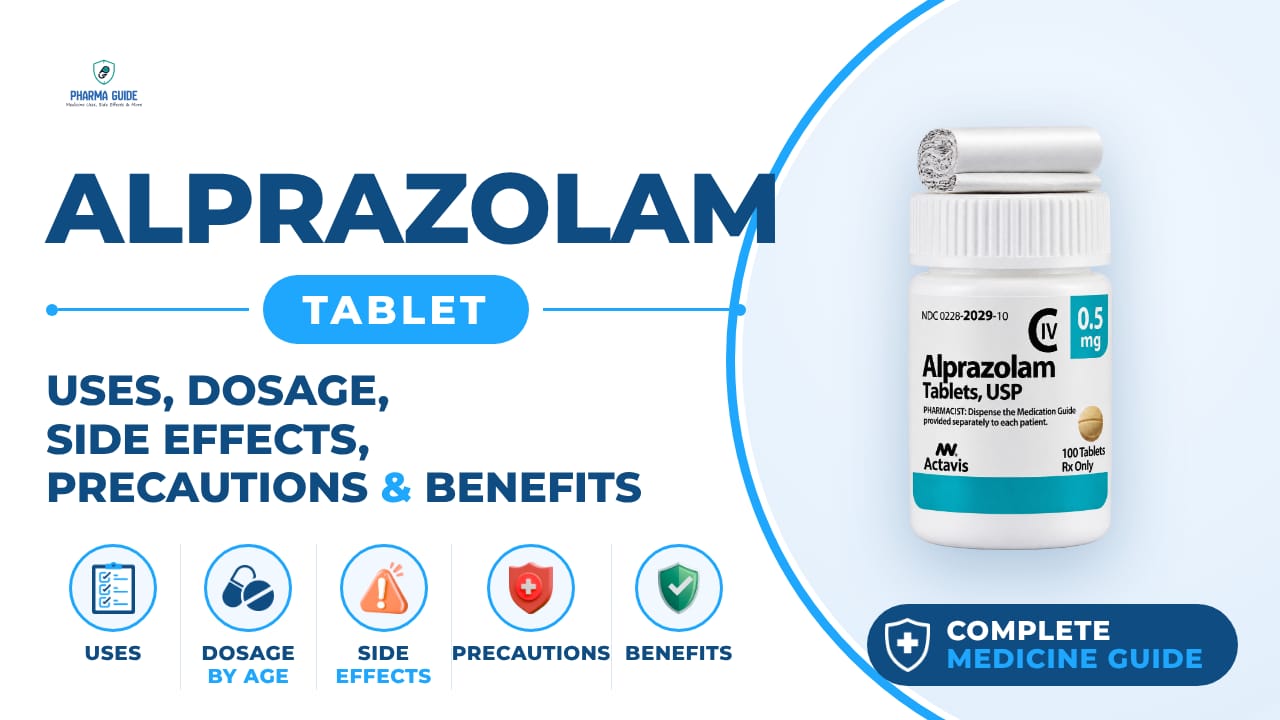
| Generic name | alprazolam |
|---|---|
| Drug class | Benzodiazepines |
| Forms | Oral tablet, Extended-release tablet, Orally disintegrating tablet, Oral concentrate/solution |
Quick overview
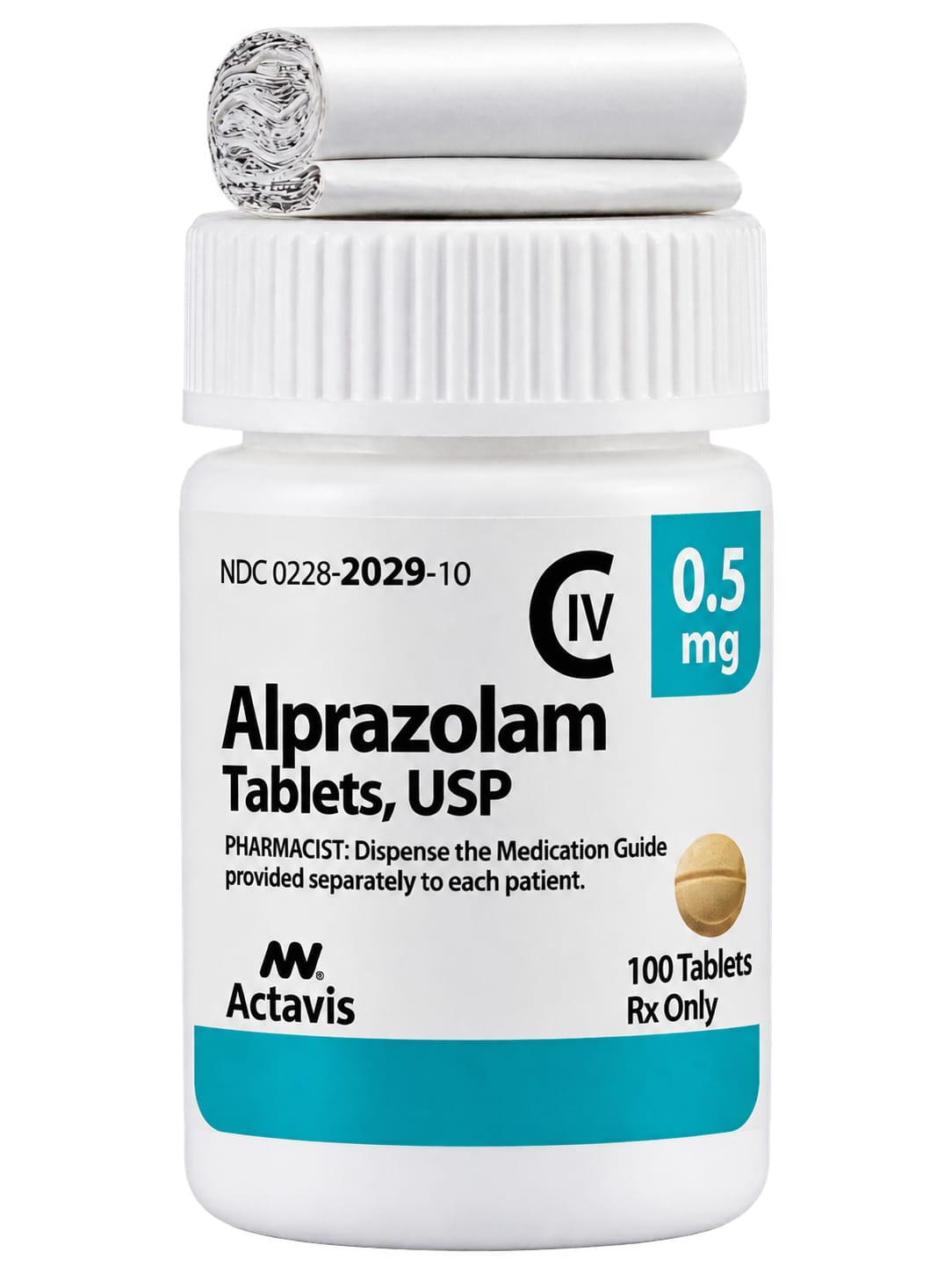
Alprazolam Tablet is a benzodiazepine medicine used to treat anxiety disorders and panic disorder. It works by calming activity in the brain and nervous system. It is available in several forms, including standard, extended-release, and orally disintegrating tablets, as well as an oral liquid.
What is Alprazolam Tablet
Alprazolam is a benzodiazepine, a type of medicine that slows down the central nervous system. It is used to treat anxiety and panic disorder.
Alprazolam Tablet uses
- Treats anxiety disorders, including generalized anxiety disorder
- Treats panic disorder with or without agoraphobia (fear of places or situations that might cause panic)
- Anxiety caused by depression
Benefits of Alprazolam Tablet
- Helps reduce feelings of fear, worry, and panic
- Can reduce the number of panic attacks
- Helps calm the brain and nervous system
How Alprazolam Tablet works
Alprazolam works by calming down brain activity. It attaches to certain receptors in the brain and boosts the effect of a natural calming chemical, which helps reduce anxiety.
Alprazolam Tablet dosage
Take this medicine by mouth exactly as your doctor tells you, and do not take it more often or for longer than prescribed. Swallow extended-release tablets whole; do not crush, chew, or break them. For the disintegrating tablet, use dry hands, remove it from the blister pack right before use, and place it on your tongue to dissolve; it can also be taken with water but should not be chewed. If using the oral liquid, measure the dose with the specially marked measuring device, not a kitchen spoon.
Older adults are usually started on a lower dose and may need smaller doses overall. Do not stop taking this medicine or lower your dose suddenly without talking to your doctor first, since your dose usually needs to be reduced gradually. Avoid grapefruit or grapefruit juice while taking this medicine.
If you miss a dose, take it as soon as you remember, but skip it if it is almost time for your next dose; do not take two doses at once.
| Age group | Dose |
|---|---|
| Under 18 Years | Not recommended unless prescribed by a specialist |
| Adults (18–64 Years) | 0.25–0.5 mg, usually 2–3 times daily (as prescribed) |
| Older Adults (65+ years) | 0.25 mg, usually 2–3 times daily; dose adjusted based on response |
Available forms and strengths
- Oral tablet
- Extended-release tablet
- Orally disintegrating tablet
- Oral concentrate/solution
Side effects of Alprazolam Tablet
Common
- Drowsiness
- Light-headedness or dizziness
- Headache
- Tiredness
- Irritability
- Talkativeness
- Dry mouth
- Increased saliva
- Changes in sex drive or ability
- Nausea
- Constipation
- Changes in appetite
- Weight changes
- Difficulty urinating
- Joint pain
- Problems with coordination
- Low blood pressure
- Trouble speaking clearly (dysarthria)
Serious
- Slow, shallow, or difficult breathing
- Severe drowsiness or dizziness, trouble staying awake
- Confusion
- Seizures
- Hallucinations
- Unusual mood or behavior changes, including thoughts of suicide or self-harm
- Loss of coordination or trouble walking
- Memory problems
- Yellowing of the skin or eyes (jaundice)
- Allergic reaction: rash, hives, itching, swelling of the face, lips, tongue, or throat, trouble breathing or swallowing
Warnings and precautions
- Tell your doctor if you are pregnant or planning to become pregnant.
- Using this medicine, especially late in pregnancy, may cause breathing problems or withdrawal symptoms in the newborn baby. You and your doctor should weigh the risks and benefits together.
- Breastfeeding is not recommended while taking this medicine, since it passes into breast milk and may cause sedation or withdrawal symptoms in the baby.
- Tell your doctor if you have kidney disease, since this may affect how the medicine is used in your body.
- People with liver problems may need a lower starting dose because the medicine is cleared from the body more slowly.
- Avoid drinking alcohol while taking this medicine. Combining alprazolam with alcohol can cause dangerous side effects or death.
- Do not drive or use heavy machinery until you know how this medicine affects you, since it can cause dizziness or drowsiness that may lead to falls or accidents.
- Misusing this medicine can lead to addiction, overdose, or death. It should only be used by the person it was prescribed for, and should be kept where others cannot access it.
- Taking this medicine with alcohol, opioids, or other drugs that cause drowsiness can slow or stop your breathing and can be fatal.
- Do not stop this medicine suddenly without talking to your doctor. Stopping suddenly after long-term use can cause life-threatening withdrawal symptoms, some of which may last up to a year or longer.
- You should not take this medicine if you have a certain type of glaucoma, if you take certain antifungal medicines, or if you are allergic to alprazolam or similar medicines.
- This medicine may worsen depression and has been linked to increased risk of suicidal thoughts, especially in people with panic disorder.
Storage
- Store at room temperature between 20 and 25 degrees C (68 and 77 degrees F)
- Keep away from light and moisture (not in the bathroom)
- Keep out of the reach of children and pets
- Discard any cotton packaging found in the bottle of orally disintegrating tablets and close the bottle tightly
- Throw away any liquid medicine not used within 90 days
- Do not flush this medication down the toilet; use a medicine take-back program when it is expired or no longer needed
When to see a doctor
- Get medical help right away if, after stopping this medicine, you have unusual muscle movements, increased activity or talking, sudden severe mood or behavior changes, confusion, hallucinations, seizures, or thoughts about suicide.
- Seek emergency care if you have signs of an allergic reaction, such as hives, difficulty breathing, or swelling of the face, lips, tongue, or throat.
- If breathing becomes slow with long pauses, lips turn blue, or the person is hard to wake up, a caregiver should get emergency medical help right away.
- Call your doctor right away if you have weak or shallow breathing, feel like you might pass out, have a seizure, hallucinations, risk-taking behavior, increased energy, racing thoughts, agitation, double vision, or yellowing of the skin or eyes.
- If you think someone has taken too much of this medicine, get emergency medical help or contact a poison control center right away, especially if the person has collapsed, had a seizure, is having trouble breathing, or cannot be woken up.
Alternatives
- Lorazepam
- Clonazepam
- Buspirone
Watch the video
FAQs
What is Alprazolam Tablet used for?
It is used to treat anxiety disorders, including generalized anxiety disorder, panic disorder with or without agoraphobia, and anxiety caused by depression.
How does Alprazolam Tablet work?
It calms brain activity by attaching to certain receptors in the brain and boosting the effect of a natural calming chemical, helping reduce anxiety.
What is the usual adult dose of Alprazolam Tablet?
Adults aged 18-64 are usually prescribed 0.25-0.5 mg, 2-3 times daily, while older adults typically start at 0.25 mg, 2-3 times daily, adjusted based on response.
Can I drink alcohol while taking Alprazolam Tablet?
No, alcohol should be avoided while taking this medicine, as combining it with alprazolam can cause dangerous side effects or death.
What should I avoid while taking Alprazolam Tablet?
You should avoid grapefruit or grapefruit juice, alcohol, and driving or using heavy machinery until you know how the medicine affects you.
General information, not medical advice
Your prescriber and the leaflet in your pack know your situation. This page does not.
- Follow your prescriber and the leaflet
- Don't start, stop, or change a dose on your own
- Doses and warnings differ by country and product
Sources
Video
Related medicines
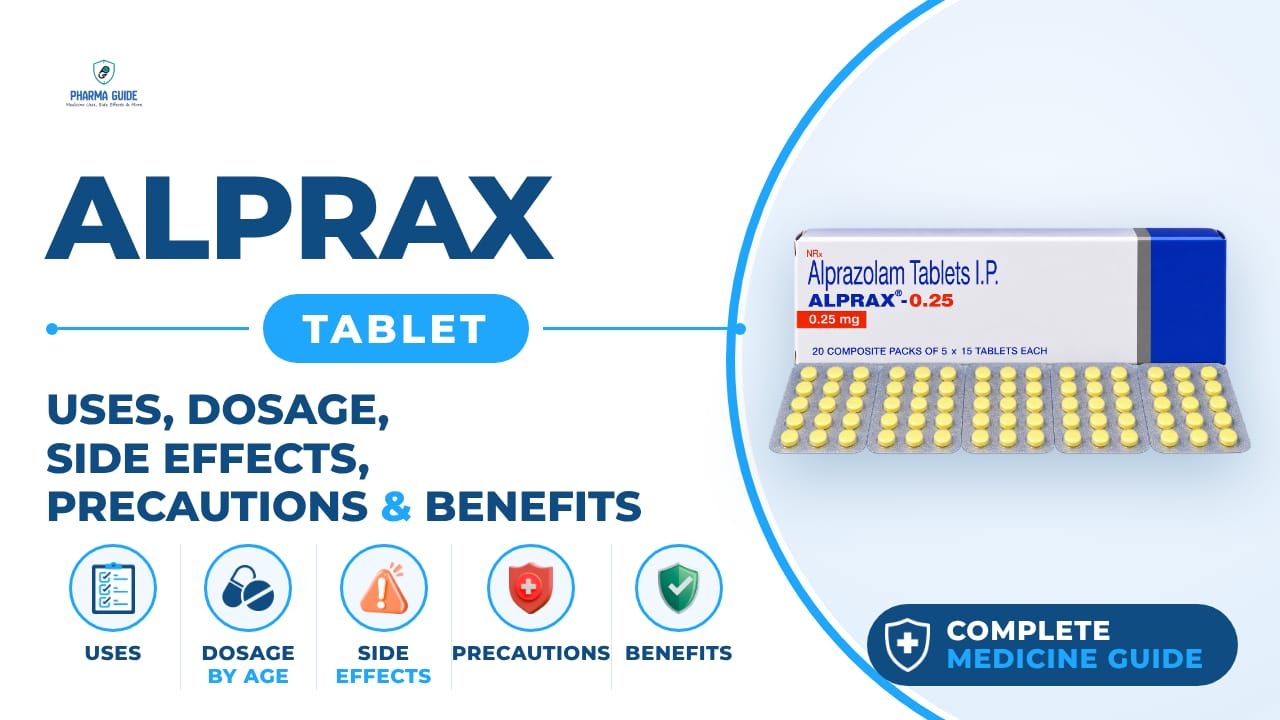
Alprax Tablet: Uses, Dosage, Side Effects, Precautions and Alternates
Benzodiazepines
Alprax Tablet (alprazolam) treats anxiety and panic disorder by calming brain activity. Learn about dosage, side effects, warnings, and precautions.
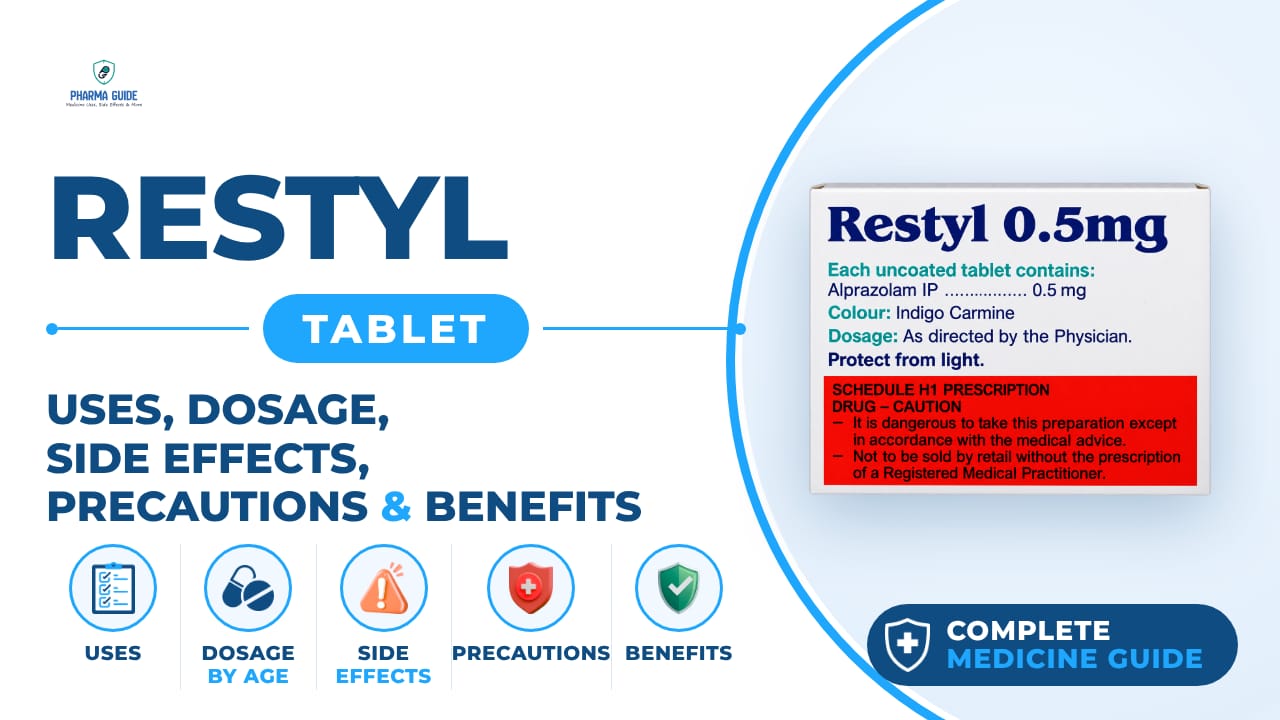
Restyl Tablet: Uses, Dosage, Side Effects, Precautions and Alternates
Benzodiazepines
Restyl Tablet (Alprazolam) treats anxiety, panic disorder, and anxiety with depression. Learn its uses, dosage, side effects, and precautions.