
Safety
General information, not medical advice
Your prescriber and the leaflet in your pack know your situation. This page does not.
- Follow your prescriber and the leaflet
- Don't start, stop, or change a dose on your own
- Doses and warnings differ by country and product
Alvesco Inhaler: Uses, Dosage, Side Effects, Precautions and Alternates
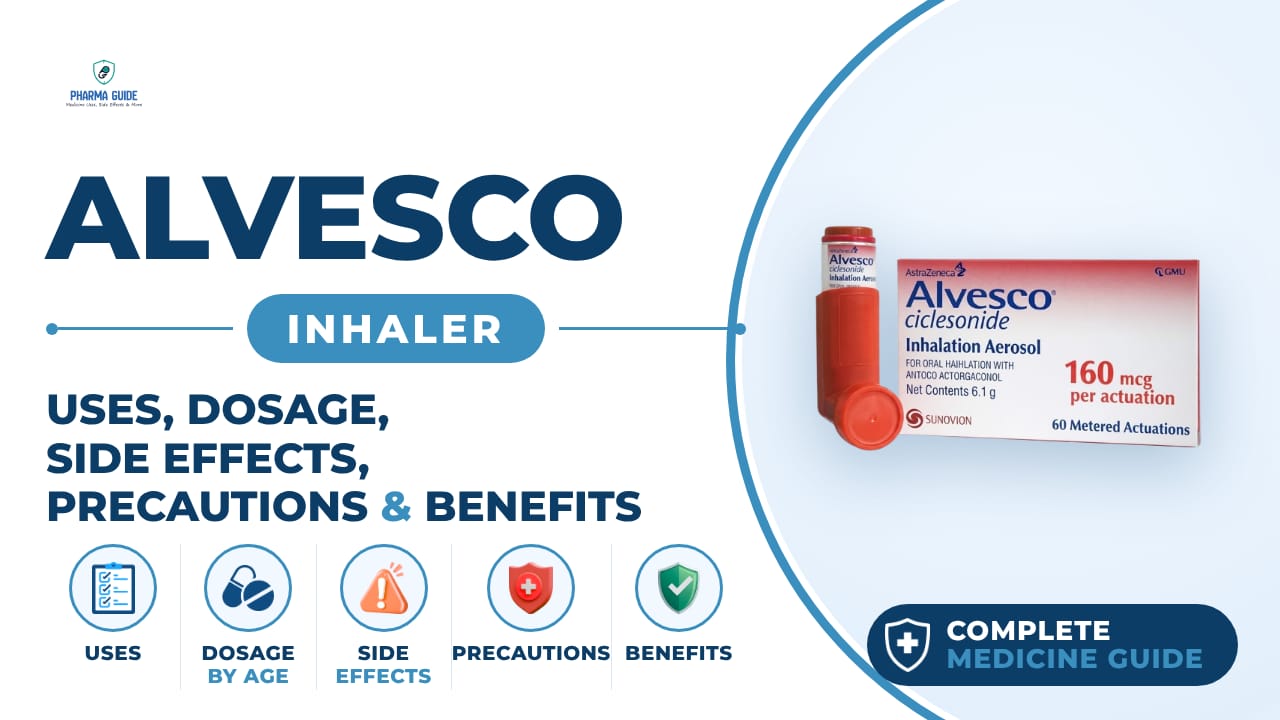
| Generic name | Ciclesonide |
|---|---|
| Drug class | Inhaled corticosteroid (ICS) |
| Forms | Metered dose inhaler (inhalation aerosol) |
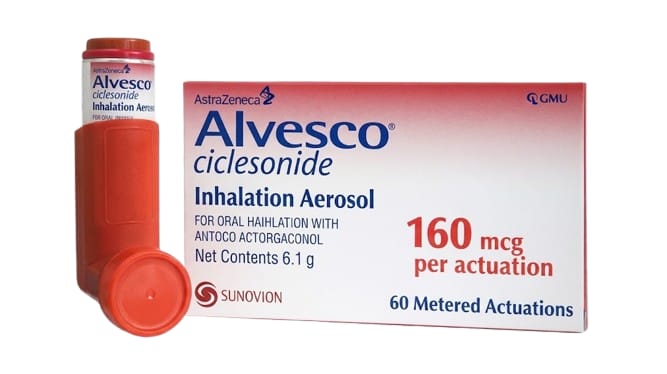
Quick overview
Alvesco Inhaler contains ciclesonide, a man-made corticosteroid medicine used regularly to help prevent asthma attacks rather than treat them once they start. It is used for the maintenance treatment of asthma, helping to control airway inflammation and reduce the risk of flare-ups. Alvesco is not a rescue inhaler and should not be used to treat a sudden asthma attack.
What is Alvesco Inhaler
Alvesco is an inhaler containing ciclesonide, a man-made corticosteroid medicine. It is used regularly to help prevent asthma attacks rather than to treat them once they start.
Alvesco Inhaler uses
- Maintenance treatment of asthma
- Prevention of recurrent asthma symptoms
- Control of persistent airway inflammation
- Long-term asthma management
- Reducing the risk of asthma flare-ups
Benefits of Alvesco Inhaler
- Reduces airway inflammation
- Helps improve asthma control
- May reduce wheezing
- Helps prevent asthma symptoms
- Supports better breathing over time
How Alvesco Inhaler works
Alvesco is a corticosteroid that works directly in the lungs to reduce inflammation and swelling in the airways, which helps keep the airways open and prevents asthma attacks. The exact way it lowers inflammation is not fully known, but it is thought to reduce the activity of cells and chemical signals in the body that trigger asthma.
Alvesco Inhaler dosage
Inhale into the lungs through the mouth; do not use it to treat a sudden asthma attack—use a fast-acting reliever inhaler instead for that. Use every day at the same time(s), even if asthma feels under control. Do not suddenly stop using it or change the amount you use without speaking to your doctor first.
Whenever possible, stand or sit upright while inhaling. If the inhaler is new or has not been used for a week or more (or 10 days or longer per other sources), it must be tested/primed first by releasing puffs into the air away from you. You do not need to shake the inhaler before use.
Breathe out as far as comfortable before placing the mouthpiece in your mouth and closing your lips around it. Press down on the inhaler just after starting to breathe in slowly and deeply through the mouth. Hold your breath for about ten seconds, or as long as comfortable, after inhaling. If told to take another puff, wait about half a minute before repeating the steps.
Always replace the mouthpiece cover after use to keep out dust. Clean the mouthpiece weekly with a dry tissue or cloth; do not wash or put any part of the inhaler in water. A spacer device may be used if you have trouble with your inhaler technique; inhale immediately after pressing down on the inhaler when using a spacer.
Rinse your mouth with water and spit it out after each use to help prevent a fungal mouth infection (thrush). Keep a separate fast-acting reliever inhaler on hand at all times in case of worsening breathing. If you forget a dose, take it as soon as you remember, unless it is almost time for the next dose—then skip the missed dose; do not double up doses. It may take several weeks or longer of regular use before you notice the full benefit.
| Age group | Dose |
|---|---|
| Under 18 years | Not recommended |
| 18–64 years | 160 mcg, once/day |
| 65+ years | 160 mcg, once/day |
Available forms and strengths
- Metered dose inhaler (inhalation aerosol)
Side effects of Alvesco Inhaler
Common
- Headache
- Sore throat
- Swelling or infection in the nose, throat, sinuses, or ear
- Common cold or upper respiratory infection symptoms (runny nose, cough, sneezing)
- Nasal congestion or stuffy nose
- Joint pain, back pain, pain in arms, legs, hands, or feet
- Dry mouth or throat
- Unpleasant or unusual taste
- Hoarse or lost voice
- Fungal infection in the mouth or throat (thrush)
- Nausea, vomiting, stomach pain, diarrhea, indigestion (more common in children)
- Toothache
Serious
- Signs of a serious allergic reaction: rash, itching, hives, swelling of the face, lips, tongue, or throat, difficulty breathing
- Sudden worsening of asthma symptoms, wheezing, or other breathing problems right after using the inhaler (paradoxical bronchospasm)
- Signs of pneumonia: fever or chills, increased or discolored phlegm, worsening cough or breathing problems
- Eye problems such as blurred vision, glaucoma, or cataracts
- Signs of adrenal insufficiency (low cortisol): ongoing tiredness or weakness, dizziness, nausea and vomiting that don't go away
- Signs of too much cortisol (Cushing's syndrome): weight gain around the stomach, puffy face, muscle weakness, easy bruising, stretch marks, mood changes, irregular periods
- Increased risk of infections, including reactivation of tuberculosis or severe effects from chickenpox or measles if not immune
- Loss of bone density over time, raising risk of osteoporosis and fractures
- Slowed growth in children using the medicine long-term
Warnings and precautions
- Do not use this medicine to treat a sudden or severe asthma attack—it will not give immediate relief. Use a fast-acting reliever inhaler instead for sudden symptoms.
- Do not use this medicine if you are allergic to ciclesonide or any of its ingredients, if you are having a sudden asthma attack, or if you are a child under 6 years old.
- Do not suddenly stop using this medicine or change your dose without talking to your doctor, since this can affect asthma control and may cause other problems if you are switching from steroid tablets or injections.
- Using this medicine can weaken the immune system, making infections more likely or worse, and can be serious if you are exposed to chickenpox or measles without prior immunity.
- Tell your doctor if you have had tuberculosis, eye infections such as herpes, glaucoma, cataracts, or a family history of weak bones, as this medicine may affect these conditions.
- This medicine may cause a fungal infection in the mouth and throat (thrush); rinsing your mouth with water and spitting it out after each dose can help lower this risk.
- If you are pregnant or planning to become pregnant, talk to your doctor. They will discuss whether the benefits of using Alvesco outweigh any possible risks to your unborn baby, since safety in pregnancy is not fully established.
- Talk to your doctor if you are breastfeeding or planning to breastfeed, as it isn't known whether this medicine passes into breast milk or could affect a nursing baby.
- Tell your doctor if you have had or currently have any liver problems before using this medicine.
- This medicine contains a small amount of alcohol, equal to less than a splash of wine or beer in two puffs. This amount is unlikely to cause noticeable effects, but tell your doctor if you have been advised to avoid alcohol for any reason.
- This medicine is unlikely to affect your ability to drive or use machines, but be careful until you know how it affects you.
Storage
- Store the pack at room temperature, below 25°C
- Do not freeze or refrigerate
- Do not puncture or incinerate the canister even when empty, as it may explode
- Keep in a cool, dry place away from moisture, heat, or sunlight—do not store in the bathroom, near a sink, in the car, or on windowsills
- Keep out of reach of children
- Discard the medicine if your doctor tells you to stop, if it is damaged, if the expiry date has passed, or when all doses have been used
- Take unwanted medicine to a pharmacy for safe disposal
When to see a doctor
- Call your doctor right away or go to the emergency department if you notice signs of a serious allergic reaction, such as rash, itching, hives, or swelling of the face, lips, tongue, throat, or other body parts, along with shortness of breath or wheezing.
- Tell your doctor right away if your asthma symptoms suddenly get worse just after using this medicine, or if you have severe wheezing or breathing problems that are not relieved by your fast-acting reliever inhaler.
- Tell your doctor right away if your eyesight becomes blurred or you have other vision problems, as you may need an eye check.
- Get medical help immediately if you think you have used too much of this medicine, even if you feel fine.
- If you experience sudden worsening of breathing, wheezing, or chest tightness right after using the inhaler, use your rescue inhaler immediately and seek urgent medical attention if symptoms continue to worsen.
Alternatives
- Flovent
- Pulmicort
- Qvar
Watch the video
FAQs
What is Alvesco Inhaler used for?
Alvesco Inhaler is used for the maintenance treatment of asthma, helping prevent recurrent symptoms, control persistent airway inflammation, and reduce the risk of asthma flare-ups. It is not used to treat a sudden asthma attack.
How does Alvesco Inhaler work?
Alvesco is a corticosteroid that works directly in the lungs to reduce inflammation and swelling in the airways, helping keep airways open and preventing asthma attacks by reducing the activity of cells and chemical signals that trigger asthma.
What is the dosage of Alvesco Inhaler?
For adults aged 18-64 and those 65 and older, the dose is 160 mcg once daily. It is not recommended for use in children under 18 years old.
What are the common side effects of Alvesco Inhaler?
Common side effects include headache, sore throat, nasal congestion, joint or back pain, dry mouth, unusual taste, hoarse voice, oral thrush, and nausea or stomach upset, which is more common in children.
Can Alvesco Inhaler be used for a sudden asthma attack?
No, Alvesco Inhaler should not be used to treat a sudden or severe asthma attack since it will not provide immediate relief. A fast-acting reliever inhaler should be used instead for sudden symptoms.
General information, not medical advice
Your prescriber and the leaflet in your pack know your situation. This page does not.
- Follow your prescriber and the leaflet
- Don't start, stop, or change a dose on your own
- Doses and warnings differ by country and product
Sources
Video
Related medicines
Asmanex Inhaler: Uses, Dosage, Side Effects, Precautions and Alternates
Inhaled corticosteroid (ICS)
Asmanex Inhaler (mometasone furoate) is a daily corticosteroid inhaler for long-term asthma control in ages 5+. Learn dosage, side effects, and precautions.

Injectafer Injection: Uses, Dosage, Side Effects, Precautions and Alternates
Iron products
Injectafer (ferric carboxymaltose) treats iron deficiency anemia and heart failure-related iron deficiency via IV. Learn uses, dosage, side effects, and