
Safety
General information, not medical advice
Your prescriber and the leaflet in your pack know your situation. This page does not.
- Follow your prescriber and the leaflet
- Don't start, stop, or change a dose on your own
- Doses and warnings differ by country and product
Amcinonide Cream: Uses, Dosage, Side Effects, Precautions and Alternates
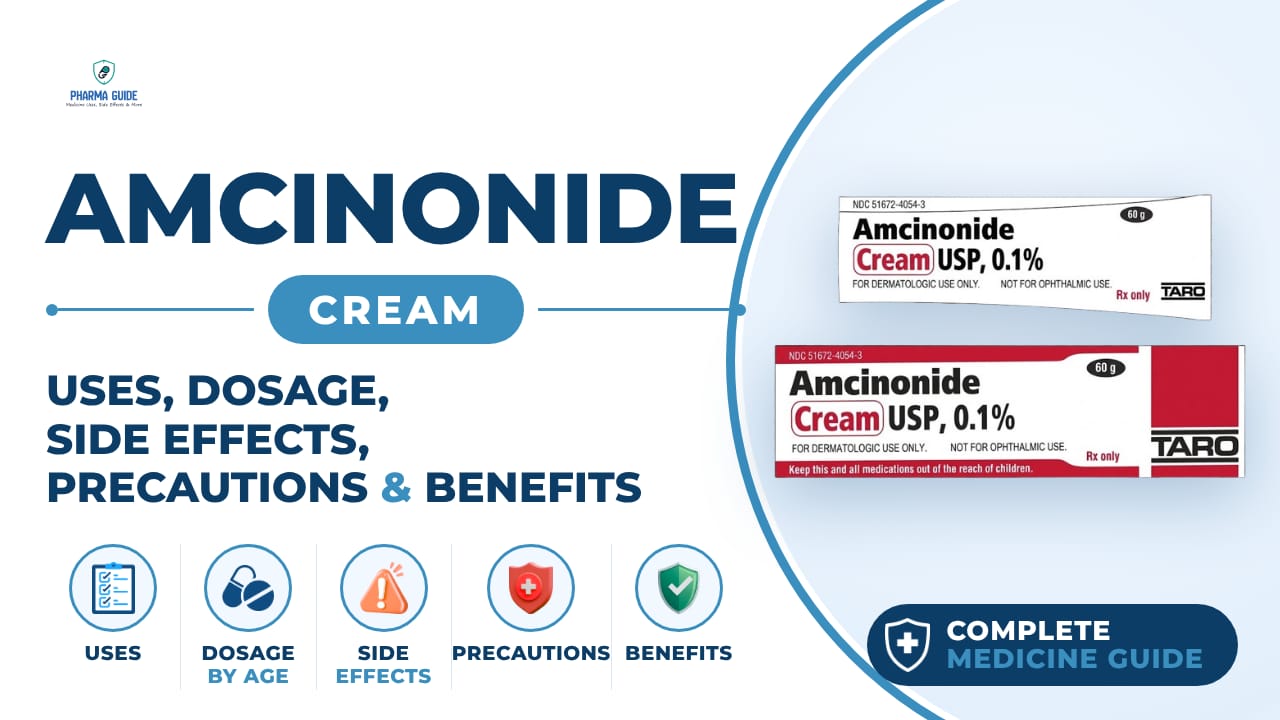
| Generic name | amcinonide |
|---|---|
| Drug class | Topical corticosteroid |
| Forms | topical cream (0.1%), topical lotion (0.1%), topical ointment (0.1%) |
Quick overview
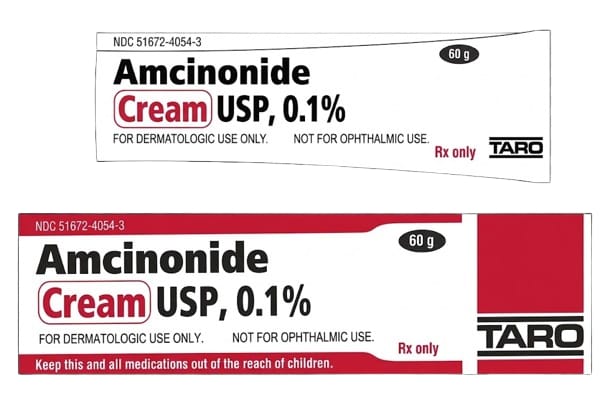
Amcinonide Cream is a high-potency topical corticosteroid used to calm inflammation and itching caused by certain skin conditions, such as eczema, dermatitis, and psoriasis. It works by calming immune cells in the skin that trigger swelling, redness, and itching. It is applied to the skin as a cream, lotion, or ointment and should be used exactly as prescribed by a doctor.
What is Amcinonide Cream
Amcinonide is a high-potency corticosteroid cream applied to the skin. It is used to calm inflammation and itching caused by certain skin conditions.
Amcinonide Cream uses
- Eczema
- Dermatitis
- Psoriasis
- Allergic skin inflammation
- Other inflammatory, itchy skin conditions responsive to topical corticosteroids
Benefits of Amcinonide Cream
- Helps reduce skin inflammation.
- Relieves itching.
- Reduces redness.
- Helps decrease swelling.
- Improves discomfort from steroid-responsive skin conditions.
How Amcinonide Cream works
Amcinonide is a steroid that works by calming the immune cells in the skin that cause inflammation and by stopping them from releasing substances that trigger swelling, redness, and itching. It may also narrow blood vessels in the treated area, which helps reduce swelling.
Amcinonide Cream dosage
For use on the skin only — do not swallow it, and rinse with water if it gets in your eyes or mouth. Wash your hands before and after applying, unless you are treating the skin on your hands. Apply a thin layer to the affected area and rub in gently. Do not apply over a large area of skin unless your doctor has told you to.
Do not bandage, wrap, or cover the treated area unless your health care provider says you should, since this can increase how much medicine your body absorbs. If treating the diaper area of a baby, do not use plastic pants or tight-fitting diapers.
Use it regularly to get the most benefit, and refill your prescription before you run out. Call your doctor if your skin condition does not improve within two weeks of treatment, or if it gets worse. Children may absorb more of this medicine through the skin than adults and may be more likely to have side effects, so use only as directed by a doctor.
| Age group | Dose |
|---|---|
| Under 18 years | Not recommended |
| 18–64 years | Apply a thin layer, 2–3 times/day |
| 65+ years | Apply a thin layer, 2–3 times/day |
Available forms and strengths
- Topical cream (0.1%)
- Topical lotion (0.1%)
- Topical ointment (0.1%)
Side effects of Amcinonide Cream
Common
- Dryness, burning, irritation, or itchiness of treated skin
- Excessive or increased hair growth
- Lightening of skin color
- Inflamed hair follicles (folliculitis)
- Acne or skin rash
- Stretch marks or thinning skin
- White or wrinkled ('pruned') look to skin from long covering
Serious
- Signs of a severe allergic reaction: hives, trouble breathing, swelling of the face, lips, tongue, or throat, racing heart, fever, or dizziness
- Signs of reduced adrenal gland function: nausea, vomiting, weakness, tiredness, low blood pressure
- Signs of Cushing's syndrome: rounded or rosy face, weight gain especially in the upper body, thinning skin, acne, mood changes, sleep problems, unusual hair growth
- Signs of high blood sugar: increased thirst, increased urination, hunger, tiredness, nausea, confusion, fruity-smelling breath
- Worsening skin condition or signs of skin infection: redness, warmth, swelling, oozing, or severe irritation
Warnings and precautions
- Do not bandage, wrap, or seal the treated skin area unless your health care provider tells you to, since this can increase the amount absorbed into your blood and raise the risk of side effects.
- In children, this medicine may slow growth in height and weight, especially with long-term use. Tell your child's doctor if you have concerns about their growth.
- Do not use this medicine on skin that has an infection, is broken, or has open wounds unless your doctor tells you to.
- Avoid getting this medicine in your eyes; rinse with water if contact happens.
- Do not use this medicine for a skin problem that has not been checked by your doctor, and do not share it with other people even if they have a similar condition.
- It is not known if amcinonide can harm an unborn baby. Tell your doctor if you are pregnant or planning to become pregnant.
- It is not known for certain if amcinonide passes into breast milk, and some sources advise against breastfeeding while using it. Talk with your doctor if you are breastfeeding or plan to.
- Tell your doctor if you have liver disease before using this medicine.
- It is not known if drinking alcohol affects this medicine.
Storage
- Store at room temperature, between 68 F and 77 F (20 C and 25 C)
- It can be exposed to temperatures between 59 F and 86 F (15 C and 30 C) for shorter periods, such as when transporting it
- Store it in a cool, dry place away from moisture and heat
- Do not freeze
When to see a doctor
- Get emergency help right away if you have signs of a severe allergic reaction, such as hives, trouble breathing, or swelling of the face, lips, tongue, or throat.
- Call your doctor right away if your skin condition is getting worse, or if the treated skin becomes very red, warm, swollen, oozing, or severely irritated.
- Call your doctor if you notice signs of high blood sugar, such as being more thirsty or hungry than usual, urinating more, or having fruity-smelling breath.
- If someone swallows this medicine by accident, get emergency medical help or contact a poison control center right away.
Alternatives
- Hydrocortisone Cream
- Betamethasone Cream
- Triamcinolone Cream
Watch the video
FAQs
What is Amcinonide Cream used for?
It is used to treat inflammation and itching caused by skin conditions such as eczema, dermatitis, psoriasis, and other allergic or inflammatory skin problems responsive to topical corticosteroids.
How should Amcinonide Cream be applied?
Apply a thin layer to the affected area and rub in gently, 2-3 times a day. Do not apply over a large area unless your doctor says to, and do not bandage or cover the treated area unless instructed by your health care provider.
Can children use Amcinonide Cream?
Use in children under 18 is not recommended. Children may absorb more of the medicine through the skin than adults and may be more likely to have side effects, including slowed growth with long-term use.
What are the common side effects of Amcinonide Cream?
Common side effects include dryness, burning, irritation, or itchiness of treated skin, excessive hair growth, lightening of skin color, folliculitis, acne or rash, stretch marks or thinning skin, and a white or wrinkled look to the skin.
What forms does Amcinonide come in?
Amcinonide is available as a topical cream, lotion, and ointment, each at 0.1% strength.
General information, not medical advice
Your prescriber and the leaflet in your pack know your situation. This page does not.
- Follow your prescriber and the leaflet
- Don't start, stop, or change a dose on your own
- Doses and warnings differ by country and product
Sources
Video
Related medicines
Amcinonide Lotion: Uses, Dosage, Side Effects, Precautions and Alternates
Topical corticosteroid
Amcinonide Lotion is a high-potency corticosteroid for eczema, dermatitis, and psoriasis. Learn uses, dosage, side effects, and precautions.
Desoximetasone Spray: Uses, Dosage, Side Effects, Precautions and Alternates
topical corticosteroid
Desoximetasone Spray is a prescription corticosteroid for plaque psoriasis that eases redness, itching, and swelling. Learn dosage, side effects, and warnings.