
Safety
General information, not medical advice
Your prescriber and the leaflet in your pack know your situation. This page does not.
- Follow your prescriber and the leaflet
- Don't start, stop, or change a dose on your own
- Doses and warnings differ by country and product
Amcinonide Lotion: Uses, Dosage, Side Effects, Precautions and Alternates
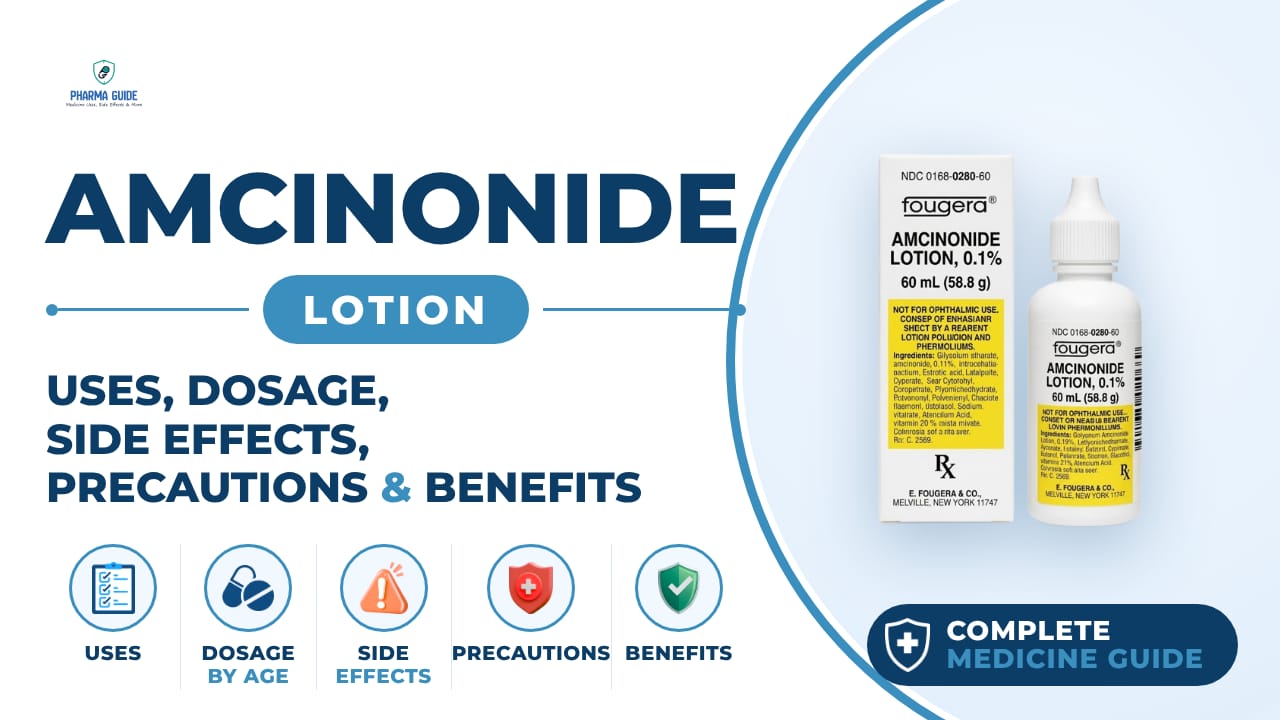
| Generic name | amcinonide |
|---|---|
| Drug class | Topical corticosteroid |
| Forms | Topical cream, Topical lotion, Topical ointment |
Quick overview
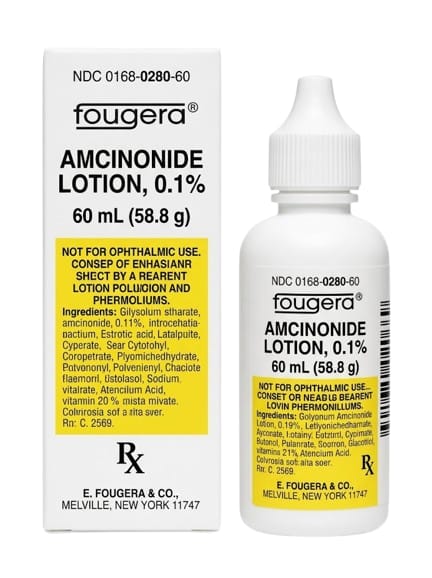
Amcinonide Lotion contains amcinonide, a high-potency topical corticosteroid applied to the skin to reduce inflammation, redness, and itching caused by conditions such as eczema, dermatitis, and psoriasis. It works by calming the skin's immune response and narrowing blood vessels in the skin. It is for use on the skin only, is not recommended for anyone under 18, and should be used exactly as directed by a doctor.
What is Amcinonide Lotion
Amcinonide Lotion is a high-potency topical corticosteroid that is applied to the skin to reduce inflammation and itching caused by various skin conditions.
Amcinonide Lotion uses
- Eczema.
- Dermatitis.
- Psoriasis.
- Allergic skin rashes.
- Inflammatory skin conditions that respond to corticosteroids.
Benefits of Amcinonide Lotion
- Reduces skin inflammation.
- Relieves itching.
- Reduces redness.
- Helps calm skin irritation.
- Relieves symptoms of steroid-responsive skin conditions.
How Amcinonide Lotion works
Amcinonide is a corticosteroid that works by calming down the skin's immune cells so they release fewer substances that cause inflammation. It also narrows blood vessels in the skin, which helps reduce swelling, redness, and itching.
Amcinonide Lotion dosage
Apply a thin layer of the lotion to the affected skin area as directed by your doctor, usually two to three times a day depending on how severe the condition is. Rub the lotion into the skin completely and protect the area from washing, clothing, or rubbing until it has dried. Do not bandage, wrap, or cover the treated skin with airtight dressings unless your doctor tells you to, since this can increase the amount absorbed into your body and raise the risk of side effects. Use only on the skin and keep it away from your eyes. Do not use tight-fitting diapers or plastic pants over treated skin on a child, since these can act like an occlusive covering.
If you miss a dose, apply it as soon as you remember; if it is almost time for your next dose, skip the missed one and continue your normal schedule instead of using extra. Children may be more likely to absorb the medicine through their skin, so use should be limited to the smallest amount needed.
| Age group | Dose |
|---|---|
| Under 18 years | Not recommended |
| 18–64 years | Apply a thin layer, 2 times/day |
| 65+ years | Apply a thin layer, 2 times/day |
Available forms and strengths
- Topical cream
- Topical lotion
- Topical ointment
Side effects of Amcinonide Lotion
Common
- Skin burning, stinging, or pain
- Itching, dryness, cracking, or scaly skin
- Redness or irritation at the application site
- Inflamed hair follicles (folliculitis)
- Acne-like bumps or pimples
- Lightening of skin color
- Excessive hair growth
- Stretch marks
Serious
- Signs of a severe allergic reaction, such as trouble breathing, swelling of the face, lips, mouth, tongue, or throat, hives, or racing heart
- Signs of reduced adrenal gland function, such as nausea, vomiting, weakness, tiredness, or low blood pressure
- Signs of Cushing's syndrome, such as a rounded or rosy face, weight gain in the upper body, thinning skin, or unusual hair growth
- Signs of high blood sugar, such as increased thirst, increased urination, fruity-smelling breath, or confusion
- Skin thinning, skin infections, or worsening of the treated skin condition
- Slow wound healing
- Serious eye symptoms such as sudden vision loss, blurred vision, or eye pain
- Serious heart symptoms such as fast or irregular heartbeat, fluttering in the chest, or sudden dizziness or fainting
- Severe headache, confusion, slurred speech, arm or leg weakness, trouble walking, loss of coordination, very stiff muscles, high fever, profuse sweating, or tremors
Warnings and precautions
- Do not bandage, wrap, or otherwise cover the treated skin area unless your health care provider has told you to do so, since this can increase the amount of medicine absorbed into your body and raise the risk of side effects.
- Using amcinonide in children may slow their growth in height and weight, especially with long-term use. Tell your child's health care provider if you have concerns about their growth.
- Do not use amcinonide unless it was prescribed for you, do not share it with others, and keep it out of the reach of children.
- This medicine is for use on the skin only and should be kept away from the eyes.
- Tell your health care provider if you have a skin infection, since it may need to be treated before you use amcinonide.
- It is not known if amcinonide can harm an unborn baby. Topical corticosteroids like this one may carry some risk and should only be used during pregnancy if your doctor decides the benefit is worth the potential risk. Tell your health care provider if you are pregnant or planning to become pregnant.
- It is not known if amcinonide passes into breast milk. Tell your health care provider if you are breastfeeding or plan to breastfeed, as they may advise stopping breastfeeding or stopping the medicine.
- Consult a healthcare professional before use during pregnancy or breastfeeding.
- Do not cover the treated area with bandages unless advised by a doctor.
- It is not known whether drinking alcohol affects amcinonide.
- Use on the face, groin, or underarms only if specifically directed by a healthcare professional.
Storage
- Store at 15–30°C.
- Do not freeze.
- Keep the bottle tightly closed.
- Keep out of reach of children.
- Do not use after the expiry date.
When to see a doctor
- Stop using amcinonide and get help right away if you have signs of a serious allergic reaction, such as breathing problems, wheezing, a racing heart, swelling of the face, lips, mouth, tongue, or throat, trouble swallowing, hives, dizziness, or fainting.
- Get medical help right away or contact a poison control center if you or someone else has used too much amcinonide.
- Seek medical care right away if you have serious eye symptoms such as sudden vision loss, blurred vision, eye pain, or seeing halos around lights.
- Seek medical care right away if you have serious heart symptoms such as a fast, irregular, or pounding heartbeat, fluttering in your chest, shortness of breath, or sudden dizziness or fainting.
- Seek medical care right away if you have a severe headache, confusion, slurred speech, arm or leg weakness, trouble walking, loss of coordination, feeling unsteady, very stiff muscles, high fever, profuse sweating, or tremors.
Alternatives
- Betamethasone Lotion
- Mometasone Lotion
- Hydrocortisone Lotion
Watch the video
FAQs
What is Amcinonide Lotion used for?
It is used to treat eczema, dermatitis, psoriasis, allergic skin rashes, and other inflammatory skin conditions that respond to corticosteroids.
How should Amcinonide Lotion be applied?
Apply a thin layer to the affected skin area as directed by your doctor, usually two to three times a day, rubbing it in completely and protecting the area from washing, clothing, or rubbing until dry.
Can Amcinonide Lotion be covered with a bandage?
No, you should not bandage, wrap, or cover the treated skin with airtight dressings unless your doctor tells you to, since this can increase absorption and raise the risk of side effects.
Is Amcinonide Lotion safe for children?
It is not recommended for anyone under 18, as children may absorb more medicine through their skin and long-term use may slow growth in height and weight.
What are the common side effects of Amcinonide Lotion?
Common side effects include skin burning, stinging, or pain, itching, dryness, cracking, redness or irritation, folliculitis, acne-like bumps, skin lightening, excessive hair growth, and stretch marks.
General information, not medical advice
Your prescriber and the leaflet in your pack know your situation. This page does not.
- Follow your prescriber and the leaflet
- Don't start, stop, or change a dose on your own
- Doses and warnings differ by country and product
Sources
Video
Related medicines
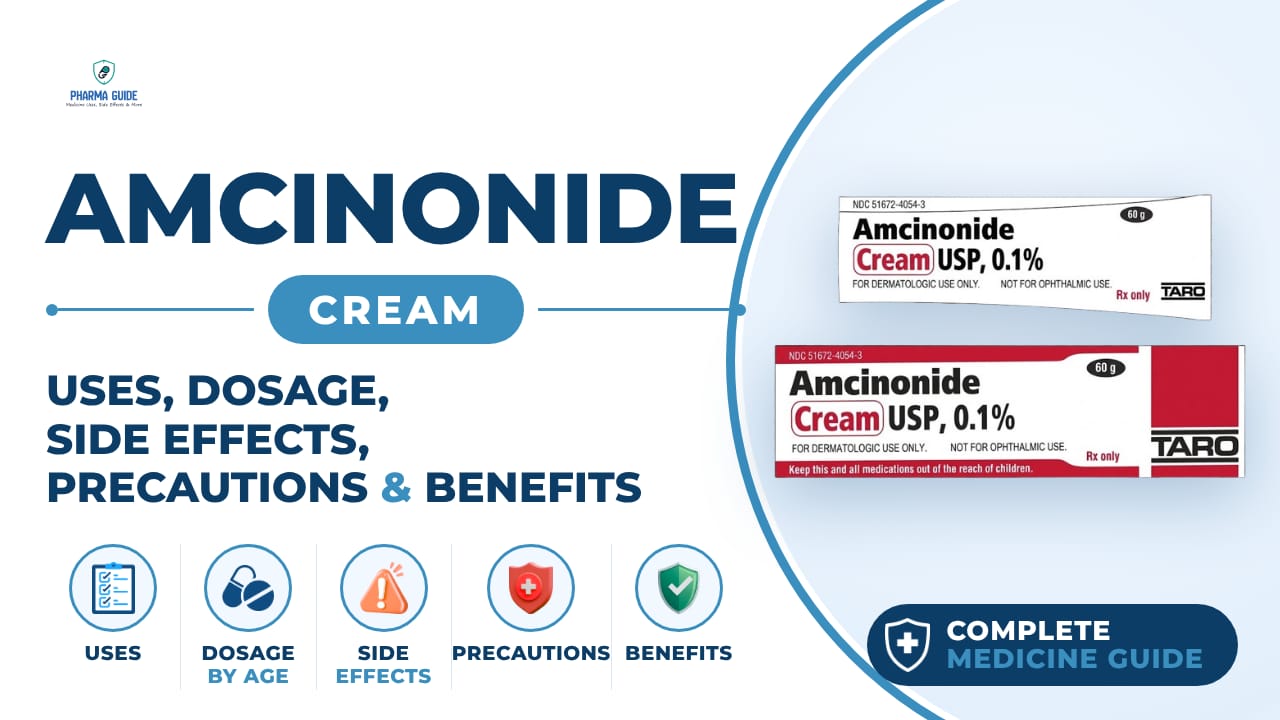
Amcinonide Cream: Uses, Dosage, Side Effects, Precautions and Alternates
Topical corticosteroid
Amcinonide Cream is a high-potency corticosteroid that relieves itching, redness, and inflammation from eczema, dermatitis, and psoriasis.
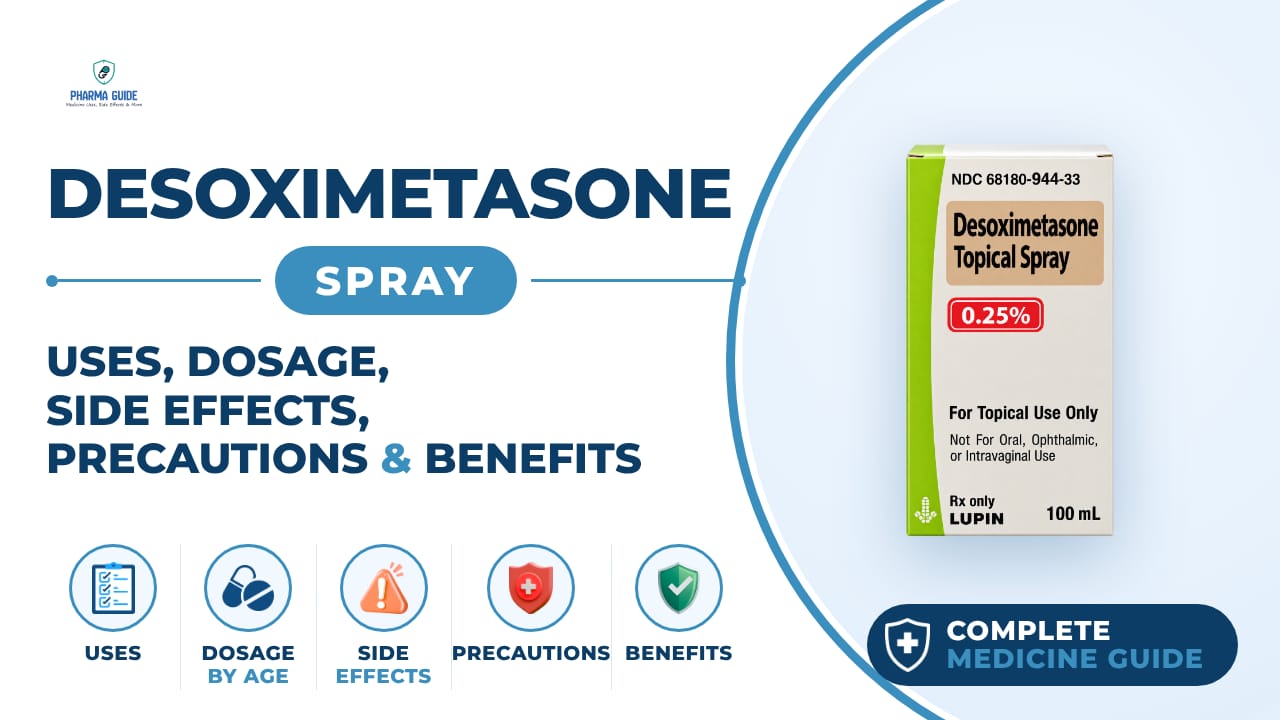
Desoximetasone Spray: Uses, Dosage, Side Effects, Precautions and Alternates
topical corticosteroid
Desoximetasone Spray is a prescription corticosteroid for plaque psoriasis that eases redness, itching, and swelling. Learn dosage, side effects, and warnings.