
Safety
General information, not medical advice
Your prescriber and the leaflet in your pack know your situation. This page does not.
- Follow your prescriber and the leaflet
- Don't start, stop, or change a dose on your own
- Doses and warnings differ by country and product
Amitriptyline Tablet: Uses, Dosage, Side Effects, Precautions and Alternates
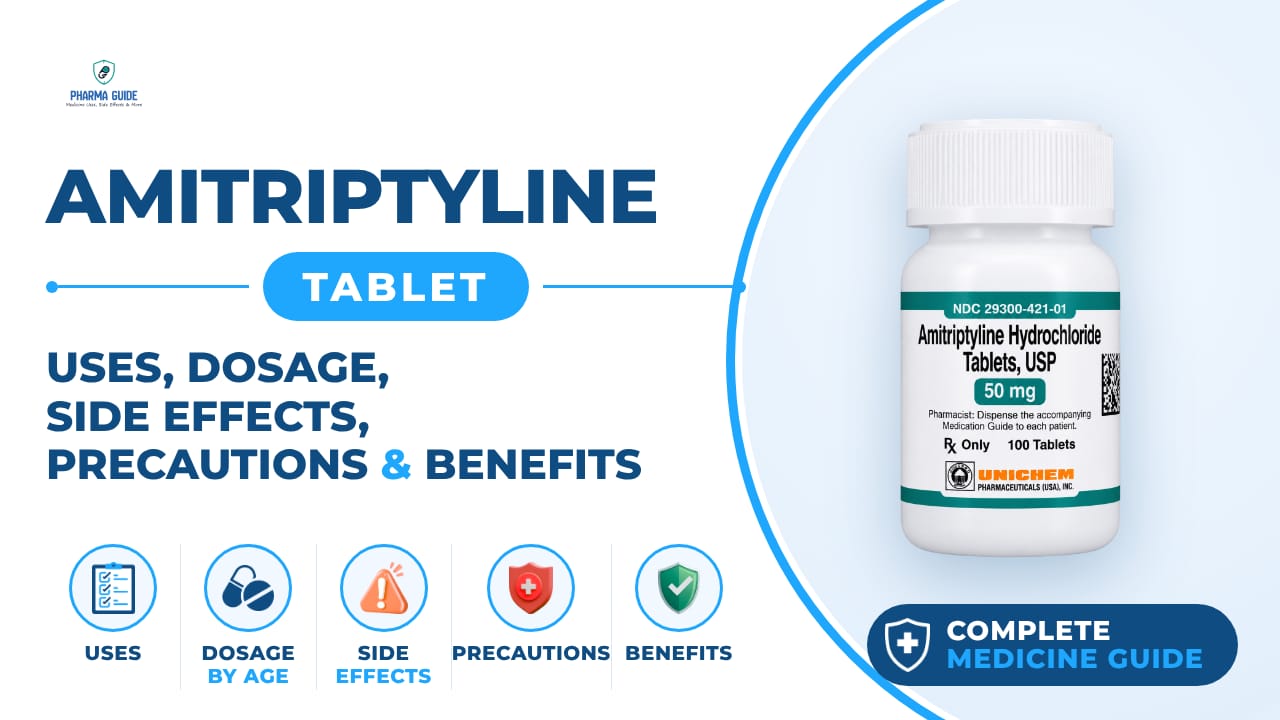
| Generic name | Amitriptyline hydrochloride |
|---|---|
| Drug class | Tricyclic antidepressant (TCA) |
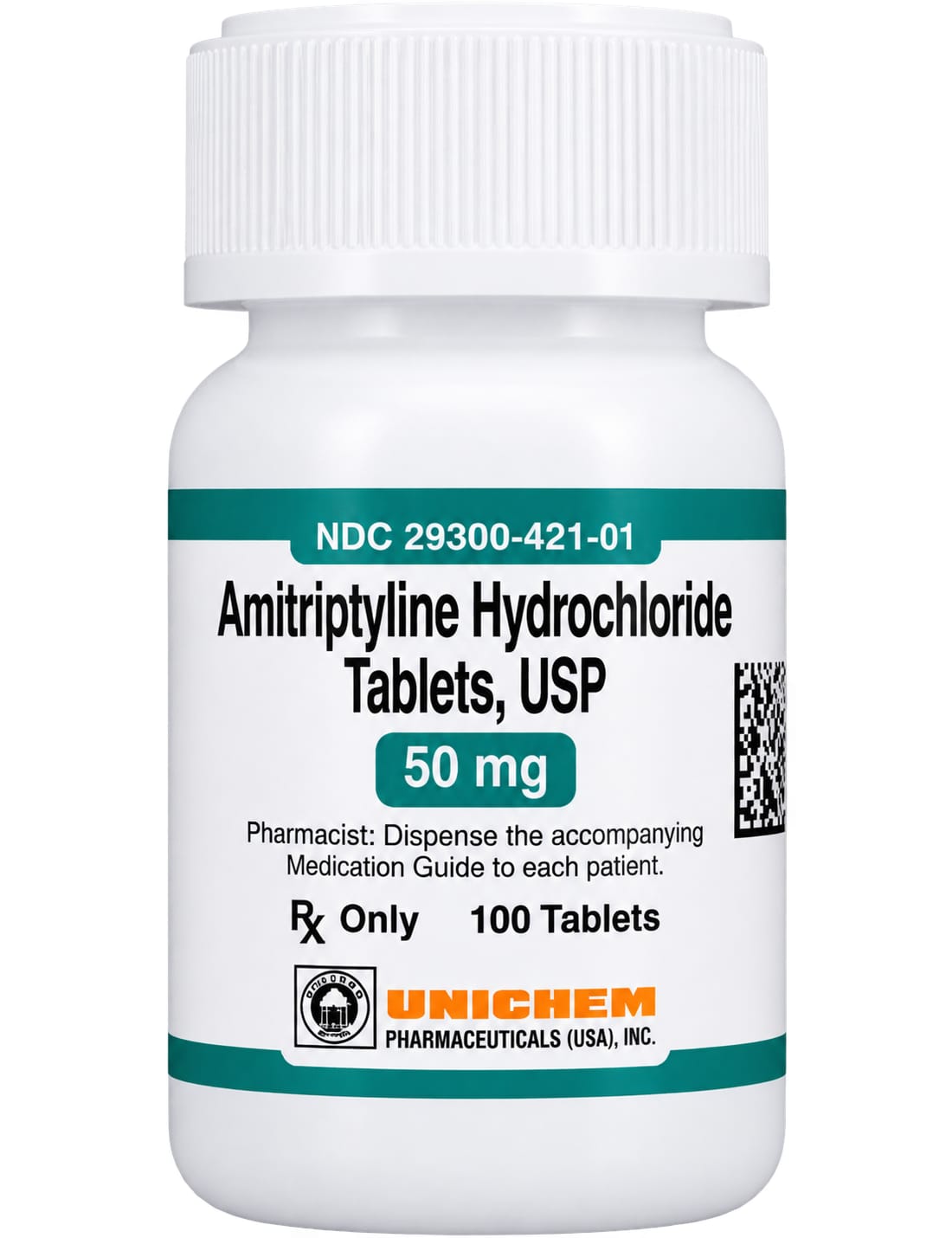
| Forms | Tablets (10 mg, 25 mg, 50 mg, 75 mg, 100 mg, 150 mg) |
Quick overview
Amitriptyline Tablet (amitriptyline hydrochloride) is a prescription tricyclic antidepressant mainly used to treat depression. It also helps with bedwetting when there is no physical cause, and may be used off-label for conditions such as nerve pain, migraine prevention, and insomnia. It comes as tablets taken by mouth, usually once daily or in divided doses as directed by a doctor.
What is Amitriptyline Tablet
Amitriptyline is a prescription medicine belonging to a group called tricyclic antidepressants. It is mainly used to treat depression and comes as tablets that you swallow.
Amitriptyline Tablet uses
- Depression
- Bedwetting (when there is no physical cause)
- Off-label: insomnia, migraine prevention, ADHD, eating disorders, bipolar disorder, anxiety, psychotic disorders, and nerve pain
- Off-label: chronic pain syndromes such as diabetic neuropathy and fibromyalgia, irritable bowel syndrome, interstitial cystitis, postherpetic neuralgia, and sialorrhea
Benefits of Amitriptyline Tablet
- Can help relieve symptoms of depression
- May help control bedwetting in children when there is no physical cause
- May help relieve certain types of nerve pain and help prevent migraines
- Depression Support: Helps improve mood and reduce symptoms of depression
- Nerve Pain Relief: Helps manage certain types of chronic nerve-related pain
- Migraine Prevention: May help reduce the frequency of migraine headaches
How Amitriptyline Tablet works
Amitriptyline raises the levels of serotonin and norepinephrine, natural brain chemicals that help control mood and pain, by blocking their reabsorption into nerve cells. This helps correct a chemical imbalance linked to depression.
Amitriptyline Tablet dosage
Take this medicine exactly as your doctor prescribes and follow the instructions on your prescription label. It can be taken with or without food. It can be taken as a single dose, such as at bedtime, or in divided doses through the day, depending on your doctor's instructions. Try to take it at about the same time each day.
Swallow the tablets whole with a glass of water; the tablet can also be cut or crushed if needed. It may take up to 4 weeks to feel the full benefit, so keep taking it even if you don't notice improvement right away.
Do not stop taking this medicine suddenly, or you may get withdrawal symptoms; ask your doctor how to stop safely. If you need surgery, including dental surgery, tell your surgeon or dentist that you are taking this medicine, as you may need to stop it for a short time beforehand.
| Age group | Dose |
|---|---|
| Under 12 Years | Use only if prescribed by a specialist |
| 12–17 Years | Dose determined by doctor based on condition |
| Adults (18–64 Years) | Initial dose: 25–50 mg once daily (usually at bedtime); adjusted based on response |
| Older Adults (65+ Years) | Initial dose: 10–25 mg once daily; adjusted based on response and medical condition |
Available forms and strengths
Tablets (10 mg, 25 mg, 50 mg, 75 mg, 100 mg, 150 mg)
Side effects of Amitriptyline Tablet
Common
- Dry mouth
- Blurred vision or other vision changes
- Sleepiness (sedation) and tiredness
- Appetite or weight changes
- Constipation or diarrhea
- Nausea, vomiting, or upset stomach
- Mouth pain or unusual taste
- Black tongue
- Urinating less than usual
- Breast swelling in men or women
- Lower sex drive, impotence, or difficulty having an orgasm
- Headache, dizziness, or lightheadedness
- Increased sweating
- Confusion
- Numbness and tingling in arms and legs
- Skin rash
Serious
- Signs of an allergic reaction: difficulty breathing, hives, or swelling of the face, lips, tongue, or throat
- Signs of a blood clot: sudden numbness or weakness, vision or speech problems, swelling or redness in an arm or leg
- Chest pain or pressure, pain spreading to the jaw or shoulder, nausea, sweating (possible heart attack)
- Weakness on one side of the body, slurred speech (possible stroke)
- Pounding or irregular heartbeats, or fluttering in the chest
- A light-headed feeling, like you might pass out (sudden drop in blood pressure)
- Confusion or hallucinations
- A seizure (convulsions)
- Painful or difficult urination, or severe constipation
- Easy bruising or unusual bleeding
- Fever, chills, sore throat, and mouth sores
- Eye pain, changes in vision, swelling or redness in or around the eye
- Low sodium levels: headache, weakness, feeling unsteady, confusion, or memory problems
- Signs of serotonin syndrome: agitation, hallucinations, coma, racing heartbeat, high or low blood pressure, coordination problems, muscle twitching, nausea, vomiting, diarrhea, sweating, fever, or muscle rigidity
- New or worsening mood or behavior changes, anxiety, panic attacks, trouble sleeping, feeling impulsive, irritable, agitated, hostile, aggressive, restless, or having thoughts of suicide or self-harm
Warnings and precautions
- Tell your doctor if you are pregnant or planning to become pregnant. Amitriptyline can cross to the baby, and there have been reports of complications in newborns after delivery; your doctor will weigh the risks and benefits with you.
- This medicine passes into breast milk and may affect a breastfed baby. Talk to your doctor about whether to breastfeed or take this medicine.
- This medicine should be used carefully if you have liver problems, since it can increase the risk of liver-related side effects.
- Do not drink alcohol while taking this medicine. Combining alcohol with amitriptyline can cause dangerous side effects, extreme drowsiness, or even death.
- Avoid driving or doing anything dangerous until you know how this medicine affects you, since it can make you less alert, drowsy, or dizzy.
- Antidepressants like amitriptyline can increase the risk of suicidal thoughts and actions in children, teens, and young adults up to age 24, especially in the first weeks of treatment. This is the most serious FDA warning level.
- Do not take this medicine if you have recently had a heart attack.
- Do not take amitriptyline if you have taken a type of medicine called an MAO inhibitor in the past 14 days, as this can cause a dangerous reaction.
- This medicine can trigger a sudden, serious eye problem called angle-closure glaucoma in people with certain eye anatomy who have not had a particular eye procedure.
- Do not stop taking this medicine suddenly, as this can cause unpleasant withdrawal symptoms like nausea, headache, and feeling generally unwell. Your doctor will tell you how to lower the dose gradually.
- This medicine can cause a severe allergic reaction with rash, hives, trouble breathing, or swelling of the face or tongue. Do not take it again if you have ever had an allergic reaction to it, as this could be fatal.
Storage
- Store at room temperature between 68°F and 77°F (20°C and 25°C); brief exposure to 59°F–86°F (15°C–30°C) is permitted.
- Keep away from light and moisture.
- Do not store in the bathroom or other damp areas.
- Keep the container tightly closed when not in use.
- Keep out of reach of children, ideally in a locked cupboard at least one-and-a-half metres above the ground.
- If you no longer need the medicine or it is out of date, take it to a pharmacy for safe disposal; do not use after the expiry date.
When to see a doctor
- Get emergency help right away if you have signs of a severe allergic reaction, such as trouble breathing, hives, or swelling of your face, lips, tongue, or throat.
- Call your doctor right away if you notice signs of a blood clot, chest pain, fainting feelings, irregular heartbeat, confusion, hallucinations, a seizure, painful urination, severe constipation, easy bruising or bleeding, fever with sore throat and mouth sores, eye pain or vision changes, or symptoms of low sodium or serotonin syndrome.
- Tell your doctor immediately if you have any thoughts of suicide or self-harm, or notice worsening depression or mood changes.
- Seek urgent medical help if you think you have taken too much of this medicine, even if you feel fine, because an overdose can be dangerous and even fatal.
Alternatives
- Nortriptyline
- Duloxetine
- Fluoxetine
Watch the video
FAQs
What is Amitriptyline Tablet used for?
It mainly treats depression and bedwetting when there is no physical cause. It may also be used off-label for conditions like nerve pain, migraine prevention, insomnia, and other chronic pain syndromes.
How does Amitriptyline Tablet work?
It raises levels of serotonin and norepinephrine, natural brain chemicals that control mood and pain, by blocking their reabsorption into nerve cells, helping correct a chemical imbalance linked to depression.
How long does it take for Amitriptyline Tablet to work?
It may take up to 4 weeks to feel the full benefit, so it's important to keep taking it even if improvement isn't noticed right away.
Can I drink alcohol while taking Amitriptyline Tablet?
No, alcohol should be avoided while taking this medicine, as combining it with amitriptyline can cause dangerous side effects, extreme drowsiness, or even death.
Can I stop taking Amitriptyline Tablet suddenly?
No, you should not stop suddenly, as this can cause withdrawal symptoms like nausea, headache, and feeling generally unwell. Your doctor will tell you how to lower the dose gradually.
General information, not medical advice
Your prescriber and the leaflet in your pack know your situation. This page does not.
- Follow your prescriber and the leaflet
- Don't start, stop, or change a dose on your own
- Doses and warnings differ by country and product
Sources
- Drugs.com – Amitriptyline (https://www.drugs.com/amitriptyline.html)
- Australian Commission on Safety and Quality in Health Care – Medicine Finder: Amitriptyline Viatris (https://www.safetyandquality.gov.au/medicine-finder/amitriptyline-alphapharm-tablets)
- StatPearls – Amitriptyline (https://www.ncbi.nlm.nih.gov/books/NBK537225/)
Video
Related medicines
Vivactil Tablet: Uses, Dosage, Side Effects, Precautions and Alternates
Tricyclic antidepressant (TCA)
Vivactil Tablet (protriptyline) is a tricyclic antidepressant for depression, especially in withdrawn or low-energy patients. Learn dosage, uses, and side
Pamelor Capsule: Uses, Dosage, Side Effects, Precautions and Alternates
Tricyclic antidepressant (TCA)
Pamelor Capsule (nortriptyline) treats depression in adults by raising mood-related brain chemicals. Learn uses, dosage, side effects, and precautions.