
Safety
General information, not medical advice
Your prescriber and the leaflet in your pack know your situation. This page does not.
- Follow your prescriber and the leaflet
- Don't start, stop, or change a dose on your own
- Doses and warnings differ by country and product
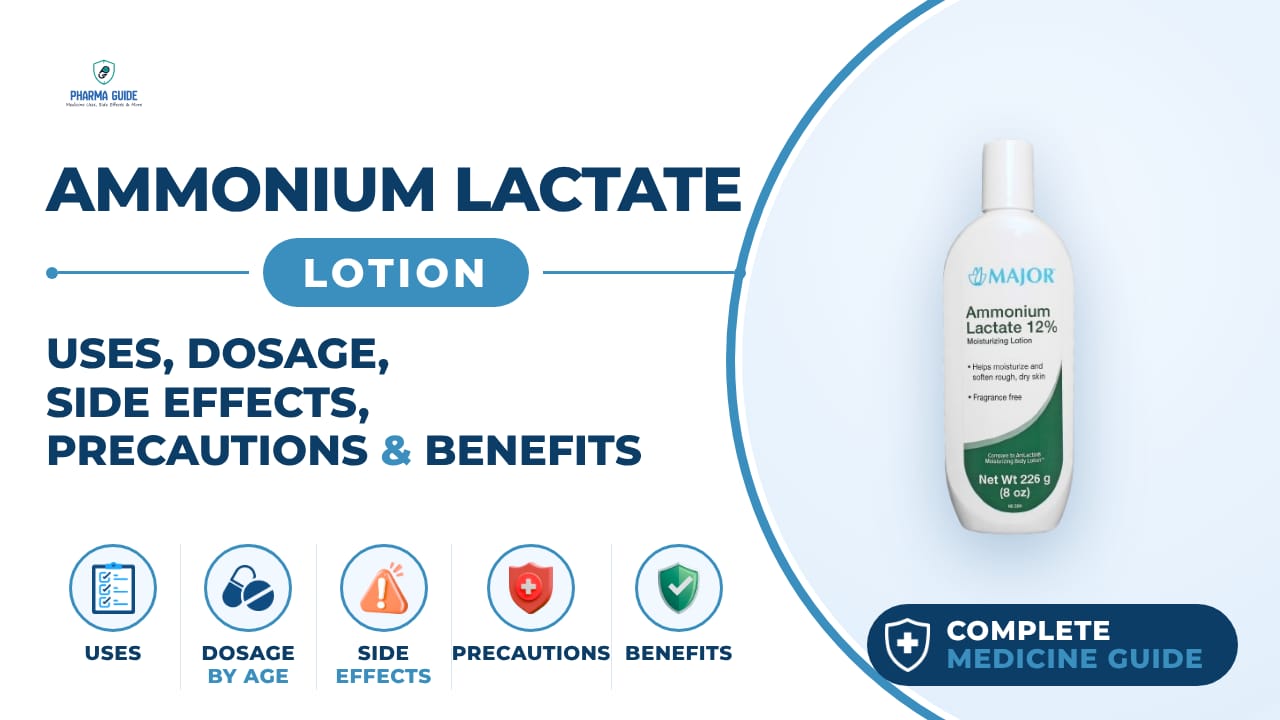
Ammonium Lactate Lotion: Uses, Dosage, Side Effects, Precautions and Alternates
| Generic name | ammonium lactate |
|---|---|
| Drug class | alpha-hydroxy acid, emollient |
| Forms | topical cream, topical lotion |
Quick overview
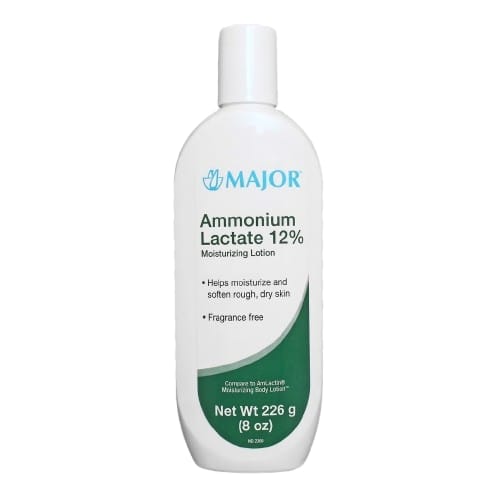
Ammonium Lactate Lotion (ammonium lactate) is an alpha-hydroxy acid and emollient combining lactic acid and ammonium hydroxide. It is applied to the skin as a moisturizer to treat dry, scaly, and itchy skin conditions. It is typically applied twice daily to the affected area, and it works by helping the skin hold onto moisture.
What is Ammonium Lactate Lotion
Ammonium lactate is a combination of lactic acid and ammonium hydroxide. It is a moisturizer applied to the skin to treat dry, scaly, and itchy skin conditions.
Ammonium Lactate Lotion uses
- Dry skin (xerosis)
- Scaly skin
- Ichthyosis vulgaris
- Rough, flaky skin
- Itching associated with dry, scaly skin
Benefits of Ammonium Lactate Lotion
- Increases skin hydration
- Softens rough skin
- Reduces scaling and flaking
- Improves skin smoothness
- Helps relieve itching associated with dry skin
How Ammonium Lactate Lotion works
Ammonium lactate acts as a humectant, meaning it helps the skin hold onto moisture. It also helps increase skin hydration and may reduce how tightly skin cells stick together, which keeps skin smoother.
Ammonium Lactate Lotion dosage
Apply to the affected skin area, usually twice daily, at around the same time each day. Shake the lotion well before each use to mix the medication evenly. Apply a small amount of lotion to cover the affected area and rub it in gently and thoroughly. Wash your hands before and after applying, unless treating a hand condition. Do not apply to the face unless your doctor has told you to.
This medication is for use on the skin only; keep it away from the eyes, mouth, nose, and vaginal area, and do not swallow it. If you miss a dose, apply it as soon as you remember, but if it is almost time for the next dose, skip the missed one and do not double up. Continue your normal diet unless your doctor tells you otherwise. Contact your doctor if your skin condition gets worse instead of better while using this medicine.
| Age group | Dose |
|---|---|
| Under 18 years | Apply twice/day |
| 18–64 years | Apply twice/day |
| 65+ years | Apply twice/day |
Available forms and strengths
- Topical cream
- Topical lotion
Side effects of Ammonium Lactate Lotion
Common
- Rash, such as skin redness and irritation
- Burning or stinging where applied
- Skin peeling
- Dry skin
- Itching
- Mild dryness or skin irritation after use
- Bruising or discoloration of treated skin
Serious
- Breathing problems or wheezing
- Racing heart
- Fever or general ill feeling
- Swollen lymph nodes
- Swelling of the face, lips, mouth, tongue, or throat
- Trouble swallowing or throat tightness
- Hives (skin bumps that can be red, pink, white, or brown)
- Nausea or vomiting
- Dizziness, feeling lightheaded, or fainting
- Stomach cramps
- Joint pain
- Severe redness or stinging where the medicine was applied
Warnings and precautions
- Avoid unnecessary or prolonged sun exposure (natural or artificial) on the treated skin area, and wear protective clothing or sunscreen if sun exposure can't be avoided, because this medicine can make skin more sensitive to sunlight.
- Do not use this medicine if you are allergic to ammonium lactate or any of its ingredients.
- This medicine is for use on the skin only. Keep it away from your eyes, mouth, nose, and vaginal area, and do not swallow it.
- It may sting or burn when applied to skin with cuts, cracks, or abrasions, such as after shaving. Use caution when applying to the face because it may cause irritation there.
- Stop using this medicine if your skin condition gets worse instead of better, and contact your doctor.
- It is not known for certain if ammonium lactate is safe during pregnancy. Animal studies did not show harm, but there are no well-controlled studies in pregnant women, so it should be used during pregnancy only if clearly needed. Tell your doctor if you are pregnant or planning to become pregnant.
- It is not known if ammonium lactate passes into breast milk, so caution is advised if you are breastfeeding. Tell your doctor if you are breastfeeding.
- Avoid applying to cracked, broken, or freshly shaved skin if it causes burning.
- It is not known whether drinking alcohol affects this medicine.
- Avoid contact with the eyes, lips, mouth, and other mucous membranes.
Storage
- Keep this medication in the container it came in, tightly closed, and out of reach of children.
- Store it at room temperature and away from excess heat and moisture (not in the bathroom).
- Store at 20-25°C (68-77°F) [see USP Controlled Room Temperature].
- Dispose of unneeded medications in a way so that pets, children, and other people cannot take them. Do not flush this medication down the toilet. Use a medicine take-back program.
When to see a doctor
- Get medical help right away if you have signs of a serious allergic reaction, such as breathing problems, swelling of the face, lips, mouth, tongue, or throat, trouble swallowing, hives, dizziness, or fainting.
- If someone swallows this medicine, contact your local poison control center right away. If the person has collapsed or is not breathing, call emergency services immediately.
- Call your doctor if your skin condition does not improve or gets worse while using this medicine.
Alternatives
- Petrolatum Moisturizer
- Lactic Acid Lotion
- Urea Lotion
Watch the video
FAQs
What is Ammonium Lactate Lotion used for?
It is used to treat dry, scaly skin conditions such as xerosis and ichthyosis vulgaris, and to relieve rough, flaky skin and itching associated with dry skin.
How often should I apply Ammonium Lactate Lotion?
It is typically applied to the affected skin area twice daily at around the same time each day, after shaking the lotion well.
Can I apply Ammonium Lactate Lotion to my face?
You should not apply it to the face unless your doctor has told you to, since it may cause irritation there.
What are the common side effects of Ammonium Lactate Lotion?
Common side effects include rash, burning or stinging where applied, skin peeling, dry skin, itching, mild irritation, and bruising or discoloration of treated skin.
Is Ammonium Lactate Lotion safe to use during pregnancy?
It is not known for certain if it is safe during pregnancy; animal studies showed no harm, but there are no well-controlled studies in pregnant women, so it should be used only if clearly needed and after talking to your doctor.
General information, not medical advice
Your prescriber and the leaflet in your pack know your situation. This page does not.
- Follow your prescriber and the leaflet
- Don't start, stop, or change a dose on your own
- Doses and warnings differ by country and product
Sources
Video
Related medicines
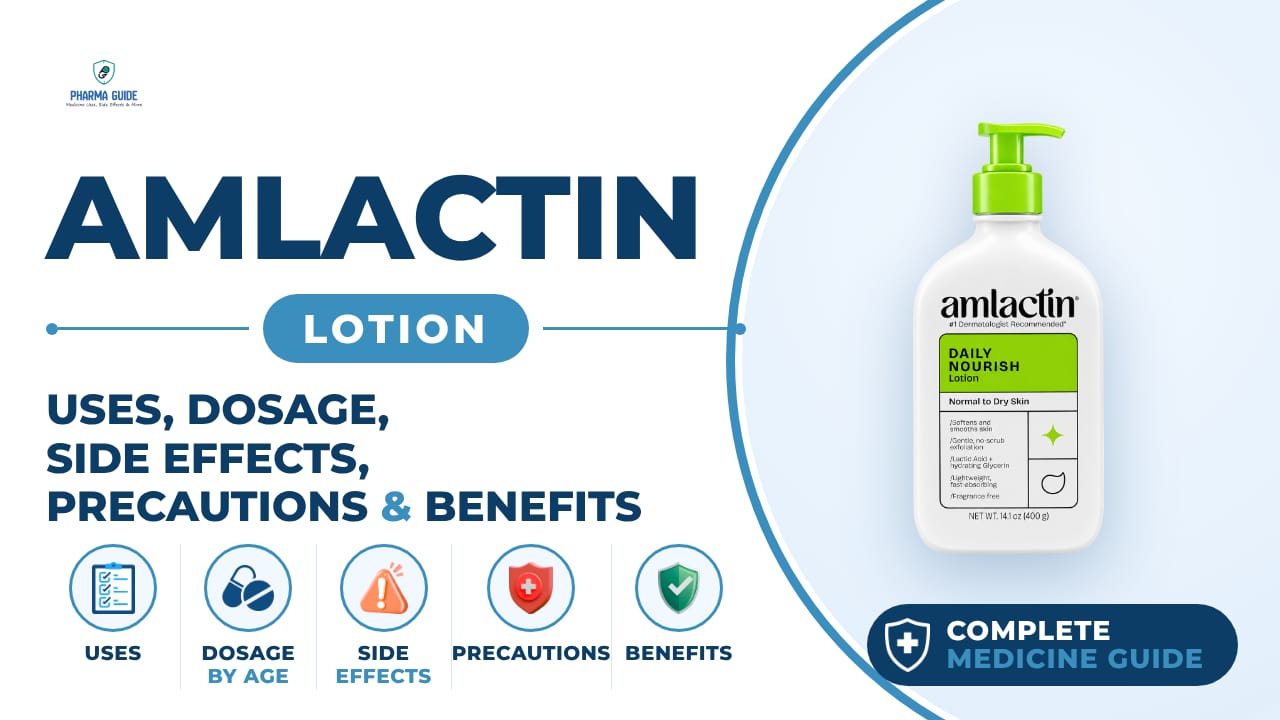
Amlactin Lotion: Uses, Dosage, Side Effects, Precautions and Alternates
alpha-hydroxy acid, emollient
Amlactin Lotion (12% ammonium lactate) treats dry, scaly skin, keratosis pilaris, and ichthyosis vulgaris. Learn uses, dosage, side effects, and precautions.
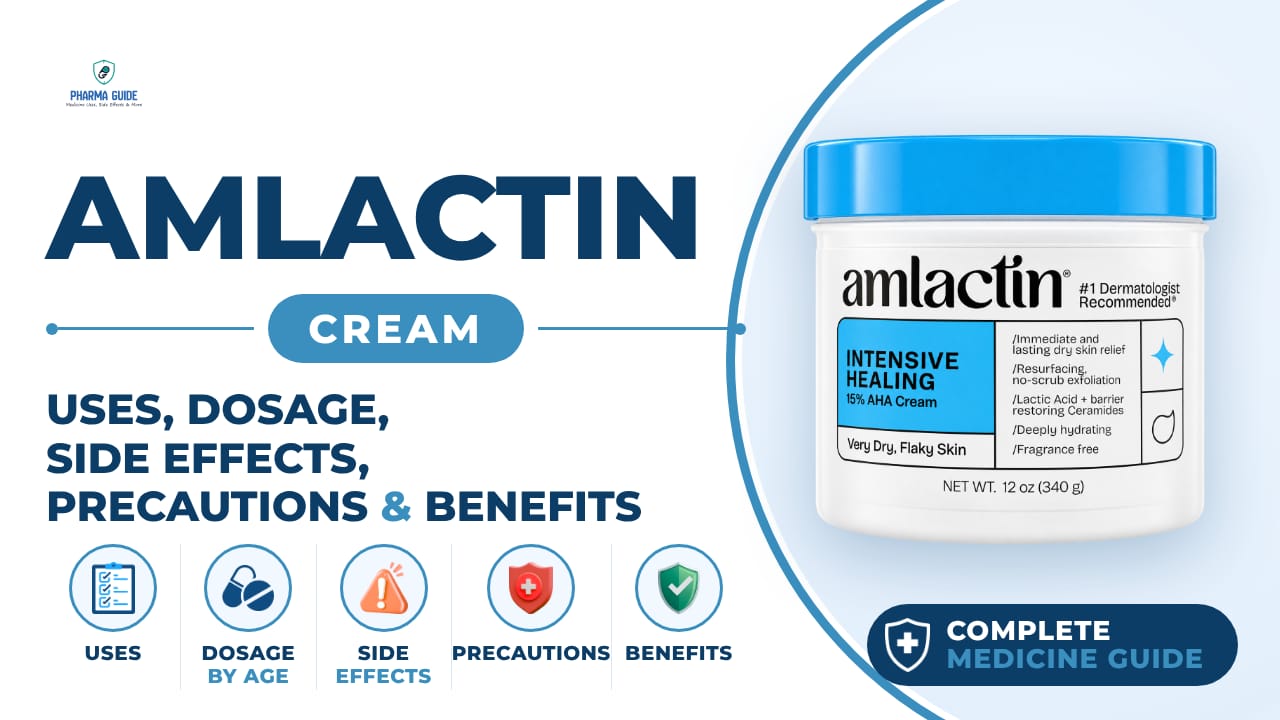
Amlactin Cream: Uses, Dosage, Side Effects, Precautions and Alternates
alpha-hydroxy acid, emollient
Amlactin Cream (ammonium lactate) treats dry, scaly, itchy skin like xerosis and keratosis pilaris. Learn uses, dosage, side effects, and precautions.