
Safety
General information, not medical advice
Your prescriber and the leaflet in your pack know your situation. This page does not.
- Follow your prescriber and the leaflet
- Don't start, stop, or change a dose on your own
- Doses and warnings differ by country and product
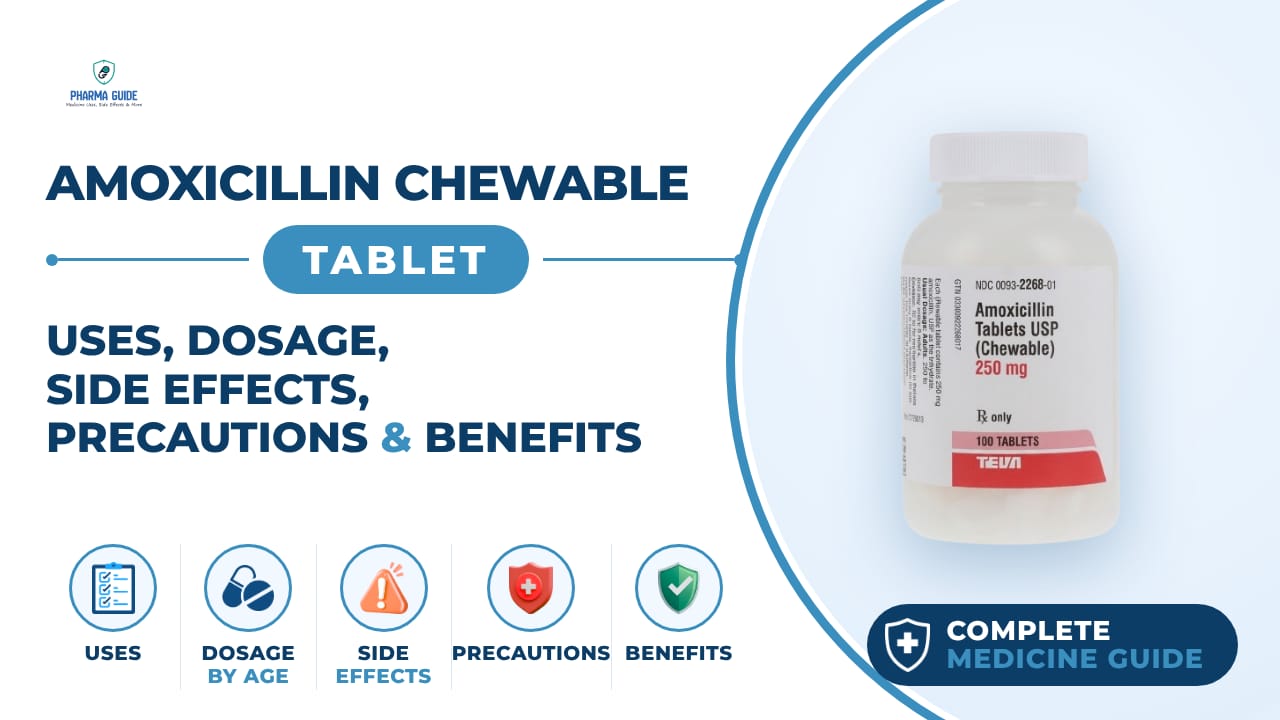
Amoxicillin Chewable Tablet: Uses, Dosage, Side Effects, Precautions and Alternates
| Generic name | amoxicillin |
|---|---|
| Drug class | Penicillin antibiotic (aminopenicillin) |
| Forms | Oral chewable tablet, Capsule, Oral suspension (liquid) |
Quick overview
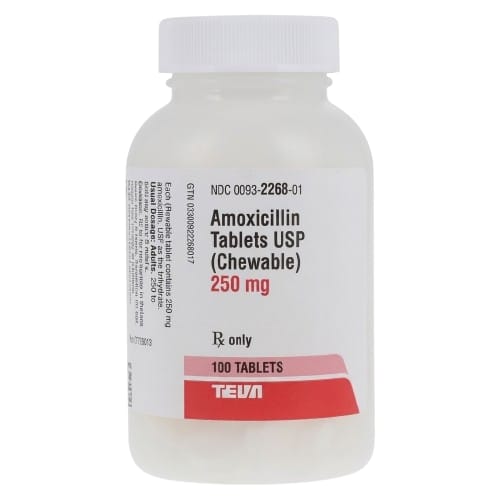
Amoxicillin Chewable Tablet (amoxicillin) is a prescription penicillin-class antibiotic (aminopenicillin) used to treat infections caused by certain bacteria. It is available as a chewable tablet, which can be helpful for children and people who have trouble swallowing regular tablets. It also comes as a capsule and an oral suspension. It works by stopping bacteria from building their cell walls, which kills the bacteria and helps clear the infection.
What is Amoxicillin Chewable Tablet
Amoxicillin is a prescription antibiotic that belongs to the penicillin family of drugs. It is used to treat infections caused by certain bacteria and comes in several forms, including a chewable tablet that is helpful for children and people who have trouble swallowing regular tablets.
Amoxicillin Chewable Tablet uses
- Ear infections.
- Throat and tonsil infections.
- Certain sinus and respiratory infections.
- Certain urinary tract infections.
- Skin and soft-tissue infections.
- H. pylori infection, in combination with other medicines.
Benefits of Amoxicillin Chewable Tablet
- Helps clear susceptible bacterial infections.
- Can reduce infection-related pain and discomfort.
- Helps reduce fever caused by bacterial infections.
- Supports recovery from susceptible respiratory infections.
- Helps prevent complications when the correct infection is treated.
How Amoxicillin Chewable Tablet works
Amoxicillin belongs to the penicillin class of antibiotics. It works by stopping bacteria from building their cell walls, which kills the bacteria and stops the infection from spreading.
Amoxicillin Chewable Tablet dosage
Take this medicine at the times recommended by your doctor, at the same time each day. You can take amoxicillin with or without food, but check your medicine label since some forms should be taken with food to reduce stomach upset. You can chew, crush, or cut chewable amoxicillin tablets, but swallow regular (non-chewable) tablets whole without crushing or chewing them.
If you are using the liquid form, shake it well before measuring a dose, and use a proper dosing syringe or cup rather than a kitchen spoon. Finish the entire course of treatment as prescribed, even if you start feeling better, to prevent the infection from coming back or becoming resistant to treatment.
If you miss a dose, take it as soon as you remember, but if it is almost time for your next dose, skip the missed one — do not take two doses at once. Older adults may be started on a lower dose or different schedule because their kidneys may process the drug more slowly.
| Age group | Dose |
|---|---|
| Under 18 years | Not recommended |
| 18–64 years | 250–500 mg, 3 times/day |
| 65+ years | 250–500 mg, 3 times/day |
Available forms and strengths
- Oral chewable tablet
- Capsule
- Oral suspension (liquid)
Side effects of Amoxicillin Chewable Tablet
Common
- Nausea
- Vomiting
- Diarrhea
- Rash
- Vaginal yeast infection
- Dizziness or headache
Serious
- Severe allergic reaction (hives, trouble breathing, swelling of the face, throat, lips, or tongue)
- Severe skin reactions such as Stevens-Johnson syndrome, toxic epidermal necrolysis, or DRESS (fever, sore throat, burning eyes, skin pain, red or purple rash with blistering and peeling)
- Liver damage (abdominal pain, yellowing of skin or eyes, tiredness, increased liver enzymes)
- Severe or bloody/watery diarrhea, which may signal a serious intestinal infection
- Drug-induced enterocolitis syndrome — severe vomiting and diarrhea within hours of taking a dose, along with paleness, weakness, low blood pressure, or confusion
- Blood disorders such as anemia or low platelet/white blood cell counts (rare)
Warnings and precautions
- Amoxicillin can cause a serious, even life-threatening, allergic reaction. People who have had allergic reactions to other penicillin or cephalosporin antibiotics may be at higher risk. Do not take amoxicillin again if you have ever had an allergic reaction to it.
- Serious skin reactions, including Stevens-Johnson syndrome and toxic epidermal necrolysis, can occur rarely during treatment. Tell your doctor about any skin rash that is bothersome or does not go away.
- People with mononucleosis ('mono') have a higher chance of developing a severe rash if they take amoxicillin.
- It is important to finish the whole course of treatment, even if you feel better early. Stopping early or skipping doses can let the infection come back and may lead to antibiotic resistance.
- Amoxicillin can make birth control pills less effective, so talk with your doctor about using an additional non-hormonal method of birth control while taking this medicine.
- Taking too much amoxicillin can lead to dangerous drug levels in the body, and in high doses may cause kidney problems.
- It is not known for certain whether amoxicillin is safe for an unborn baby. Animal studies did not show harm, but there is not enough research in humans. Talk with your doctor if you are pregnant or planning to become pregnant.
- Amoxicillin can pass into breast milk and may cause side effects in a nursing child. Talk with your doctor about whether to continue breastfeeding while taking this medicine.
- If you have severe kidney disease, your body may not clear this drug as quickly, allowing it to build up. Your doctor may need to lower your dose.
- It is not clear whether alcohol directly affects amoxicillin, but heavy drinking can weaken your immune system and make it harder for your body to fight off infection.
Storage
- Store amoxicillin tablets and capsules at room temperature between 59°F and 86°F (15°C and 30°C).
- Keep the medicine away from light and do not store it in moist or damp areas such as bathrooms.
- Liquid amoxicillin may need to be stored in the refrigerator or at room temperature depending on the brand — check the label.
- If the liquid is refrigerated, do not let it freeze.
- Throw away any unused liquid medicine 14 days after it was mixed at the pharmacy.
- Keep this and all other medicines out of the reach of children.
When to see a doctor
- Get emergency help right away if you have signs of a serious allergic reaction, such as hives, trouble breathing, or swelling of the face, lips, mouth, or throat.
- Call your doctor right away if you develop severe stomach pain or vomiting, or diarrhea that is watery or bloody, even if it happens months after you stop taking this medicine.
- Seek medical help immediately if you think you have taken too much amoxicillin, or contact a poison control center for guidance.
- Stop taking amoxicillin and call your doctor right away if you develop a rash, fever, sore throat, burning eyes, or painful skin that looks burned, blisters, or peels, as these can be signs of a severe skin reaction.
- If you have severe vomiting, severe diarrhea, extreme tiredness, pale skin, low blood pressure, or confusion within a day of taking a dose, stop the medicine and get medical help right away.
Alternatives
- Cefuroxime
- Penicillin V
- Ampicillin
Watch the video
FAQs
What is Amoxicillin Chewable Tablet used for?
It treats infections caused by certain bacteria, including ear infections, throat and tonsil infections, sinus and respiratory infections, urinary tract infections, skin and soft-tissue infections, and H. pylori infection in combination with other medicines.
How does Amoxicillin Chewable Tablet work?
It belongs to the penicillin class of antibiotics and works by stopping bacteria from building their cell walls, which kills the bacteria and stops the infection from spreading.
What is the dosage for Amoxicillin Chewable Tablet in adults?
For adults aged 18-64 and for those 65 and older, the typical dose is 250-500 mg taken 3 times a day. It is not recommended for those under 18 years.
What are the common side effects of Amoxicillin Chewable Tablet?
Common side effects include nausea, vomiting, diarrhea, rash, vaginal yeast infection, and dizziness or headache.
Can I drink alcohol while taking Amoxicillin Chewable Tablet?
It is not clear whether alcohol directly affects amoxicillin, but heavy drinking can weaken your immune system and make it harder for your body to fight off infection.
General information, not medical advice
Your prescriber and the leaflet in your pack know your situation. This page does not.
- Follow your prescriber and the leaflet
- Don't start, stop, or change a dose on your own
- Doses and warnings differ by country and product
Sources
Video
Related medicines
Novamox Capsule: Uses, Dosage, Side Effects, Precautions and Alternates
Penicillin antibiotic (Aminopenicillin)
Novamox Capsule contains amoxicillin, a penicillin antibiotic used for throat, ear, lung, urinary, and skin infections. Learn uses, dosage, and side effects.
Ampicillin Injection: Uses, Dosage, Side Effects, Precautions and Alternates
Penicillin antibiotic (aminopenicillin)
Ampicillin Injection is a penicillin antibiotic used for meningitis, pneumonia, septicemia, and more. Learn dosage, side effects, and warnings.