Ampicillin Injection: Uses, Dosage, Side Effects, Precautions and Alternates
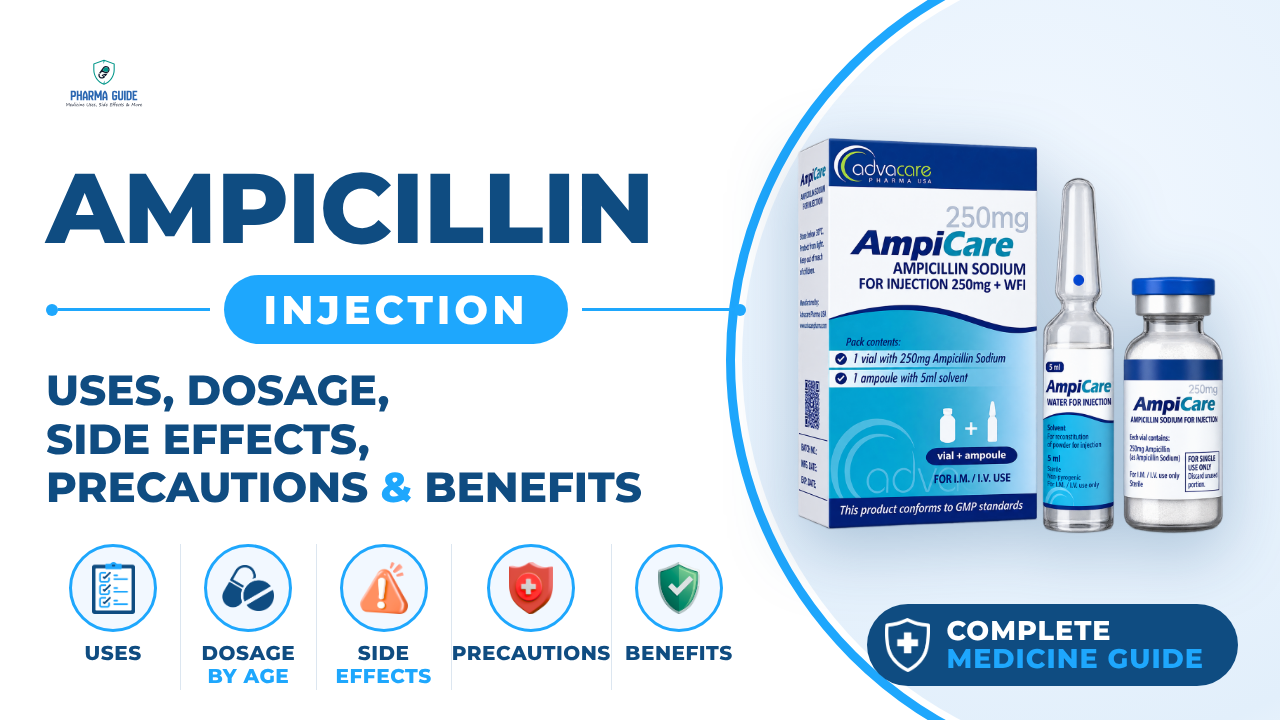
| Generic name | Ampicillin |
|---|---|
| Drug class | Penicillin antibiotic (aminopenicillin) |
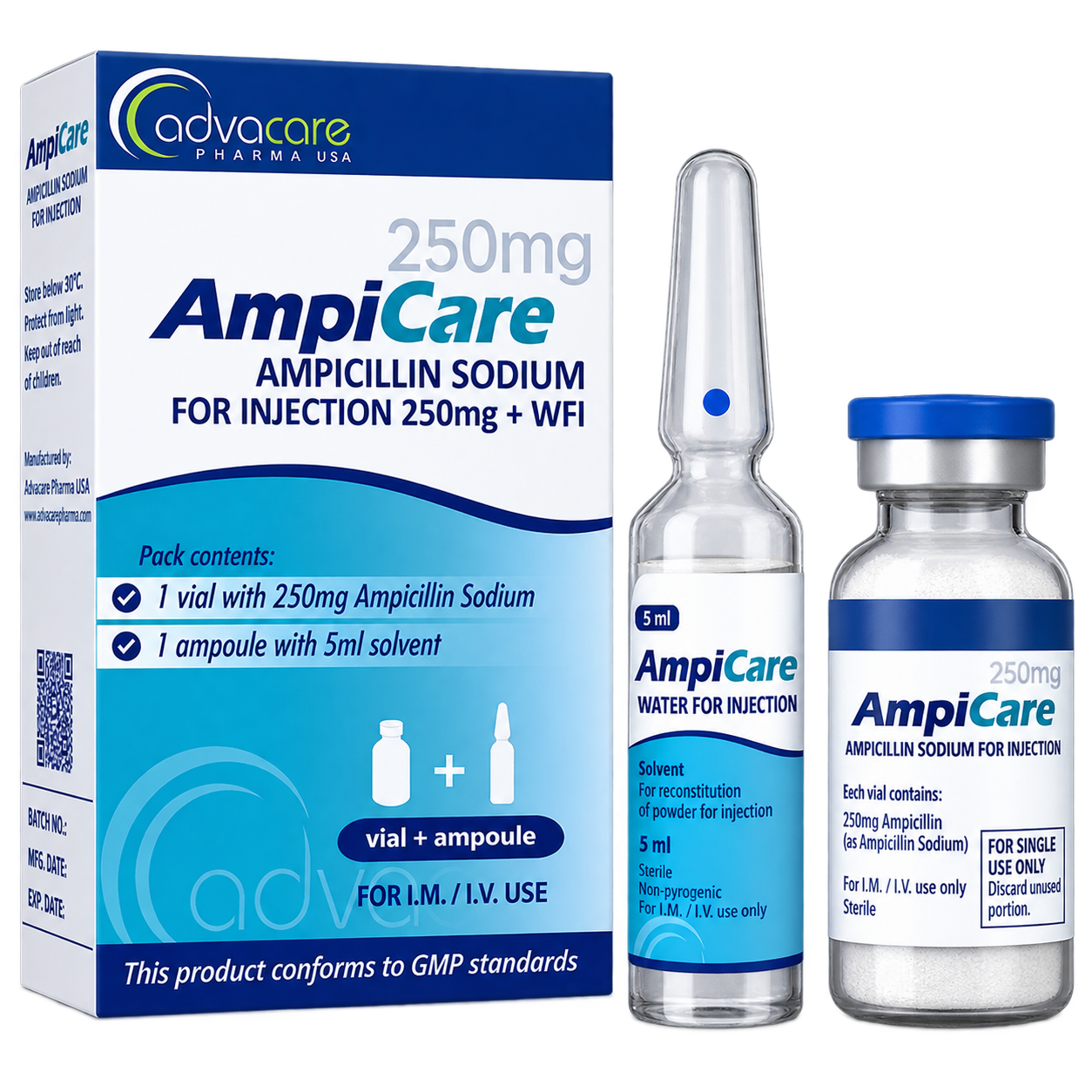
| Forms | Powder for injection (injectable), given into a vein or muscle, Piggyback IV vials, Pharmacy bulk package |
Quick overview
Ampicillin injection is a penicillin antibiotic that fights bacteria. It comes as a powder that is mixed with fluid and given into a vein or muscle to treat certain bacterial infections such as meningitis, pneumonia, septicemia, and endocarditis. It does not work against viral infections such as colds or flu. It is usually given in a hospital setting, though some people are shown how to give it at home.
What is Ampicillin Injection
Ampicillin injection is a penicillin antibiotic that fights bacteria. It comes as a powder that is mixed with fluid and given into a vein or muscle to treat certain bacterial infections.
Ampicillin Injection uses
- Treats meningitis (infection of the layers that cover the brain and spinal cord)
- Treats lung infections such as pneumonia
- Treats blood infections (septicemia)
- Treats heart infections (endocarditis)
- Treats urinary tract and bladder infections
- Treats infections of the stomach and intestines
- Treats gonorrhea
- Used in some pregnant women to help stop an infection from spreading to the baby during birth
- Sometimes used to prevent infection in people having certain surgery or dental procedures
Benefits of Ampicillin Injection
- Kills bacteria that cause many different types of infection
- Can be given into a vein or muscle when someone cannot take medicine by mouth
- Treats certain bacterial infections
- Used for serious respiratory tract infections
- Helps treat meningitis
- Used for certain urinary tract infections (UTIs)
- Helps treat gastrointestinal infections
- Used for certain skin and soft-tissue infections
- May be used for bloodstream infections (septicemia)
- Effective against susceptible Gram-positive and some Gram-negative bacteria
How Ampicillin Injection works
Ampicillin is a penicillin antibiotic. It works by killing the bacteria that cause infection. It does not work against viral infections such as colds or flu.
Ampicillin Injection dosage
Ampicillin injection comes as a powder that is mixed with fluid and injected into a vein or into a muscle. You may receive it in a hospital, or you may be shown how to give it at home. Be sure you understand the directions and ask your healthcare provider if you have any questions.
Do not self-inject if you do not understand how to give the injection and how to safely dispose of needles, IV tubing, and other items. You may need to mix the medicine with a liquid before use. Use the injection as soon as possible after mixing it.
Use a disposable needle and syringe only once, and follow local laws about throwing away used needles and syringes into a puncture-proof sharps container.
Keep using the medicine until you finish the full course, even if you feel better. Stopping too soon or skipping doses may leave the infection untreated and let bacteria become resistant. This antibiotic will not treat viral infections such as the flu or a common cold.
Your doctor may switch you from the injection to an oral form when appropriate. You should begin to feel better during the first few days; if your symptoms do not improve or get worse, call your doctor.
| Age group | Dose |
|---|---|
| Newborns (0–28 days) | Weight- and age-based dosing, usually every 6–12 hours; must be determined by a doctor |
| 1 month–11 years | Commonly 25–50 mg/kg per dose every 6 hours; severe infections may require higher doses |
| 12–17 years | If adult-sized, commonly 1–2 g every 4–6 hours, depending on the infection |
| 18–64 years | Commonly 1–2 g every 4–6 hours for serious infections; the exact regimen depends on the diagnosis |
| 65+ years | Adult dosing may be used, but kidney function should be assessed and the dose adjusted when necessary |
Available forms and strengths
- Powder for injection (injectable), given into a vein or muscle
- Piggyback IV vials
- Pharmacy bulk package
Side effects of Ampicillin Injection
Common
- Nausea
- Vomiting
- Stomach pain
- Diarrhea
- Itching or rash
- Swollen, black, or hairy tongue
- Vaginal itching or discharge
Serious
- Rash, itching, or hives
- Difficulty breathing or swallowing
- Swelling of the face, lips, tongue, or throat
- Severe diarrhea (watery or bloody stools) that may occur with or without fever and stomach cramps, even up to 2 months or more after treatment
- Seizures
- Fever, swollen glands, skin rash, joint pain, or general ill feeling
- Pale skin, easy bruising or bleeding, unusual weakness
- A return of fever, cough, sore throat, chills, or other signs of infection
Warnings and precautions
- Do not use ampicillin if you are allergic to any penicillin antibiotic. Serious and sometimes fatal allergic (anaphylactoid) reactions have happened with penicillins, especially given by injection.
- People allergic to penicillin may also have severe reactions to cephalosporin antibiotics. Tell your doctor about all your allergies before starting treatment.
- This antibiotic can cause Clostridium difficile diarrhea, which can range from mild diarrhea to a life-threatening bowel infection, and may appear even more than two months after treatment.
- Ampicillin is not recommended for people with mononucleosis (mono) because many of them develop a skin rash.
- Ampicillin can make hormonal birth control (pills, patches, rings, and injections) less effective, so use another method of contraception while receiving it.
- Taking allopurinol with ampicillin greatly increases the chance of skin rashes.
- Giving the medicine into a vein too quickly can cause convulsive seizures, so it must be given slowly.
- This medicine is not expected to harm an unborn baby, but it should be used during pregnancy only if clearly needed.
- Tell your doctor if you are pregnant or plan to become pregnant, and call your doctor if you become pregnant while receiving it.
- Ampicillin passes into breast milk in trace amounts and may harm a nursing baby, so caution should be used. Tell your doctor if you are breastfeeding.
- During long treatment, your doctor may check how your kidneys are working. In people with reduced kidney function, ampicillin can be removed by hemodialysis.
- A temporary rise in liver enzyme (transaminase) levels has been seen after taking ampicillin. During long treatment, your doctor may check your liver function.
Storage
- Store unmixed ampicillin powder at room temperature, away from moisture and heat.
- After mixing, use the medicine within a certain number of hours, which depends on the diluent used and whether it is kept at room temperature or in a refrigerator. Carefully follow the mixing and storage instructions provided with your medicine.
- Keep all medication out of sight and reach of children, and always lock safety caps.
- Dispose of unneeded medicine so that pets, children, and other people cannot take it. Do not flush it down the toilet. Use a medicine take-back program if available.
- Keep used needle containers out of the reach of children and pets.
When to see a doctor
- Get emergency medical help if you have signs of an allergic reaction such as hives, difficulty breathing, or swelling of your face, lips, tongue, or throat.
- Stop receiving ampicillin and call your doctor right away or get emergency help if you have rash, itching, hives, trouble breathing or swallowing, severe watery or bloody diarrhea, seizures, or a return of fever and other signs of infection.
- Call your doctor at once if you have severe stomach pain, watery or bloody diarrhea, fever with swollen glands, skin rash, joint pain, or pale skin, easy bruising or bleeding, or unusual weakness.
- In case of an overdose, call your local poison control center. If the person has collapsed, had a seizure, has trouble breathing, or cannot be woken up, call emergency services right away.
Alternatives
- Amoxicillin Injection
- Amoxicillin-Clavulanate Injection
- Ceftriaxone Injection
- Cefotaxime Injection
- Cefazolin Injection
- Cefuroxime Injection
Watch the video
FAQs
What is Ampicillin Injection used for?
It is used to treat bacterial infections such as meningitis, pneumonia, septicemia, endocarditis, urinary tract infections, stomach and intestinal infections, and gonorrhea. It does not work against viral infections like colds or flu.
How is Ampicillin Injection given?
It comes as a powder mixed with fluid and injected into a vein or muscle. It may be given in a hospital or at home if you have been shown how to do it safely, including proper needle disposal.
What are the common side effects of Ampicillin Injection?
Common side effects include nausea, vomiting, stomach pain, diarrhea, itching or rash, swollen black or hairy tongue, and vaginal itching or discharge.
Can Ampicillin Injection affect birth control?
Yes, ampicillin can make hormonal birth control such as pills, patches, rings, and injections less effective, so another method of contraception should be used while receiving it.
Is Ampicillin Injection safe during pregnancy and breastfeeding?
It is not expected to harm an unborn baby but should be used during pregnancy only if clearly needed. It passes into breast milk in trace amounts and may harm a nursing baby, so caution should be used and your doctor informed.
Sources
- MedlinePlus (https://medlineplus.gov/druginfo/meds/a601133.html)
- Drugs.com (https://www.drugs.com/mtm/ampicillin-injection.html)
- Ampicillin for Injection, USP prescribing information (G.C. Hanford Manufacturing Co.)
Video
Related medicines
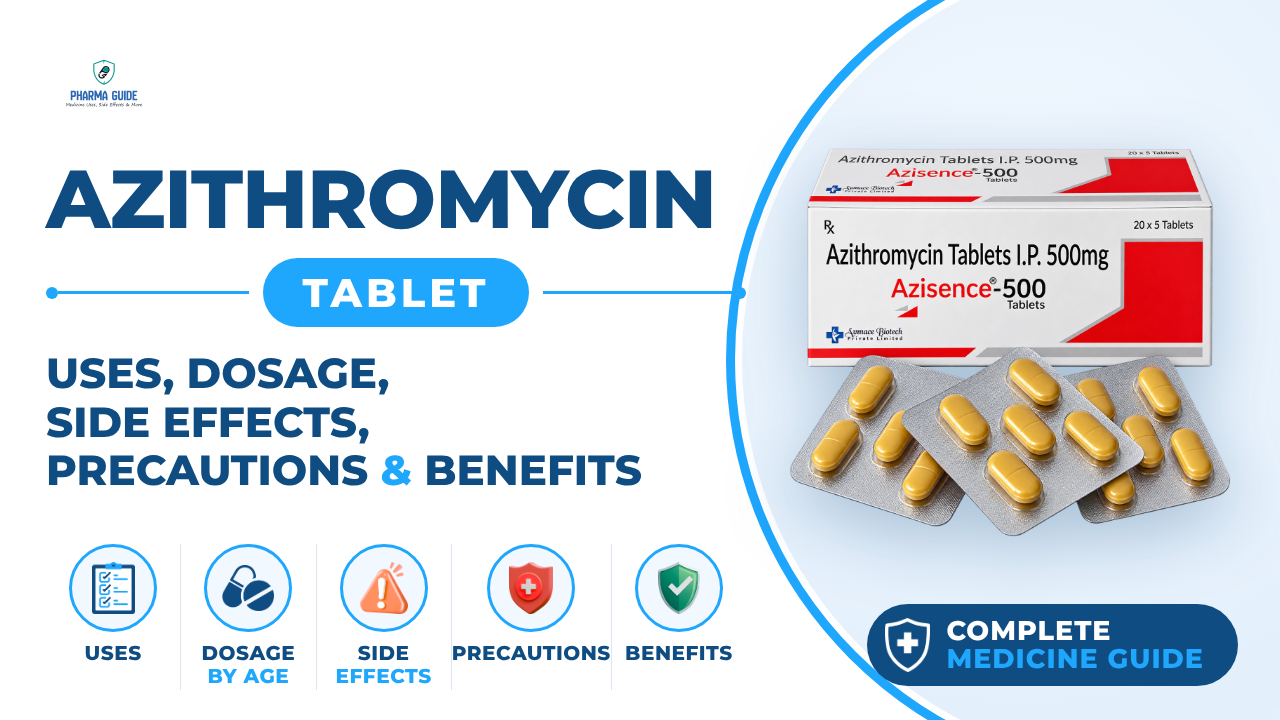
Azithromycin Tablet: Uses, Dosage, Side Effects, Precautions and Alternates
Macrolide antibiotic (azalide subclass)
Azithromycin Tablet is a macrolide antibiotic used for bacterial infections like Chlamydia and MAC. Learn its uses, dosage, side effects, and precautions.
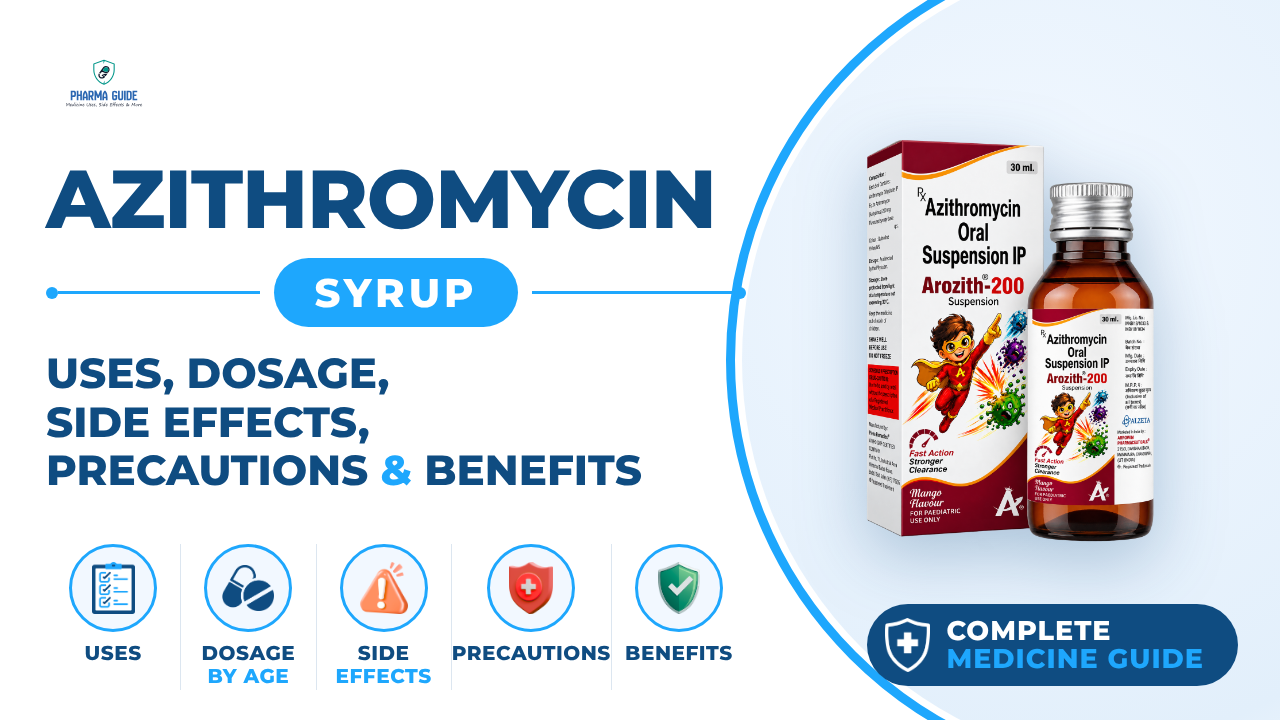
Azithromycin Syrup: Uses, Dosage, Side Effects, Precautions and Alternates
Macrolides
Azithromycin Syrup is an antibiotic for children used to treat bacterial infections. Learn its uses, dosage by age, side effects, and safety warnings.