Azithromycin Tablet: Uses, Dosage, Side Effects, Precautions and Alternates
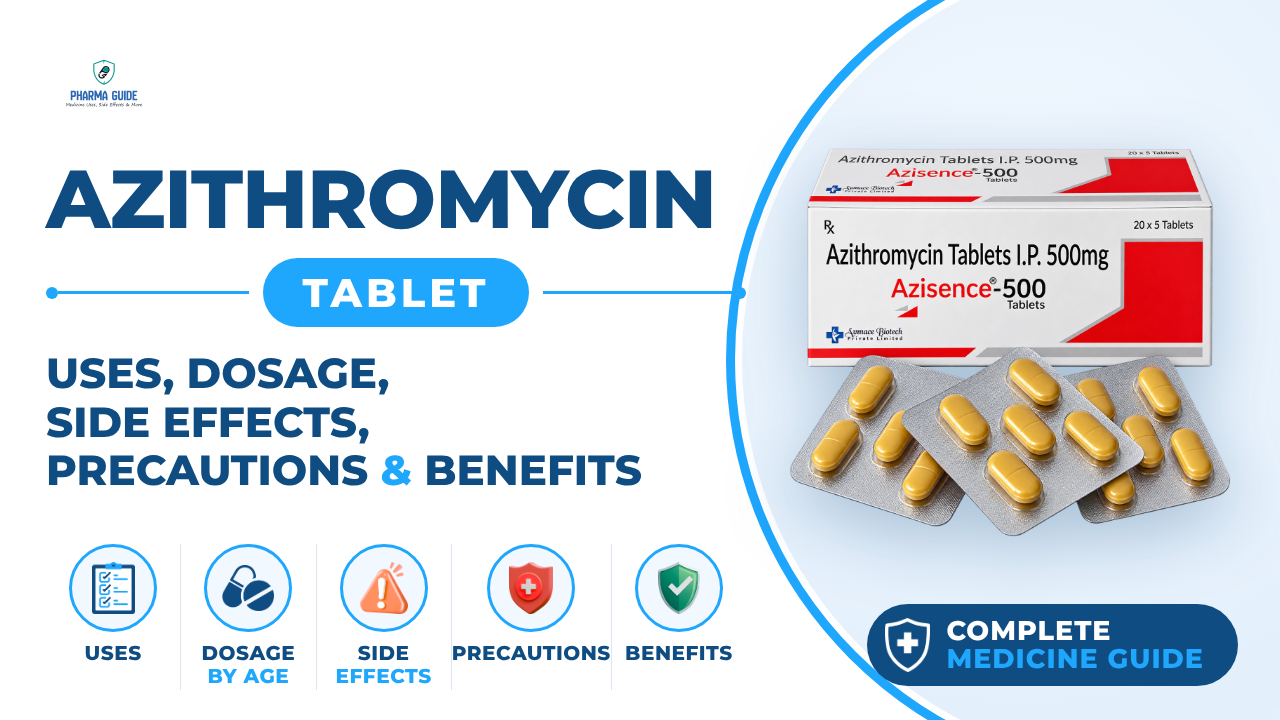
| Generic name | Azithromycin |
|---|---|
| Drug class | Macrolide antibiotic (azalide subclass) |
| Forms | Tablet, Suspension (liquid), Powder for suspension (single-dose packet) |

Quick overview
Azithromycin Tablet contains azithromycin, a macrolide antibiotic (azalide subclass) used to treat infections caused by bacteria. It will not treat colds, the flu, or infections caused by viruses. It is commonly used for conditions such as Chlamydia and MAC infection, among others. Dosage depends on age and the infection being treated, and it should be taken exactly as prescribed.
What is Azithromycin Tablet
Azithromycin is an antibiotic that treats infections caused by bacteria. It belongs to a group of medicines called macrolide antibiotics. It will not treat colds, the flu, or infections caused by viruses.
Azithromycin Tablet uses
- Treats infections in different parts of the body caused by bacteria
- Commonly used to treat Chlamydia
- Treats and prevents disseminated Mycobacterium avium complex (MAC) infection, a lung infection that affects people with a weakened immune system
- Sometimes used to treat H. pylori infection, travelers' diarrhea, and other gastrointestinal infections
- Sometimes used to treat Legionnaires' disease, whooping cough (pertussis), Lyme disease, and babesiosis
- Used to help prevent heart infection in people having dental or other procedures
- Used to prevent sexually transmitted disease in victims of sexual assault
Benefits of Azithromycin Tablet
- Kills or stops the growth of bacteria causing your infection
- You should begin to feel better during the first few days of treatment
How Azithromycin Tablet works
Azithromycin works by killing bacteria or stopping their growth. It does not work against colds, flu, or other viral infections.
Azithromycin Tablet dosage
Take this medicine by mouth with a full glass of water. You can take it with or without food; if it upsets your stomach, take it with food. Swallow the tablets whole. Take your medicine at regular intervals and at around the same time every day. Do not take it more often than directed. Take all of your medicine, even if you feel better; do not stop early unless your doctor tells you to.
For the liquid form, shake well before each use and measure with a proper dosing device. If you need to take an antacid, take it at least 1 hour before or 2 hours after your dose of azithromycin. If you vomit within an hour after taking azithromycin, call your doctor right away and do not take another dose unless told to. Talk to your care team about the use of this medicine in children, as precautions apply.
| Age group | Dose |
|---|---|
| Under 6 months | Use only when specifically prescribed by a doctor |
| 6 months–11 years | Usually 10 mg/kg once daily, with the total dose and duration depending on the infection |
| 12–17 years | Often 500 mg once daily, depending on the infection and body weight |
| 18–64 years | Common regimens include 500 mg once daily for 3 days or 500 mg on day 1, followed by 250 mg once daily on days 2–5, depending on the infection |
| 65+ years | Usually the same adult dose, but medical assessment is recommended |
Available forms and strengths
- Tablet
- Suspension (liquid)
- Powder for suspension (single-dose packet)
Side effects of Azithromycin Tablet
Common
- Nausea
- Vomiting
- Diarrhea
- Stomach pain
- Headache
- Indigestion, wind, constipation
- Dizziness, spinning sensation
- Tiredness, drowsiness, fatigue
- Muscle or joint aches
- Rash
- Hearing loss or ringing in the ears
- Altered taste and smell
- Oral thrush (white, sore tongue and mouth)
- Vaginal thrush (sore, itchy vagina and/or white discharge)
- Loss of appetite
Serious
- Allergic reaction or angioedema — skin rash, itching or hives, swelling of the face, eyes, lips, tongue, arms or legs, trouble swallowing or breathing, wheezing, hoarseness
- Heart rhythm changes — fast, pounding or irregular heartbeat, dizziness, feeling faint, chest pain, trouble breathing
- Liver injury — right upper belly pain, loss of appetite, nausea, light-colored stool, dark urine, yellowing skin or eyes, unusual weakness or fatigue, jaundice
- Serious skin reactions — rash, fever, swollen lymph nodes, blisters, peeling or loosening of the skin including inside the mouth
- Severe, watery or bloody diarrhea, which may occur with fever and stomach cramps, up to two months or more after treatment
- Unusual vaginal discharge, itching or odor
- Vomiting or irritability while feeding in infants less than 6 weeks old
- Unusual muscle weakness or difficulty with muscle control
- Pink and swollen eyes
- Unusual bleeding or bruising, reddish or purplish blotches under the skin
- Extreme tiredness, lack of energy, flu-like symptoms
- Signs of a stroke or serious event such as numbness or weakness in the face, arm or leg, trouble speaking, problems with vision, loss of balance, fainting, or convulsions
Warnings and precautions
- Tell your doctor if you are pregnant or plan to become pregnant.
- Your doctor can discuss the risks and benefits. If you become pregnant while taking azithromycin, call your doctor.
- Tell your doctor if you are breastfeeding so they can discuss the risks and benefits.
- Tell your doctor right away if your baby develops irritability with feeding or starts vomiting during your treatment.
- Tell your doctor if you have kidney disease before taking this medicine.
- Tell your doctor if you have liver disease or have ever had jaundice or other liver problems while taking azithromycin.
- Your doctor will probably tell you not to take it in that case.
- This medicine is not expected to affect your ability to drive a car or operate machinery.
- Do not take this medicine with cisapride, dronedarone, pimozide, or thioridazine.
- This medicine may cause serious skin reactions that can happen weeks to months after starting it.
- Contact your care team right away if you notice fever or flu-like symptoms with a rash, or a rash with swelling of the face, lips or lymph nodes.
- Do not treat diarrhea with over-the-counter products. Diarrhea may mean you have a serious bowel condition and may occur weeks after stopping the medicine.
- This medicine can make you more sensitive to the sun. Stay out of the sun, wear protective clothing and sunscreen, and do not use sun lamps or tanning beds.
- Do not share this medicine with others, even if they have the same condition.
- Do not take azithromycin if you are allergic to it or to other macrolide or ketolide antibiotics such as clarithromycin, erythromycin, roxithromycin, or telithromycin.
Storage
- Store at room temperature, away from excess heat and moisture (not in the bathroom)
- Keep tablets in the pack until it is time to take them
- Keep in a cool dry place where the temperature stays below 25°C
- Keep out of the reach of children and pets
- Throw away any unused medicine after the expiration date
- Discard any liquid suspension after taking all doses
- Dispose of unneeded medicine through a medicine take-back program; do not flush it down the toilet
- If your doctor tells you to stop or the expiry date has passed, ask your pharmacist how to dispose of leftover medicine
When to see a doctor
- If you think you have taken too much of this medicine, contact a poison control center or emergency room at once, even if there are no signs of discomfort.
- Stop taking azithromycin and get emergency medical help if you have signs of a serious allergic reaction, blisters or peeling skin, or serious heart rhythm changes.
- If you have chest pain, shortness of breath, sudden dizziness, light-headedness or numbness in the face, arm or leg, tell your doctor, pharmacist or nurse immediately as you may need urgent medical attention.
- If you get severe diarrhea, tell your doctor immediately, even if it happens several weeks after stopping the medicine.
Alternatives
- Amoxicillin
- Amoxicillin-Clavulanate
- Cefuroxime
- Cefixime
- Levofloxacin
- Moxifloxacin
- Clindamycin
Watch the video
FAQs
What is Azithromycin Tablet used for?
It treats bacterial infections such as Chlamydia and MAC infection, and is also used for conditions like H. pylori infection, travelers' diarrhea, Legionnaires' disease, whooping cough, Lyme disease, and to help prevent heart infection before certain procedures.
How should I take Azithromycin Tablet?
Take it by mouth with a full glass of water, with or without food, swallowing tablets whole at regular intervals around the same time each day. Take all of your medicine even if you feel better, unless your doctor tells you to stop.
What are the common side effects of Azithromycin Tablet?
Common side effects include nausea, vomiting, diarrhea, stomach pain, headache, indigestion, dizziness, tiredness, muscle or joint aches, rash, altered taste, and oral or vaginal thrush.
Can I take antacids with Azithromycin Tablet?
If you need to take an antacid, take it at least 1 hour before or 2 hours after your dose of azithromycin.
What should I avoid while taking Azithromycin Tablet?
Avoid taking it with cisapride, dronedarone, pimozide, or thioridazine, avoid treating diarrhea with over-the-counter products, and limit sun exposure since this medicine can increase sun sensitivity.
Sources
Video
Related medicines
Ampicillin Injection: Uses, Dosage, Side Effects, Precautions and Alternates
Penicillin antibiotic (aminopenicillin)
Ampicillin Injection is a penicillin antibiotic used for meningitis, pneumonia, septicemia, and more. Learn dosage, side effects, and warnings.

Azithromycin Syrup: Uses, Dosage, Side Effects, Precautions and Alternates
Macrolides
Azithromycin Syrup is an antibiotic for children used to treat bacterial infections. Learn its uses, dosage by age, side effects, and safety warnings.