
Safety
General information, not medical advice
Your prescriber and the leaflet in your pack know your situation. This page does not.
- Follow your prescriber and the leaflet
- Don't start, stop, or change a dose on your own
- Doses and warnings differ by country and product
Apomorphine Injection: Uses, Dosage, Side Effects, Precautions and Alternates
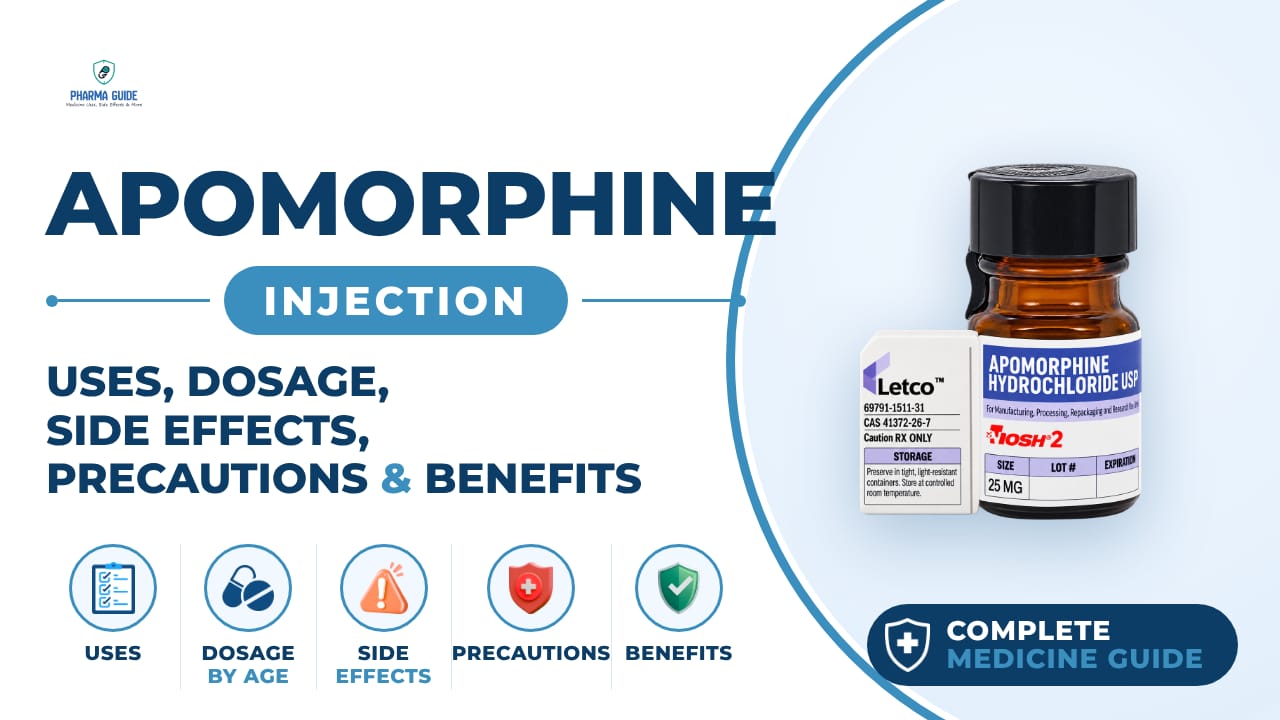
| Generic name | apomorphine |
|---|---|
| Drug class | Dopamine agonist (dopaminergic antiparkinsonism agent) |
| Forms | Subcutaneous injection (solution), Prefilled pens or cartridges, Subcutaneous infusion pump device |
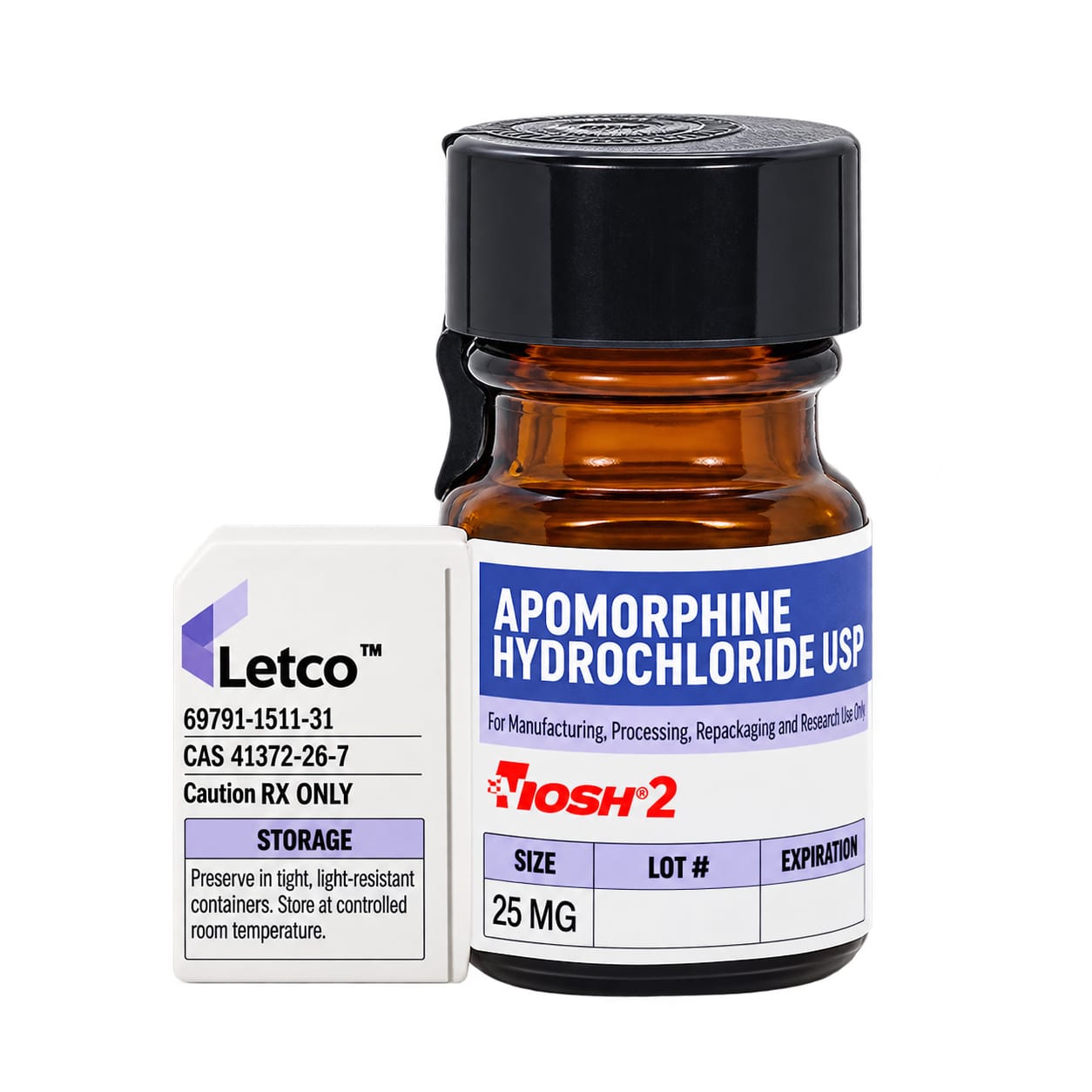
Quick overview
Apomorphine Injection (generic name: apomorphine) is a dopamine agonist used to treat sudden "off" episodes in people with advanced Parkinson's disease, when stiffness, freezing, or trouble moving occurs as other Parkinson's medicines wear off. It is injected just under the skin and works quickly to restore movement. It carries important warnings, including the need to avoid certain anti-nausea medicines and never inject it into a vein.
What is Apomorphine Injection
Apomorphine injection is a medicine used to treat sudden 'off' episodes in people with advanced Parkinson's disease, when stiffness, freezing, or trouble moving happens as other Parkinson's medicines wear off.
Apomorphine Injection uses
- Treats sudden, temporary 'off' episodes (freezing, stiffness, or trouble moving) in people with advanced Parkinson's disease
- Used for end-of-dose wearing off or unpredictable on-off episodes in Parkinson's disease
- Treats sudden OFF episodes in advanced Parkinson's disease
- Helps improve movement during temporary mobility difficulties
- Reduces episodes of muscle stiffness and slowness
Benefits of Apomorphine Injection
- Works quickly to restore movement, muscle control, and balance within 10 to 20 minutes of an injection under the skin
- Helps rescue patients from sudden freezing or when oral Parkinson's medications wear off unexpectedly
- Reduces rigidity, tremors, and difficulty speaking or walking, helping with daily activities
How Apomorphine Injection works
Apomorphine acts like dopamine, a natural brain chemical that helps control movement and coordination, by attaching to dopamine receptors in the brain. This helps reduce Parkinson's symptoms like stiffness and tremors.
Apomorphine Injection dosage
This medication is injected just under the skin (subcutaneously); it must never be injected into a vein. You will be taught how to prepare and give the injection, and your first dose will be given in a medical office so your doctor can watch how you respond.
Use a different injection spot each time and do not use the same spot twice in a row; avoid areas that are sore, red, bruised, scarred, or infected. Check the solution before use — it should be clear and colorless; do not use it if it looks cloudy, colored, or has particles in it. Do not give another injection sooner than the time your doctor recommends between doses.
Your doctor may have you take an anti-nausea medicine before and during treatment to help prevent nausea and vomiting. Do not stop using this medicine suddenly without talking to your doctor, as this can cause serious side effects or make your condition worse. Keep taking this medicine unless your care team tells you to stop.
Be careful not to get the solution on your skin or in your eyes; if this happens, wash the area right away with cold water. If you are also using nitroglycerin under the tongue, lie down first before taking it and stay lying down for at least 45 minutes, since the combination can cause a sudden drop in blood pressure.
Talk to your care team about use in children, as special care may be needed. This medicine is generally not used on a regular schedule, so there is no routine missed-dose instruction.
| Age group | Dose |
|---|---|
| 18–39 years | Starting dose: 1–2 mg; maximum 6 mg per injection |
| 40–64 years | Starting dose: 1–2 mg; maximum 6 mg per injection |
| 65–74 years | Starting dose: 1–2 mg; maximum 6 mg per injection, with closer monitoring |
| 75 years and older | Starting dose: 1–2 mg; maximum 6 mg per injection, with careful monitoring of tolerability |
Available forms and strengths
- Subcutaneous injection (solution)
- Prefilled pens or cartridges
- Subcutaneous infusion pump device
Side effects of Apomorphine Injection
Common
- Nausea and vomiting
- Constipation and diarrhea
- Headache
- Yawning
- Runny or stuffy nose
- Injection site reactions such as soreness, redness, pain, bruising, swelling, or itching
- Dizziness or lightheadedness, especially when standing up quickly
- Drowsiness or excessive sleepiness
- Swelling of the ankles, hands, or feet
Serious
- Severe low blood pressure and fainting, especially when combined with alcohol, blood pressure medicines, or nitroglycerin
- Dangerous drop in blood pressure and loss of consciousness if combined with certain anti-nausea drugs like ondansetron
- Hallucinations, confusion, aggressive behavior, or other unusual changes in thinking or behavior
- Impulse control problems such as compulsive gambling, excessive shopping, binge eating, or unusual sexual urges
- Prolonged or painful erection lasting more than 4 hours (priapism), which needs emergency care
- Sudden uncontrolled or repetitive movements (dyskinesia)
- Falling asleep suddenly during daily activities without warning
- Allergic reactions including rash, hives, swelling of the face, lips, tongue, or throat, and trouble breathing or swallowing
- Heart problems such as chest pain, irregular or fast heartbeat, or heart attack symptoms
- Hemolytic anemia with symptoms like unusual weakness, yellowing skin or eyes, or dark urine
- High fever and confusion, which can happen if Parkinson's medicine is stopped suddenly or reduced too quickly
- Falls
- Tissue changes (fibrotic complications) affecting the pelvis, lungs, or heart valves
- Blood clots, if the medicine is accidentally injected into a vein instead of under the skin
Warnings and precautions
- Never combine apomorphine with certain anti-nausea medicines called 5-HT3 antagonists (like ondansetron, granisetron, dolasetron, or palonosetron), since this combination can cause a dangerous drop in blood pressure and loss of consciousness
- This medicine must only be injected under the skin, never into a vein, because injecting into a vein can cause serious blood clots
- A painful erection lasting more than 4 hours is a medical emergency and needs immediate care
- Do not stop this medicine suddenly or change your dose without your doctor's advice, as this can cause serious problems including high fever and confusion
- This medicine can cause severe nausea and vomiting, especially when starting treatment, so your doctor may give you another medicine to help prevent it
- Tell your doctor if you are pregnant or planning to become pregnant, since it is not known if apomorphine could harm an unborn baby.
- Tell your doctor if you are breastfeeding, since it isn't known whether apomorphine passes into breast milk; you and your doctor should decide whether you should use the medicine or breastfeed.
- Use with caution if you have kidney disease, since the effects of the medicine may be stronger because your body clears it more slowly. People with kidney problems may need a lower starting dose.
- Use with caution if you have liver disease, since the medicine may build up in your body and cause stronger effects.
- Do not drink alcohol while using this medicine, as it can make side effects like dizziness and drowsiness worse.
- This medicine can affect your coordination, judgment, and alertness, and can even cause you to fall asleep suddenly without warning. Do not drive or operate machinery until you know how it affects you.
Storage
- Store at room temperature between 20 and 25 degrees C (68 and 77 degrees F)
- Keep away from light, excess heat, and moisture; do not store in the bathroom
- Keep out of the reach of children and pets
- Get rid of any unused medication after the expiration date
- Put used needles and syringes in a special sharps container, not in the trash; ask your pharmacist or care team for one if you don't have it
- Take unneeded or expired medication to a medication take-back program; if that is not possible, ask your pharmacist or care team how to safely dispose of it
- Do not flush this medication down the toilet
When to see a doctor
- Get emergency help right away if you have an erection that lasts longer than 4 hours and is painful
- Call your doctor or get emergency care right away if you have chest pain, pressure, fast or irregular heartbeat, trouble breathing, or feel like you might faint
- Contact your care team right away if you suddenly fall asleep during everyday activities like driving, eating, or talking
- Tell your doctor right away if you or your family notice new or strong urges to gamble, shop, eat, or engage in sexual activity that are unusual for you
- Seek care right away if you experience signs of an allergic reaction, such as rash, hives, swelling of the face, lips, tongue, or throat, or trouble breathing or swallowing
- Call your doctor right away if you start seeing or hearing things that are not there, or notice other unusual changes in thinking or behavior
- If you think you have taken too much of this medicine, contact a poison control center or go to the emergency room right away
Alternatives
- Rotigotine
- Inhaled Levodopa
- Levodopa/Carbidopa
- Safinamide
Watch the video
FAQs
What is Apomorphine Injection used for?
It is used to treat sudden 'off' episodes in people with advanced Parkinson's disease, when stiffness, freezing, or trouble moving occurs as other Parkinson's medicines wear off.
How fast does Apomorphine Injection work?
It works quickly to restore movement, muscle control, and balance within 10 to 20 minutes of an injection under the skin.
Can Apomorphine Injection be injected into a vein?
No, it must never be injected into a vein; it is injected just under the skin (subcutaneously), and injecting into a vein can cause serious blood clots.
What medicines should be avoided with Apomorphine Injection?
You should never combine apomorphine with certain anti-nausea medicines called 5-HT3 antagonists, such as ondansetron, granisetron, dolasetron, or palonosetron, since this combination can cause a dangerous drop in blood pressure and loss of consciousness.
What are the serious side effects of Apomorphine Injection?
Serious side effects include severe low blood pressure and fainting, hallucinations, impulse control problems, prolonged painful erection, sudden uncontrolled movements, sudden sleep episodes, allergic reactions, heart problems, and hemolytic anemia.
General information, not medical advice
Your prescriber and the leaflet in your pack know your situation. This page does not.
- Follow your prescriber and the leaflet
- Don't start, stop, or change a dose on your own
- Doses and warnings differ by country and product
Sources
Video
Related medicines

Pramipexole Tablet: Uses, Dosage, Side Effects, Precautions and Alternates
Dopamine agonist (dopaminergic antiparkinsonism agent)
Pramipexole Tablet is a dopamine agonist used for Parkinson's disease and restless legs syndrome. Learn uses, dosage, side effects, and warnings.

Neupro Patch: Uses, Dosage, Side Effects, Precautions and Alternates
Dopamine agonist (dopaminergic antiparkinsonism agent)
Neupro Patch (rotigotine) is a once-daily skin patch for Parkinson's disease and restless legs syndrome. Learn dosage, side effects, and warnings.