
Safety
General information, not medical advice
Your prescriber and the leaflet in your pack know your situation. This page does not.
- Follow your prescriber and the leaflet
- Don't start, stop, or change a dose on your own
- Doses and warnings differ by country and product
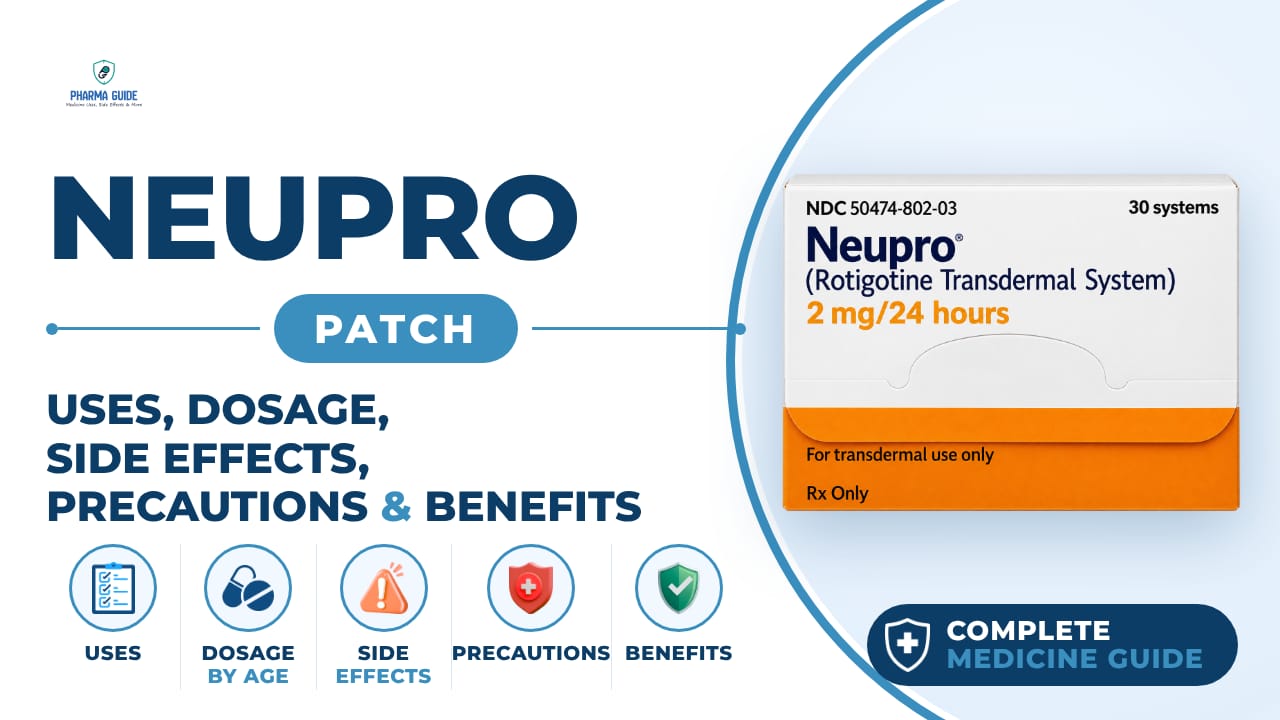
Neupro Patch: Uses, Dosage, Side Effects, Precautions and Alternates
| Generic name | rotigotine |
|---|---|
| Drug class | Dopamine agonist (dopaminergic antiparkinsonism agent) |
| Forms | Patch |
Quick overview
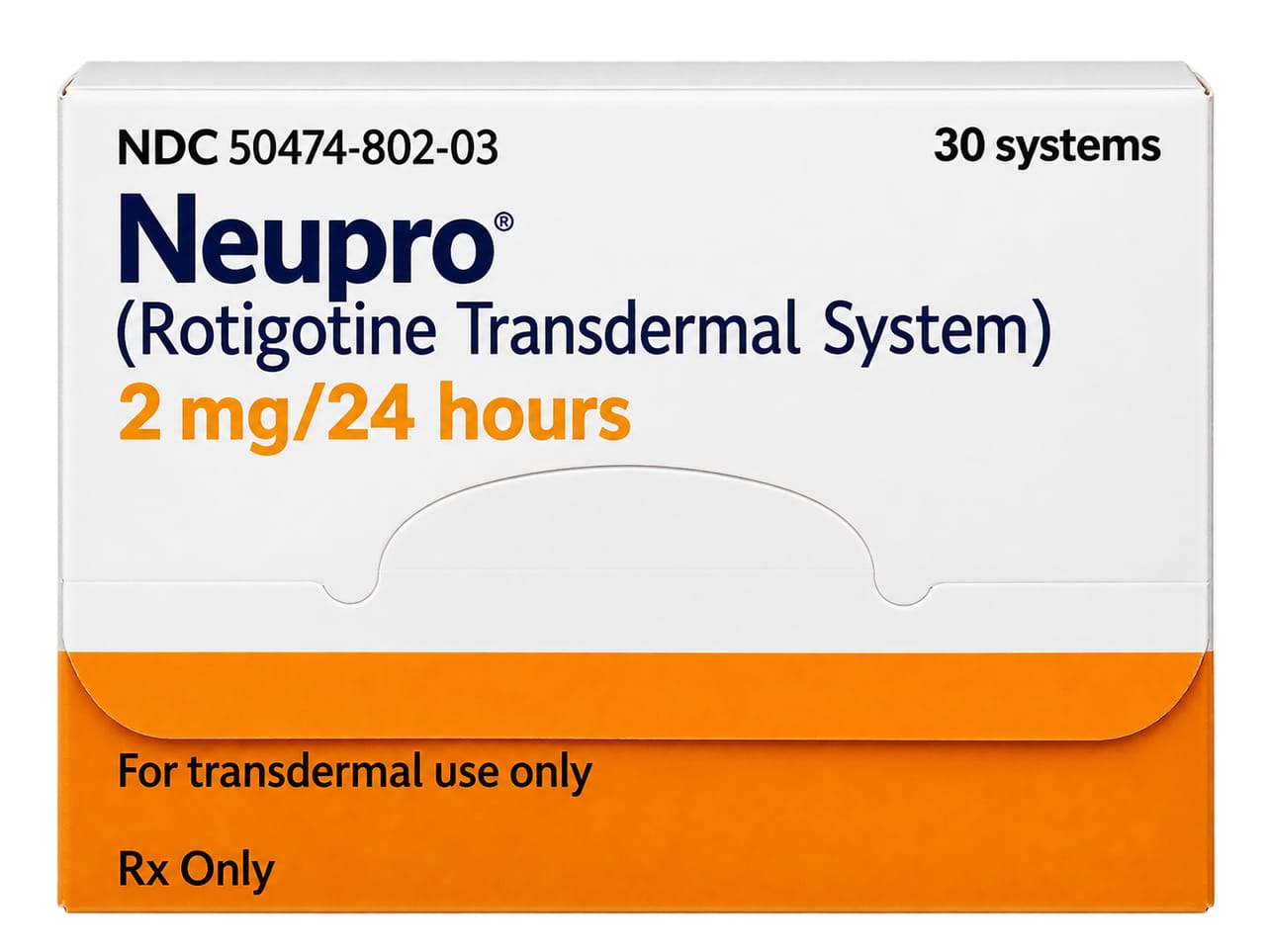
Neupro Patch contains rotigotine, a dopamine agonist delivered through a skin patch over 24 hours. It is used to treat Parkinson's disease and moderate to severe restless legs syndrome (RLS) in adults. The patch is applied once daily to clean, dry, healthy skin and is available only as a skin patch.
What is Neupro Patch
Neupro is a prescription skin patch that delivers the medicine rotigotine through your skin over 24 hours. It is used to treat Parkinson's disease and restless legs syndrome (RLS) in adults.
Neupro Patch uses
- Treatment of Parkinson's disease, a movement disorder that gets worse over time
- Treatment of moderate to severe restless legs syndrome (RLS) in adults
Benefits of Neupro Patch
- May reduce stiffness, tremors, muscle spasms, and poor muscle control from Parkinson's disease
- May reduce RLS symptoms such as leg discomfort and twitchiness, especially at night
- Delivers medicine steadily over 24 hours through the skin instead of by mouth
- May help reduce 'off' time (periods when Parkinson's symptoms are not controlled) in people also taking levodopa
How Neupro Patch works
Rotigotine acts like dopamine, a natural brain chemical. In Parkinson's disease, it is thought to increase dopamine activity in certain brain areas to help reduce movement symptoms. In restless legs syndrome, it is thought to stimulate dopamine receptors in the brain, which may help ease symptoms. The exact way it works for both conditions is not fully understood.
Neupro Patch dosage
Apply the patch once a day at about the same time each day, to clean, dry, and healthy (not irritated or damaged) skin on the belly, thigh, hip, flank, shoulder, or upper arm. You can use the patch regardless of whether you have eaten, since food does not affect how it is absorbed through the skin. Press the patch firmly in place for about 30 seconds, making sure it sticks well, especially around the edges.
Wear the patch for 24 hours, then remove it and apply a new patch right away to a different area of skin. Apply each new patch to a different skin site than the last one; do not use the same spot more than once every 14 days. If you need to apply the patch to a hairy area, shave that area at least 3 days beforehand.
Do not cut or tear the patch, as this may change how the medicine is released and raise the risk of side effects. You may bathe, shower, or swim in a pool while wearing the patch, but water may cause it to loosen.
If the patch falls off, apply a new one for the rest of the day, then go back to your regular schedule the next day. If you miss a dose, apply a new patch as soon as you remember, then go back to your normal schedule the next day.
Do not stop using this medicine suddenly without talking to your doctor; your dose will usually be lowered gradually. Wash your hands with soap and water after applying or removing a patch, and avoid touching your eyes beforehand.
| Age group | Dose |
|---|---|
| Under 18 years | Not recommended |
| 18–64 years | 1–8 mg/day |
| 65+ years | 1–8 mg/day |
Available forms and strengths
- Patch
Side effects of Neupro Patch
Common
- Nausea and vomiting
- Loss of appetite
- Headache
- Dizziness
- Drowsiness or sleepiness
- Trouble falling or staying asleep
- Excessive sweating
- Vision problems
- Swelling in the hands, ankles, or feet
- Redness, itching, or swelling where the patch was worn
Serious
- Sudden falling asleep during daily activities, including driving, sometimes called a 'sleep attack'
- Hallucinations, confusion, excessive suspicion, agitation, or other psychotic-like changes
- Severe allergic reaction, especially in people with a sulfite sensitivity or allergy, causing swelling of lips, tongue, or throat, chest pain, or trouble breathing or swallowing
- Fainting or feeling faint, dizzy, nauseous, or sweaty when standing up (low blood pressure)
- Increased heart rate
- High blood pressure
- Severe weight gain or fluid retention, especially in the ankles or legs
- New or worsening uncontrolled, sudden movements (dyskinesia)
- Worsening of RLS symptoms or symptoms starting earlier in the day (augmentation) or rebound after stopping treatment
- High fever, severe muscle stiffness, and confusion if Neupro is stopped suddenly in people with Parkinson's disease, which can lead to a serious condition called rhabdomyolysis
- New or increased urges to gamble, spend money, eat excessively, or have sex, or using more of the medicine than prescribed
- Severe or worsening skin reactions at the patch site that spread or do not go away
Warnings and precautions
- Neupro contains a sulfite preservative that can cause severe, life-threatening allergic reactions in people sensitive to sulfites, especially those with asthma. A sulfite allergy is different from a sulfa allergy.
- Some people using Neupro have suddenly fallen asleep during normal daytime activities such as working, talking, eating, or driving, sometimes without feeling drowsy beforehand.
- You may develop increased sexual urges, unusual urges to gamble, or other intense urges while using this medicine.
- Do not stop using Neupro suddenly, as this can cause unpleasant withdrawal symptoms or, in Parkinson's disease, a serious reaction with high fever and confusion.
- The patch's backing contains aluminum, which can burn your skin if you wear it during an MRI scan or a cardioversion procedure for heart rhythm problems. Remove the patch before these procedures.
- Neupro may cause hallucinations, most commonly in elderly people.
- Avoid exposing the patch to direct heat sources like heating pads, heat lamps, hot tubs, saunas, electric blankets, heated water beds, or prolonged sun exposure, since heat can increase the amount of drug absorbed into your body.
- It isn't known whether Neupro is safe to use during pregnancy, since this hasn't been studied in people. In animal studies, the drug caused birth defects and pregnancy loss at certain doses.
- It isn't known whether Neupro is safe during breastfeeding, or whether it passes into breast milk. The medicine may lower a hormone needed for milk production, so it could reduce how much milk you make.
- Tell your doctor if you have kidney disease before using Neupro, as this may affect whether it's safe for you.
- Drinking alcohol while using Neupro may increase your risk of drowsiness or excessive sleepiness. Talk with your doctor about alcohol use before starting this medicine.
- Neupro can cause you to suddenly fall asleep during daily activities, including driving, sometimes without any warning signs. Avoid driving or doing anything that requires you to be alert until you know how this medicine affects you.
Storage
- Store at room temperature, between 68°F and 77°F (20°C to 25°C)
- Short exposure to temperatures between 59°F and 86°F (15°C to 30°C) is allowed, such as during travel
- Keep the patch in its original sealed pouch until you are ready to use it; do not store it outside the pouch
- Avoid storing in places that could get damp or wet, such as bathrooms
- After removing a used patch, fold it in half so it sticks to itself, then throw it away where children and pets cannot reach it
- Keep both used and unused patches out of the reach of children and animals
When to see a doctor
- Get emergency help right away if you have signs of a severe allergic reaction, such as swelling of the lips or tongue, chest pain, trouble breathing or swallowing, or hives.
- Call your doctor right away if you have severe skin irritation at the patch site that doesn't clear up within several hours of removing the patch, or that spreads or worsens.
- Call your doctor right away if you suddenly fall asleep during daily activities, even after feeling alert, or if you have extreme drowsiness.
- Call your doctor right away if you feel light-headed, like you might pass out, or if you experience fainting.
- Call your doctor right away if you have agitation, confusion, hallucinations, or paranoia, which are most common in elderly people.
- Call your doctor right away if you develop increased sexual urges, unusual urges to gamble, or other intense urges you can't control.
- Call your doctor right away if you notice uncontrolled muscle movements.
- If you are using Neupro for restless legs syndrome, call your doctor if your symptoms get worse or start earlier in the day than usual.
- Call your doctor right away if you have withdrawal symptoms such as fever, confusion, severe muscle stiffness, not caring about things you usually care about, anxiety, depression, fatigue, insomnia, sweating, or pain.
- If you think you've used too much Neupro, seek emergency medical attention or contact a poison control center right away.
Alternatives
- Apomorphine
- Ropinirole
- Rotigotine
Watch the video
FAQs
What is Neupro Patch used for?
Neupro Patch is used to treat Parkinson's disease and moderate to severe restless legs syndrome (RLS) in adults.
How do you apply the Neupro Patch?
Apply the patch once a day at about the same time to clean, dry, healthy skin on the belly, thigh, hip, flank, shoulder, or upper arm. Press it firmly for about 30 seconds, wear it for 24 hours, then remove it and apply a new patch to a different skin site, avoiding the same spot more than once every 14 days.
Can you cut the Neupro Patch?
No, you should not cut or tear the patch, as this may change how the medicine is released and raise the risk of side effects.
What are common side effects of Neupro Patch?
Common side effects include nausea and vomiting, loss of appetite, headache, dizziness, drowsiness, trouble sleeping, excessive sweating, vision problems, swelling in the hands or feet, and redness or itching where the patch was worn.
Can you stop using Neupro Patch suddenly?
No, you should not stop using Neupro suddenly without talking to your doctor, as this can cause withdrawal symptoms or, in Parkinson's disease, a serious reaction with high fever and confusion.
General information, not medical advice
Your prescriber and the leaflet in your pack know your situation. This page does not.
- Follow your prescriber and the leaflet
- Don't start, stop, or change a dose on your own
- Doses and warnings differ by country and product
Sources
Video
Related medicines

Pramipexole Tablet: Uses, Dosage, Side Effects, Precautions and Alternates
Dopamine agonist (dopaminergic antiparkinsonism agent)
Pramipexole Tablet is a dopamine agonist used for Parkinson's disease and restless legs syndrome. Learn uses, dosage, side effects, and warnings.
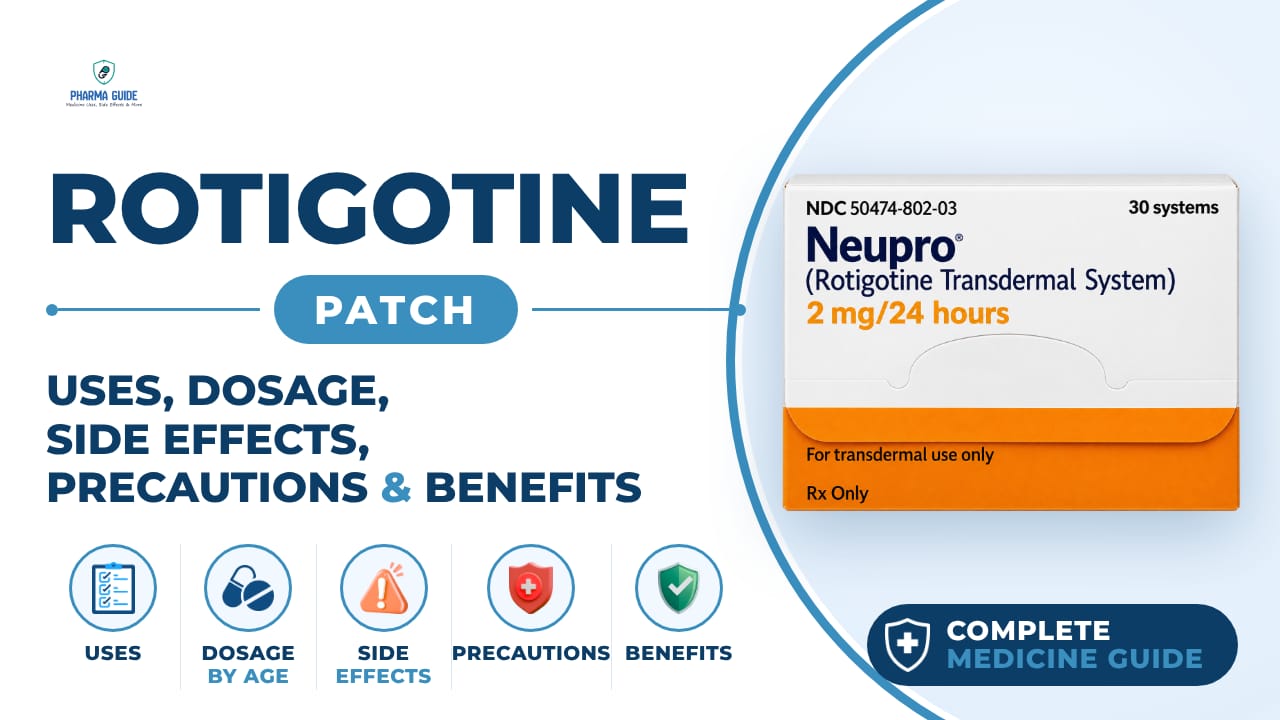
Rotigotine Patch: Uses, Dosage, Side Effects, Precautions and Alternates
Dopamine agonist (dopaminergic antiparkinsonism agent)
Rotigotine Patch is a once-daily skin patch used to treat Parkinson's disease symptoms and restless legs syndrome by stimulating brain dopamine receptors.