
Safety
General information, not medical advice
Your prescriber and the leaflet in your pack know your situation. This page does not.
- Follow your prescriber and the leaflet
- Don't start, stop, or change a dose on your own
- Doses and warnings differ by country and product
Rotigotine Patch: Uses, Dosage, Side Effects, Precautions and Alternates
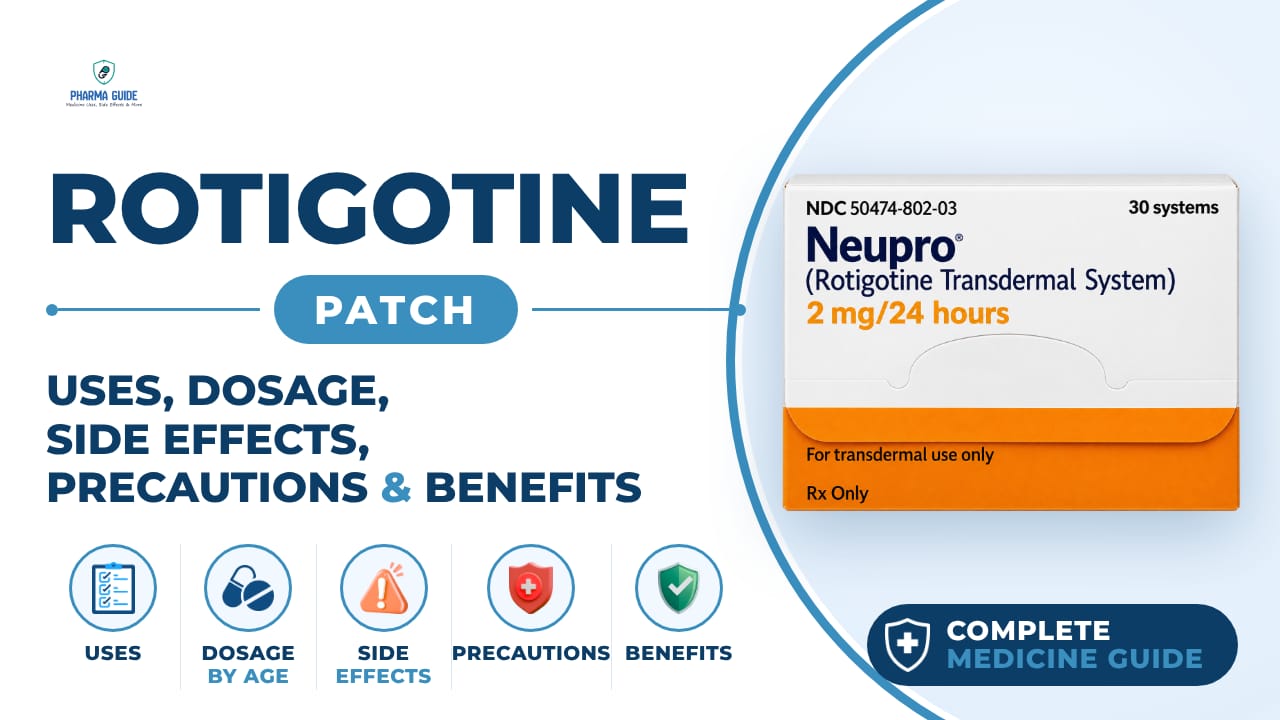
| Generic name | rotigotine |
|---|---|
| Drug class | Dopamine agonist (dopaminergic antiparkinsonism agent) |
| Forms | Patch |
Quick overview
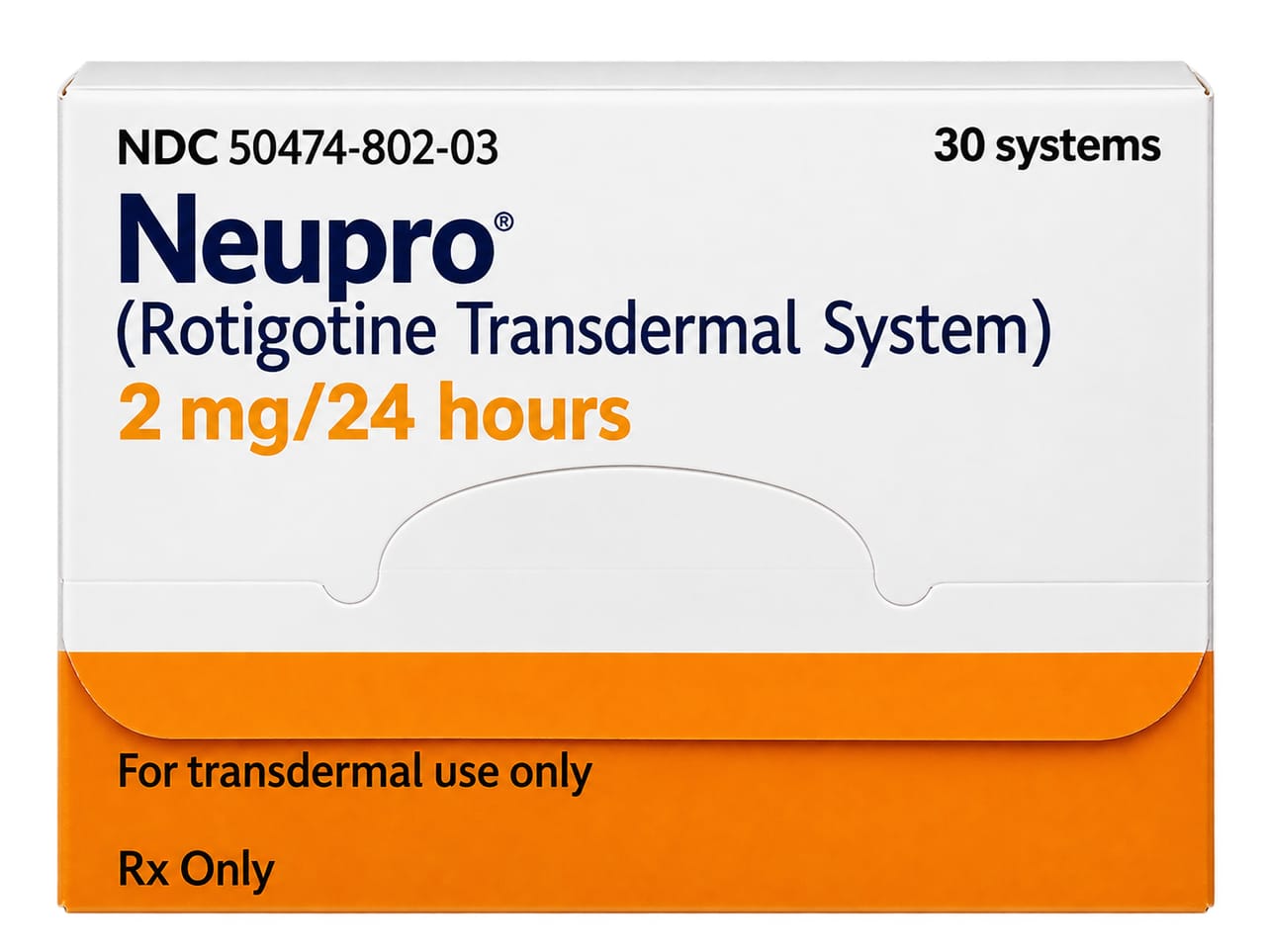
Rotigotine Patch (generic name: rotigotine) is a non-ergot dopamine agonist delivered through a once-daily skin patch that provides steady levels of medicine in the body over 24 hours. It is used to treat the signs and symptoms of Parkinson's disease and moderate to severe restless legs syndrome (RLS), also called Ekbom syndrome. It works by stimulating dopamine receptors in the brain to help control movement and coordination.
What is Rotigotine Patch
Rotigotine is a non-ergot (non-ergoline) dopamine agonist delivered through a once-daily skin patch. It provides steady levels of medicine in the body over 24 hours.
Rotigotine Patch uses
- Treats the signs and symptoms of Parkinson's disease, such as shaking, stiffness, slowed movements, and problems with balance
- Treats moderate to severe restless legs syndrome (RLS), also called Ekbom syndrome
Benefits of Rotigotine Patch
- Helps reduce Parkinson's symptoms
- Improves movement
- Reduces muscle stiffness
- Helps with slow movements
- Relieves restless legs symptoms
How Rotigotine Patch works
Rotigotine acts like dopamine, a natural brain chemical needed to control movement. It stimulates dopamine receptors in the brain, which helps control movement and coordination.
Rotigotine Patch dosage
Apply the patch to the skin once a day, at around the same time every day. Your doctor will likely start you on a low dose and increase it gradually, not more than once a week. It may take several weeks before you feel the full benefit of the medicine. Keep using the patch even if you feel well; do not stop without talking to your doctor.
Apply the patch to clean, dry, healthy skin on the stomach, thigh, hip, flank, shoulder, or upper arm. Do not use creams, lotions, ointments, oils, or powders on the skin where the patch will go. Do not apply the patch to skin that is oily, red, irritated, or damaged. If applying to a hairy area, shave the area at least 3 days beforehand. Choose a different area of skin each day and avoid using the same spot more than once every 14 days. Avoid placing the patch where tight clothing or a waistband could rub it.
Keep the patch away from heating pads, electric blankets, heat lamps, saunas, hot tubs, heated water beds, and direct sunlight while wearing it. You may bathe, shower, or swim while wearing the patch, but check afterward that it has not come loose. If the edges lift, tape them down; if the patch falls off, put on a new one for the rest of the day and resume your normal schedule the next day. Do not cut or damage the patch.
Rotigotine is not affected by food, so it can be used without regard to meals. After applying a new patch, remove and dispose of the previous day's patch safely. Wash your hands with soap and water after handling the patch, and avoid touching your eyes until you have washed your hands.
| Age group | Dose |
|---|---|
| Under 18 years | Not recommended |
| 18–64 years | 1–8 mg/day |
| 65+ years | 1–8 mg/day |
Available forms and strengths
- Patch
Side effects of Rotigotine Patch
Common
- Rash, redness, swelling, or itching of the skin where the patch was worn
- Nausea
- Vomiting
- Constipation
- Loss of appetite
- Drowsiness
- Difficulty falling or staying asleep
- Abnormal dreams
- Dizziness or feeling that you or the room is moving
- Headache
- Fainting
- Weight gain
- Swelling of the hands, feet, ankles, or lower legs
- Increased sweating
- Dry mouth
- Loss of energy
- Joint pain
- Abnormal vision
- Sudden movements of legs or worsening of symptoms of PD or RLS
- Rapid or irregular heartbeat
Serious
- Difficulty breathing or swallowing
- Hives, rash, or itching (severe allergic reaction)
- Seeing things or hearing voices that do not exist (hallucinating)
- Feeling unusually suspicious of others
- Confusion
- Aggressive or unfriendly behavior
- Having strange thoughts or beliefs that have no basis in reality
- Agitation
- Frenzied or abnormally excited mood
- Sudden falling asleep without warning during daily activities
- Fainting or feeling light-headed when standing up (low blood pressure)
- Intense urges such as gambling, increased sexual urges, excessive shopping, or binge eating
Warnings and precautions
- Some people using this medicine have suddenly fallen asleep during daily activities, including while driving, sometimes without any warning signs of drowsiness beforehand. This can lead to accidents.
- Stopping this medicine suddenly can cause a serious reaction with fever, confusion, muscle stiffness, and other symptoms. Your doctor should lower your dose gradually instead of stopping it all at once.
- This medicine can cause intense urges or unusual behaviors, such as gambling, increased sexual urges, excessive shopping, or binge eating. Tell your doctor if you or your family notice these changes.
- This medicine can cause skin burns during an MRI scan or a heart procedure called cardioversion because the patch backing contains metal. Remove the patch before these procedures.
- People with Parkinson's disease have a higher chance of developing a type of skin cancer called melanoma. Regular skin checks are recommended.
- This medicine contains a sulfite that can cause severe allergic reactions, including life-threatening breathing problems, in people sensitive to sulfites, especially those with asthma.
- This medicine can cause low blood pressure when standing up, which may cause dizziness, lightheadedness, fainting, or sweating, especially when starting treatment or increasing the dose.
- For people using this medicine for restless legs syndrome, symptoms can become worse, start earlier in the day, or spread to other body parts, a condition called augmentation. Stopping the medicine can also cause symptoms to return worse than before (rebound).
- Rotigotine is not recommended during pregnancy because there isn't enough information about its safety in pregnant women. Animal studies showed it may harm the developing baby. Tell your doctor if you are pregnant or planning to become pregnant.
- Rotigotine is not recommended while breastfeeding. It is likely to reduce milk production, and it may pass into breast milk and affect the baby.
- No dose adjustment is needed for people with mild to severe kidney problems, including those on dialysis, though rotigotine is not removed by dialysis.
- No dose adjustment is needed for mild to moderate liver problems. There is no information on use in severe liver impairment.
- Alcohol can increase the drowsiness caused by this medicine. Tell your doctor if you regularly drink alcohol.
- This medicine may make you drowsy or cause you to suddenly fall asleep during daily activities, sometimes without any warning signs. Do not drive or operate machinery until you know how the medicine affects you, and talk to your doctor right away if you feel drowsy or fall asleep unexpectedly.
Storage
- Store at room temperature, away from excess heat and moisture (not in the bathroom)
- Keep the medication in its original pouch until ready to use
- Keep out of sight and reach of children and pets
- After removal, fold the used patch in half with the sticky side inward, place it in an empty pouch, and throw it away safely out of reach of children
- Do not flush the medication down the toilet; use a medicine take-back program if possible
When to see a doctor
- Get medical help right away if you have signs of a severe allergic reaction, such as difficulty breathing or swallowing, hives, rash, or itching.
- Call your doctor right away if you feel drowsy or suddenly fall asleep during daily activities.
- Call your doctor immediately if you experience hallucinations, feel unusually suspicious of others, become confused, show aggressive or unfriendly behavior, have strange thoughts or beliefs, or feel agitated or abnormally excited.
- If you or a family member notices signs of compulsive behavior, such as gambling, overspending, binge eating, or increased sex drive, tell your doctor right away.
- If someone applies extra patches by mistake, remove the patches and contact a poison control center for guidance. If the person has collapsed or is not breathing, call emergency services right away.
- Contact your doctor if a skin reaction from the patch lasts more than a few days, becomes more severe, or spreads beyond the area where the patch was worn.
Alternatives
- Bromocriptine
- Levodopa
- Pramipexole
Watch the video
FAQs
What is Rotigotine Patch used for?
It is used to treat the signs and symptoms of Parkinson's disease, such as shaking, stiffness, and slowed movements, and to treat moderate to severe restless legs syndrome (RLS).
How does Rotigotine Patch work?
Rotigotine acts like dopamine, a natural brain chemical needed to control movement. It stimulates dopamine receptors in the brain, helping control movement and coordination.
How often should the Rotigotine Patch be applied?
Apply the patch to the skin once a day at around the same time every day, choosing a different skin area each time and avoiding the same spot more than once every 14 days.
Can I bathe or shower while wearing the Rotigotine Patch?
Yes, you may bathe, shower, or swim while wearing the patch, but check afterward that it has not come loose, and keep it away from heating pads, electric blankets, saunas, and direct sunlight.
What are serious side effects of Rotigotine Patch to watch for?
Serious effects include difficulty breathing or swallowing, severe allergic reactions, hallucinations, confusion, aggressive behavior, sudden falling asleep during activities, fainting from low blood pressure, and intense urges like gambling or binge eating.
General information, not medical advice
Your prescriber and the leaflet in your pack know your situation. This page does not.
- Follow your prescriber and the leaflet
- Don't start, stop, or change a dose on your own
- Doses and warnings differ by country and product
Sources
Video
Related medicines

Pramipexole Tablet: Uses, Dosage, Side Effects, Precautions and Alternates
Dopamine agonist (dopaminergic antiparkinsonism agent)
Pramipexole Tablet is a dopamine agonist used for Parkinson's disease and restless legs syndrome. Learn uses, dosage, side effects, and warnings.
Neupro Patch: Uses, Dosage, Side Effects, Precautions and Alternates
Dopamine agonist (dopaminergic antiparkinsonism agent)
Neupro Patch (rotigotine) is a once-daily skin patch for Parkinson's disease and restless legs syndrome. Learn dosage, side effects, and warnings.