
Safety
General information, not medical advice
Your prescriber and the leaflet in your pack know your situation. This page does not.
- Follow your prescriber and the leaflet
- Don't start, stop, or change a dose on your own
- Doses and warnings differ by country and product
Apremilast Tablet: Uses, Dosage, Side Effects, Precautions and Alternates
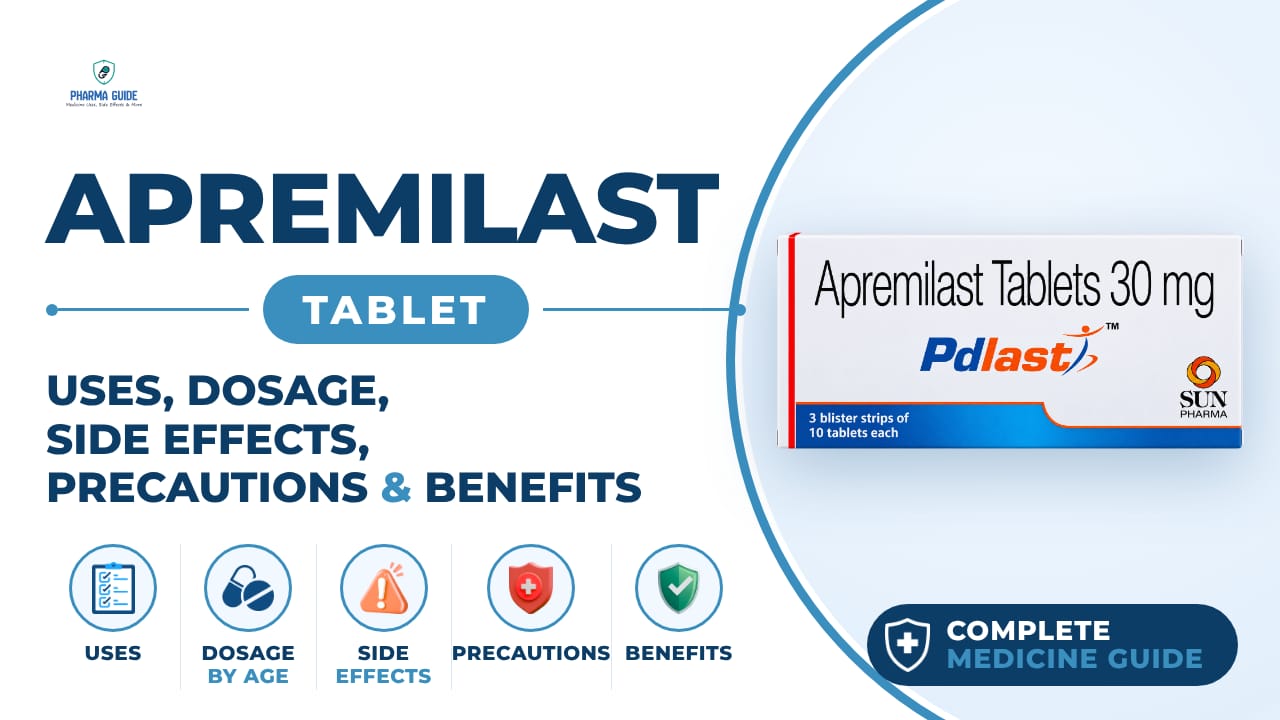
| Generic name | Apremilast |
|---|---|
| Drug class | Phosphodiesterase 4 (PDE4) inhibitor |
| Forms | Tablet |
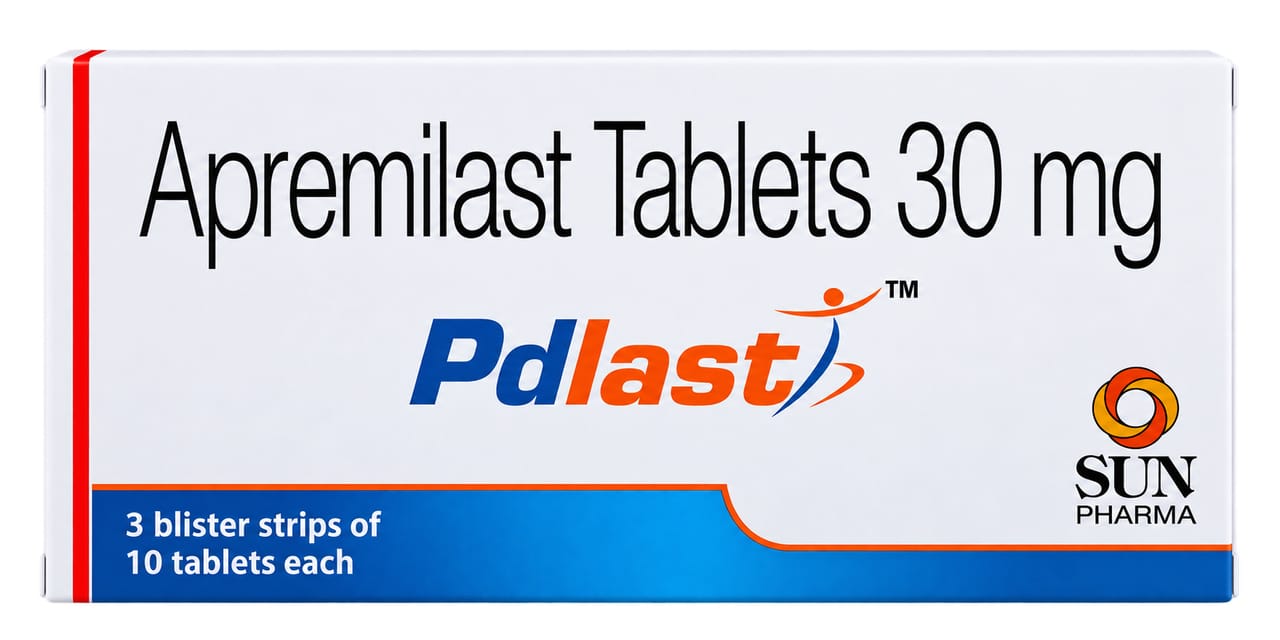
Quick overview
Apremilast Tablet contains apremilast, a phosphodiesterase 4 (PDE4) inhibitor taken by mouth to help control inflammation. It is used for moderate to severe plaque psoriasis, active psoriatic arthritis, and oral ulcers linked to Behçet's disease. It works by blocking the PDE4 enzyme to reduce inflammatory activity, and it is usually taken twice daily following a gradual starter schedule.
What is Apremilast Tablet
Apremilast is a medicine taken by mouth that blocks an enzyme called PDE4, which helps control inflammation in the body.
Apremilast Tablet uses
- Moderate to severe plaque psoriasis
- Active psoriatic arthritis
- Oral ulcers (mouth sores) linked to Behçet's disease
- Treats plaque psoriasis
- Treats psoriatic arthritis
Benefits of Apremilast Tablet
- Can help improve the symptoms of psoriasis
- Reduces joint pain, stiffness, and swelling in psoriatic arthritis
- Decreases the frequency and severity of painful mouth ulcers in Behçet's disease
- Does not usually need routine blood or other lab monitoring
- Does not cause the broad immune suppression that some other treatments cause
How Apremilast Tablet works
Apremilast blocks the PDE4 enzyme, which normally helps break down a substance called cAMP inside inflammatory cells. By stopping this breakdown, apremilast reduces the production of substances that cause inflammation and increases substances that calm inflammation, which helps lessen redness, swelling, and itching in the skin.
Apremilast Tablet dosage
The tablet is usually taken every morning and every evening, about 12 hours apart. It can be taken with or without food. Swallow the tablet whole — do not crush, split, or chew it. Treatment usually starts with a lower dose that is gradually increased over the first week to reduce stomach upset. If a dose is missed, talk to your doctor or pharmacist about when to take the next one.
Apremilast has not been studied in children under 18, so it is not used in this age group. No overall differences in effectiveness or safety were seen between elderly patients and younger adults in studies.
| Age group | Dose |
|---|---|
| Under 6 years | Safety and effectiveness are not established |
| 6–17 years | Pediatric dosing is weight-based and indication-specific; specialist-directed |
| 18–64 years | After the standard starter titration, the usual maintenance dose is 30 mg twice daily |
| 65–74 years | Usually follows adult dosing; monitor tolerance and kidney function |
Available forms and strengths
- Tablet
Side effects of Apremilast Tablet
Common
- Diarrhoea
- Nausea and vomiting
- Headache
- Upper respiratory tract infections (stuffy nose, sneezing, sore throat)
- Indigestion or stomach pain
- Decreased appetite
- Unintended weight loss
- Insomnia
- Fatigue
- Muscle or joint pain
Serious
- Depression, anxiety, or worsening of existing mental health conditions, including suicidal thoughts
- Severe diarrhoea or vomiting leading to dehydration, especially in older adults
- Significant unexpected weight loss
Warnings and precautions
- Apremilast can increase the risk of depression. Tell your doctor right away if you or people around you notice new or worsening depression, suicidal thoughts, or other mood changes.
- Your weight should be checked regularly during treatment, since noticeable weight loss can happen. If you lose weight without explanation, your doctor may need to stop the medicine.
- Do not take apremilast together with certain medicines that increase liver enzyme activity, because they can reduce how well apremilast works.
- Do not take apremilast if you are allergic to it or to any of its ingredients.
- Live vaccines should not be given while taking apremilast.
- This medicine contains lactose and may not be suitable if you are lactose intolerant.
- Apremilast is not recommended during pregnancy because its effects on unborn babies are not well known. It should only be used in pregnancy if the possible benefit outweighs the possible risk.
- Apremilast is not recommended while breastfeeding because it is not known if it passes into breast milk.
- People with severe kidney problems need a lower dose of apremilast.
- No dose changes are needed for people with moderate or severe liver problems.
- Apremilast does not interact with alcohol, but drinking too much alcohol can make psoriasis symptoms worse, so it's best to stay within recommended limits.
- Apremilast usually does not directly impair driving, but dizziness or fatigue can occur.
Storage
- Store apremilast tablets at 20°C to 25°C (68°F to 77°F) under controlled room-temperature conditions. Some branded labeling for Otezla allows storage below 30°C (86°F). Keep the tablets in their original packaging, protected from excessive heat and moisture, and keep them out of reach of children.
When to see a doctor
- Contact your healthcare provider right away if you notice new or worsening depression, suicidal thoughts, or other mood changes.
- Tell your doctor if you lose weight unexpectedly while taking this medicine.
- Discuss any change in mood or suicidal thoughts with your doctor.
Alternatives
- Methotrexate
- Adalimumab
- Etanercept
- Secukinumab
Watch the video
FAQs
What is Apremilast Tablet used for?
It is used for moderate to severe plaque psoriasis, active psoriatic arthritis, and oral ulcers linked to Behçet's disease.
How should Apremilast Tablet be taken?
It is usually taken every morning and evening, about 12 hours apart, with or without food. The tablet should be swallowed whole, and treatment starts with a lower dose gradually increased over the first week to reduce stomach upset.
What are the common side effects of Apremilast Tablet?
Common side effects include diarrhoea, nausea and vomiting, headache, upper respiratory tract infections, indigestion, decreased appetite, weight loss, insomnia, fatigue, and muscle or joint pain.
Can Apremilast Tablet affect mood?
Yes, it can increase the risk of depression, anxiety, or worsening existing mental health conditions, including suicidal thoughts, so any mood changes should be reported to a doctor right away.
Is Apremilast Tablet safe during pregnancy?
It is not recommended during pregnancy because its effects on unborn babies are not well known, and it should only be used if the benefit outweighs the risk.
General information, not medical advice
Your prescriber and the leaflet in your pack know your situation. This page does not.
- Follow your prescriber and the leaflet
- Don't start, stop, or change a dose on your own
- Doses and warnings differ by country and product
Sources
Video
Related medicines
Otezla Tablet: Uses, Dosage, Side Effects, Precautions and Alternates
Phosphodiesterase 4 (PDE4) inhibitor
Otezla Tablet (apremilast) treats plaque psoriasis, psoriatic arthritis, and Behçet's oral ulcers. Learn uses, dosage, side effects, and warnings.
Daxas Tablet: Uses, Dosage, Side Effects, Precautions and Alternates
Phosphodiesterase 4 (PDE4) inhibitor
Daxas Tablet (roflumilast) is a prescription PDE4 inhibitor used with bronchodilators to reduce COPD exacerbations. Know its dosage, benefits, and side effects.