
Safety
General information, not medical advice
Your prescriber and the leaflet in your pack know your situation. This page does not.
- Follow your prescriber and the leaflet
- Don't start, stop, or change a dose on your own
- Doses and warnings differ by country and product
Otezla Tablet: Uses, Dosage, Side Effects, Precautions and Alternates
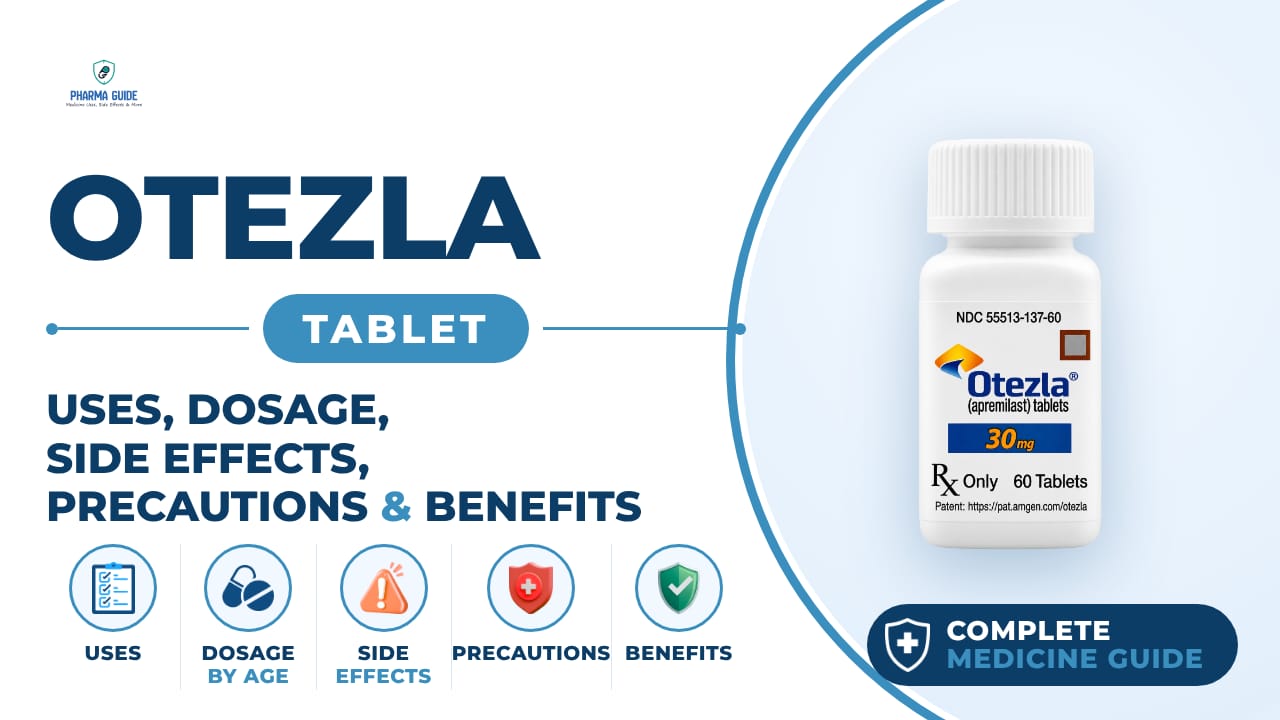
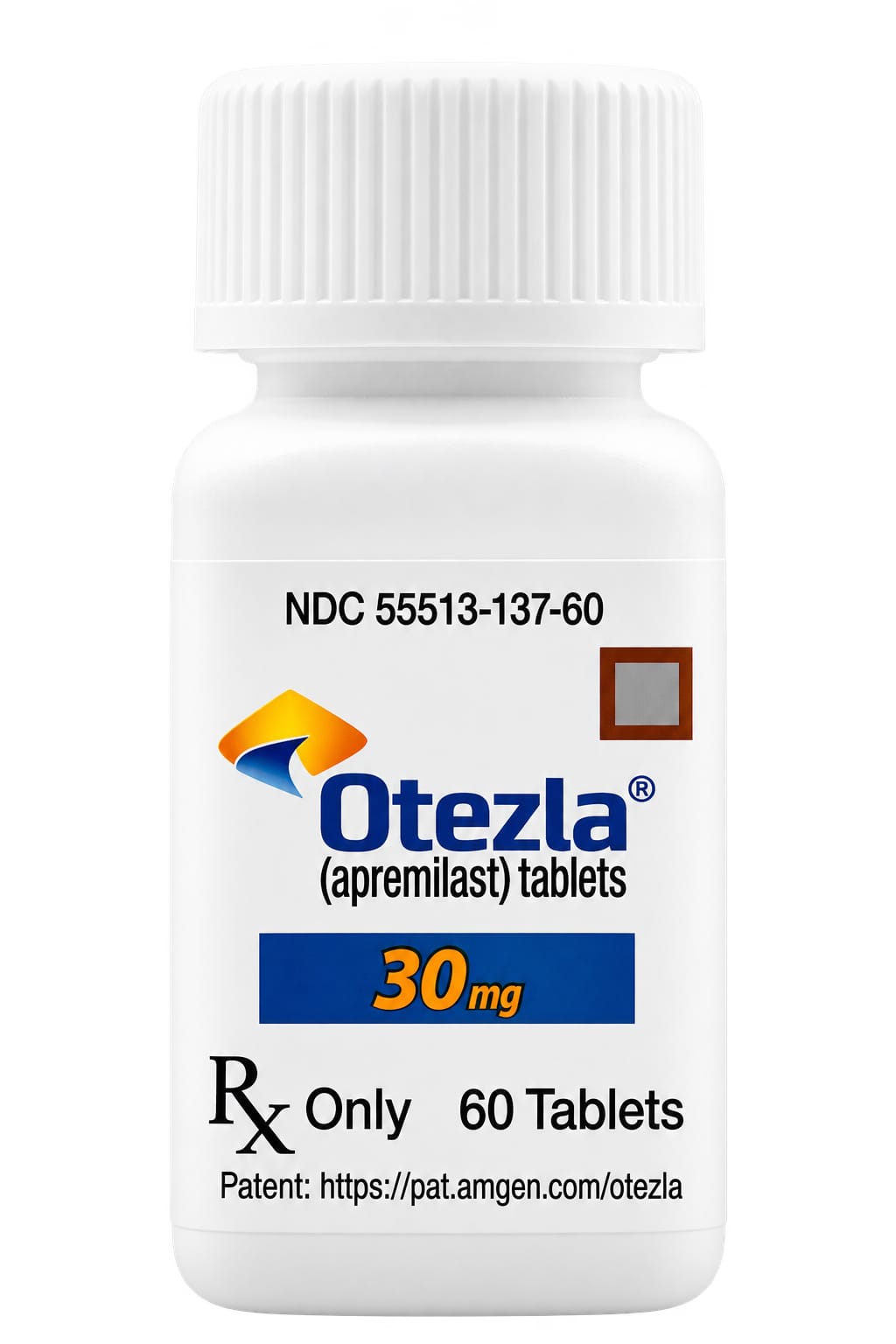
| Generic name | apremilast |
|---|---|
| Drug class | Phosphodiesterase 4 (PDE4) inhibitor |
| Forms | Tablet (10 mg, 20 mg, 30 mg), Extended-release tablet (75 mg) |
Quick overview
Otezla Tablet (generic name apremilast) is a prescription medicine belonging to the phosphodiesterase 4 (PDE4) inhibitor drug class. It is used to treat moderate to severe plaque psoriasis, active psoriatic arthritis, and oral ulcers associated with Behçet's Disease in adults, and certain of these conditions in children 6 years and older weighing at least 20 kg. Unlike many treatments for these conditions, Otezla is taken as an oral tablet rather than an injection or cream.
What is Otezla Tablet
Otezla is a prescription pill used to treat moderate to severe plaque psoriasis, active psoriatic arthritis, and oral ulcers from Behçet's Disease in adults. It is taken as a tablet rather than an injection or cream.
Otezla Tablet uses
- Plaque psoriasis in adults who are candidates for phototherapy or systemic therapy
- Active psoriatic arthritis in adults
- Oral ulcers associated with Behçet's Disease in adults
- Moderate to severe plaque psoriasis in children 6 years and older weighing at least 20 kg
- Active psoriatic arthritis in children 6 years and older weighing at least 20 kg
Benefits of Otezla Tablet
- Psoriasis Support: Helps reduce plaques and skin inflammation in appropriate patients.
- Psoriatic Arthritis Support: Helps reduce joint pain, swelling, and stiffness.
- Behçet's Disease Support: Can help manage oral ulcers associated with Behçet's disease.
- Inflammation Control: Modulates inflammatory signaling through PDE4 inhibition.
- Oral Treatment: Provides a non-injectable option for certain inflammatory conditions.
How Otezla Tablet works
Otezla blocks an enzyme called PDE4 that plays a role in inflammation. By reducing its activity, the medicine is thought to help lower inflammation in the body, though scientists don't fully understand exactly how this leads to symptom improvement.
Otezla Tablet dosage
Take Otezla by mouth every day, generally once in the morning and once at night, about 12 hours apart. You can take it with or without food. Swallow the tablet whole; do not crush, split, or chew it. Taking it with food may help if you feel nauseous.
Do not take two tablets at the same time to make up for a missed dose. If you miss a dose, take it as soon as you remember, unless it is almost time for your next dose—then skip the missed one. Take the medicine every day exactly as prescribed; do not skip doses or stop without talking to your doctor.
People with severe kidney disease follow a different, once-daily schedule as directed by their doctor. Patients 65 years of age or older should be monitored closely since they may be more likely to have complications from severe diarrhea, nausea, or vomiting.
| Age group | Dose |
|---|---|
| Under 18 Years | Use only if prescribed by a specialist |
| 18–64 Years | 30 mg twice daily after the initial dose-titration schedule |
| 65+ Years | 30 mg twice daily; dose adjustment may be needed in severe kidney impairment |
Available forms and strengths
- Tablet (10 mg, 20 mg, 30 mg)
- Extended-release tablet (75 mg)
Side effects of Otezla Tablet
Common
- Diarrhea
- Nausea
- Vomiting
- Headaches, migraines, or tension headaches
- Upper respiratory tract infections (cold, runny nose, sinus infection)
- Cough
- Back pain
- Feeling tired
- Stomach pain
- Loss of appetite
- Frequent bowel movements
- Difficulty sleeping (insomnia)
- Indigestion or heartburn
- Bronchitis
- Common cold (nasopharyngitis)
- Weight loss
Serious
- Depression, suicidal thoughts or behavior
- Severe allergic reaction (swelling of face, lips, mouth, tongue or throat; difficulty breathing or swallowing)
- Severe diarrhea, nausea, or vomiting leading to dehydration, sometimes requiring hospitalization
- Significant or unexplained weight loss
- Bleeding in the bowel or stomach
Warnings and precautions
- Otezla can cause allergic reactions, sometimes severe, including swelling of the face, lips, tongue, throat, or arms, hives, rash, or trouble breathing or swallowing. Stop the medicine and get emergency help right away if these occur.
- Otezla can cause severe diarrhea, nausea, and vomiting, especially in the first few weeks of treatment. Older adults and people taking certain other medications may have a higher risk of complications from this.
- Otezla is linked to an increased risk of depression. Some people in clinical studies reported depression or suicidal thoughts or behavior while taking it.
- Some people lose body weight while taking Otezla. Your doctor should check your weight regularly.
- Certain medicines, such as rifampicin, some seizure medicines, and St John's Wort, can make Otezla less effective. Tell your doctor about all medicines you take.
- Do not take Otezla if you are allergic to apremilast or any of its ingredients.
- Tell your doctor if you are pregnant, think you may be pregnant, or are planning to become pregnant. Animal studies suggest Otezla may increase the risk of pregnancy loss, and an effective method of birth control is recommended during treatment.
- Breastfeeding is not recommended while taking Otezla; tell your doctor if you are planning to breastfeed.
- People with severe kidney disease need a lower, adjusted dose of Otezla, usually taken once daily in the morning only, as directed by a doctor.
- Liver-function tests may be recommended if there is an existing liver problem or other risk factors.
Storage
- Store OTEZLA tablets below 30°C (86°F)
- Store OTEZLA XR tablets between 20°C and 25°C (68°F and 77°F); short-term exposure between 15°C and 30°C (59°F and 86°F) is permitted
When to see a doctor
- Get emergency help right away if you have signs of a serious allergic reaction, such as trouble breathing or swallowing, hives, rash or itching, or swelling of the face, lips, tongue, throat, or arms.
- Tell your doctor right away about any changes in mood or behavior, feelings of depression, or thoughts of suicide while taking Otezla.
- Contact your doctor if you have severe diarrhea, nausea, or vomiting.
- If you take more Otezla than you should, talk to a doctor immediately or go straight to a hospital, bringing the medicine pack and patient information leaflet with you.
Alternatives
- Methotrexate
- Cyclosporine
- Adalimumab
Watch the video
FAQs
What is Otezla Tablet used for?
Otezla is used to treat moderate to severe plaque psoriasis, active psoriatic arthritis, and oral ulcers associated with Behçet's Disease in adults, and certain of these conditions in children 6 years and older weighing at least 20 kg.
How should I take Otezla Tablet?
Take Otezla by mouth daily, generally once in the morning and once at night about 12 hours apart, with or without food. Swallow the tablet whole without crushing, splitting, or chewing it.
What are the common side effects of Otezla?
Common side effects include diarrhea, nausea, vomiting, headaches, upper respiratory tract infections, cough, back pain, fatigue, stomach pain, loss of appetite, and difficulty sleeping.
Can Otezla cause serious side effects?
Yes, serious side effects can include depression or suicidal thoughts, severe allergic reactions, severe diarrhea, nausea, or vomiting leading to dehydration, significant weight loss, and bleeding in the bowel or stomach.
Is Otezla safe during pregnancy or breastfeeding?
Animal studies suggest Otezla may increase the risk of pregnancy loss, so effective birth control is recommended during treatment. Breastfeeding is not recommended while taking Otezla.
General information, not medical advice
Your prescriber and the leaflet in your pack know your situation. This page does not.
- Follow your prescriber and the leaflet
- Don't start, stop, or change a dose on your own
- Doses and warnings differ by country and product
Sources
Video
Related medicines
Apremilast Tablet: Uses, Dosage, Side Effects, Precautions and Alternates
Phosphodiesterase 4 (PDE4) inhibitor
Apremilast Tablet is a PDE4 inhibitor for plaque psoriasis, psoriatic arthritis, and Behçet's oral ulcers. Learn dosage, side effects, and warnings.
Daxas Tablet: Uses, Dosage, Side Effects, Precautions and Alternates
Phosphodiesterase 4 (PDE4) inhibitor
Daxas Tablet (roflumilast) is a prescription PDE4 inhibitor used with bronchodilators to reduce COPD exacerbations. Know its dosage, benefits, and side effects.