
Safety
General information, not medical advice
Your prescriber and the leaflet in your pack know your situation. This page does not.
- Follow your prescriber and the leaflet
- Don't start, stop, or change a dose on your own
- Doses and warnings differ by country and product
Apretude Injection: Uses, Dosage, Side Effects, Precautions and Alternates

| Generic name | cabotegravir |
|---|---|
| Drug class | Integrase strand transfer inhibitor (INSTI) |
| Forms | prolonged-release (extended-release) injectable suspension, film-coated tablets (used for optional oral lead-in) |
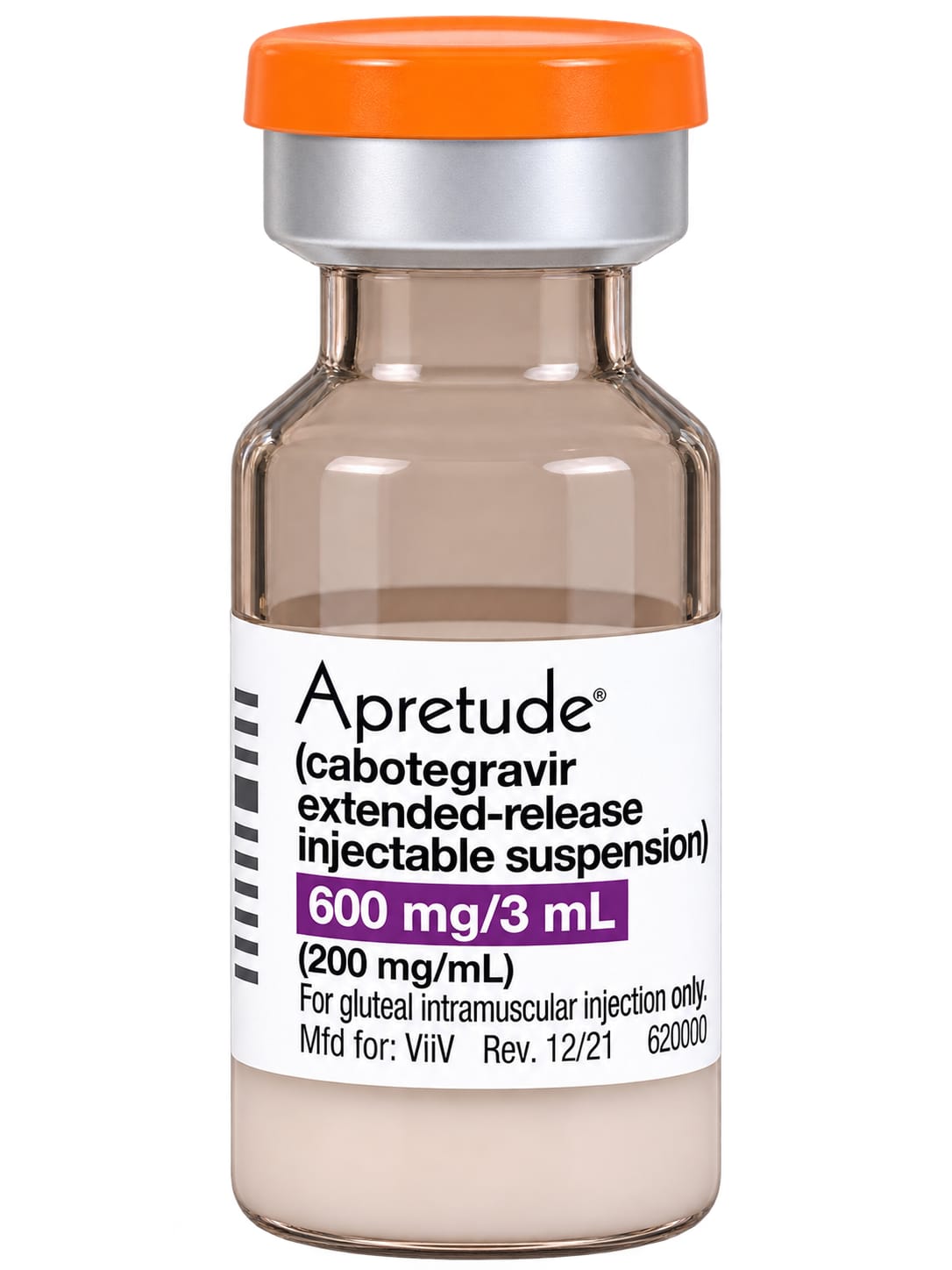
Quick overview
Apretude Injection (cabotegravir) is a long-acting injectable medicine from the integrase strand transfer inhibitor (INSTI) class. It is used for HIV pre-exposure prophylaxis (PrEP), given as a shot every two months instead of a daily pill, to help lower the chance of getting HIV-1 infection through sex. It is used in adults and adolescents weighing at least 35 kg who are at risk of HIV-1, as part of a complete prevention plan that also includes safer sex practices like condoms.
What is Apretude Injection
Apretude is a long-acting injectable medicine used for HIV pre-exposure prophylaxis (PrEP). It is given as a shot every two months instead of a daily pill, to help lower the chance of getting HIV-1 infection through sex.
Apretude Injection uses
- Reduces the risk of getting HIV-1 infection through sex in adults and adolescents weighing at least 35 kg (about 77 lb) who are at risk of HIV-1
- Used as part of a complete HIV prevention plan, along with safer sex practices like condoms
Benefits of Apretude Injection
- Only needs to be given once every two months instead of taking a pill every day
- Can be a good option for people who find it hard to stick to a daily pill routine
- Does not contain tenofovir, which may suit people who prefer or need a non-tenofovir option
- Offers a more private, discreet way to use PrEP compared with daily pills
How Apretude Injection works
Apretude belongs to a class of medicines called integrase inhibitors. It works by blocking an enzyme the HIV virus needs to copy itself, which helps stop the virus from establishing an infection.
Apretude Injection dosage
You must have a negative HIV-1 test right before starting Apretude, and you will be tested again before every injection. A doctor or nurse may first give an optional one-month course of cabotegravir tablets to see how well you tolerate the medicine before starting the injections.
The first two injections are given one month apart, then injections continue every two months after that. Each injection is given by a doctor or nurse into the muscle of your buttock — it is not something you inject yourself. Injections can be given up to seven days before or after your planned injection date if needed.
Keep all of your scheduled appointments; missing or delaying injections can raise your risk of getting HIV or developing drug resistance. Continue using condoms and other safer sex practices, since this medicine does not protect against other sexually transmitted infections and does not always prevent HIV.
| Age group | Dose |
|---|---|
| Under 12 years or under 35 kg | Safety and effectiveness are not established |
| 12–17 years, ≥35 kg | 600 mg IM injection, followed by another 600 mg injection 1 month later, then 600 mg every 2 months |
| 18–64 years | 600 mg IM injection, followed by another 600 mg injection 1 month later, then 600 mg every 2 months |
Available forms and strengths
- Prolonged-release (extended-release) injectable suspension
- Film-coated tablets (used for optional oral lead-in)
Side effects of Apretude Injection
Common
- Injection site reactions (pain, tenderness, a hardened lump, swelling, bruising, redness, itching, warmth, numbness, or discoloration)
- Diarrhea
- Headache
- Fever
- Tiredness (fatigue)
- Sleep problems (insomnia, abnormal dreams)
- Nausea
- Dizziness
- Passing gas (flatulence)
- Stomach pain
- Vomiting
- Muscle pain (myalgia)
- Rash
- Loss of appetite
- Drowsiness (somnolence)
- Back pain
- Upper respiratory tract infection
- Feeling generally unwell (malaise)
Serious
- Serious allergic reactions, including Stevens-Johnson syndrome and toxic epidermal necrolysis
- Liver problems (hepatotoxicity), which can show as yellowing of skin or eyes, dark urine, light-colored stools, loss of appetite, itching, or stomach tenderness
- Depression, mood changes, suicidal thoughts, or suicide attempts
- Possible drug resistance if HIV-1 infection is not detected before or during treatment
- Feeling lightheaded or fainting during or after the injection
Warnings and precautions
- You must test negative for HIV-1 before starting this medicine and before every injection. Using it while infected with undiagnosed HIV-1 can lead to drug-resistant virus that is harder to treat.
- This medicine does not treat HIV-1 on its own. If you get HIV-1 while using it, you will need to switch to a full HIV treatment plan.
- Do not use this medicine if you have had an allergic reaction to cabotegravir before, or if you are taking certain seizure medicines or the antibiotics rifampin or rifapentine, since these can make the medicine not work properly.
- This medicine can stay in your body for up to a year or longer after your last injection, so missed or stopped doses still carry a risk of HIV infection or resistance during that time.
- This medicine does not protect against other sexually transmitted infections, so continue using condoms and get tested regularly.
- Pregnancy: The effect of this medicine on pregnancy is not fully known. Tell your doctor if you are pregnant, think you might be, or are planning to become pregnant, so they can weigh the benefits and risks before you receive it.
- Breastfeeding: It isn't known if this medicine passes into breast milk, but it may still be present in the body for up to 12 months after the last injection. Talk to your doctor about the benefits and risks if you are breastfeeding or plan to.
- Kidney: No routine dose adjustment is generally required solely for kidney impairment.
- Liver: Tell your doctor if you have liver problems. Your doctor may want to monitor your liver function with blood tests while you are using this medicine.
- Alcohol: Heavy alcohol use may increase liver-related concerns.
- Driving: This medicine can cause dizziness and other side effects that may affect your alertness. Avoid driving or using machines until you know how it affects you.
Storage
- APRETUDE does not require refrigeration.
- Do not freeze.
- Store at or below 36°F to 77°F (2°C to 25°C) in the original carton until ready to use. Exposure up to 86°F (30°C) permitted.
- APRETUDE injections should be kept in the pack until it is time to use it. It should be stored below 30°C.
- Your healthcare professional will be responsible for discarding APRETUDE injections.
- Dispose of used needle, syringe, vial, and vial adapter according to local health and safety laws.
When to see a doctor
- Get medical help right away if you develop a rash along with fever, feeling generally unwell, tiredness, muscle or joint aches, trouble breathing, mouth sores or blisters, or swelling of the face, lips, mouth, or tongue — these can be signs of a serious allergic reaction.
- Call your doctor right away if your skin or the whites of your eyes turn yellow, your urine turns dark, your stools become pale, you lose your appetite, feel itchy, or have pain on the right side of your stomach — these can be signs of liver problems.
- Get medical help right away if you feel sad, hopeless, anxious, restless, or have thoughts of hurting yourself.
- Tell your healthcare provider right away if you have flu-like symptoms such as tiredness, joint or muscle aches, sore throat, rash, swollen glands, fever, headache, vomiting, diarrhea, or night sweats, as these could be signs of a new HIV infection.
Alternatives
- Truvada for PrEP
- Descovy for PrEP in eligible patients
- Generic tenofovir disoproxil fumarate/emtricitabine
Watch the video
FAQs
How often is Apretude Injection given?
The first two injections are given one month apart, then injections continue every two months after that, given by a doctor or nurse into the muscle of your buttock.
Who can use Apretude Injection?
It is used in adults and adolescents weighing at least 35 kg (about 77 lb) who are at risk of HIV-1, as part of a complete prevention plan that also includes safer sex practices like condoms.
What are the common side effects of Apretude Injection?
Common side effects include injection site reactions, diarrhea, headache, fever, tiredness, sleep problems, nausea, dizziness, muscle pain, rash, and loss of appetite.
Do I need an HIV test before each Apretude injection?
Yes, you must test negative for HIV-1 before starting this medicine and before every injection, since using it with undiagnosed HIV-1 can lead to drug-resistant virus that is harder to treat.
Does Apretude Injection protect against other STIs?
No, this medicine does not protect against other sexually transmitted infections and does not always prevent HIV, so you should continue using condoms and get tested regularly.
General information, not medical advice
Your prescriber and the leaflet in your pack know your situation. This page does not.
- Follow your prescriber and the leaflet
- Don't start, stop, or change a dose on your own
- Doses and warnings differ by country and product
Sources
- https://apretudehcp.com/content/dam/cf-viiv/apretude-hcp-v2/en_US/pdf/APRETUDE_HCP_Dosing_and_Admin_Guide_PDF.pdf
- https://viivexchange.com/content/dam/cf-viiv/viivexchange/en_GB/our-medicines/apretude-hcp-welcome-booklet-smpc-viiv-uk-april-2026.pdf
- https://mydr.com.au/medicines/apretude-prolonged-release-suspension-for-injection/
Video
Related medicines
Tivicay Tablet: Uses, Dosage, Side Effects, Precautions and Alternates
Integrase strand transfer inhibitor (INSTI)
Tivicay Tablet (dolutegravir) treats HIV-1 with other antiretrovirals in adults and children 12+ weighing 40 kg+. Learn dosage, side effects, and precautions.

Injectafer Injection: Uses, Dosage, Side Effects, Precautions and Alternates
Iron products
Injectafer (ferric carboxymaltose) treats iron deficiency anemia and heart failure-related iron deficiency via IV. Learn uses, dosage, side effects, and