
Safety
General information, not medical advice
Your prescriber and the leaflet in your pack know your situation. This page does not.
- Follow your prescriber and the leaflet
- Don't start, stop, or change a dose on your own
- Doses and warnings differ by country and product
Aquadrate Cream: Uses, Dosage, Side Effects, Precautions and Alternates
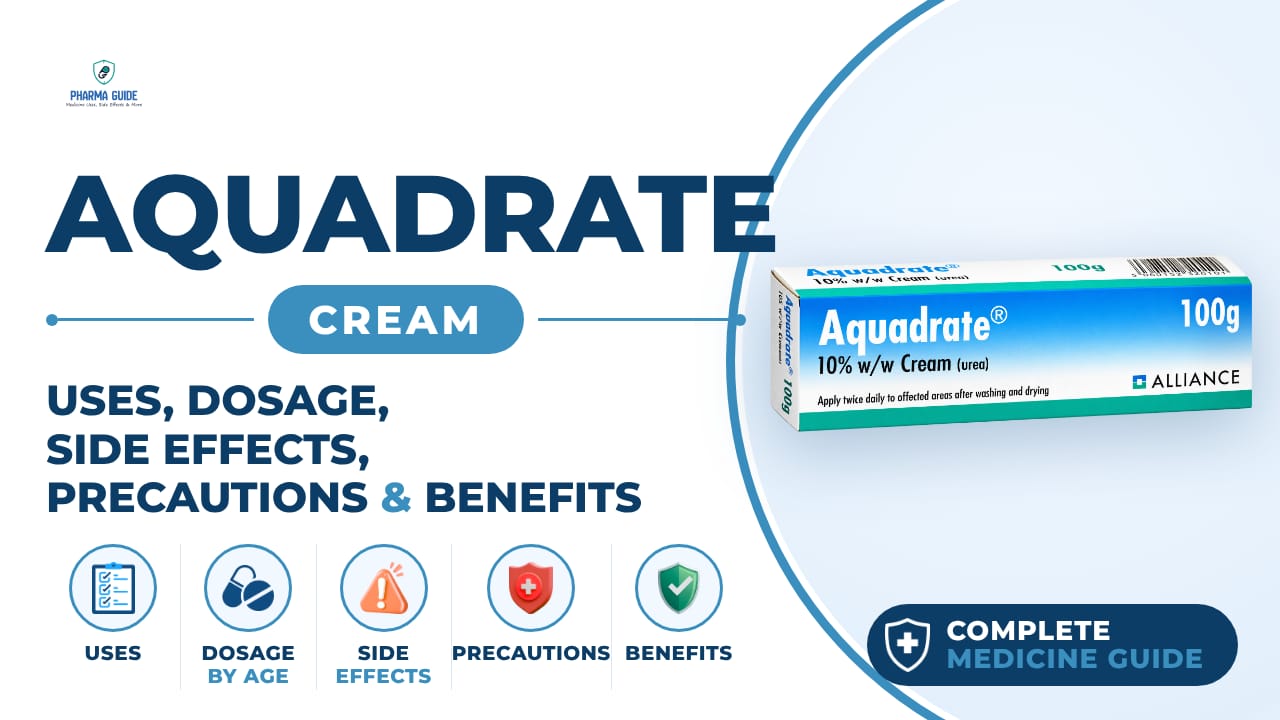
| Generic name | Urea |
|---|---|
| Drug class | Emollient |
| Forms | Cream, Lotion, Foam, Ointment, Suspension, Gel |
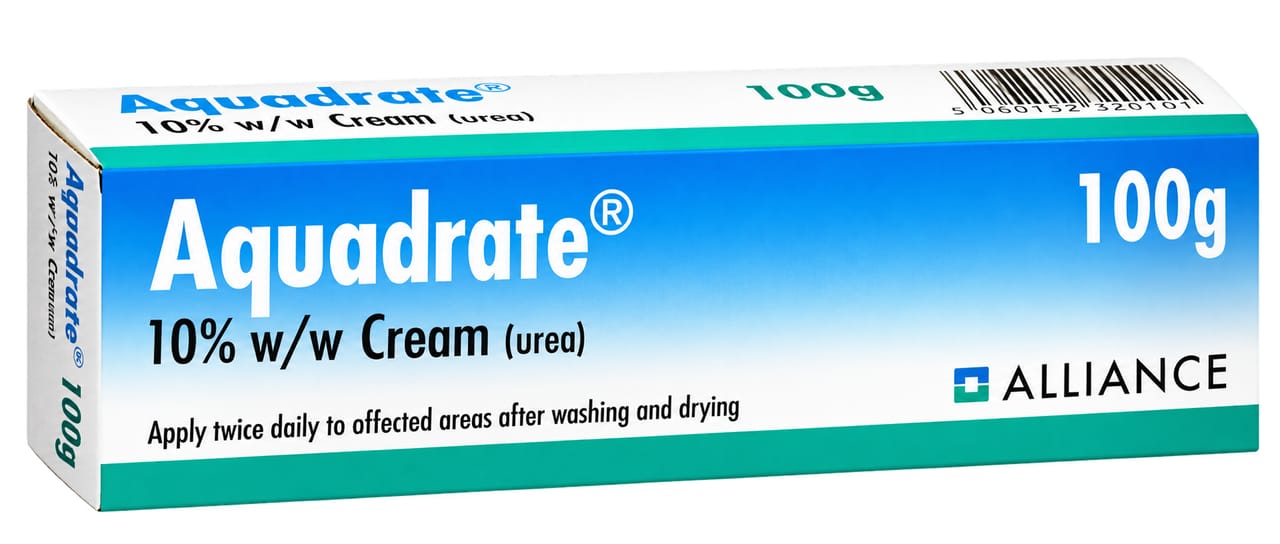
Quick overview
Aquadrate Cream is a topical emollient cream containing 10% urea mixed with white soft paraffin. It is used to soften hardened, dry, rough, or scaly skin and help it retain moisture. It may be applied to conditions such as eczema, psoriasis, and dry or thickened skin and nails. Common side effects include mild burning, irritation, or redness, and the cream is for skin use only.
What is Aquadrate Cream
Aquadrate Cream is a topical cream containing 10% urea mixed with white soft paraffin. It is used to treat dry, rough, and scaly skin conditions by softening hardened skin and helping it hold moisture.
Aquadrate Cream uses
- Eczema
- Psoriasis
- Nail infection/thick or damaged nails
- Dry, rough, or scaly skin (xerosis)
- Corns and calluses
- Ichthyosis
- Dermatitis (atopic and contact)
- Seborrheic dermatitis
- Xeroderma
- Keratosis
- Pruritus (itching)
Benefits of Aquadrate Cream
- Provides intensive hydration to the skin
- Relieves dry skin symptoms like itching, tightness, scaling, and roughness
- Softens hardened skin on heels, hands, and feet
- Supports healthier nails by softening thickened or damaged nail tissue
- Improves skin texture by helping remove dead skin cells
How Aquadrate Cream works
The cream contains urea, which draws and holds water in the skin to keep it hydrated, and it also breaks down the protein (keratin) that holds dead skin cells together, helping rough or thickened skin shed more easily. It is mixed with white soft paraffin, which forms an oily layer on the skin's surface to stop moisture from evaporating.
Aquadrate Cream dosage
Apply a thin layer to the affected area as instructed by your doctor and follow the directions on the label or package insert. Wash and dry the affected area before applying the cream, and wash your hands thoroughly before and after use.
Do not apply to broken or moist skin, open wounds, or areas with active infection. Avoid contact with eyes, mouth, and mucous membranes; rinse with water if accidental contact occurs. Do not cover the treated area with bandages or airtight dressings unless your doctor tells you to.
Apply shortly after bathing while skin is still slightly damp to help lock in moisture. If applying to the feet, wear socks or non-slip footwear afterward since treated skin may become slippery. This cream is not recommended for use in children below 12 years of age. Wait at least 30 minutes before applying other topical medicines to the same area.
If you forget a dose, apply it as soon as you remember, but skip it if it is almost time for your next dose; do not apply double to make up for a missed one. Contact your doctor if symptoms do not improve after two weeks of use.
| Age group | Dose |
|---|---|
| 3–11 years | Apply a thin layer to the affected dry skin as directed |
| 12–17 years | Apply a thin layer to affected areas as needed |
| 18–64 years | Apply to dry or scaly areas as required, usually several times daily depending on skin dryness |
Available forms and strengths
- Cream (10% urea)
- Lotion
- Foam
- Ointment
- Suspension
- Gel
Side effects of Aquadrate Cream
Common
- Burning sensation
- Skin irritation
- Itching
- Skin rash
- Change in color and texture of the skin
- Redness of skin
- Mild stinging
Serious
- Allergic reaction
- Hives
- Skin reactions with or without fever
- Difficulty in breathing
- Swelling of the mouth
- Fluid retention (swelling)
Warnings and precautions
- This cream is for use on the skin only. Avoid contact with your mouth, eyes, mucous membranes, cuts, or open wounds, and rinse immediately with water if accidental contact happens. Do not apply it to broken or moist skin, open wounds, bleeding skin, deep cuts, or areas with active infection.
- Do not cover the treated skin with tight bandages, plastic wraps, or airtight dressings unless your doctor tells you to. The cream can catch fire easily, so avoid smoking or being near open flames or high heat after applying it. Check the cream before each use and do not use it if its color, smell, or texture has changed.
- This medicine may interact with other topical medicines and increase the risk of side effects, so tell your doctor about all current medicines before starting treatment.
- It is not known whether this cream is safe to use during pregnancy. Talk to your doctor before using it if you are pregnant.
- It is not known if this cream passes into breast milk. Talk to your doctor before using it while breastfeeding, and clean it off the breast area before feeding your baby.
- Talk to your doctor before using this cream if you have any kidney problems. Talk to your doctor if you have concerns about using this cream with liver problems.
- It isn't known how this cream interacts with alcohol. Check with your doctor before drinking alcohol while using it.
- This cream usually does not affect your ability to drive or operate machinery.
Storage
- Store Aquadrate Cream at a controlled room temperature, ideally between 15°C and 30°C (59°F to 86°F)
- Keep the tube or container tightly closed when not in use to prevent the cream or gel from drying out
- Do not use past the expiry date printed on the packaging
- Never throw away medicine via household or water waste; take any unwanted or expired medicine to your local pharmacy for safe disposal
- Always store medicine out of the sight and reach of children and pets
When to see a doctor
- If you notice a skin rash, itching, or hives, tell your doctor and get medical help right away, as this could mean an allergic reaction. If the cream is accidentally swallowed, or gets in the eyes or mouth, rinse thoroughly with clean water and get medical help right away or contact your local poison control center.
- If you have severe skin irritation, deep pain, or signs of an allergic reaction, stop using the cream right away and see your doctor. Contact your doctor if symptoms do not improve after two weeks of use.
Alternatives
- Hydromol Intensive 10% Cream
- Flexitol 10% Urea Cream
- Eucerin UreaRepair 10%
- Balneum Plus Cream
Watch the video
FAQs
What is Aquadrate Cream used for?
It is used to soften hardened, dry, rough, or scaly skin and help it retain moisture, and may be applied for conditions such as eczema, psoriasis, dermatitis, ichthyosis, corns, calluses, and thick or damaged nails.
How does Aquadrate Cream work?
The urea in the cream draws and holds water in the skin to keep it hydrated and breaks down keratin so rough or thickened skin sheds more easily, while white soft paraffin forms a layer to stop moisture loss.
How should Aquadrate Cream be applied?
Apply a thin layer to clean, dry affected skin as directed, ideally shortly after bathing while skin is still slightly damp, and avoid covering the area with airtight dressings unless advised by your doctor.
What are the common side effects of Aquadrate Cream?
Common side effects include burning sensation, skin irritation, itching, rash, redness, mild stinging, and changes in skin color or texture.
Is Aquadrate Cream safe for children?
It is not recommended for use in children below 12 years of age.
General information, not medical advice
Your prescriber and the leaflet in your pack know your situation. This page does not.
- Follow your prescriber and the leaflet
- Don't start, stop, or change a dose on your own
- Doses and warnings differ by country and product
Sources
Video
Related medicines
E45 Cream: Uses, Dosage, Side Effects, Precautions and Alternates
Emollient
E45 Cream is a fragrance-free emollient that relieves dry, itchy, flaky skin. Learn about its uses, dosage, side effects, and precautions.
Diprobase Ointment: Uses, Dosage, Side Effects, Precautions and Alternates
Emollient
Diprobase Ointment is a non-steroid emollient that moisturises and protects dry, chapped or eczema-prone skin. Learn uses, dosage, side effects and precautions.