
Safety
General information, not medical advice
Your prescriber and the leaflet in your pack know your situation. This page does not.
- Follow your prescriber and the leaflet
- Don't start, stop, or change a dose on your own
- Doses and warnings differ by country and product
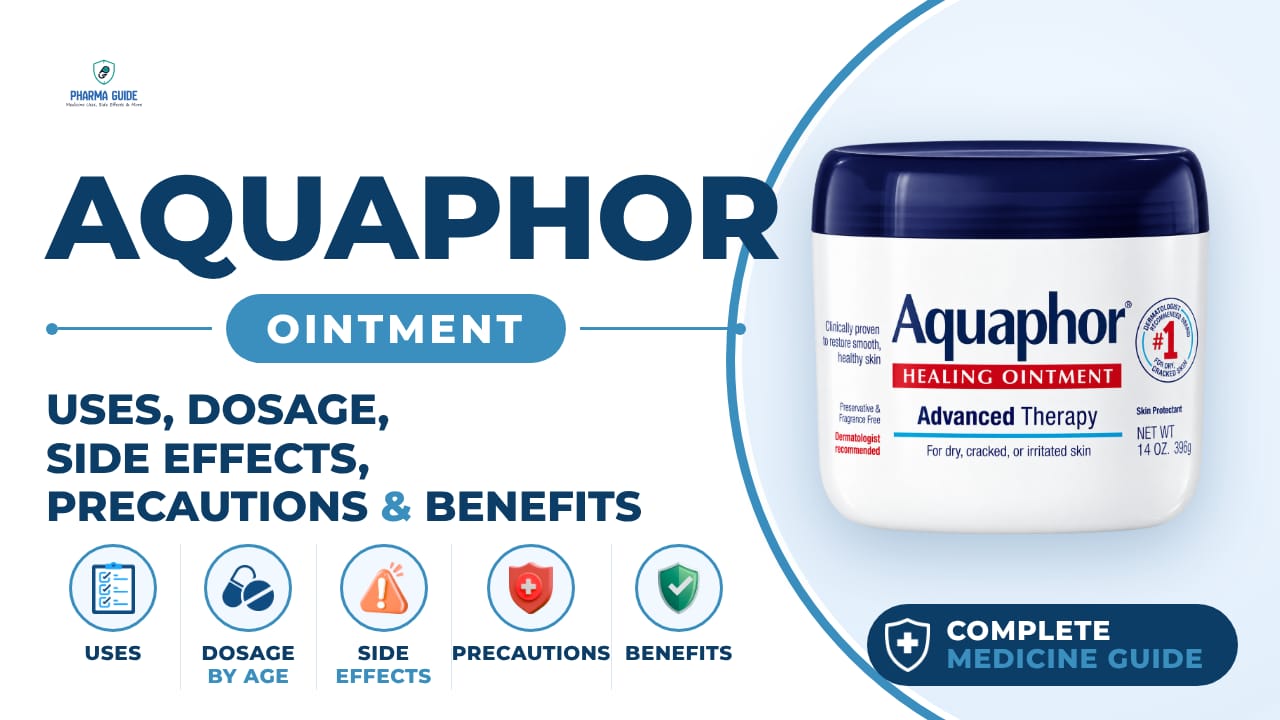
Aquaphor Ointment: Uses, Dosage, Side Effects, Precautions and Alternates
| Generic name | Petrolatum topical |
|---|---|
| Drug class | Topical emollient |
| Forms | Ointment |
Quick overview
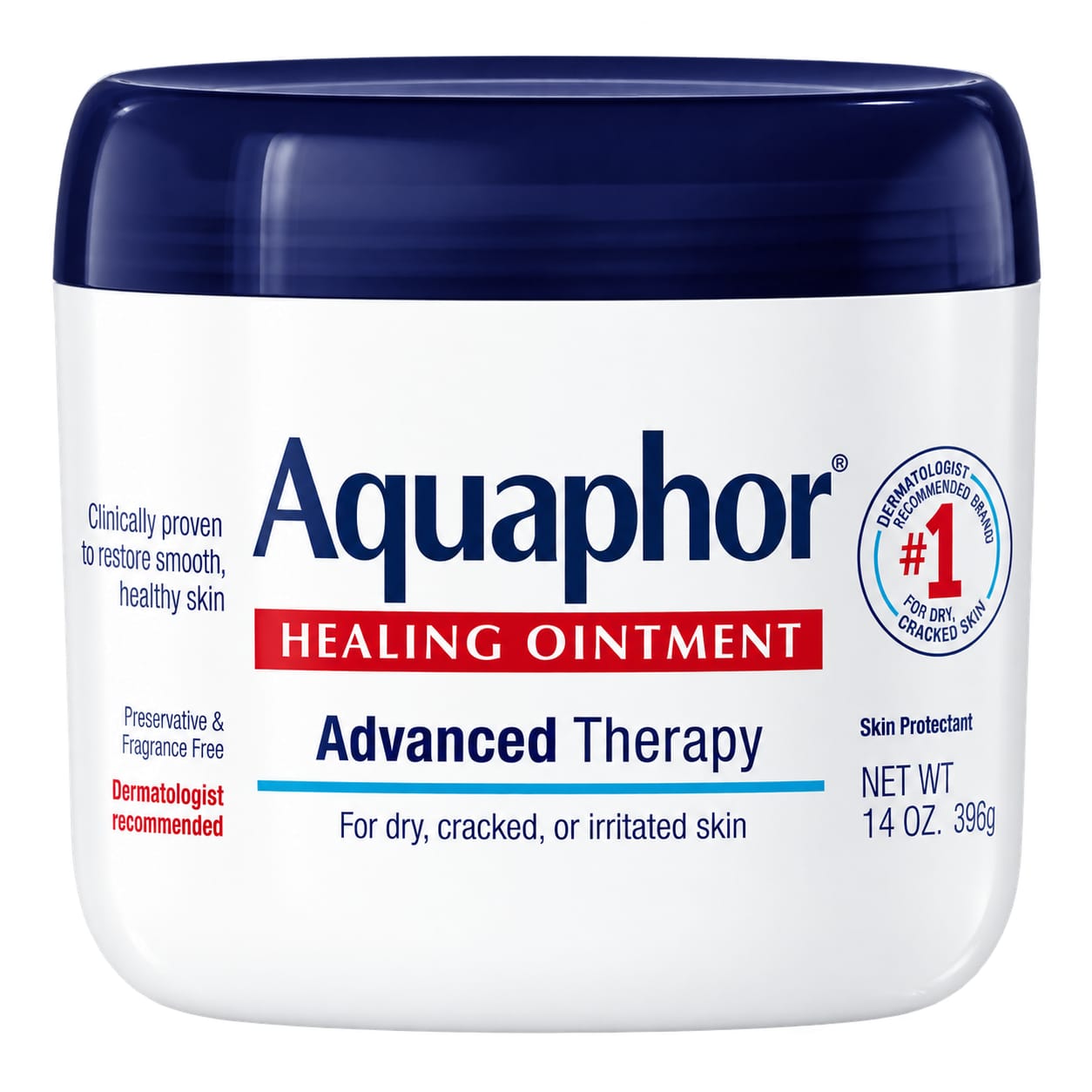
Aquaphor Ointment (petrolatum topical) is an over-the-counter topical emollient made mostly of petroleum jelly, along with mineral oil, panthenol, and glycerin. It forms a protective layer on the skin that helps hold in moisture while still letting air reach the skin. It is used to protect and soothe minor cuts, scrapes, burns, chapped lips, and dry or irritated skin, including diaper rash.
What is Aquaphor Ointment
Aquaphor is an over-the-counter ointment made mostly of petroleum jelly (petrolatum), along with other ingredients like mineral oil, panthenol, and glycerin. It forms a protective layer on the skin that helps it hold onto moisture while still letting air reach the skin.
Aquaphor Ointment uses
- Helps protect minor cuts, scrapes, burns, or eczema
- Treats or prevents chapped lips or cracked skin
- Protects skin from the drying effects of wind or cold weather
- Helps prevent diaper rash or skin irritation from bladder or bowel incontinence
- Soothes dry, cracked, or irritated skin and minor conditions like diaper rash and insect bites
Benefits of Aquaphor Ointment
- Helps protect dry, cracked skin
- Supports the skin's moisture barrier
- Helps soothe minor irritation
- Useful for chapped lips and rough skin
- Helps protect minor cuts, scrapes, and burns while healing
How Aquaphor Ointment works
Aquaphor creates a semi-occlusive barrier on the skin. This barrier helps the skin hold in moisture and lets excess fluid escape while still allowing oxygen to reach the skin, creating a good environment for healing.
Aquaphor Ointment dosage
Use exactly as directed on the label, or as your doctor prescribes. Apply only to the skin — do not swallow it. First clean the area before applying. It can be applied as often as needed to soothe dry or irritated skin. Do not use on deep wounds, puncture wounds, animal bites, or serious burns. Do not apply to open, bleeding, or wet wounds. Avoid getting it in your eyes. If breastfeeding, avoid applying it to areas of the breast that may touch the baby's mouth. Call your doctor if symptoms do not improve after seven days of use, or if the condition clears up and then comes back.
| Age group | Dose |
|---|---|
| 12–17 years | Apply to affected skin as needed |
| 18–64 years | Apply to affected skin as needed |
| 65 years and older | Apply to affected skin as needed |
Available forms and strengths
- Ointment
Side effects of Aquaphor Ointment
Serious
- Skin redness or tenderness
- Itching
- Swelling
Warnings and precautions
- Do not use on deep wounds, puncture wounds, animal bites, or serious burns.
- Some people, especially those with eczema, may have an allergic reaction to the lanolin in this ointment.
- Some people with eczema have had itching, dryness, and irritation after using products containing glycerol, like this ointment.
- If breastfeeding, avoid applying this ointment to breast areas that may come into contact with the baby's mouth.
- No routine restriction for topical use on the kidney.
- No routine restriction for topical use on the liver.
- No significant interaction with alcohol is expected.
- Does not affect driving.
Storage
- Store at room temperature away from moisture and heat.
- Keep this and all other medicines out of the reach of children, never share your medicines with others, and use this medication only for the indication prescribed.
When to see a doctor
- Stop using this ointment and call your doctor right away if you notice skin redness, tenderness, itching, or swelling.
- Call your doctor if your symptoms do not improve after seven days of use, or if your condition clears up and then comes back.
- If someone accidentally swallows this ointment, seek emergency medical attention or contact your local poison control center.
- A person should discuss any noticeable skin changes with a doctor after using this product.
Alternatives
- Vaseline (petrolatum)
- CeraVe Healing Ointment
- Eucerin Aquaphor-type barrier ointments
Watch the video
FAQs
What is Aquaphor Ointment used for?
It's used to protect minor cuts, scrapes, burns, and eczema, treat chapped lips and cracked skin, protect skin from wind or cold, and prevent diaper rash or irritation from incontinence.
How does Aquaphor Ointment work?
It creates a semi-occlusive barrier on the skin that helps it hold in moisture while letting excess fluid escape and oxygen reach the skin, creating a good environment for healing.
How should Aquaphor Ointment be applied?
Clean the area first, then apply to the skin as often as needed. It should not be swallowed, used on deep wounds, puncture wounds, animal bites, or serious burns, or applied to open, bleeding, or wet wounds.
What are the side effects of Aquaphor Ointment?
Possible side effects include skin redness or tenderness, itching, and swelling. You should stop use and call your doctor right away if these occur.
When should I see a doctor while using Aquaphor Ointment?
Call your doctor if symptoms don't improve after seven days of use, if the condition clears up and returns, or if you notice skin redness, tenderness, itching, or swelling.
General information, not medical advice
Your prescriber and the leaflet in your pack know your situation. This page does not.
- Follow your prescriber and the leaflet
- Don't start, stop, or change a dose on your own
- Doses and warnings differ by country and product
Sources
Video
Related medicines
Oilatum Cream: Uses, Dosage, Side Effects, Precautions and Alternates
Topical emollient
Oilatum Cream is a fragrance-free emollient that moisturizes dry skin and soothes eczema flare-ups. Learn about its uses, dosage, side effects, and precautions.

Injectafer Injection: Uses, Dosage, Side Effects, Precautions and Alternates
Iron products
Injectafer (ferric carboxymaltose) treats iron deficiency anemia and heart failure-related iron deficiency via IV. Learn uses, dosage, side effects, and