
Safety
General information, not medical advice
Your prescriber and the leaflet in your pack know your situation. This page does not.
- Follow your prescriber and the leaflet
- Don't start, stop, or change a dose on your own
- Doses and warnings differ by country and product
Aricept Tablet: Uses, Dosage, Side Effects, Precautions and Alternates
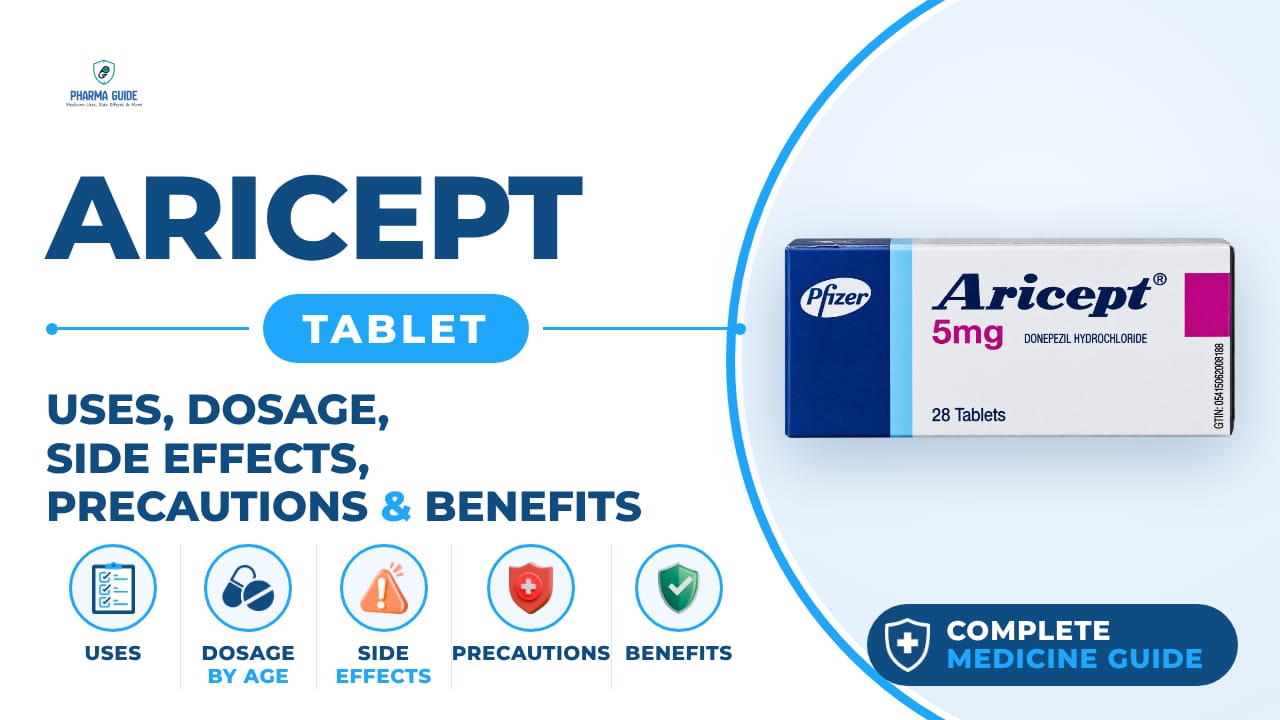
| Generic name | donepezil |
|---|---|
| Drug class | Acetylcholinesterase inhibitor |
| Forms | Tablet (5 mg, 10 mg, 23 mg), Orally disintegrating tablet (5 mg, 10 mg) |
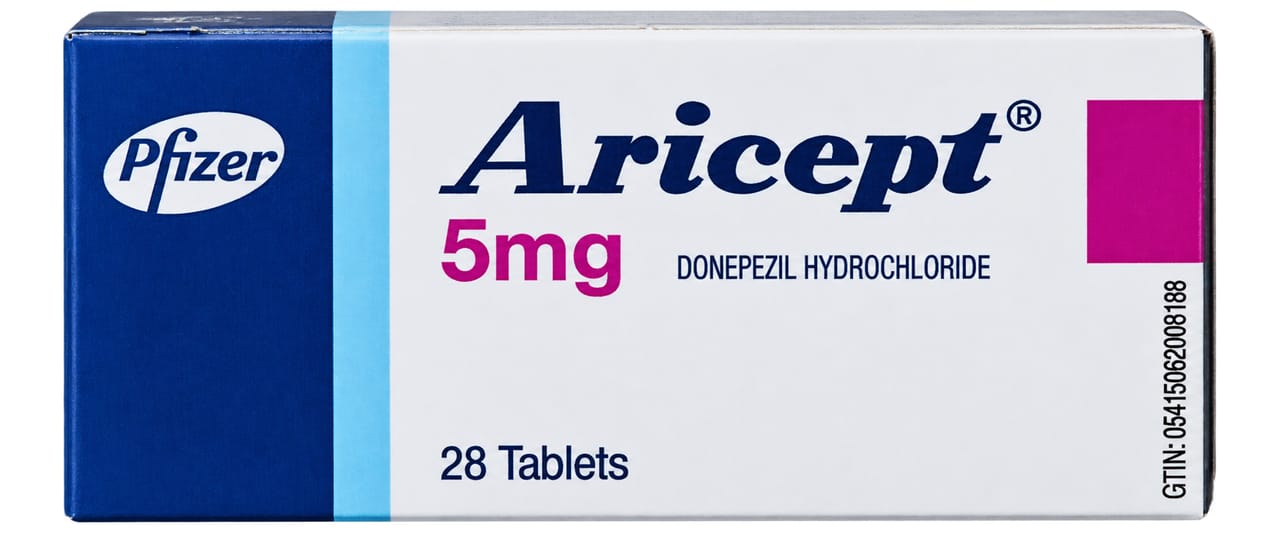
Quick overview
Aricept Tablet (donepezil) is a prescription acetylcholinesterase inhibitor used to treat dementia caused by Alzheimer's disease in adults. It is taken by mouth once a day, usually in the evening before bed. Aricept may help slow the progression of dementia symptoms and may improve thinking, memory, and daily functioning in some people.
What is Aricept Tablet
Aricept is a prescription medicine used to treat dementia caused by Alzheimer's disease. It comes as a tablet you take by mouth once a day, usually in the evening before bed.
Aricept Tablet uses
- Treatment of dementia due to mild, moderate, or severe Alzheimer's disease in adults
Benefits of Aricept Tablet
- May help slow the progression of dementia symptoms in some people
- May improve cognitive function (thinking and memory) for a while in some people
- May help some people perform daily tasks better, such as making meals or doing laundry
- May help slow disease progression even if no clear improvement is noticed
How Aricept Tablet works
People with Alzheimer's disease have falling levels of a brain chemical called acetylcholine, which helps with thinking and memory. Aricept blocks an enzyme that breaks down this chemical, so more of it builds up in the brain. This may help slow the worsening of dementia symptoms.
Aricept Tablet dosage
Take Aricept once a day in the evening, right before bedtime. It can be taken with or without food. The 5 mg or 10 mg tablets may be swallowed whole, or split in half if your doctor tells you to. The 23 mg tablet must be swallowed whole; do not crush, cut, or chew it.
If a dose is missed, skip it and take the next dose at the usual time; do not take two doses together. If Aricept is missed for a week or longer, talk with your doctor before restarting. Do not stop taking Aricept on your own; talk with your doctor first.
It may take at least 2 weeks, and sometimes a few weeks or months, before you notice any change. Aricept is meant to be used as a long-term treatment. Older adults may be more sensitive to side effects and should be monitored closely by their doctor. Aricept has not been tested in children and is not approved for use in children.
| Age group | Dose |
|---|---|
| Under 18 Years | Not recommended unless prescribed by a specialist |
| Adults (18–64 Years) | 5 mg once daily initially; may increase to 10 mg once daily |
| Older Adults (65+ years) | 5 mg once daily initially; may increase to 10 mg once daily based on response |
Available forms and strengths
- Tablet (5 mg, 10 mg, 23 mg)
- Orally disintegrating tablet (5 mg, 10 mg)
Side effects of Aricept Tablet
Common
- Nausea
- Diarrhea
- Insomnia (trouble sleeping)
- Vomiting
- Muscle cramps
- Fatigue
- Loss of appetite
- Weight loss
- Bruising (ecchymosis)
Serious
- Severe nausea and vomiting
- Severe diarrhea
- Difficulty passing urine and urinary tract infection
- Stomach ulcers or bleeding (abdominal pain, heartburn, nausea or vomiting, bloody or dark-colored stool or vomit)
- Hallucinations
- Depression
- Slow heart rate or heart block (weakness, exhaustion, confusion, dizziness or fainting, trouble breathing)
- Abnormal dreams or nightmares
- Aggression
- Seizures
- Allergic reaction (mild rash to severe swelling or trouble breathing)
Warnings and precautions
- Aricept can increase the effect of certain anesthesia drugs used during surgery, causing excessive muscle relaxation. Tell your doctor or dentist about any upcoming surgery or dental procedures.
- Aricept may cause a slow heart rate or heart block, and fainting has been reported. This may happen more often in people with heart problems.
- Aricept can increase stomach acid, raising the risk of stomach ulcers or bleeding, especially in people with a history of ulcers or those taking NSAIDs like aspirin or ibuprofen.
- Aricept may cause weight loss, especially at the highest dose.
- Aricept may worsen breathing problems in people with asthma or other lung conditions like COPD.
- Aricept may cause seizures in some people, although seizures can also be a symptom of Alzheimer's disease itself.
- Aricept may cause difficulty passing urine.
- Do not stop taking Aricept on your own without talking to your doctor first, as this could lead to a decline in symptoms.
- People who weigh less than about 121 pounds (55 kg) may have a higher risk of nausea, vomiting, and weight loss with Aricept.
- It is not known if Aricept is safe to take during pregnancy. You should not take Aricept while pregnant.
- It is not known if Aricept passes into breast milk. You should not use Aricept while breastfeeding.
- If you have kidney problems, your body may take longer to clear Aricept, which may raise your risk of side effects. Tell your doctor if you have a kidney condition.
- If you have liver problems, such as cirrhosis, your body may take longer to clear Aricept, which may raise your risk of side effects. Tell your doctor if you have a liver condition.
- There are no known direct interactions between alcohol and Aricept, but alcohol can cause some of the same side effects, such as nausea, vomiting, and trouble sleeping.
- Heavy drinking over time can also cause liver damage that may raise your risk of side effects from Aricept. Talk with your doctor before drinking alcohol while taking this medicine.
Storage
- Store ARICEPT at room temperature between 59° to 86°F (15° to 30°C).
- Keep ARICEPT and all medicines out of the reach of children.
When to see a doctor
- Call your doctor right away if you faint while taking Aricept.
- Get medical help right away for new or worsening heartburn or stomach pain, vomiting blood or vomit that looks like coffee grounds, or black, tarry stools.
- Seek medical care right away for new or worsening asthma or breathing problems.
- Seek medical help right away if a seizure occurs.
- Contact your doctor right away if you have trouble or difficulty passing urine.
- If you think you or someone else has taken too much Aricept, call a doctor or poison control, or go to the emergency room right away.
- Seek emergency care for signs of a severe allergic reaction, such as swelling or trouble breathing.
Alternatives
- Rivastigmine
- Memantine
- Gantenerumab
Watch the video
FAQs
What is Aricept Tablet used for?
Aricept is used to treat dementia caused by mild, moderate, or severe Alzheimer's disease in adults.
When should I take Aricept Tablet?
Aricept should be taken once a day in the evening, right before bedtime, with or without food.
How does Aricept Tablet work?
Aricept blocks an enzyme that breaks down acetylcholine, a brain chemical involved in thinking and memory, allowing it to build up and help slow dementia symptom progression.
What are the common side effects of Aricept Tablet?
Common side effects include nausea, diarrhea, insomnia, vomiting, muscle cramps, fatigue, loss of appetite, weight loss, and bruising.
What happens if I miss a dose of Aricept Tablet?
If a dose is missed, skip it and take the next dose at the usual time; do not take two doses together. If missed for a week or longer, talk with your doctor before restarting.
General information, not medical advice
Your prescriber and the leaflet in your pack know your situation. This page does not.
- Follow your prescriber and the leaflet
- Don't start, stop, or change a dose on your own
- Doses and warnings differ by country and product
Sources
Video
Related medicines
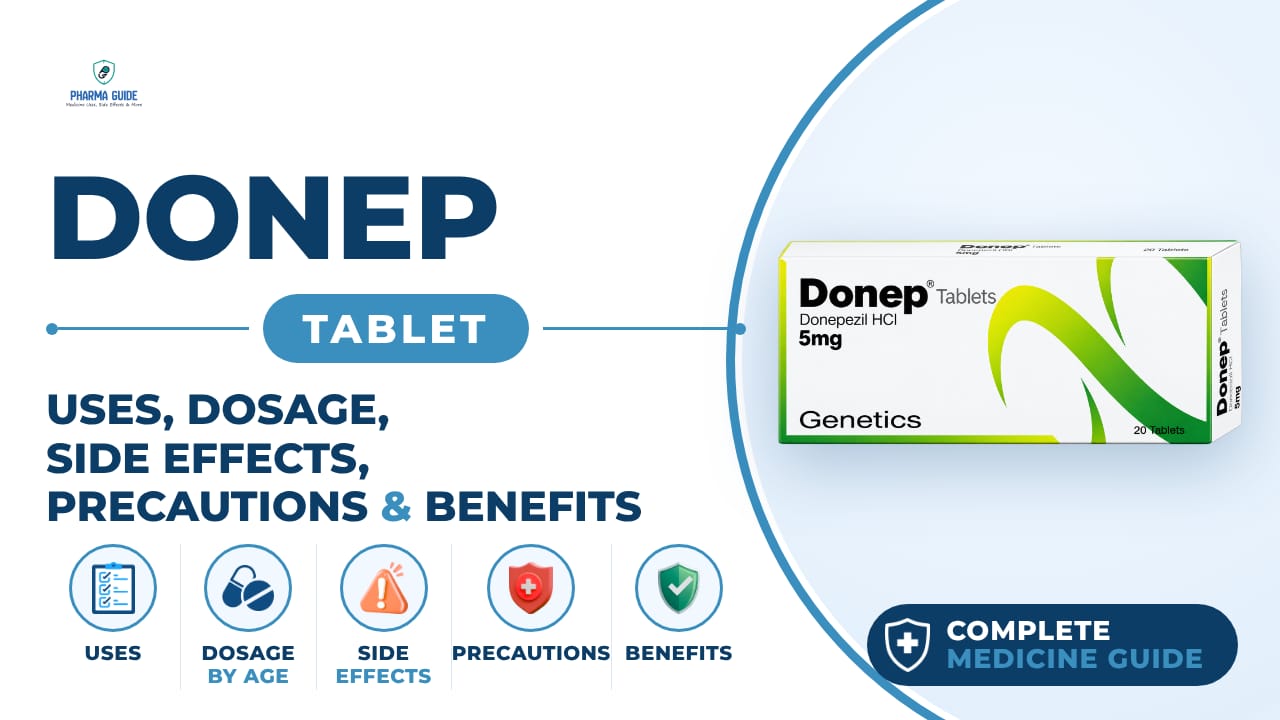
Donep Tablet: Uses, Dosage, Side Effects, Precautions and Alternates
Acetylcholinesterase inhibitor
Donep Tablet (donepezil) helps manage mild to moderate Alzheimer's disease by improving memory and thinking. Learn uses, dosage, side effects, and precautions.

Injectafer Injection: Uses, Dosage, Side Effects, Precautions and Alternates
Iron products
Injectafer (ferric carboxymaltose) treats iron deficiency anemia and heart failure-related iron deficiency via IV. Learn uses, dosage, side effects, and