
Safety
General information, not medical advice
Your prescriber and the leaflet in your pack know your situation. This page does not.
- Follow your prescriber and the leaflet
- Don't start, stop, or change a dose on your own
- Doses and warnings differ by country and product
Arixtra Injection: Uses, Dosage, Side Effects, Precautions and Alternates
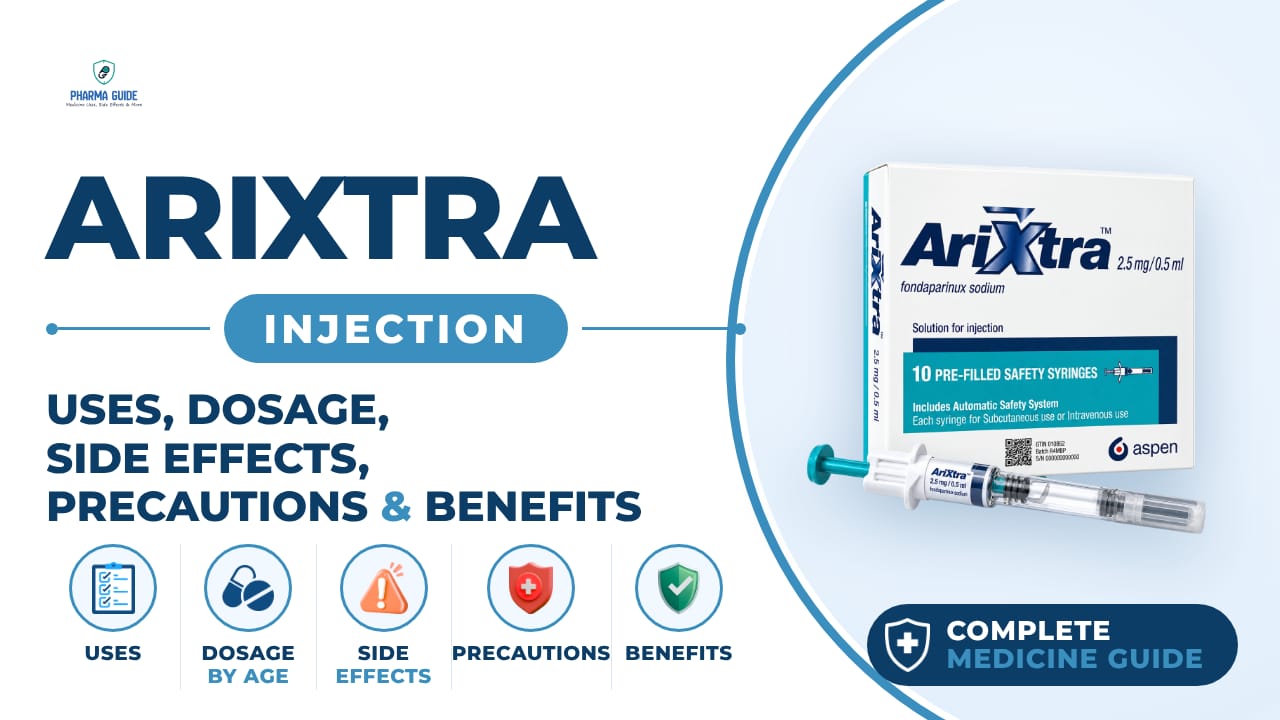
| Generic name | fondaparinux sodium |
|---|---|
| Drug class | Factor Xa inhibitor (anticoagulant) |
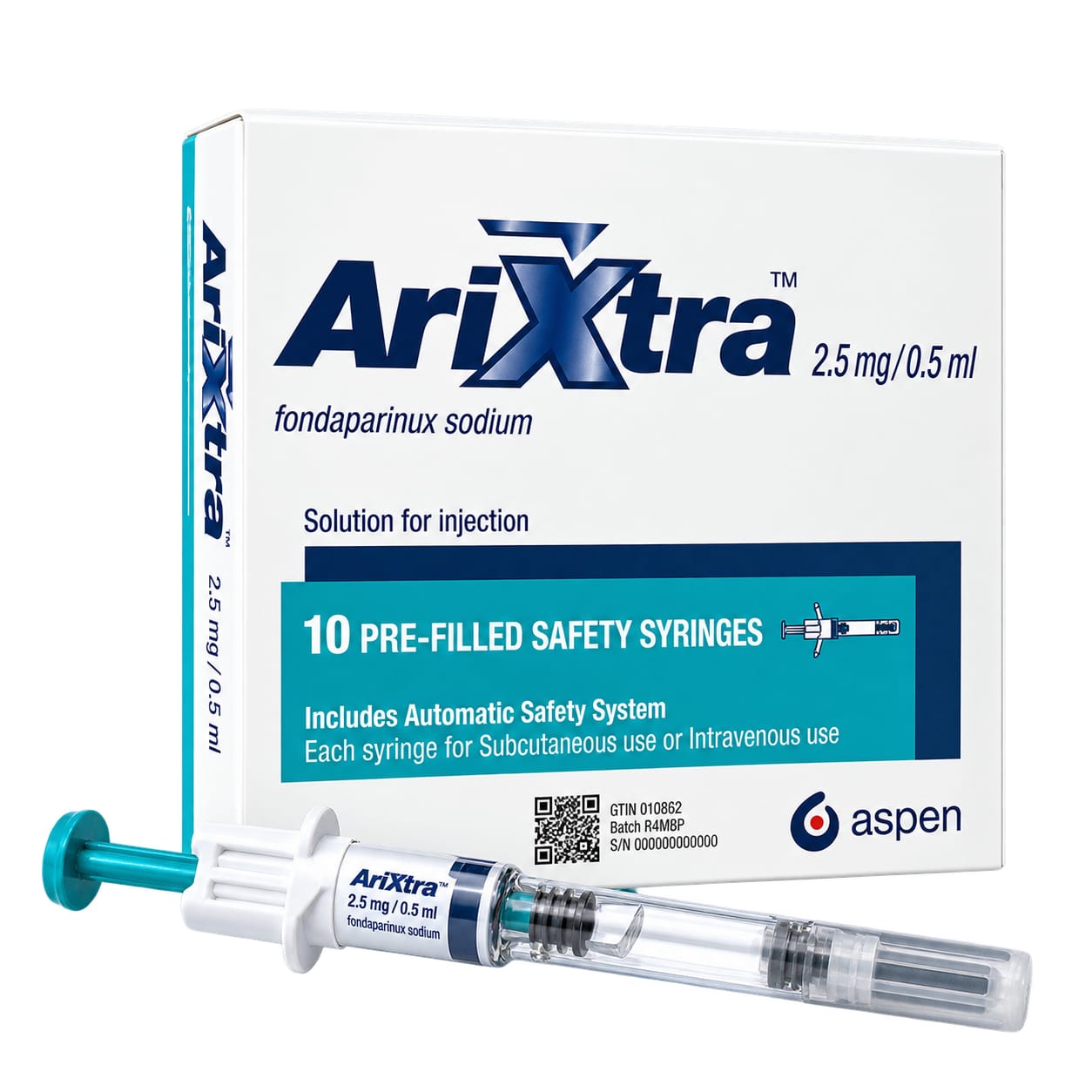
| Forms | Single-dose, prefilled syringes (solution for injection) |
Quick overview
Arixtra Injection contains fondaparinux sodium, a Factor Xa inhibitor used as an anticoagulant. It is given as an injection under the skin to help prevent and treat certain types of blood clots, including deep vein thrombosis (DVT) and pulmonary embolism (PE). It is used in adults after certain surgeries, in adults with DVT or PE (together with warfarin), and in children aged 1 year or older weighing at least 10 kg with venous thromboembolism (VTE).
What is Arixtra Injection
Arixtra is a man-made medicine that blocks the activity of a blood-clotting substance called Factor Xa. It is given as an injection under the skin and is used to prevent and treat certain types of blood clots.
Arixtra Injection uses
- Prevention of deep vein thrombosis (DVT) in adults having hip fracture surgery, hip replacement surgery, knee replacement surgery, or abdominal surgery
- Treatment of DVT or acute pulmonary embolism (PE) in adults, used together with warfarin
- Treatment of venous thromboembolism (VTE) in children aged 1 year or older who weigh at least 10 kg (22 lbs)
Benefits of Arixtra Injection
- Helps prevent blood clots from forming in the veins of the legs after certain surgeries
- Helps treat existing blood clots in the legs (DVT) or lungs (PE) when used with warfarin
- Reduces the risk of a clot growing or breaking loose and traveling to the lungs
How Arixtra Injection works
Arixtra works by boosting the natural activity of a protein in your blood called antithrombin III, which blocks a clotting factor called Factor Xa. By blocking Factor Xa, Arixtra interrupts the chain of events that leads to blood clot formation, without directly affecting platelets.
Arixtra Injection dosage
Arixtra is given as an injection under the skin (subcutaneous), never into a muscle. It is injected into a fold of skin in the lower stomach area, alternating sides each time, and should be given at about the same time each day. Do not remove the air bubble from the syringe before injecting, to avoid losing some of the dose. If a dose is missed, inject it as soon as you remember, but do not inject two doses at the same time.
Patients may self-inject only after being trained by a healthcare professional. If used after surgery, the first dose is timed carefully by your doctor based on when bleeding has stopped.
| Age group | Dose |
|---|---|
| 18–64 years – VTE prevention | 2.5 mg subcutaneously once daily |
| 18–64 years – DVT/PE treatment, <50 kg | 5 mg subcutaneously once daily |
| 18–64 years – DVT/PE treatment, 50–100 kg | 7.5 mg subcutaneously once daily |
Available forms and strengths
- Single-dose, prefilled syringes (solution for injection)
Side effects of Arixtra Injection
Common
- Bleeding problems (such as from a wound, nosebleed, or injection site)
- Rash, itching, or bruising at the injection site
- Low red blood cell count (anemia)
- Sleep problems (insomnia)
- Increased wound drainage
- Low potassium levels in the blood (hypokalemia)
- Dizziness
- Purple spots on the skin (purpura)
- Low blood pressure (hypotension)
- Confusion
- Fluid-filled blisters (bullous eruption)
- Blood clots under the skin (hematoma)
- Severe bleeding after surgery
- Increased liver enzyme levels
Serious
- Spinal or epidural blood clots (hematoma) that can cause long-term or permanent paralysis
- Serious or life-threatening bleeding from any part of the body, including internal organs or the brain
- Severe allergic reactions, including swelling of the face, tongue, or throat, or difficulty breathing or swallowing
- Low platelet count (thrombocytopenia), sometimes with blood clot formation
- Severe kidney problems that increase bleeding risk
Warnings and precautions
- Arixtra can cause blood clots around the spinal cord in people who have spinal taps or spinal/epidural anesthesia while taking this medicine, which can lead to long-term or permanent paralysis.
- People with certain bleeding risk factors should use Arixtra cautiously because of an increased chance of serious bleeding.
- Arixtra should not be given earlier than 6 to 8 hours after surgery because this increases the risk of major bleeding.
- Arixtra can lower platelet counts, which are needed for normal blood clotting, and this should be monitored by your doctor.
- The packaging of the prefilled syringe contains dry natural rubber latex, which may cause allergic reactions in people sensitive to latex.
- Arixtra should generally not be used during pregnancy unless clearly needed, as it may increase bleeding risk for the mother and baby.
- It is not known whether Arixtra passes into human breast milk, so your doctor should help you weigh the benefits of breastfeeding against the potential risks.
- Arixtra is removed from the body by the kidneys, so people with kidney problems are at higher risk of bleeding, and the medicine is not recommended for people with severe kidney disease. People with liver problems may be more likely to bleed while using Arixtra, and the medicine should be used carefully in people with severe liver disease.
- No studies have looked at whether Arixtra affects your ability to drive or operate machinery.
Storage
- Store at room temperature between 68°F and 77°F (20°C to 25°C); brief changes between 59°F and 86°F (15°C to 30°C) are allowed
- Some pediatric prepared syringes should instead be stored in a refrigerator between 36°F to 46°F (2°C to 8°C) and not frozen, as directed by the pharmacy
- Do not freeze
- Throw away any unused portion of the syringe; each syringe is for one use only
- Do not use if the solution is discolored, cloudy, or has particles in it, or if the syringe is damaged
- Keep out of the reach of children
- Dispose of used needles and syringes in an FDA-cleared sharps container, not in household trash
When to see a doctor
- Get medical help right away if you have back pain, tingling, numbness, muscle weakness (especially in the legs), or loss of bladder or bowel control, as these can be signs of a dangerous spinal blood clot.
- Contact your doctor if you notice any unusual bleeding, bruising, or a rash of dark red spots under the skin, which could be signs of a bleeding problem or low platelets.
- Seek emergency care for signs of a serious allergic reaction, such as swelling of the face, lips, tongue, or throat, or difficulty breathing or swallowing.
- Call your doctor right away if you think you have injected too much Arixtra, because of the increased risk of bleeding.
Alternatives
- Enoxaparin
- Unfractionated heparin
- Apixaban
Watch the video
FAQs
What is Arixtra Injection used for?
Arixtra is used to prevent DVT after hip fracture, hip replacement, knee replacement, or abdominal surgery in adults, to treat DVT or pulmonary embolism in adults together with warfarin, and to treat venous thromboembolism in children aged 1 year or older weighing at least 10 kg.
How does Arixtra Injection work?
Arixtra works by boosting the activity of antithrombin III, a natural blood protein, which blocks a clotting factor called Factor Xa. This interrupts the chain of events that leads to blood clot formation without directly affecting platelets.
How is Arixtra Injection given?
Arixtra is given as an injection under the skin, never into a muscle, into a fold of skin in the lower stomach area, alternating sides each time, at about the same time each day. The air bubble should not be removed from the syringe before injecting, and patients may self-inject only after being trained by a healthcare professional.
What are the serious side effects of Arixtra Injection?
Serious side effects include spinal or epidural blood clots that can cause long-term or permanent paralysis, serious or life-threatening bleeding, severe allergic reactions, low platelet count, and severe kidney problems that increase bleeding risk.
Can Arixtra Injection be used during pregnancy?
Arixtra should generally not be used during pregnancy unless clearly needed, as it may increase bleeding risk for the mother and baby.
General information, not medical advice
Your prescriber and the leaflet in your pack know your situation. This page does not.
- Follow your prescriber and the leaflet
- Don't start, stop, or change a dose on your own
- Doses and warnings differ by country and product
Sources
Video
Related medicines
Xarelto Starter Pack Tablet: Uses, Dosage, Side Effects, Precautions and Alternates
Factor Xa inhibitor (anticoagulant)
Xarelto Starter Pack Tablet (rivaroxaban) is a prescription anticoagulant that treats or prevents blood clots and lowers stroke risk in atrial fibrillation.

Injectafer Injection: Uses, Dosage, Side Effects, Precautions and Alternates
Iron products
Injectafer (ferric carboxymaltose) treats iron deficiency anemia and heart failure-related iron deficiency via IV. Learn uses, dosage, side effects, and