
Safety
General information, not medical advice
Your prescriber and the leaflet in your pack know your situation. This page does not.
- Follow your prescriber and the leaflet
- Don't start, stop, or change a dose on your own
- Doses and warnings differ by country and product
Atarax Tablet: Uses, Dosage, Side Effects, Precautions and Alternates
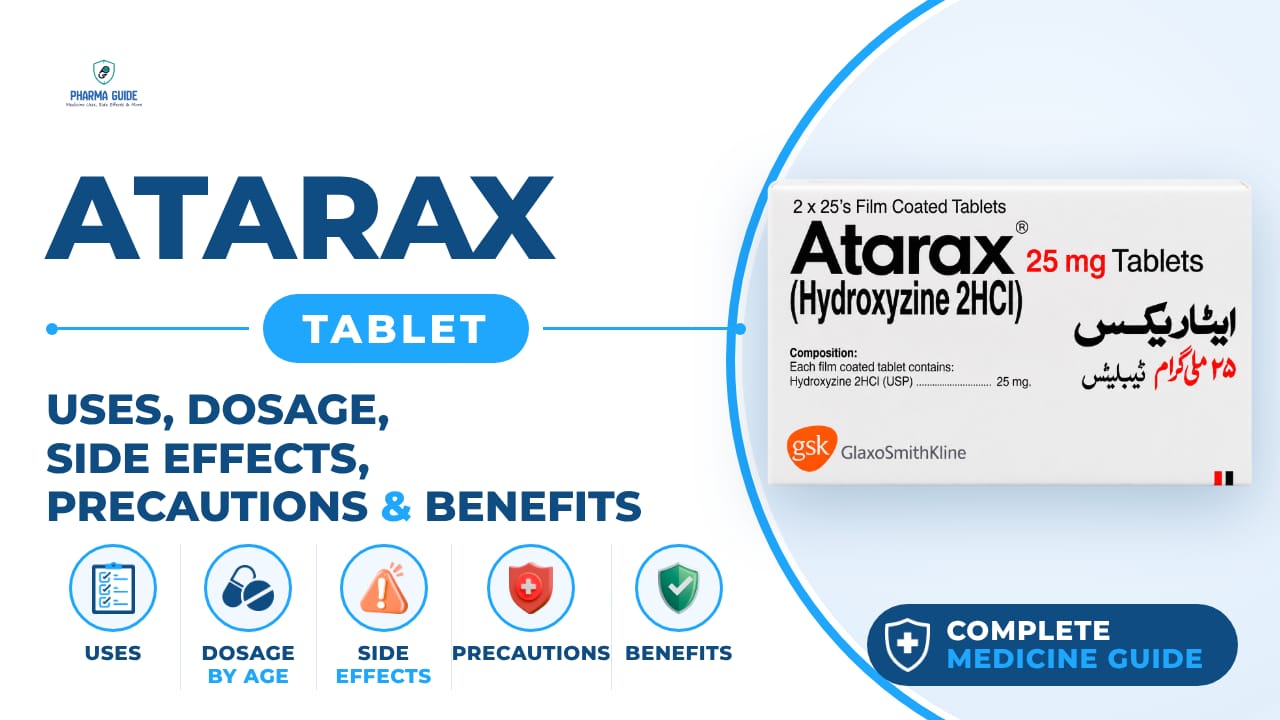
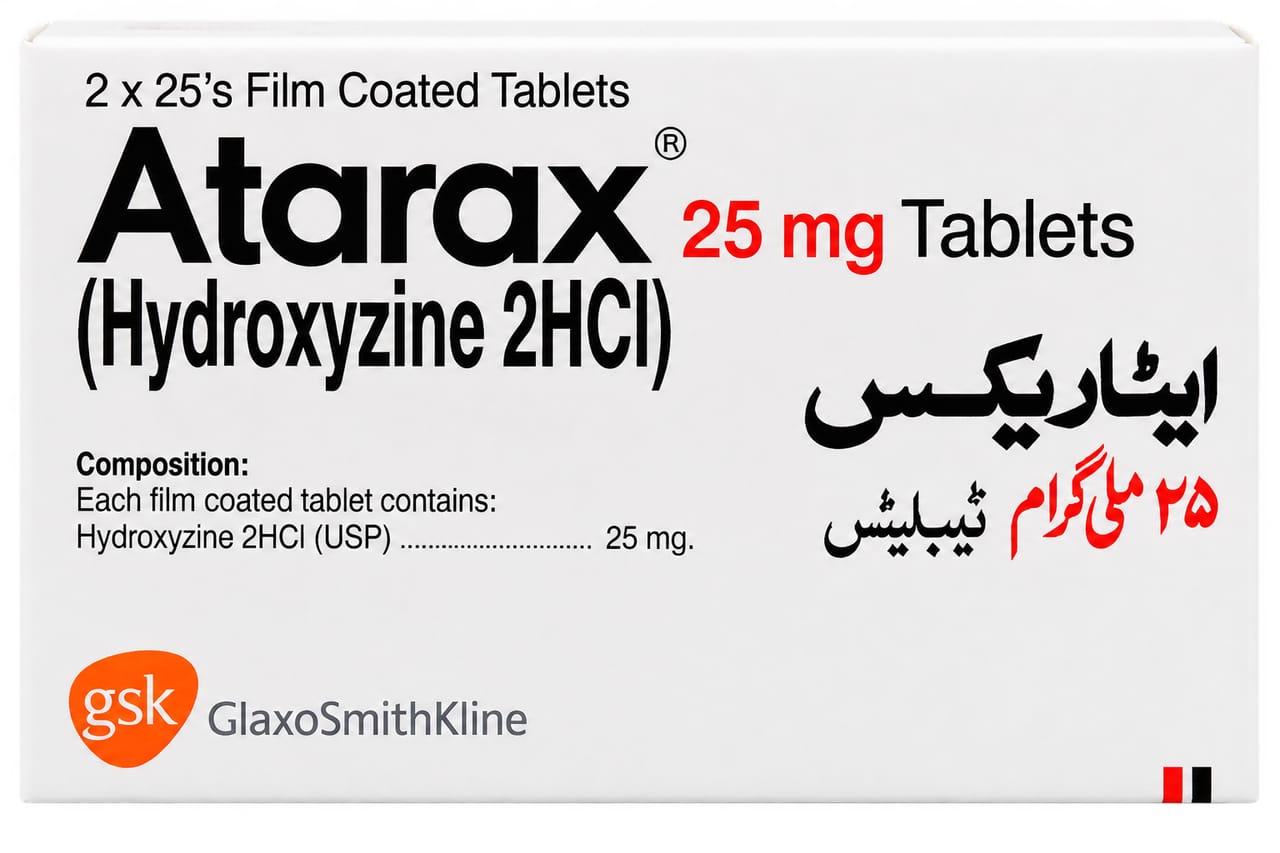
| Generic name | Hydroxyzine |
|---|---|
| Drug class | Antihistamine |
| Forms | Tablet, Syrup, Injection, Drops |
Quick overview
Atarax Tablet contains hydroxyzine, a prescription antihistamine. It is used to treat allergic skin conditions such as itching, rash, and hives, to help manage anxiety and tension, and for sedation before surgery along with anesthesia. It works by reducing histamine activity and calming the central nervous system. Use it exactly as prescribed, and be aware of possible drowsiness and other side effects.
What is Atarax Tablet
Atarax is a brand name for hydroxyzine, a prescription antihistamine. It reduces activity in the central nervous system and also acts as an antihistamine that reduces the natural chemical histamine in the body.
Atarax Tablet uses
- Treating allergic skin conditions such as rash, redness, itching, swelling, hives, or contact dermatitis
- Treating anxiety and tension
- Helping with sedation before surgery, used together with anesthesia
Benefits of Atarax Tablet
- Reduces itching and other allergy-related skin symptoms
- Provides short-term relief of anxiety symptoms
- Helps induce relaxation and sleep before medical procedures
How Atarax Tablet works
Atarax works by blocking histamine, a chemical involved in allergic reactions that can cause itching, hives, and watery eyes. It also has sedating and calming effects on the nervous system, which is why it may help with anxiety or restlessness, but this same effect can also affect alertness and reaction time.
Atarax Tablet dosage
Take exactly as prescribed by your doctor; do not take more, less, or for longer than recommended. Take with a full glass of water. It can be taken with or without food as advised by your doctor. Do not break, crush, or chew the tablet. If using a syrup form, measure it with a special dose-measuring spoon or cup, not a regular table spoon. If you miss a dose, take it as soon as you remember, but skip it if it is almost time for your next dose; do not take extra medicine to make up for it. Do not stop taking this medicine without consulting your doctor.
| Age group | Dose |
|---|---|
| Under 6 years | 50 mg/day in divided doses |
| 6 years & older | 50–100 mg/day in divided doses |
| Adults | 25 mg, 3–4 times daily |
Available forms and strengths
- Tablet
- Syrup
- Injection
- Drops
Side effects of Atarax Tablet
Common
- Dizziness
- Drowsiness/sleepiness
- Tiredness
- Blurred vision
- Dry mouth
- Headache
- Nausea
- Constipation
Serious
- Restless muscle movements in the eyes, tongue, jaw, or neck
- Tremor (uncontrolled shaking)
- Confusion
- Seizure (convulsions)
- Allergic reaction: hives, difficulty breathing, swelling of face, lips, tongue, or throat
Warnings and precautions
- Do not use this medicine if you are allergic to hydroxyzine, or if you are pregnant.
- Tell your doctor before taking this medicine if you have a seizure disorder, asthma or other breathing problems, glaucoma, heart disease or high blood pressure, stomach ulcer or blockage, thyroid disorder, enlarged prostate or urination problems, liver disease, or kidney disease.
- This medicine is not recommended if you have a heart condition called QT interval prolongation, as it may make the condition worse.
- Older adults may be more likely to have side effects from this medication and should use it with caution.
- Tell your doctor if you regularly use other medicines that make you sleepy, such as cold or allergy medicine, sedatives, narcotic pain medicine, sleeping pills, muscle relaxers, or medicine for seizures, depression, or anxiety, since these can add to sleepiness caused by this medicine.
- This medicine should be used with caution if you have a history of depression or other mental illness, as it may cause changes in behavior and thoughts and increase the risk of suicidal thoughts.
- Do not use Atarax without telling your doctor if you are pregnant, as it could harm the unborn baby. It is not recommended for use in pregnancy.
- Atarax is not recommended while breastfeeding, as it passes into breast milk. Talk to your doctor if you are breastfeeding.
- This medicine is removed from the body by the kidneys, so it should be used with caution if you have kidney disease, as it may build up in your body and increase side effects. Your doctor may need to adjust your dose.
- This medicine is broken down in the liver, so it should be used with caution if you have liver disease, as it may build up in your body and increase side effects.
- Avoid drinking alcohol while taking this medicine, as it can increase side effects such as dizziness, drowsiness, and difficulty concentrating.
- This medicine may cause dizziness or drowsiness and can impair your thinking or reactions. Avoid driving or operating machinery if you experience these effects.
Storage
Store at room temperature away from moisture and heat.
When to see a doctor
- Stop using this medicine and call your doctor right away if you have serious side effects such as tremors, confusion, seizures, or restless muscle movements in your eyes, tongue, jaw, or neck.
- Get emergency medical help if you have signs of an allergic reaction, such as hives, difficulty breathing, or swelling of your face, lips, tongue, or throat.
- Seek emergency medical attention if you take too much of this medicine. Overdose symptoms may include extreme drowsiness, nausea, vomiting, or feeling like you might pass out.
- Seek immediate medical attention if you notice worsening symptoms such as skin rash, itching or swelling (especially of the face, tongue, or throat), severe dizziness, or breathing difficulty.
- Seek urgent care for trouble breathing, swelling of the lips or tongue, chest pain, fainting, severe confusion, or a widespread rash with fever.
Alternatives
- Anxorax
- Hicope
- Hydroze
- Vistaril
- Hyzine
Watch the video
FAQs
What is Atarax Tablet used for?
Atarax is used to treat allergic skin conditions such as rash, redness, itching, swelling, hives, or contact dermatitis, to manage anxiety and tension, and to help with sedation before surgery along with anesthesia.
How does Atarax Tablet work?
Atarax works by blocking histamine, a chemical involved in allergic reactions that causes itching, hives, and watery eyes. It also has sedating and calming effects on the nervous system, which helps with anxiety or restlessness.
What is the adult dosage of Atarax Tablet?
Adults are typically prescribed 25 mg, 3–4 times daily, but you should take it exactly as prescribed by your doctor.
What are the common side effects of Atarax Tablet?
Common side effects include dizziness, drowsiness or sleepiness, tiredness, blurred vision, dry mouth, headache, nausea, and constipation.
Can Atarax Tablet be used during pregnancy?
No, Atarax is not recommended during pregnancy as it could harm the unborn baby. You should not use it without telling your doctor if you are pregnant.
General information, not medical advice
Your prescriber and the leaflet in your pack know your situation. This page does not.
- Follow your prescriber and the leaflet
- Don't start, stop, or change a dose on your own
- Doses and warnings differ by country and product
Sources
Video
Related medicines
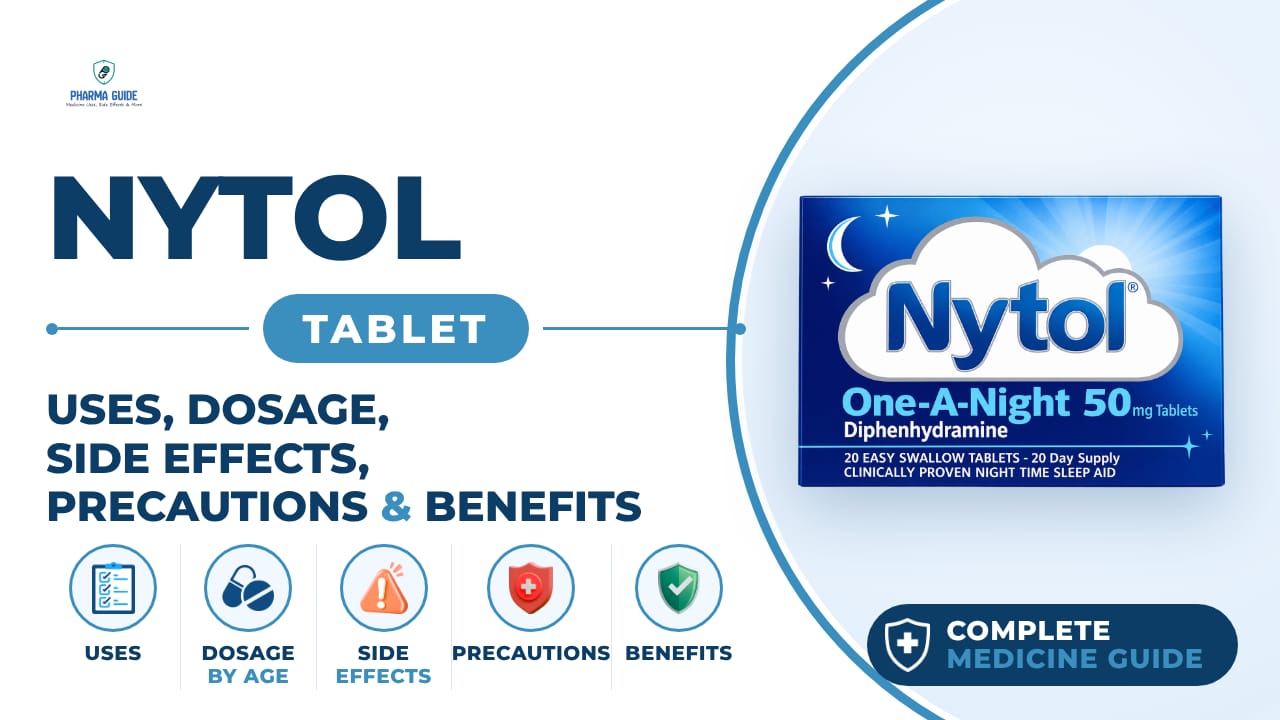
Nytol Tablet: Uses, Dosage, Side Effects, Precautions and Alternates
Antihistamine
Nytol Tablet contains diphenhydramine, used for short-term relief of occasional sleeplessness. Learn its dosage, benefits, side effects, and precautions.
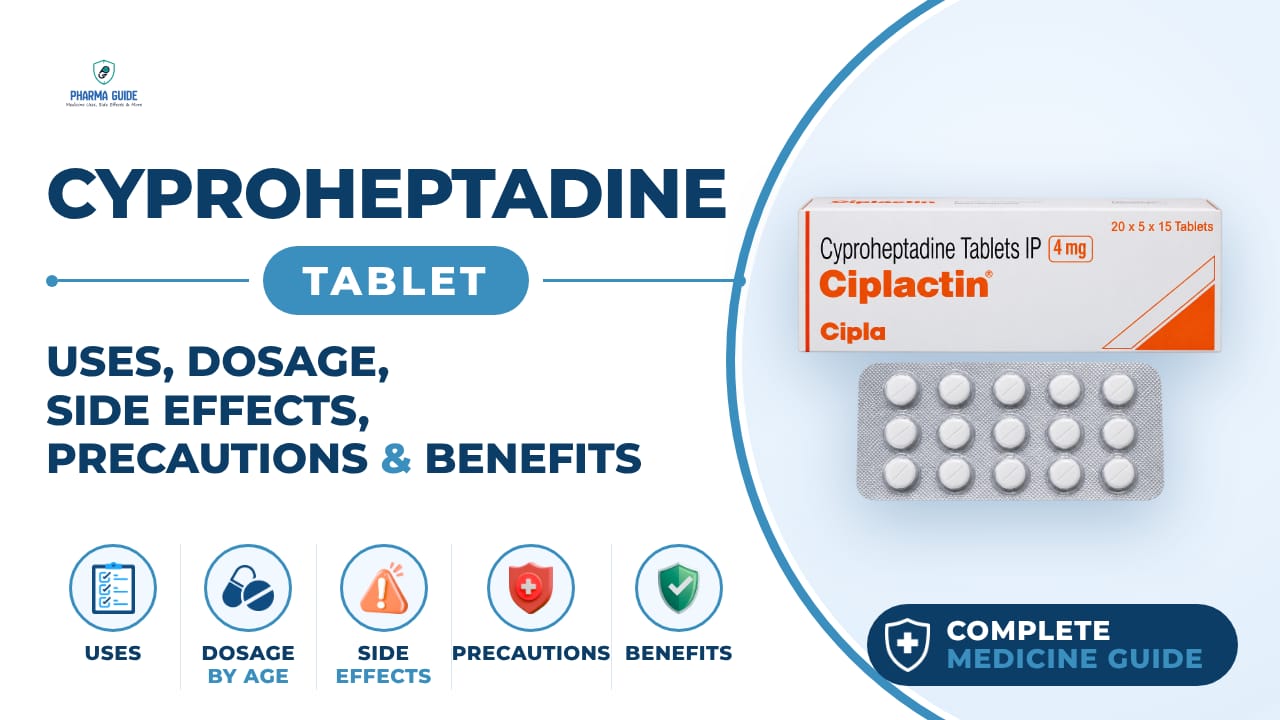
Cyproheptadine Tablet: Uses, Dosage, Side Effects, Precautions and Alternates
Antihistamine
Cyproheptadine Tablet is an antihistamine used for allergies, hives, and migraine headaches. Learn its uses, dosage, side effects, and precautions.