
Safety
General information, not medical advice
Your prescriber and the leaflet in your pack know your situation. This page does not.
- Follow your prescriber and the leaflet
- Don't start, stop, or change a dose on your own
- Doses and warnings differ by country and product
Aten Tablet: Uses, Dosage, Side Effects, Precautions and Alternates
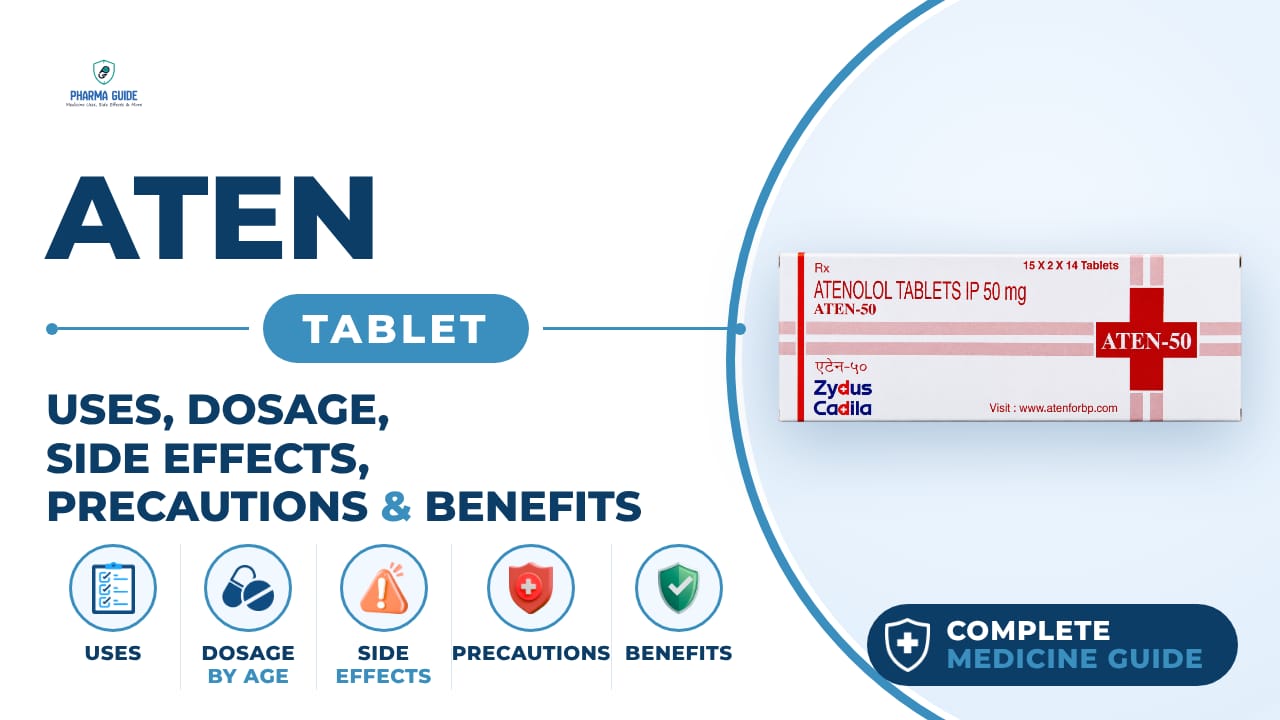
| Generic name | Atenolol |
|---|---|
| Drug class | Beta blocker |
| Forms | Tablet |
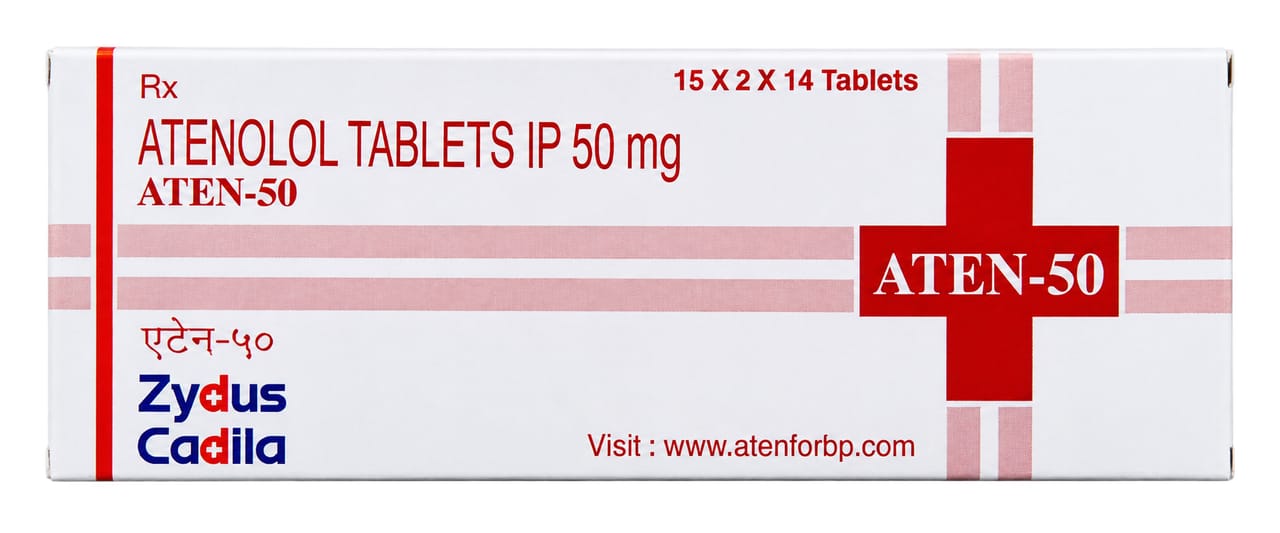
Quick overview
Aten Tablet contains Atenolol, a beta-blocker medicine. It is a prescription drug used mainly for heart and blood pressure problems, including high blood pressure, angina, and irregular heart rhythms. It works by slowing the heart rate and reducing the force of the heartbeat. It should be taken exactly as prescribed and should not be stopped suddenly.
What is Aten Tablet
Aten Tablet contains Atenolol, a beta-blocker medicine. It is a prescription drug used mainly for heart and blood pressure problems.
Aten Tablet uses
- High blood pressure (hypertension)
- Angina (chest pain)
- Irregular heart rhythms (arrhythmias)
- Reducing strain on the heart after a heart attack
- Thyrotoxicosis (symptoms from too much thyroid hormone)
- Prevention of migraines
Benefits of Aten Tablet
- Helps lower and control blood pressure, reducing the risk of stroke, heart attack, and kidney problems
- Improves blood flow to the heart, which reduces chest pain from angina and can help you be more active
- Helps steady certain irregular heart rhythms
- Reduces the strain on the heart following a heart attack
How Aten Tablet works
Aten Tablet is a beta-blocker. It blocks the action of adrenaline on the heart, which slows the heart rate and reduces the force of the heartbeat. This relaxes blood vessels, improves blood flow to the heart, and lowers blood pressure and the strain on the heart.
Aten Tablet dosage
Take exactly as prescribed by your doctor; do not change the dose or stop on your own. It can be taken with or without food, and taking it at the same time every day can help you remember. Swallow the tablet whole; do not chew, crush, or break it.
Do not stop taking this medicine suddenly, as this can cause a sudden rise in blood pressure or heart rate, and may lead to a heart attack or stroke. If you feel dizzy or drowsy after taking it, avoid driving or operating machinery. Get up slowly from sitting or lying down, since standing up quickly can cause dizziness.
This medicine is generally not recommended for children; if prescribed for a child, the exact dose must be followed carefully. Older adults may need a different dose because the body may process the medicine more slowly.
| Age group | Dose |
|---|---|
| Children | Dose based on body weight and medical condition (as prescribed) |
| Adults (18–64 Years) | 25–50 mg once daily, may be adjusted up to 100 mg/day |
| Older Adults (65+ Years) | 25 mg once daily initially, adjusted based on response |
Available forms and strengths
- Tablet
Side effects of Aten Tablet
Common
- Blurred vision
- Cold hands or feet
- Dizziness
- Fatigue/tiredness
- Headache
- Diarrhoea
- Drowsiness
- Sweating
- Slow heartbeat
- Decrease in frequency of urination
- Increased thirst
- Loss of appetite
- Trouble sleeping
- Stomach upset
Serious
- Wheezing or breathing difficulty
- Sudden lowering of blood pressure on standing (orthostatic hypotension)
- Signs of allergic reaction such as skin rash, itching, swelling of face/tongue/throat, severe dizziness
- Very slow heartbeat
- Signs of heart failure such as chest pain, swelling of face, fingers, feet or lower legs, irregular breathing or heartbeat, extreme fatigue
Warnings and precautions
- Do not suddenly stop taking this medicine, as it may cause a stroke or heart attack. Any stopping of treatment should be done gradually under a doctor's supervision.
- This medicine can hide the warning signs of low blood sugar in people with diabetes, so regular blood sugar monitoring may be needed.
- People with asthma or COPD should generally avoid this medicine, as it can make breathing difficulties worse, especially at higher doses.
- This medicine should not be used by people with a very slow heart rate, certain heart block disorders, uncontrolled heart failure, or cardiogenic shock.
- People with poor circulation in the hands and feet may notice their symptoms get worse, since this medicine lowers blood pressure and reduces blood flow to the limbs.
- In people with an overactive thyroid, suddenly stopping this medicine can hide worsening symptoms and may be life-threatening; any stopping must be gradual and supervised by a doctor.
- Effects can be severe for pregnant women; do not take this medicine while pregnant without a doctor's advice. Some sources note it may be used under medical supervision, but risks and benefits should always be discussed with your doctor first.
- This medicine passes into breast milk and may harm a breastfeeding baby. Do not take it while breastfeeding without your doctor's advice.
- This medicine is removed from the body through the kidneys, so it should be used with caution if you have kidney problems, as it may build up and cause serious side effects. Your doctor may need to adjust your dose or monitor your kidney function.
- There is not enough scientific information available on how this medicine affects the liver.
- Drinking alcohol while taking this medicine can cause serious effects such as very low blood pressure, headache, dizziness, lightheadedness, fainting, or changes in heart rate. It is best to avoid alcohol during treatment.
- This medicine can cause dizziness and drowsiness, so avoid driving or operating machinery if you feel these effects.
Storage
- Store at room temperature between 68°F and 77°F (20°C and 25°C)
- Keep the medication tightly closed and in a light-resistant container
- Store away from moisture; do not store in a bathroom
- Keep out of the reach of children and pets
- Do not use after the expiry date
- Dispose of unused medicine properly
When to see a doctor
- Get emergency help right away if you notice signs of an allergic reaction, such as a large red rash, fever, swelling of the hands, feet, ankles, throat or tongue, or trouble breathing.
- Stop the medicine and get medical help immediately if you develop a rash, swelling of the face or lips, wheezing, or difficulty breathing.
- Seek immediate medical attention if you think you have taken too much of this medicine, since an overdose can cause a dangerously slow heartbeat, a severe drop in blood pressure, wheezing, and seizures.
- Contact your doctor right away if you notice signs of heart failure, such as chest pain or discomfort, swollen neck veins, extreme tiredness, irregular breathing or heartbeat, swelling of the face, fingers, feet, or lower legs, trouble breathing, or unusual weight gain.
Alternatives
- Metoprolol
- Carvedilol
- Amlodipine
Watch the video
FAQs
What is Aten Tablet used for?
Aten Tablet is used for high blood pressure, angina, irregular heart rhythms, reducing strain on the heart after a heart attack, thyrotoxicosis, and prevention of migraines.
How does Aten Tablet work?
Aten Tablet is a beta-blocker that blocks the action of adrenaline on the heart, slowing the heart rate and reducing the force of the heartbeat. This relaxes blood vessels, improves blood flow to the heart, and lowers blood pressure and strain on the heart.
What is the dosage of Aten Tablet for adults?
For adults aged 18–64 years, the usual dose is 25–50 mg once daily, which may be adjusted up to 100 mg/day as directed by a doctor.
Can I stop taking Aten Tablet suddenly?
No, you should not stop taking Aten Tablet suddenly, as this can cause a sudden rise in blood pressure or heart rate and may lead to a heart attack or stroke. Any stopping should be done gradually under a doctor's supervision.
What are the common side effects of Aten Tablet?
Common side effects include blurred vision, cold hands or feet, dizziness, fatigue, headache, diarrhoea, drowsiness, sweating, slow heartbeat, decreased urination frequency, increased thirst, loss of appetite, trouble sleeping, and stomach upset.
General information, not medical advice
Your prescriber and the leaflet in your pack know your situation. This page does not.
- Follow your prescriber and the leaflet
- Don't start, stop, or change a dose on your own
- Doses and warnings differ by country and product
Sources
- myUpchar.com - Aten medicine page (https://www.myupchar.com/en/medicine/aten-p37079077)
- Practo.com - Aten 50 MG Tablet page
- PingMeDoc.com - Aten 25 Tablet page
- Truemeds.com - Aten 50 Tablet 14 page
- Healthline.com - Atenolol, Oral Tablet (https://www.healthline.com/health/drugs/atenolol-oral-tablet)
- Mayo Clinic - Atenolol (oral route)
- US Food and Drug Administration (FDA) - Package leaflet information for the user; Tenormin (atenolol)
- KD Tripathi - Pharmacology textbook, Seventh Edition
- April Hazard Vallerand, Cynthia A. Sanoski - Drug reference textbook, Sixteenth Edition
- NHS - Atenolol: medicine for high blood pressure and angina
- Central Drugs Standard Control Organisation (CDSCO)
- Accord Healthcare Limited - Electronic Medicines Compendium (EMC)
Video
Related medicines
Nadolol Tablet: Uses, Dosage, Side Effects, Precautions and Alternates
Beta blocker
Nadolol Tablet (Corgard) is a beta blocker used to treat high blood pressure and prevent angina. Learn about dosage, side effects, and precautions.

Injectafer Injection: Uses, Dosage, Side Effects, Precautions and Alternates
Iron products
Injectafer (ferric carboxymaltose) treats iron deficiency anemia and heart failure-related iron deficiency via IV. Learn uses, dosage, side effects, and