
Safety
General information, not medical advice
Your prescriber and the leaflet in your pack know your situation. This page does not.
- Follow your prescriber and the leaflet
- Don't start, stop, or change a dose on your own
- Doses and warnings differ by country and product
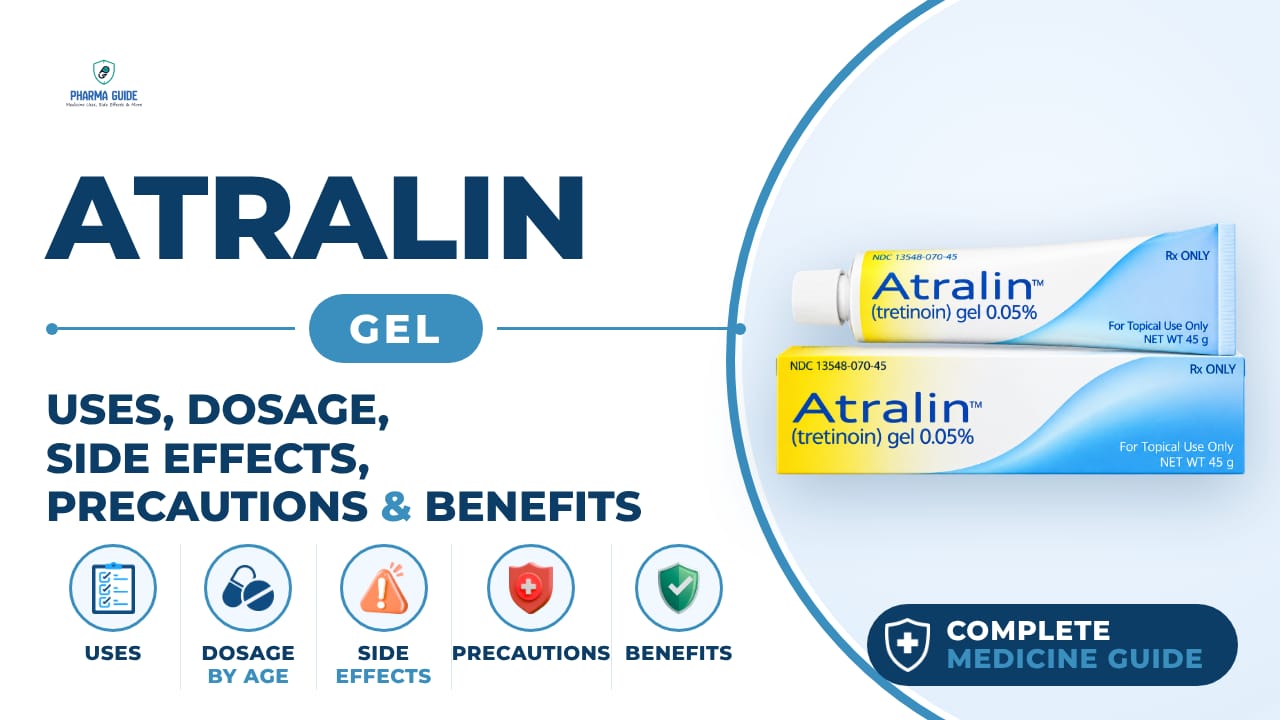
Atralin Gel: Uses, Dosage, Side Effects, Precautions and Alternates
| Generic name | tretinoin |
|---|---|
| Drug class | Retinoid |
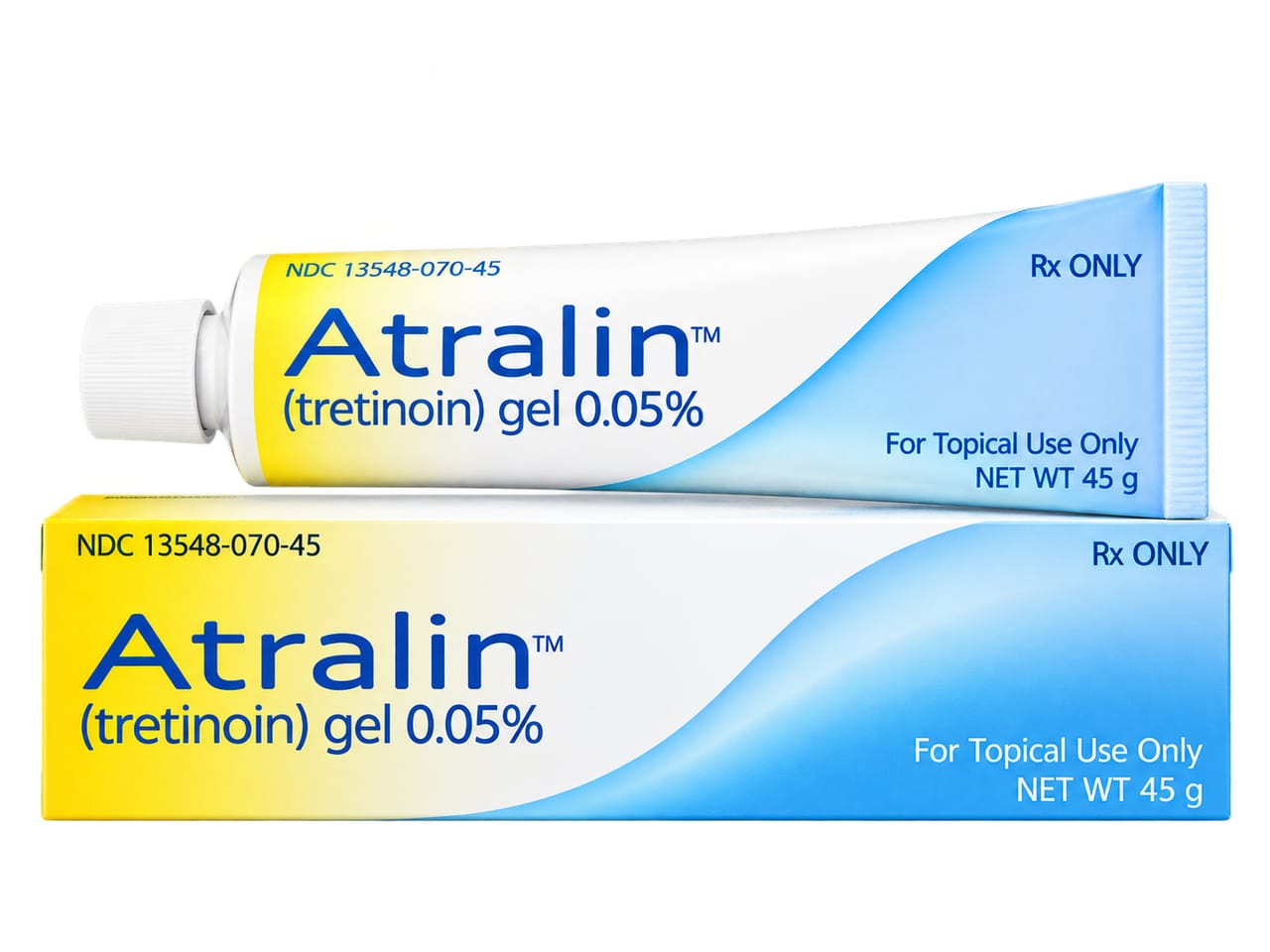
| Forms | Gel, 0.05% |
Quick overview
Atralin Gel contains tretinoin, a retinoid medicine applied to the skin to treat acne vulgaris. It helps reduce clogged pores, blackheads, and whiteheads while promoting normal skin-cell turnover. Atralin is applied once daily before bedtime and is available as a 0.05% gel.
What is Atralin Gel
Atralin is a prescription medicine applied to the skin to treat acne. Acne is a condition in which the skin has blackheads, whiteheads, and other pimples. It contains tretinoin, a form of vitamin A.
Atralin Gel uses
- Topical treatment of acne vulgaris. Treats acne vulgaris
- Helps reduce clogged pores
- Helps reduce blackheads and whiteheads
- Promotes normal skin-cell turnover
- Helps prevent formation of new acne lesions
Benefits of Atralin Gel
- Helps clear existing clogged pores and prevent new acne from forming
- Reduces the number and severity of acne lesions over time
- Provides once-daily topical treatment
- Helps clear comedonal acne
- Helps prevent new clogged pores
- Can improve overall acne control with consistent use
How Atralin Gel works
Atralin is thought to work by helping skin cells shed normally instead of sticking together and clogging pores. This helps clear existing blocked pores and reduces the formation of new ones, and it also increases skin cell turnover.
Atralin Gel dosage
Apply once a day, before bedtime, to the skin where acne appears. Before applying, gently wash the affected area with a mild, non-medicated soap, then rinse and pat dry. Apply a thin layer to cover the affected area and gently rub it in. Keep away from the eyes, mouth, nose creases, and other mucous membranes. Do not apply more often than once a day; using more than needed will not work faster and may increase irritation. You may use moisturizers and cosmetics, but remove cosmetics and clean the skin thoroughly before applying. Avoid washing the treated skin too often or scrubbing it. Not approved for use in children under 10 years old. Not studied in adults over 65 years old.
| Age group | Dose |
|---|---|
| Under 10 years | Safety and effectiveness are not established |
| 10–11 years | Apply a thin layer once daily before bedtime to acne-affected skin |
| 12–64 years | Apply a thin layer once daily before bedtime |
Available forms and strengths
- Gel, 0.05%
Side effects of Atralin Gel
Common
- Dry skin
- Peeling, scaling, or flaking skin
- Skin burning sensation
- Redness (erythema)
- Itchy skin (pruritus)
- Mild burning, stinging, or warmth
- Skin discoloration (darkening or lightening)
- Worsening of acne during the first 2-4 weeks of use
Serious
- Severe allergic reaction: hives, severe itching, swelling, trouble breathing
- Severe skin irritation (burning, stinging, peeling, redness, or unusual dryness)
Warnings and precautions
- Do not use Atralin on skin affected by eczema or sunburn, since this can cause severe irritation.
- Be careful when using other acne products, medicated or abrasive soaps, drying products, or products with alcohol, astringents, spices, or lime at the same time, since this can cause more irritation.
- Minimize unprotected sun exposure, including sunlamps, while using this medicine, since it can make skin more sensitive to light. Use sunscreen of at least SPF 15 and wear protective clothing when you cannot avoid sun exposure.
- Extreme weather, like wind or cold, may increase skin irritation while using this medicine.
- Use with caution if you are allergic to fish, since this product contains fish proteins.
- Avoid contact with lime peels, as this can cause skin irritation.
- There is not enough research in pregnant women to know if Atralin is safe during pregnancy. It should only be used during pregnancy if the possible benefit is worth the possible risk to the unborn baby.
- It is not known whether Atralin passes into breast milk. Use caution and talk to your healthcare provider before using it while breastfeeding.
- Topical tretinoin has minimal systemic absorption; no routine kidney-specific dose adjustment is established. No routine liver-specific dose adjustment is established.
- No significant direct interaction with alcohol is established. Atralin does not normally affect driving ability.
Storage
- Store at room temperature, 68°F to 77°F (20°C to 25°C)
- Protect from freezing
- Keep out of the reach of children
When to see a doctor
- Contact your healthcare provider if you develop itching or hives (urticaria) while using this medicine, as this could be a sign of a fish protein allergy.
- If you get sunburned, stop using Atralin until your skin has healed and returned to normal.
- Tell your healthcare provider about any side effect that bothers you or does not go away.
Alternatives
- Adapalene
- Tazarotene
- Trifarotene
- Azelaic acid
Watch the video
FAQs
What is Atralin Gel used for?
Atralin Gel is used for the topical treatment of acne vulgaris. It helps reduce clogged pores, blackheads, and whiteheads, promotes normal skin-cell turnover, and helps prevent new acne lesions from forming.
How do you apply Atralin Gel?
Apply a thin layer once daily before bedtime to the affected skin after washing with a mild, non-medicated soap and patting dry. Avoid the eyes, mouth, nose creases, and other mucous membranes, and do not apply more often than once a day.
What are the common side effects of Atralin Gel?
Common side effects include dry skin, peeling or flaking, burning sensation, redness, itching, mild stinging or warmth, skin discoloration, and worsening of acne during the first 2-4 weeks of use.
Can I use Atralin Gel if I'm allergic to fish?
Use Atralin with caution if you are allergic to fish, since this product contains fish proteins. Contact your healthcare provider if you develop itching or hives while using it, as this could signal a fish protein allergy.
Is Atralin Gel safe to use during pregnancy?
There is not enough research in pregnant women to know if Atralin is safe during pregnancy, so it should only be used if the possible benefit outweighs the possible risk to the unborn baby.
General information, not medical advice
Your prescriber and the leaflet in your pack know your situation. This page does not.
- Follow your prescriber and the leaflet
- Don't start, stop, or change a dose on your own
- Doses and warnings differ by country and product
Sources
Video
Related medicines
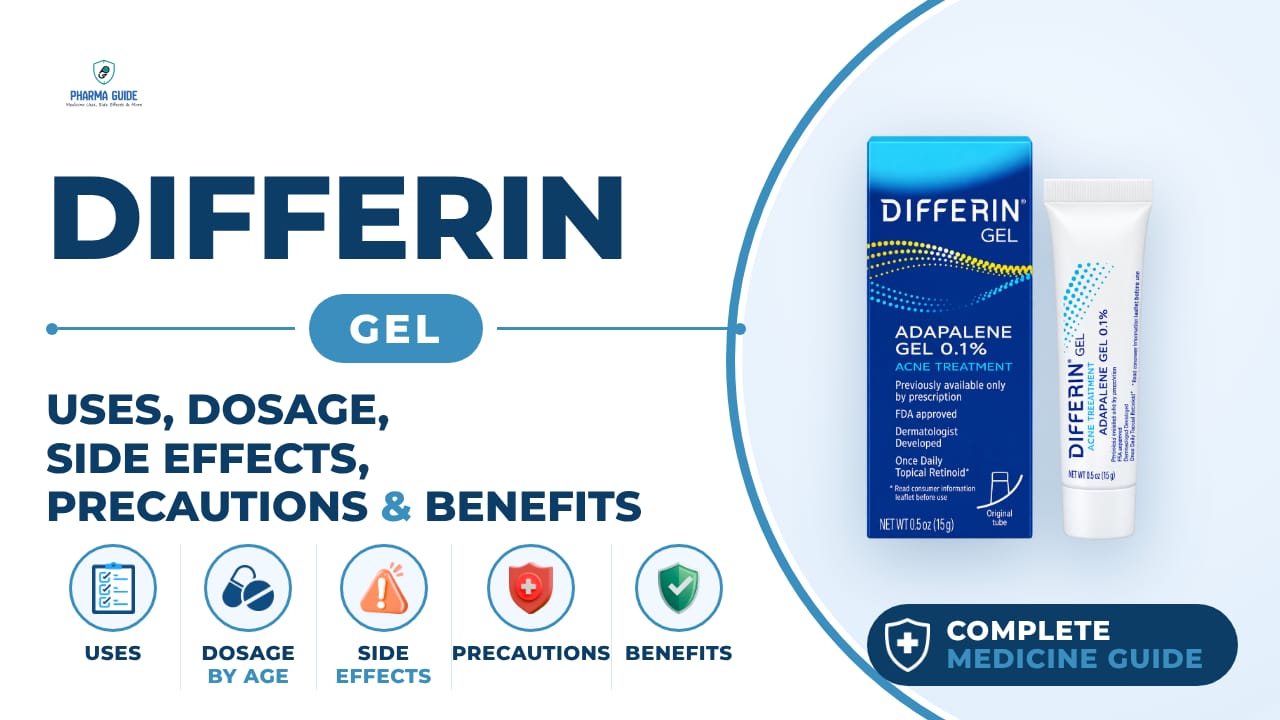
Differin Gel: Uses, Dosage, Side Effects, Precautions and Alternates
retinoid
Differin Gel (adapalene) treats acne in people 12+. Learn how it works, dosage instructions, side effects, warnings, and skincare alternatives.
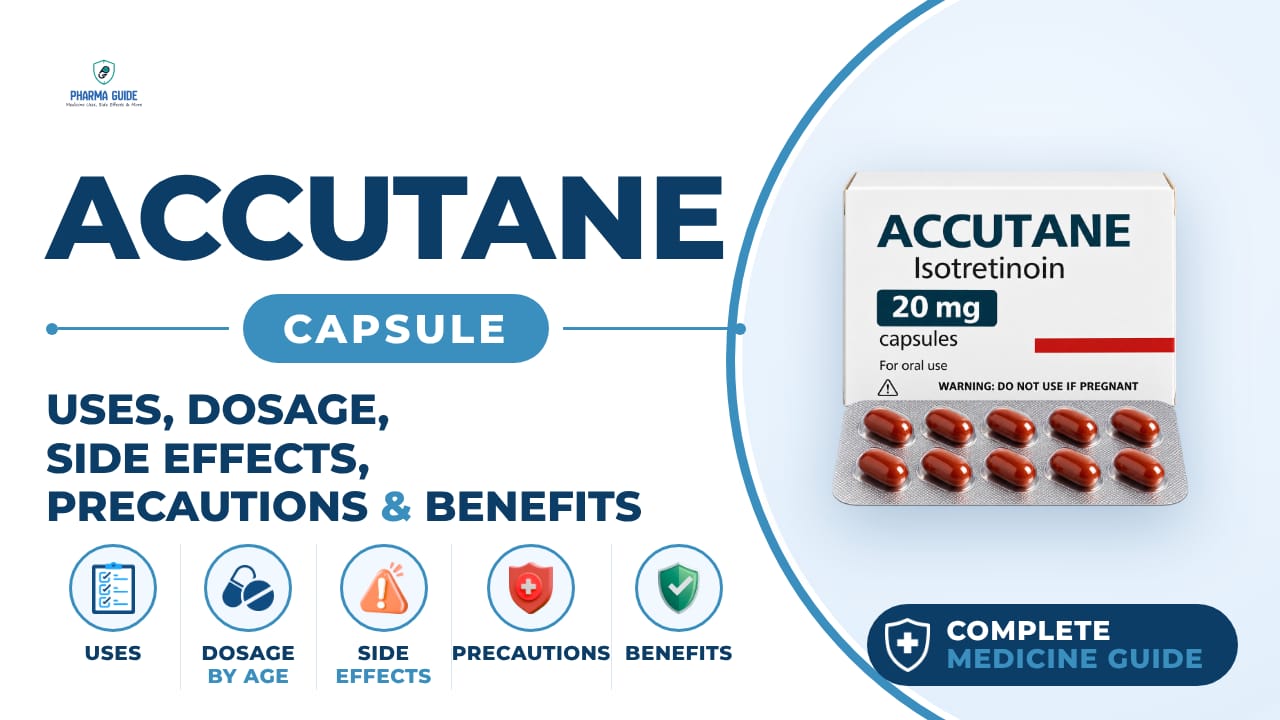
Accutane Capsule: Uses, Dosage, Side Effects, Precautions and Alternates
retinoid
Accutane Capsule (isotretinoin) treats severe nodular acne unresponsive to other treatments. Learn uses, dosage, side effects, and key safety warnings.