
Safety
General information, not medical advice
Your prescriber and the leaflet in your pack know your situation. This page does not.
- Follow your prescriber and the leaflet
- Don't start, stop, or change a dose on your own
- Doses and warnings differ by country and product
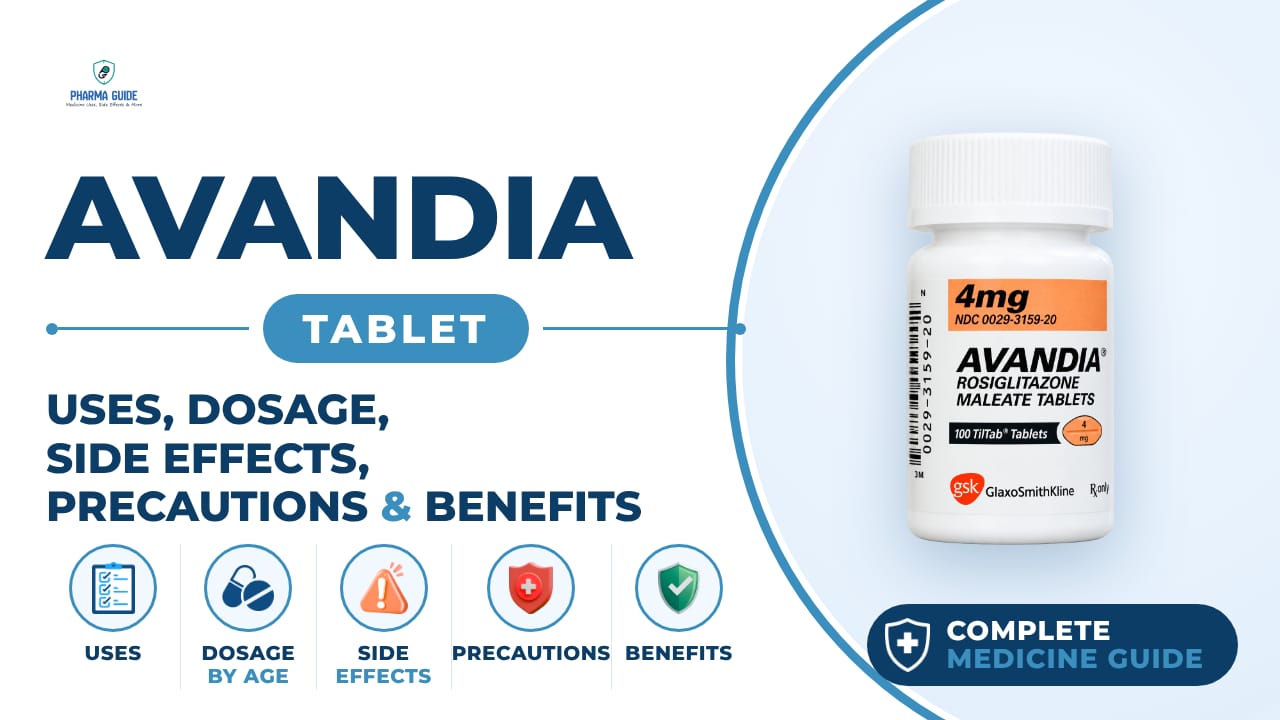
Avandia Tablet: Uses, Dosage, Side Effects, Precautions and Alternates
| Generic name | rosiglitazone |
|---|---|
| Drug class | Thiazolidinediones |
| Forms | Tablet |
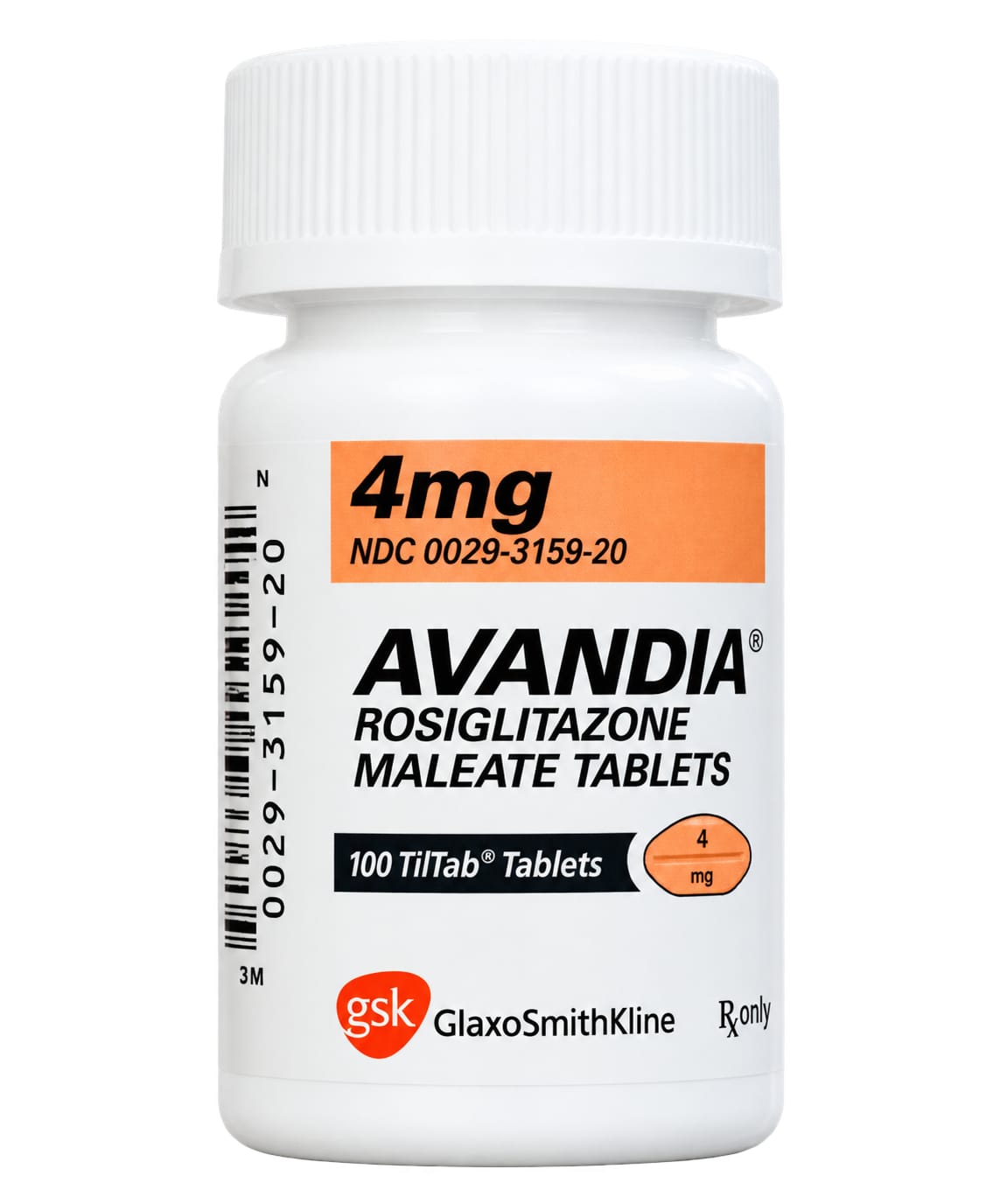
Quick overview
Avandia Tablet (rosiglitazone) is an oral diabetes medicine belonging to the thiazolidinedione class. It is used together with diet and exercise to help control blood sugar levels in adults with type 2 diabetes. Avandia works by helping the body use its own insulin more effectively. It carries a serious boxed warning about the risk of congestive heart failure, and the manufacturer is currently not selling this medicine.
What is Avandia Tablet
Avandia is an oral diabetes medicine that helps control blood sugar levels. It helps your body use insulin effectively, which decreases your blood sugar. It is used together with diet and exercise in adults with type 2 diabetes.
Avandia Tablet uses
- Improve blood sugar control in adults with type 2 diabetes mellitus, together with diet and exercise
- Not for treating type 1 diabetes
- Not recommended for use with insulin
Benefits of Avandia Tablet
- Helps control blood sugar levels in adults with type 2 diabetes
- Helps the body use insulin more effectively
How Avandia Tablet works
Rosiglitazone helps your body use its own insulin more effectively, which lowers blood sugar levels.
Avandia Tablet dosage
Take exactly as prescribed and follow all directions on your prescription label. This medicine may be taken with or without food. Take your medication at the same time each day. Do not take more often than directed, and do not stop taking except on your care team's advice. It may be taken as a single daily dose or in two divided doses.
It may take up to 2 weeks before blood sugar levels start to improve; tell your doctor if levels do not improve within 2 to 3 months. This medicine is only part of a treatment program that may also include diet, exercise, weight control, and blood sugar testing.
If you miss a dose, take it as soon as you can, but skip it if it is almost time for your next dose; do not take two doses at one time. This medicine is not approved for use in anyone younger than 18 years old.
| Age group | Dose |
|---|---|
| Under 18 years | Safety and effectiveness have not been established |
| 18–64 years | 4 mg daily initially, either once daily or divided into 2 doses |
| 65 years and older | Usually follows adult dosing with individualized monitoring |
Available forms and strengths
- Tablet
Side effects of Avandia Tablet
Common
- Headache
- Cold symptoms such as stuffy nose, sinus pain, sneezing, sore throat
- Back pain
- Mild edema (fluid buildup)
- Upper respiratory infection, such as the common cold
- Joint pain
- Fatigue
- Sinusitis
- Diarrhea
- High blood pressure
- High blood sugar (hyperglycemia)
- Low blood sugar (hypoglycemia), usually when taken with other diabetes medicine
- Weight gain
Serious
- Signs of allergic reaction: hives, itching, dizziness, rapid heartbeats, difficult breathing, swelling in face or throat
- Severe skin reaction: fever, sore throat, burning eyes, skin pain, red or purple skin rash with blistering and peeling
- Signs of liver damage: nausea, upper stomach pain, itching, loss of appetite, dark urine, clay-colored stools, jaundice
- Shortness of breath (especially when lying down), unusual tiredness, swelling, rapid weight gain
- Chest pain or pressure, pain spreading to jaw or shoulder, nausea, sweating
- Pale skin, feeling light-headed or short of breath, cold hands and feet
- Changes in vision
- Sudden unusual pain in hand, arm, or foot
- Congestive heart failure
- Bone fractures
- Macular edema (fluid buildup in the back of the eye)
- Anemia (low red blood cell level)
- Heart attack
Warnings and precautions
- Avandia can cause or worsen congestive heart failure. Do not use this medicine if you have severe or uncontrolled heart failure.
- This is a serious boxed warning from the FDA about the risk of congestive heart failure.
- Taking Avandia with insulin is not recommended because it may increase the risk of serious heart problems.
- Taking Avandia for a long time may weaken bones and raise the risk of fractures, especially in women.
- Avandia is currently not being sold by its manufacturer, and it is unknown if it will be available again.
- Avoid starting it in NYHA Class III or IV heart failure.
- It is not known if Avandia is safe during pregnancy. Controlling diabetes well during pregnancy is important, and the drug may increase the chance of ovulation and pregnancy in some women. Talk to your doctor about managing blood sugar if you are pregnant or planning pregnancy.
- You should not breastfeed while using Avandia.
- Avandia is not recommended for type 1 diabetes.
- Avandia may cause liver problems. Your doctor will order blood tests to check your liver from time to time, and you should tell your doctor if you have had liver disease before starting this medicine.
- Alcohol does not directly interact with Avandia, but it can affect blood sugar levels and may increase the risk of liver problems or worsen headaches. Ask your doctor how much, if any, alcohol is safe for you.
Storage
- Store this medicine in the original bottle at room temperature away from moisture, heat, and light.
- Keep the bottle tightly closed when not in use.
- Store at room temperature between 20 and 25 degrees C (68 and 77 degrees F). Keep container tightly closed and protect from light.
- Throw away any unused medication after the expiration date.
- Keep out of the reach of children and pets.
When to see a doctor
- Stop using Avandia and call your doctor right away if you have shortness of breath (especially lying down), unusual tiredness, swelling, or rapid weight gain.
- Get emergency medical help for signs of an allergic reaction such as hives, itching, dizziness, rapid heartbeats, difficulty breathing, or swelling of the face or throat.
- Stop using this medicine and call your doctor right away if you have signs of liver damage such as nausea, upper stomach pain, itching, loss of appetite, dark urine, clay-colored stools, or yellowing of the skin or eyes.
- Call your doctor right away if you have chest pain or pressure, pain spreading to the jaw or shoulder, nausea, or sweating.
- Call your doctor right away if you have pale skin, feel light-headed or short of breath, or have cold hands and feet.
- Call your doctor right away if you notice changes in your vision or sudden unusual pain in your hand, arm, or foot.
- If you think you have taken too much of this medicine, contact a poison control center or emergency room right away.
- If you have symptoms of a heart attack while taking Avandia, get emergency help right away.
Alternatives
- Pioglitazone
- Sitagliptin
- Dapagliflozin
- Metformin
Watch the video
FAQs
What is Avandia Tablet used for?
Avandia is used together with diet and exercise to improve blood sugar control in adults with type 2 diabetes. It is not used for type 1 diabetes.
How does Avandia Tablet work?
Rosiglitazone, the active ingredient in Avandia, helps your body use its own insulin more effectively, which lowers blood sugar levels.
What is the main warning associated with Avandia Tablet?
Avandia carries a serious boxed warning about the risk of causing or worsening congestive heart failure. It should not be used in people with severe or uncontrolled heart failure.
Can Avandia Tablet be taken with insulin?
No, taking Avandia with insulin is not recommended because it may increase the risk of serious heart problems.
Is Avandia Tablet currently available?
Avandia is currently not being sold by its manufacturer, and it is unknown if it will be available again.
General information, not medical advice
Your prescriber and the leaflet in your pack know your situation. This page does not.
- Follow your prescriber and the leaflet
- Don't start, stop, or change a dose on your own
- Doses and warnings differ by country and product
Sources
Video
Related medicines
Actos Tablet: Uses, Dosage, Side Effects, Precautions and Alternates
Thiazolidinediones
Actos Tablet (pioglitazone) helps control blood sugar in type 2 diabetes. Learn about its uses, dosage, side effects, warnings, and alternatives.

Injectafer Injection: Uses, Dosage, Side Effects, Precautions and Alternates
Iron products
Injectafer (ferric carboxymaltose) treats iron deficiency anemia and heart failure-related iron deficiency via IV. Learn uses, dosage, side effects, and