
Safety
General information, not medical advice
Your prescriber and the leaflet in your pack know your situation. This page does not.
- Follow your prescriber and the leaflet
- Don't start, stop, or change a dose on your own
- Doses and warnings differ by country and product
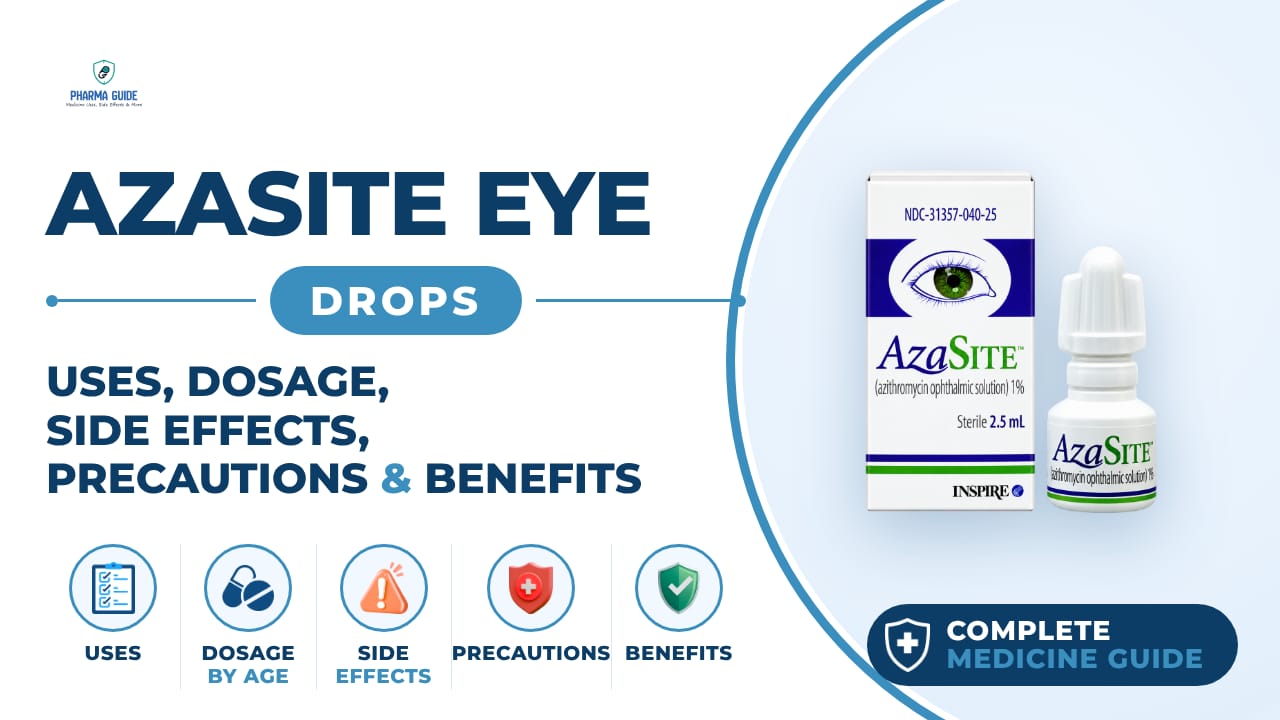
AzaSite Eye Drops: Uses, Dosage, Side Effects, Precautions and Alternates
| Generic name | azithromycin (azithromycin monohydrate) |
|---|---|
| Drug class | macrolide antibiotic |
| Forms | 1% eye drops (topical ophthalmic solution) |
Quick overview
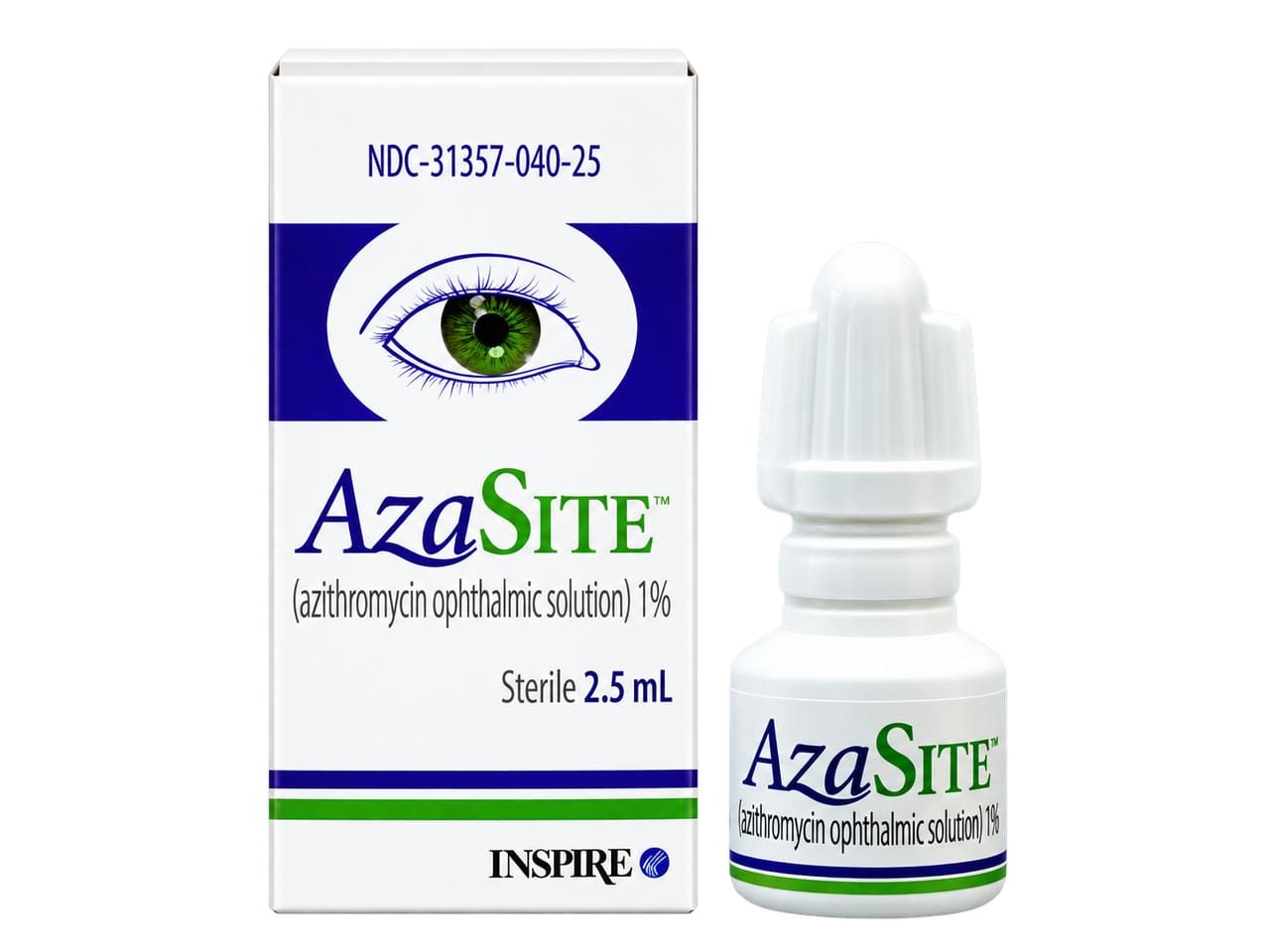
AzaSite Eye Drops contain azithromycin monohydrate, a macrolide antibiotic, formulated as a gel-like topical ophthalmic solution. They are prescribed to treat bacterial conjunctivitis (pink eye) caused by certain susceptible bacteria. The special formula stays on the surface of the eye longer, allowing a short 7-day course with once-daily dosing after the first 2 days. AzaSite is for use in the eye only and should be used exactly as prescribed.
What is AzaSite Eye Drops
AzaSite is a prescription antibiotic eye drop. It contains azithromycin in a special gel-like solution that helps the medicine stay on the surface of the eye longer. It is used to treat certain bacterial eye infections.
AzaSite Eye Drops uses
- Treats bacterial conjunctivitis (a type of pink eye) caused by certain bacteria
- May be used for other eye conditions as determined by your health care provider
- Helps reduce bacterial eye infection
- Helps improve redness and discharge caused by susceptible bacteria
Benefits of AzaSite Eye Drops
- Formulated to stay on the eye's surface longer, allowing less frequent dosing
- Short 7-day treatment course
- Requires once-daily dosing after the first 2 days
- Applied directly to the affected eye
How AzaSite Eye Drops works
AzaSite works by attaching to a part of the bacteria and blocking them from making the proteins they need to grow and multiply, which stops the infection.
AzaSite Eye Drops dosage
Wash your hands each time before using this medicine. Do not let the tip of the bottle touch your eye, fingers, or other objects. Before opening the bottle, turn it upside down and give it a strong shake, and keep it upside down while removing the cap. Tilt your head back and gently squeeze the bottle to release a drop into the affected eye or eyes. If a drop misses your eye, try again.
Do not wear contact lenses while you have signs of an eye infection and until you finish your full course of treatment. Complete the full prescribed course even if your symptoms improve or go away. Do not use extra or double drops if you miss a dose; just use the next dose as scheduled.
No overall differences in safety or effectiveness have been seen between elderly and younger patients. Use in children younger than 1 year old has not been established.
| Age group | Dose |
|---|---|
| Under 1 year | Safety and effectiveness are not established |
| 1–11 years | 1 drop in the affected eye(s) twice daily for 2 days, then 1 drop once daily for 5 days |
| 18–64 years | 1 drop in the affected eye(s) twice daily for 2 days, then 1 drop once daily for 5 days |
| 65–74 years | Same standard regimen; no routine age-based adjustment |
Available forms and strengths
- 1% eye drops (topical ophthalmic solution)
Side effects of AzaSite Eye Drops
Common
- Eye discomfort including burning, stinging, irritation, dry eye, pain, itching, runny eyes, or feeling like something is in your eye
- Blurry vision
- Change in taste
- Stuffy nose and sinus infection
Serious
- Signs of a severe allergic reaction, such as breathing problems or wheezing, racing heart, fever, swollen lymph nodes, swelling of the face, lips, mouth, tongue, or throat, trouble swallowing, itching or skin rash, hives, nausea or vomiting, dizziness or fainting, stomach cramps, or joint pain
- Severe skin reactions (Stevens-Johnson Syndrome and Toxic Epidermal Necrolysis) that can be life-threatening, with symptoms like painful red or purple skin that looks burned and peels off, or a flat red rash or blisters on the skin, mouth, nose, and genitals
- Increased risk of new infections from long-term use, such as other bacteria or fungus growing
Warnings and precautions
- Do not use this medicine unless it was prescribed for you, and do not skip drops or stop early even if your symptoms improve, since this increases the risk that future infections will resist this medicine or similar ones.
- Do not share this medicine with other people, even if they have a similar eye condition, because it may harm them.
- People allergic to azithromycin, erythromycin, any macrolide or ketolide antibiotic, or any ingredient in this product should not use it.
- This medicine is for use in the eye only. It must never be injected into the eye or given systemically.
- Do not wear contact lenses if you have signs or symptoms of an eye infection, and wait until you finish your full course of treatment before wearing them again.
- If your symptoms do not improve within about a week, or if you develop a new infection from using this medicine for a long time, contact your health care provider.
- Pregnancy: It is not known if or how AzaSite could affect pregnancy or harm an unborn baby. Tell your health care provider if you are pregnant or planning to become pregnant so they can decide if this medicine is right for you.
- Breastfeeding: It is not known if AzaSite passes into breast milk. Tell your health care provider if you are breastfeeding or planning to breastfeed.
- Kidney: No dose change is needed for people with kidney problems, because very little of the medicine gets into the bloodstream after using the eye drops.
- Liver: No dose change is needed for people with liver problems, because very little of the medicine gets into the bloodstream after using the eye drops.
- Alcohol: It is not known whether drinking alcohol affects this medicine.
- Driving: This medicine can cause temporary blurred vision, so be careful if you drive or operate machinery after using it.
Storage
- Before opening, store in a refrigerator between 36°F and 46°F (2°C to 8°C)
- After opening, store at room temperature or in the refrigerator between 36°F and 77°F (2°C to 25°C)
- Do not use AzaSite for more than 14 days after opening; throw away the bottle after 14 days
- Keep out of the reach of children
When to see a doctor
- Stop using the medicine and get help right away if you have signs of a serious allergic reaction, such as trouble breathing, a racing heart, fever, swollen lymph nodes, swelling of the face, lips, mouth, tongue or throat, trouble swallowing, hives, dizziness, fainting, stomach cramps, or joint pain.
- Get emergency help immediately if you develop painful red or purple skin that looks burned and peels, or a flat red rash or blisters on your skin, mouth, nose, or genitals, or red, painful, watery eyes — these can be signs of a severe, life-threatening skin reaction.
- Tell your health care provider right away if your eye symptoms do not improve, since this could mean a new infection has developed.
- If you or someone else uses too much of this medicine, get medical help right away or contact your local poison control center.
- Contact your doctor if your condition does not improve, or if you develop worsening eye infection, blurring, eyelid swelling, itching, pain, reduced vision, eye injury, or an allergic reaction like swelling of the eye or face, hives, rash, or difficulty breathing.
Alternatives
- Erythromycin ophthalmic ointment
- Ofloxacin eye drops
- Ciprofloxacin eye drops
- Tobramycin eye drops
Watch the video
FAQs
What is AzaSite Eye Drops used for?
AzaSite is a prescription antibiotic eye drop containing azithromycin that treats bacterial conjunctivitis (pink eye) caused by certain susceptible bacteria.
How is AzaSite dosed?
For ages 1 and up, use 1 drop in the affected eye(s) twice daily for 2 days, then 1 drop once daily for 5 days, completing a 7-day course.
Can I wear contact lenses while using AzaSite?
No, you should not wear contact lenses while you have signs of an eye infection and until you finish your full course of treatment.
What are common side effects of AzaSite Eye Drops?
Common side effects include eye discomfort such as burning, stinging, irritation, dryness, pain, or itching, as well as blurry vision, change in taste, and stuffy nose or sinus infection.
How should AzaSite Eye Drops be stored?
Before opening, store in a refrigerator between 36°F and 46°F; after opening, store at room temperature or in the refrigerator between 36°F and 77°F, and discard the bottle 14 days after opening.
General information, not medical advice
Your prescriber and the leaflet in your pack know your situation. This page does not.
- Follow your prescriber and the leaflet
- Don't start, stop, or change a dose on your own
- Doses and warnings differ by country and product
Sources
Video
Related medicines
Dificid Tablet: Uses, Dosage, Side Effects, Precautions and Alternates
macrolide antibiotic
Dificid Tablet (fidaxomicin) treats C. difficile diarrhea in adults and children. Learn about dosage, side effects, warnings, and storage tips.
Clarimac Tablet: Uses, Dosage, Side Effects, Precautions and Alternates
Macrolide antibiotic
Clarimac Tablet contains clarithromycin, used for respiratory, skin, ear infections and H. pylori treatment. Learn its uses, dosage, side effects and